The Deadly Toll of Bureaucracy: Why Thousands of Coal Miners Are Waiting for Black Lung Benefits While Industry Illness Hits a 50-Year High

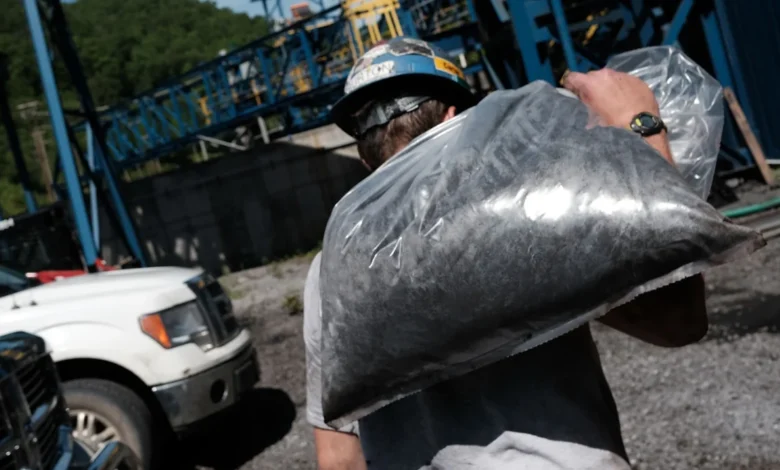
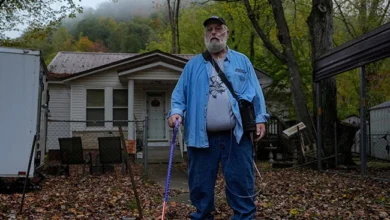
For 38 years, Josh Armes descended into the earth, laboring in the coal mines of West Virginia and Virginia to fuel the nation’s energy grid. Today, at 74, the Grundy, Virginia resident finds his world confined to the reach of his oxygen tank’s tubing. Diagnosed with coal workers’ pneumoconiosis (CWP)—the clinical term for black lung disease—Armes is part of a growing cohort of retired miners struggling not only with a progressive, incurable respiratory condition but also with a federal bureaucracy that seems designed to exhaust them before they can secure the financial relief they were promised.
The federal black lung benefits program, established in 1969 as part of the Federal Coal Mine Health and Safety Act, was intended to serve as a social contract: in exchange for the health risks inherent in mining, the industry and the government would provide medical coverage and monetary compensation to those left disabled. However, for thousands of families like the Armes clan, that contract has become a source of profound disillusionment. After receiving benefits for three years, Armes was notified in 2014 that his award was being contested by a coal operator. Twelve years later, he remains in a state of legal limbo, caught in a cycle of appeals that has outlasted his physical ability to work and, in many ways, his hope.
A Surge in Disease Amidst Policy Stagnation
The crisis of black lung is not a relic of the past; it is a burgeoning modern health emergency. Data published last month in the American Journal of Respiratory and Critical Care Medicine indicates that cases of black lung have reached their highest prevalence since 1978. Among veteran underground coal miners in central Appalachia, the disease rate now sits at a staggering 32.5 percent.
Medical experts and public health officials have largely attributed this resurgence to changes in the composition of coal dust. As the most accessible, high-quality coal seams have been depleted, miners are increasingly forced to cut through rock layers surrounding coal beds. This process releases significant amounts of silica dust, which is substantially more toxic to lung tissue than pure coal dust. The resulting inflammation and scarring of the lung tissue lead to irreversible breathing difficulties, a decline in lung capacity, and, eventually, total respiratory failure. Between 2020 and 2023 alone, more than 1,700 miners in the United States succumbed to the disease.
The Anatomy of a Legal Obstacle Course
The path to securing benefits is fraught with systemic hurdles that disproportionately favor well-funded coal operators. According to a May report from the Government Accountability Office (GAO), approximately 40 percent of all approved claims filed with the Department of Labor between 2013 and 2024 were disputed by coal companies.
The process often requires claimants to undergo repeated medical testing, secure legal representation, and attend hearings—all while suffering from the very condition that makes travel and physical exertion nearly impossible. For families, the costs of these tests and legal fees can be prohibitive. Crystal Armes, Josh’s daughter, notes that the burden of proof rests entirely on the shoulders of the disabled miner. "We have appealed it and appealed it and appealed it," she says. "They’ll send you from one doctor to another. It is very costly, and some people simply don’t have the means to navigate this."
The GAO report corroborates these frustrations, noting that miners frequently believe companies are engaging in a strategy of attrition—waiting for the claimant to pass away or give up entirely. Between January 2013 and mid-August 2024, 390 miners who had been initially granted benefits saw those awards overturned upon appeal, leaving them liable to repay the funds already received. The median wait time for an appealed claim exceeds three years, with some cases dragging on for more than a decade.
Regulatory Deadlock and Political Friction
The controversy surrounding the administration of these benefits is intensified by the current regulatory environment. In April 2024, a new federal silica dust rule—designed to mandate stricter engineering and ventilation controls to limit exposure—was passed. However, its implementation has been stalled. In June 2024, funding to enforce the rule was blocked by Congress, and the Mine Safety and Health Administration (MSHA) under the Trump administration has indicated it has no immediate plans to enforce the standards, citing ongoing judicial review.
This "indefinite delay" has drawn sharp criticism from labor organizations and public policy advocates. Rebecca Shelton, director of policy for the Appalachian Citizens’ Law Center, argues that the administration is using the legal system as a shield. "If the administration actually cared about protecting coal miners from black lung, we’d have a strong silica rule in place right now," Shelton stated. "Instead, they are hiding behind a ridiculous legal process to delay action while miners get sick and die."
Brian Sanson, president of the United Mine Workers of America (UMWA), has been a vocal proponent of unfreezing the rule. "Every day that federal regulators drag their feet, another working father, mother, husband, wife, sister, or brother contracts an incurable, fatal disease," Sanson said. "A company’s profit margin cannot take precedence over a miner’s right to draw a breath."
Institutional Responses and Future Outlook
The Department of Labor, when reached for comment, directed inquiries to the MSHA, which stated that it "continues to vigorously enforce the permissible exposure limit of 100 micrograms per cubic meter" while pending litigation and rulemaking are resolved. Critics argue that this limit, based on outdated standards, is insufficient to prevent the high levels of silica exposure currently causing the spike in black lung cases.
Legislative efforts to rectify these gaps are underway. Democratic senators including Mark Warner, John Hickenlooper, Tim Kaine, and John Fetterman have introduced legislation aimed at streamlining the benefits program and increasing accessibility for miners and their families. Their proposal seeks to remove some of the more egregious obstacles to receiving care, such as the ability of companies to perpetually appeal awards that have already been vetted by medical boards.
However, until such legislative changes are enacted, or until the judicial logjam regarding the silica rule is broken, the outlook for miners remains bleak. The human cost is measured in the silence of homes where oxygen tanks are the only sound and in the growing numbers of those who die before their claims are ever settled.
For families like the Armes, the fight is both economic and moral. It is a struggle for the recognition of their contribution to the nation’s infrastructure and a demand for the dignity promised by the law. As Crystal Armes puts it, "We’re hardworking, everyday Americans who go to work every day, pay our taxes, and try to do the right thing. It is outrageous that we can’t get what was promised to us."
As the political debate continues in Washington, the reality on the ground in Appalachia remains unchanged. The rise in black lung disease, coupled with a sluggish and often adversarial benefits system, suggests that the cost of mining—once thought to be a matter of financial investment—is increasingly being paid in the lives and health of those who were promised protection. With over 22,500 beneficiaries currently in the system, the scope of the problem is likely to expand unless there is a fundamental shift in how the government balances the demands of the industry with the fundamental human right to breathe clean air.
Related posts: