George Lucas reveals he walked away from three more Star Wars films to pursue his legacy in the museum world

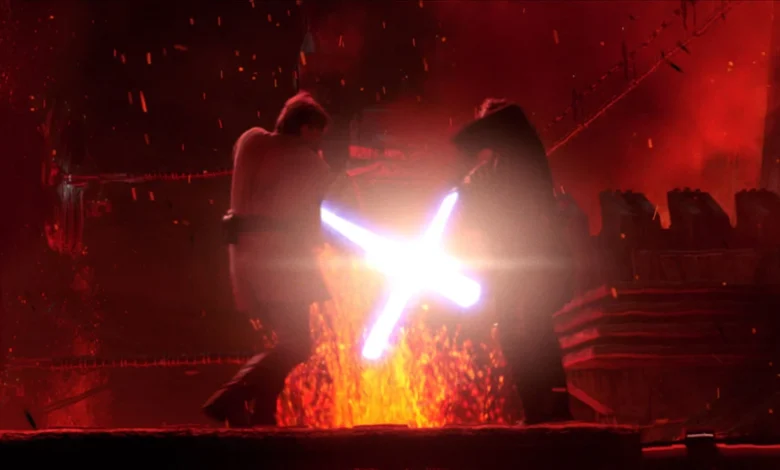
The architect of the most enduring space opera in cinematic history, George Lucas, has provided rare, definitive insight into his decision to step away from the director’s chair following the release of the 2005 prequel finale, Star Wars: Episode III – Revenge of the Sith. In a recent appearance on CBS Sunday Morning, the filmmaker revealed that his departure from the franchise was not a result of creative exhaustion, but a deliberate trade-off. Lucas disclosed that he had outlined plans for three additional Star Wars films—a vision that would have constituted a sequel trilogy—before ultimately deciding that his finite time would be better spent pivoting toward his long-standing ambition: the construction of the Lucas Museum of Narrative Art in Los Angeles.
This revelation offers a significant historical footnote for the multibillion-dollar franchise, clarifying the transition period between the end of the prequel trilogy and the 2012 sale of Lucasfilm to The Walt Disney Company.
A Career Defined by Technical Innovation and Narrative Scope
George Lucas’s career is punctuated by a commitment to pushing the boundaries of what is technically possible in filmmaking. From the practical effects of the 1970s to the pioneering digital advancements of the late 1990s and early 2000s, Lucas consistently viewed technology as the primary vehicle for storytelling.
His filmography as a director is surprisingly lean given his monumental impact on the industry. He directed the original 1977 Star Wars (later retitled A New Hope), then stepped back from the director’s seat for the subsequent two entries in the original trilogy, entrusting those projects to Irvin Kershner and Richard Marquand while maintaining tight creative control as an executive producer and writer. He returned to direct all three films of the prequel trilogy, which were released between 1999 and 2005.
The creation of the Lucas Museum of Narrative Art represents an extension of this lifelong focus on the "how" of storytelling. As Lucas noted during his interview with Norah O’Donnell, his decision to retire from active film production was driven by a realization of his own mortality. "I’m 82, so there is a limit," he stated, reflecting on the intense labor involved in bringing the museum to fruition. His wife and business partner, Mellody Hobson, emphasized the exhaustive nature of the project, noting that the level of granular detail her husband demanded during the museum’s development was an undertaking of immense proportions.
The Evolution of the Star Wars Sequel Strategy
The history of the Star Wars sequel trilogy remains a subject of intense academic and fan interest. When Lucas sold Lucasfilm to Disney in 2012 for $4.05 billion, he turned over a trove of story treatments that he had been developing. While the subsequent Disney-produced trilogy—comprising The Force Awakens, The Last Jedi, and The Rise of Skywalker—drew from his foundational concepts, the final product shifted significantly from the path Lucas had originally envisioned.
By choosing to walk away from his own planned sequels, Lucas effectively ended his role as the primary gatekeeper of the Star Wars universe. This transition allowed for the massive expansion of the franchise seen over the last decade. Under Disney’s stewardship, the galaxy far, far away has grown into a multi-platform powerhouse, with high-budget streaming series like The Mandalorian, Andor, and The Acolyte further fleshing out the timeline.
The economic implications of this transition have been staggering. Since the acquisition, the Star Wars brand has generated tens of billions of dollars in revenue across box office receipts, licensing, theme park attractions, and subscription-based content. The shift from a single auteur’s vision to a collaborative, corporate-led universe has fundamentally altered the film industry’s approach to intellectual property management.
The Lucas Museum of Narrative Art: A Director’s Cut
The Lucas Museum of Narrative Art, which opened to the public on Tuesday in Los Angeles’s Exposition Park, stands as a physical manifestation of Lucas’s appreciation for the visual arts that shaped his own creative process. During the museum’s opening festivities, Mellody Hobson provided a clear mission statement for the institution, positioning it as a corrective measure for how society views art.
"He was driven to create a space that would showcase the brilliant illustrators that he thought were too often overlooked and ignored," Hobson stated. She addressed potential critics of the museum’s populist aesthetic, noting, "If critics say a museum on narrative art is too much like a popcorn movie and not enough like an art film, well, we like popcorn movies in our family."
The museum is designed to celebrate the history of visual storytelling, bridging the gap between classical illustration, comic art, and modern cinematic production. It serves as a permanent home for Lucas’s massive collection of art, which includes pieces by Norman Rockwell, N.C. Wyeth, and various concept artists who helped bring the Star Wars universe to life. In many ways, the museum is the final chapter of Lucas’s professional narrative—a shift from the creation of commercial blockbusters to the preservation of the art forms that make them possible.
Implications of the Shift
The admission that Lucas had intended to produce three more films sheds light on the creative vacuum that was created when he stepped away. Had he moved forward with his own sequel trilogy, the landscape of modern science fiction would likely have looked significantly different. Lucas’s preference for experimental narrative structures and deep-lore world-building, as seen in the prequel trilogy, suggests that his planned films might have leaned further into the metaphysical aspects of the Force rather than the nostalgia-driven approach often utilized in later installments.
Furthermore, the scale of the museum project highlights the shift in priorities for aging industry titans. As directors who defined the New Hollywood era—such as Steven Spielberg, Martin Scorsese, and Lucas—move into the later stages of their careers, the focus has moved from aggressive production cycles to legacy building. The Lucas Museum serves as a repository of the technological and artistic advancements of the 20th century, cementing the role of the director as a curator of visual history.
The Current State of the Franchise
As of 2025, the Star Wars franchise continues to operate on a scale that few other intellectual properties can match. With the upcoming release of Star Wars: Starfighter starring Ryan Gosling, and the continued development of projects like The Mandalorian and Grogu, Disney remains committed to the roadmap established in the post-Lucas era.
Industry analysts observe that while the franchise has successfully transitioned to a model of constant content delivery, it has occasionally struggled to recapture the singular, cohesive vision that characterized Lucas’s tenure. The existence of the Lucas Museum provides a sense of continuity, ensuring that while the films continue to evolve, the underlying artistic principles that Lucas established remain visible to the public.
For Lucas, the transition from director to museum founder represents a full-circle moment. By stepping back, he relinquished control over the future of the Skywalker saga, but in doing so, he gained the freedom to curate the history of narrative art on his own terms. His legacy is now twofold: the digital revolution he sparked within the film industry and the physical monument he built to honor the illustrators and storytellers who paved the way.
The museum’s opening in Los Angeles marks a milestone for both the city and the film industry at large. It stands as a testament to a man who, having conquered the global box office, decided that the most important story left to tell was the history of storytelling itself. Whether the public ultimately views the museum as an extension of the Star Wars mythos or as a distinct, artistic achievement in its own right, the decision to trade three films for this institution remains one of the most consequential choices in modern entertainment history.
Related posts: