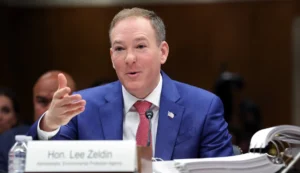
The Trump Administration EPA Signals Major Policy Shift Through Deregulation and New Water Quality Research Priorities

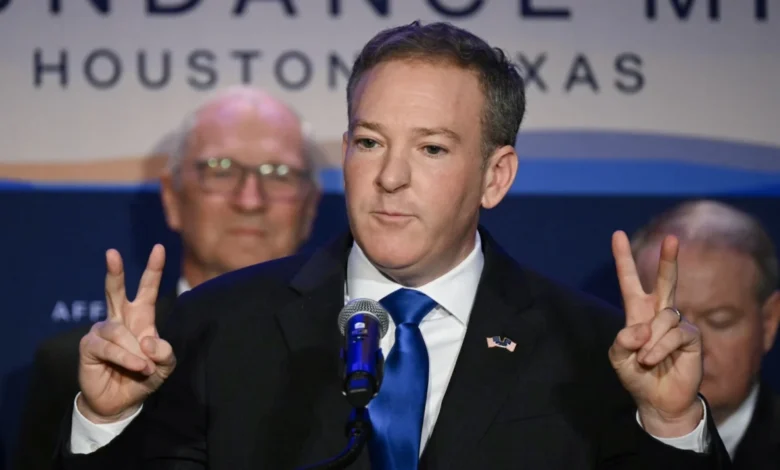
Environmental Protection Agency Administrator Lee Zeldin signaled a definitive turn in federal environmental policy this week, announcing that the agency will move to rescind existing carbon emission standards for fossil fuel-fired power plants. Speaking at the G20 Ministerial meeting on Energy Abundance in Houston, Texas, Zeldin framed the move as a long-awaited correction to what he described as a multi-decade federal campaign against reliable energy. The decision represents the latest, and perhaps most significant, step in the Trump administration’s effort to dismantle the regulatory framework governing the energy sector.
Simultaneously, the agency has launched a sweeping, multi-faceted scientific study aimed at detecting a vast array of compounds in the nation’s drinking water. This initiative includes testing for over 1,000 substances, with a specific focus on hormones, contraceptive chemicals, and mifepristone and misoprostol—the components of the two-drug medication abortion regimen. This dual-track approach—slashing climate regulations while initiating a controversial environmental investigation—underscores a fundamental realignment of the EPA’s mandate, shifting the agency’s focus toward energy dominance and the priorities of the “Make America Healthy Again” movement.
The Retreat from Climate Regulation
The rollback of power plant emissions standards marks the culmination of an eighteen-month effort to dismantle the Biden-era climate agenda. For years, the federal government had sought to leverage the Clean Air Act to drive the power sector away from coal and natural gas toward renewable alternatives. The previous administration’s suite of rules was projected to reduce carbon dioxide emissions by approximately 1.38 billion metric tons by 2047.
Under Zeldin’s direction, the EPA is not merely pausing these efforts but is moving to rescind the 2009 endangerment finding, the foundational legal determination that greenhouse gases pose a threat to public health and welfare. By removing the legal architecture that justifies federal oversight of carbon output, the administration aims to insulate the fossil fuel industry from future litigation and regulatory volatility.
Industry proponents in Houston welcomed the announcement, noting that energy security is often at odds with strict emissions caps. Critics, however, argue that the move ignores the reality of the climate crisis. Environmental organizations, including the Sierra Club, have already signaled their intent to pursue litigation. Holly Bender, the organization’s chief program officer, characterized the decision as a “full-throated climate denial” that serves as a “shocking betrayal of the American public.”
A Chronology of Policy Reversals
The trajectory of the EPA under the current administration has been marked by a rapid sequence of deregulatory actions:
- January 2025: Initial reviews of climate-related vehicle standards begin, signaling a shift in the agency’s focus regarding the transportation sector.
- February 2026: The EPA formally rescinds vehicle emission standards and begins the process of challenging the 2009 endangerment finding.
- June 2026: Republican lawmakers formally petition the EPA to expand water quality testing to include pharmaceuticals associated with reproductive health.
- September 2026: At the G20 Ministerial meeting in Houston, Administrator Zeldin confirms the repeal of power plant carbon standards.
- September 2026: The EPA launches the nationwide water study targeting over 1,000 chemicals, including abortion-related medications.
The Intersection of Water Policy and Reproductive Rights
While the rollback of climate rules has drawn the attention of environmentalists, the EPA’s new water quality study has ignited a firestorm within the sphere of reproductive health policy. Anti-abortion advocates, led by groups such as Students for Life, have long argued that medication abortion poses an environmental risk. They contend that the pharmaceutical remnants from these medications, when discarded or excreted, may find their way into the public water supply.
Kristan Hawkins, president of Students for Life, celebrated the announcement as a victory for the "Pro-Life Generation," suggesting that the government has finally acknowledged what she termed the “reckless” deregulation of the abortion pill by the FDA.
However, scientific experts offer a more skeptical perspective on the necessity and scope of this study. Nathan Donley, director of environmental health science at the Center for Biological Diversity, notes that mifepristone is typically taken as a one-time dose by a relatively small segment of the population. In comparison to industrial pollutants, agricultural runoff, or widespread contaminants like PFAS (per- and polyfluoroalkyl substances), the concentration of abortion medication in the water supply is expected to be infinitesimally low, if detectable at all.
“There are legitimate water quality threats that we need to attack and rectify in a regulatory manner,” Donley stated. “And then there are things that are out in left field that just distract people.”
Ethical and Political Implications
The decision to allocate significant EPA resources toward this specific study has raised questions regarding the politicization of environmental science. Critics argue that the study is a tactical move designed to generate data that could be used in court to justify further restrictions on abortion access. If the study detects even trace amounts of these chemicals, it could provide a basis for anti-abortion litigators to argue that the substances constitute a public health hazard, effectively weaponizing the Clean Water Act against reproductive rights.
Betsy Southerland, a former career scientist at the EPA’s Office of Water, expressed alarm at the potential trajectory of this policy. She noted that the mere presence of a substance does not equate to a health risk, yet the nuance of chemical detection is often lost in political debate. “If there is any detectable level of mifepristone or its metabolites, the anti-abortion groups will scream that we are unknowingly aborting fetuses by drinking public tap water,” Southerland warned.
While the EPA maintains that the study is intended only to assess the presence of chemicals rather than to determine risk levels or concentrations, the framing of the project by administration officials suggests broader intentions. Secretary of Health and Human Services Robert F. Kennedy, Jr. has framed the effort as a transparency initiative, claiming it will reveal the “truth” about what is in the nation’s water.
Looking Toward the Future of the EPA
The dual announcements in September 2026 solidify the current administration’s vision for the EPA: an agency that retreats from global climate commitments while adopting a proactive, often interventionist, stance on issues aligned with the conservative cultural agenda.
The economic implications of these moves are significant. By removing carbon constraints on power plants, the administration anticipates lower operational costs for energy producers, which they argue will stabilize prices for consumers. Yet, the environmental cost remains a point of intense contention. As emissions of greenhouse gases, lead, and mercury are projected to rise, the long-term public health impacts of this deregulatory path remain unclear.
Simultaneously, the water testing initiative signals that the agency may increasingly be used as a tool for ideological objectives. As environmental groups and reproductive rights organizations prepare for legal battles, the EPA finds itself at the center of a deepening national divide. Whether this new focus on water quality yields actionable scientific data or merely serves as a catalyst for further litigation, the agency’s shift marks a definitive departure from the regulatory priorities of the previous two decades.
The coming months will likely see these policies challenged in federal court, where the judiciary will be forced to weigh the extent of the EPA’s authority to prioritize "energy dominance" and specific chemical investigations over the historical mandates of environmental protection and public health regulation. As the scientific community waits for the results of the water study, the broader impact of these policy shifts will continue to unfold, affecting both the nation’s environmental landscape and its most contentious social debates.
Related posts: