When the Tourism Imperative Collides With Post-Fire Catastrophe: The Ruidoso Flood Crisis

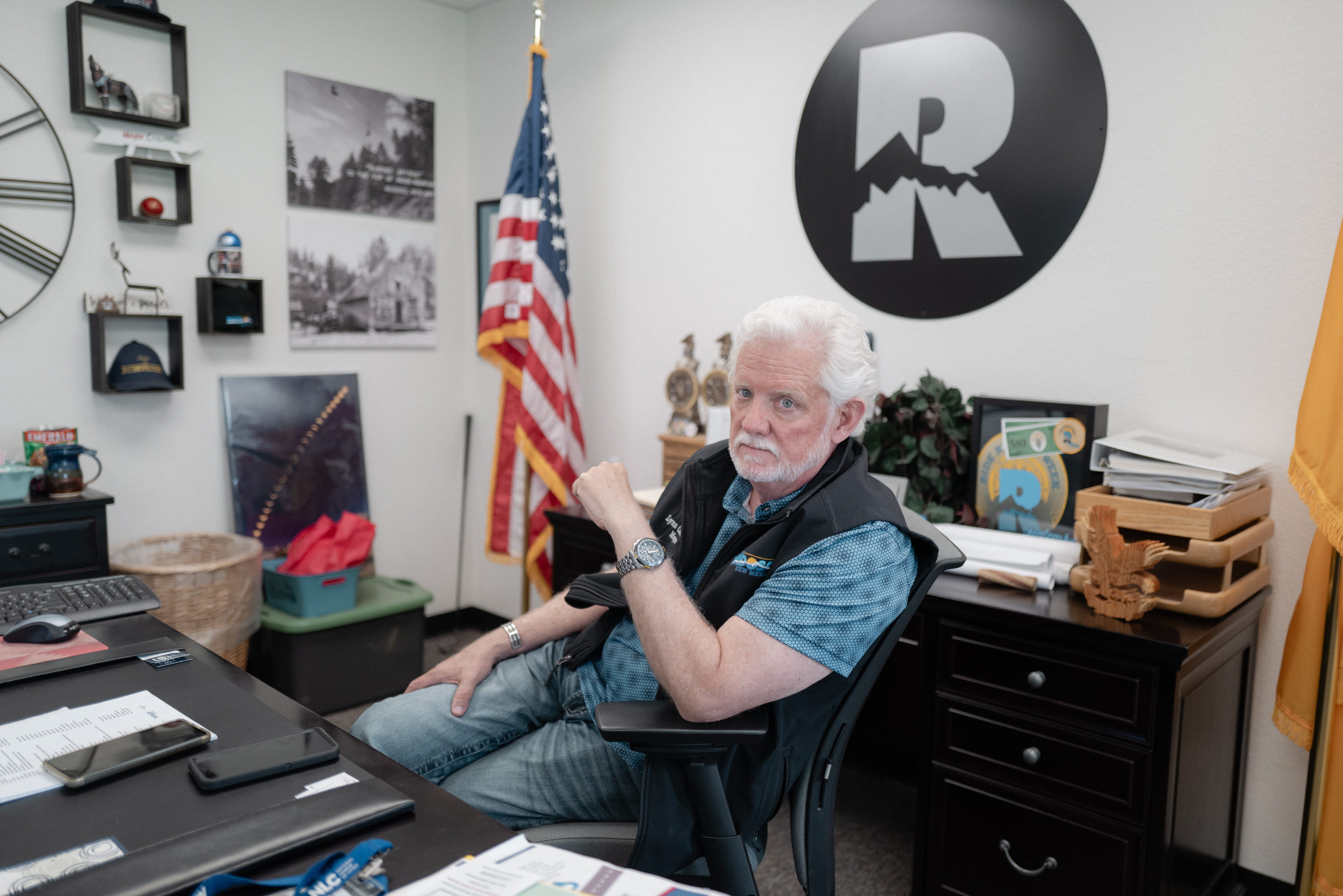
Peak tourist season in Ruidoso, New Mexico, brought with it a familiar air of optimism in the summer of 2025, despite the lingering scars of environmental devastation. Mayor Lynn Crawford, a Republican official with a Texas drawl and a dual professional life managing an exclusive club at the Ruidoso Downs Race Track, sought to reassure the public that the mountain village was fundamentally safe. Dismissing residents who shared urgent flood warnings on social media as panicked, Crawford maintained that natural hazards were fleeting inconveniences. However, this public relations push masked a much more perilous geographical and political reality: the community sat directly in the path of inevitable post-fire flash floods, trapped between the economic imperative of seasonal tourism and the mounting dangers of a warming American West.
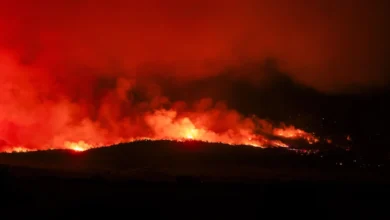
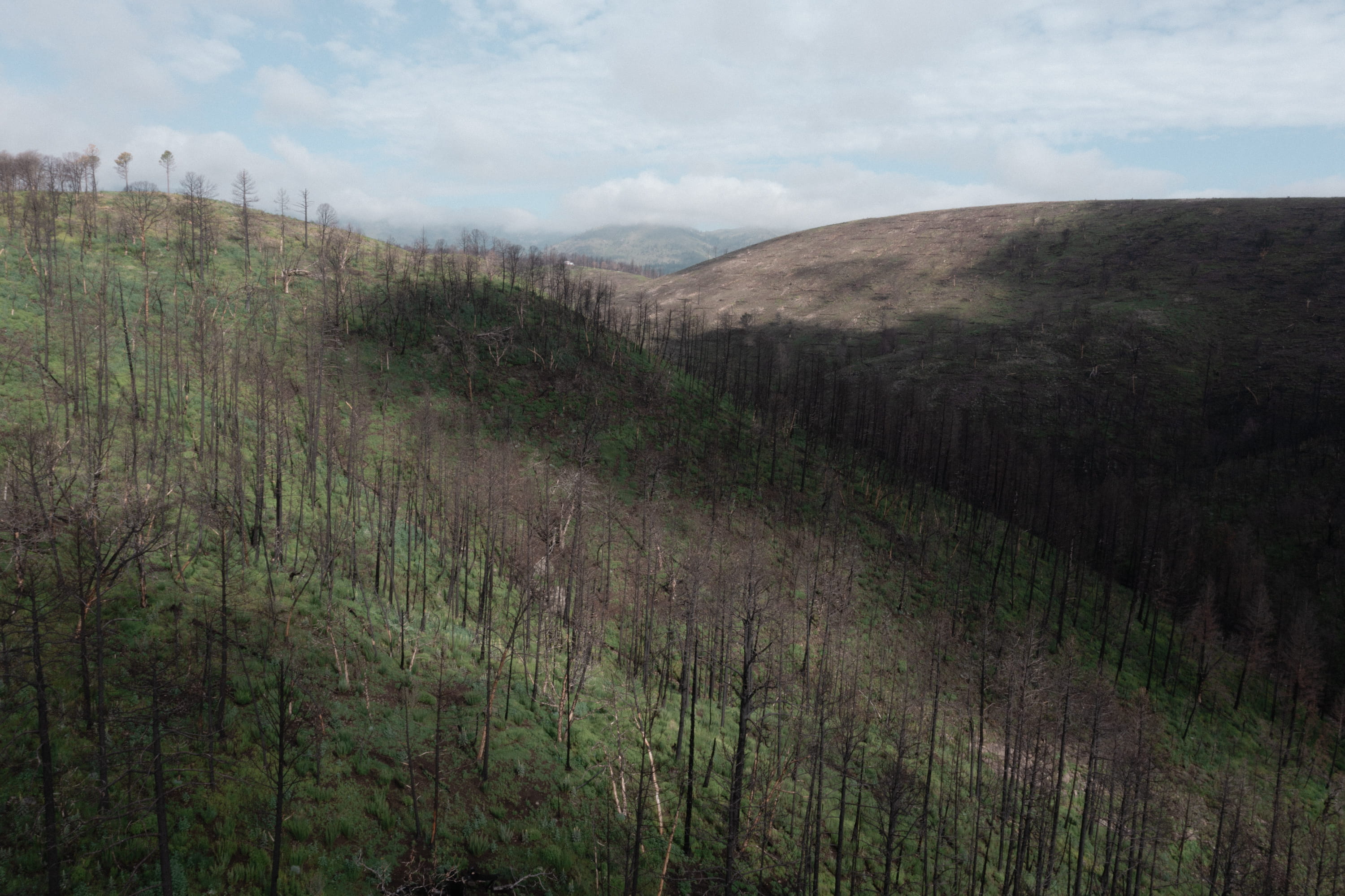
The vulnerability of Ruidoso and its smaller neighbor, Ruidoso Downs, was forged in the wake of the catastrophic South Fork and Salt fires of 2024. Those massive blazes charred approximately 25,000 acres of the Sacramento Mountains above the town, stripping steep slopes of vegetation and destroying roughly 1,000 homes. Fire intensity directly correlates with flood risk; when more than 20 percent of a watershed burns at moderate to high severity, soils lose their ability to absorb moisture. Hydrologists frequently liken the resulting landscape to pouring water over cooled, hardened wax on an incline. Despite hydrologic models from engineering firms like Cobb Fendley and JE Fuller warning of severe 100-year flood volumes—projecting water volumes up to six times greater than previous disasters—local, state, and federal leadership aggressively prioritized the revival of the region’s tourism economy, most notably funneling $16 million in public funds into the restoration of the iconic Ruidoso Downs Race Track.
A Chronology of Ignored Warnings and Rising Waters
The sequence of events leading up to the tragedy on July 8, 2025, highlights a systemic failure to balance economic recovery with human safety. Days before the disaster, internal emergency management records showed the town operating under a heightened threat level following upstream bridge collapses. Yet, public messaging actively undermined these concerns. On June 27, the village communications department issued public service announcements criticizing residents for circulating "fear-based falsehoods" about catastrophic flooding.
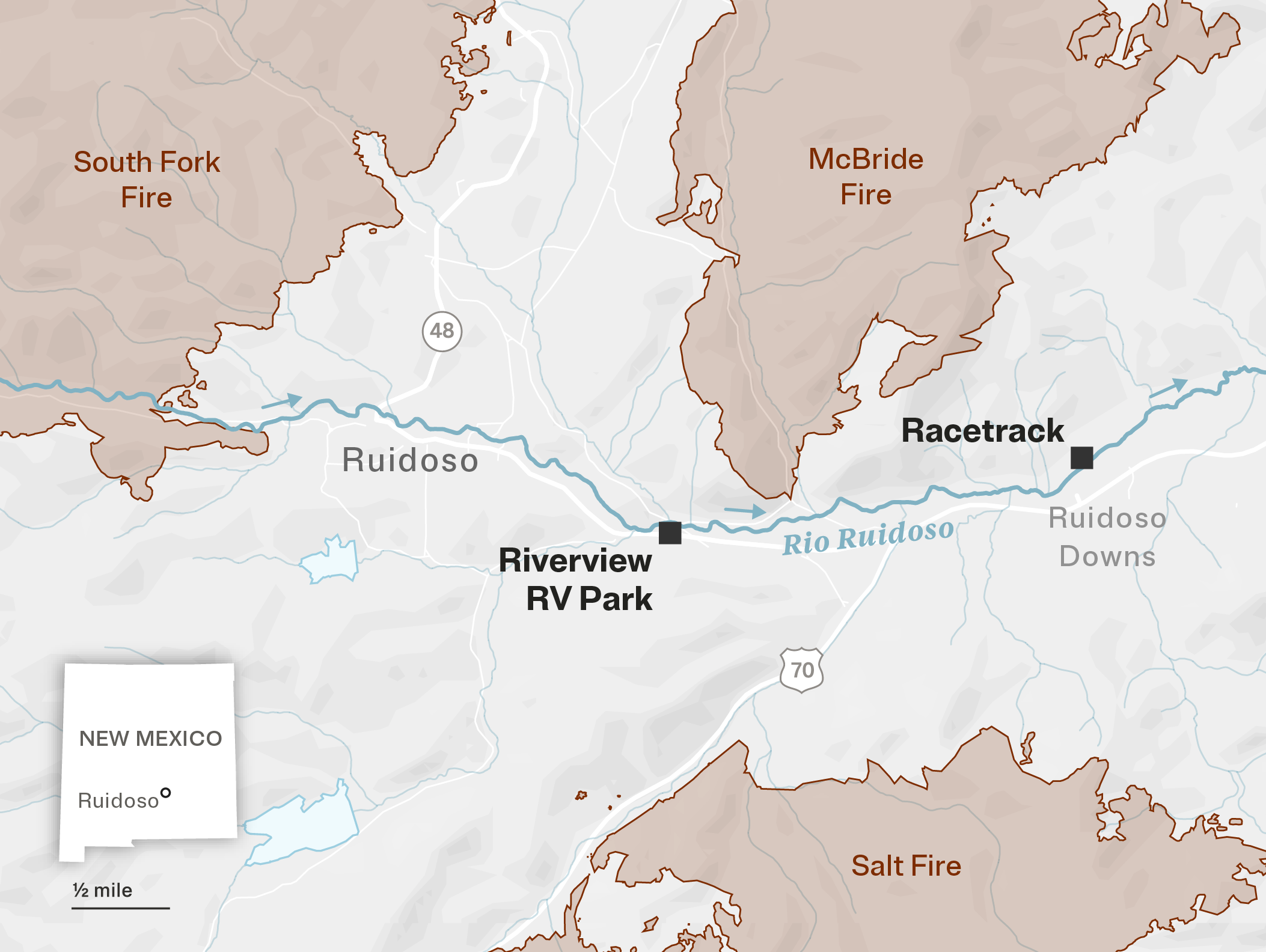
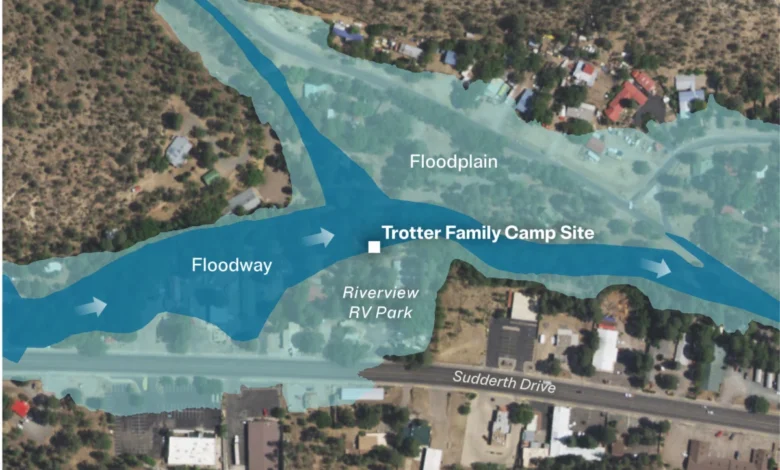
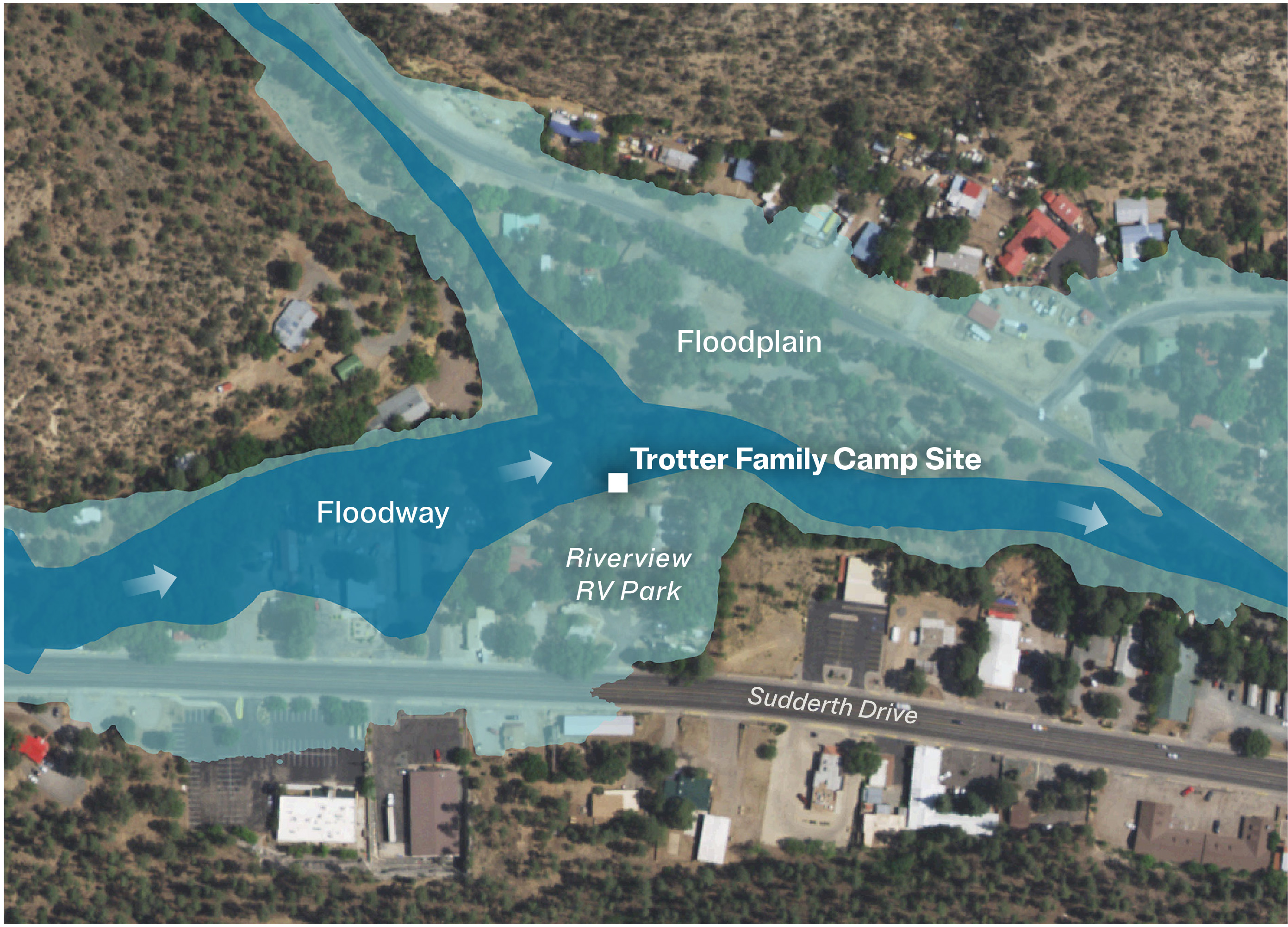
By early July, while central Texas suffered from violent flooding that claimed over 130 lives, tourists continued to pour into Ruidoso unaware of local risks. Among them were Army helicopter pilot Sebastian Trotter, his nursing student wife Stephanie, and their two young children, Sebastian Rowan, 7, and Charlotte, 4. Seeking a family-friendly getaway from Fort Bliss, Texas, the family parked their trailer on July 6 at the Riverview RV Park along the banks of the Rio Ruidoso. Although minor flooding occurred that day and firefighters conducted four swift-water rescues, campground hosts and local messaging downplayed the events as temporary.
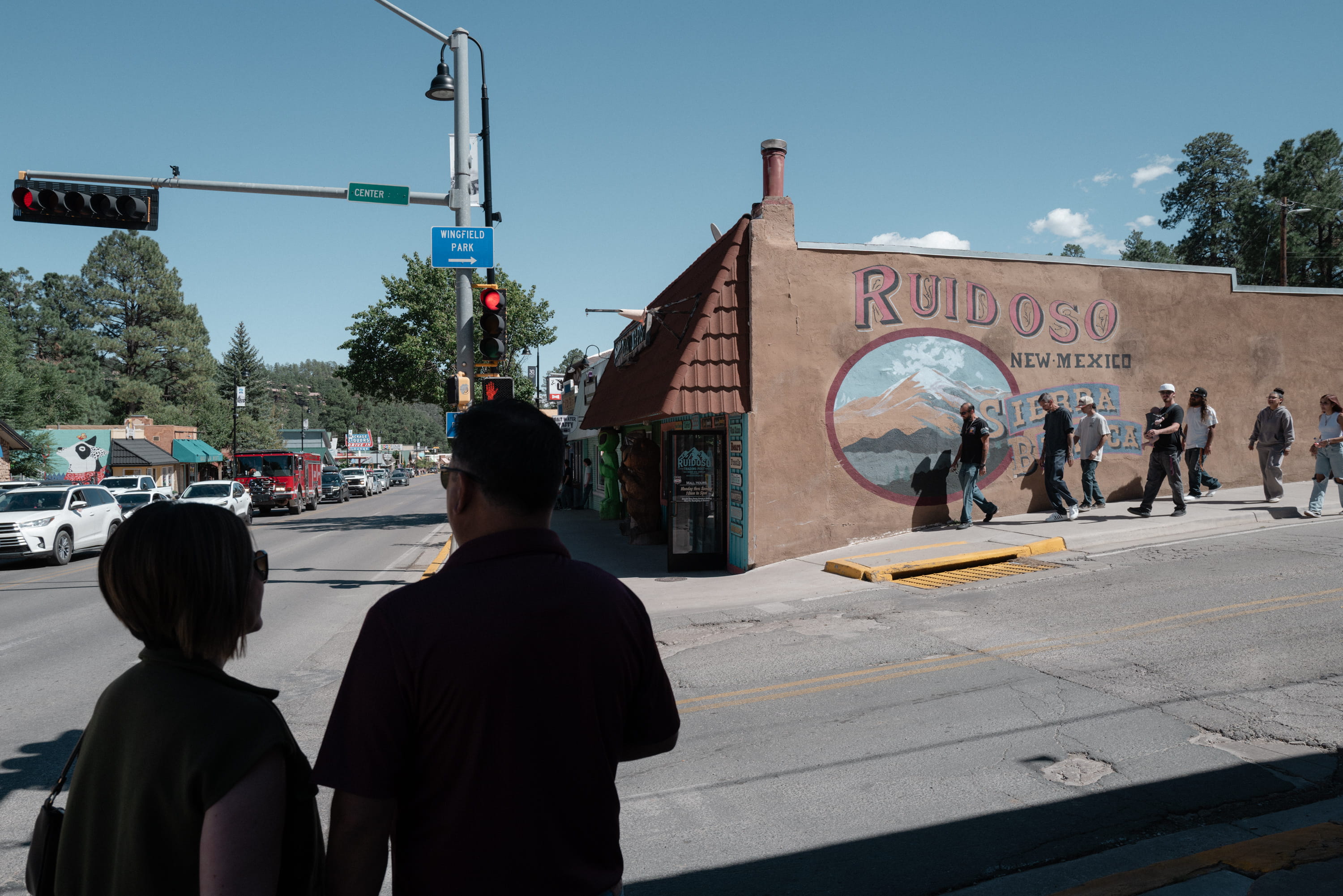
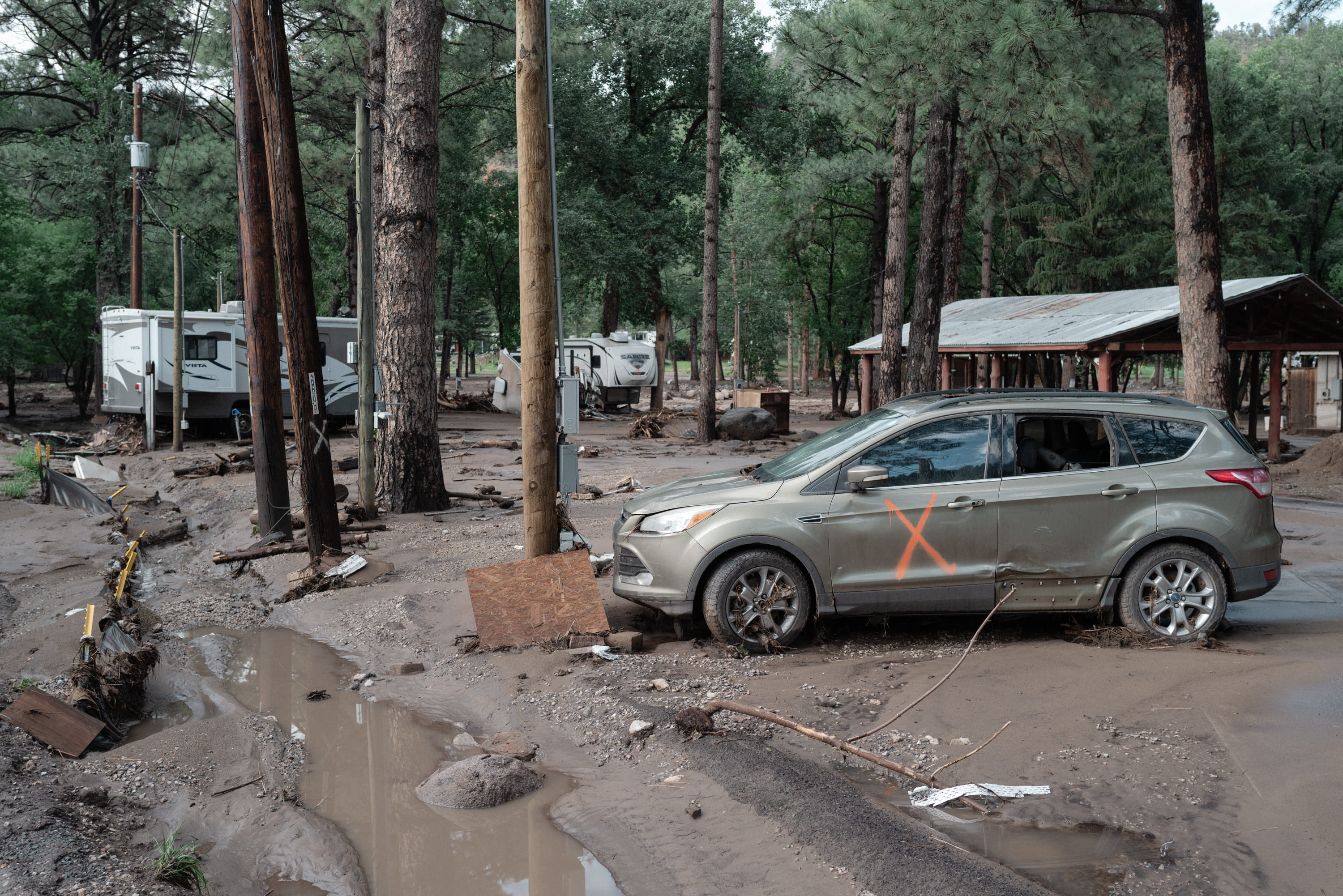
On July 8, storm clouds rapidly gathered over the burn scars by midday. By 2:12 p.m., the National Weather Service issued a flash-water warning, upgrading it to a flash flood emergency 35 minutes later as debris choked mountain channels. At Village Hall, Mayor Crawford presided over a council meeting, ultimately adjourning at 3:10 p.m. with the warning that a major wall of water was descending. While track executives received advance warning allowing them to evacuate dozens of grooms living in the barns, no such emergency door-to-door notifications were executed at the Riverview RV Park, despite its proximity to fire department headquarters. At approximately 3:00 p.m., a wall of mud and debris tore through the RV park, destroying the Trotters’ trailer, separating the family, and claiming the lives of Sebastian Rowan, Charlotte, and camper Benjamin Timothy Feagin.
Official Defenses and Accountability Gaps
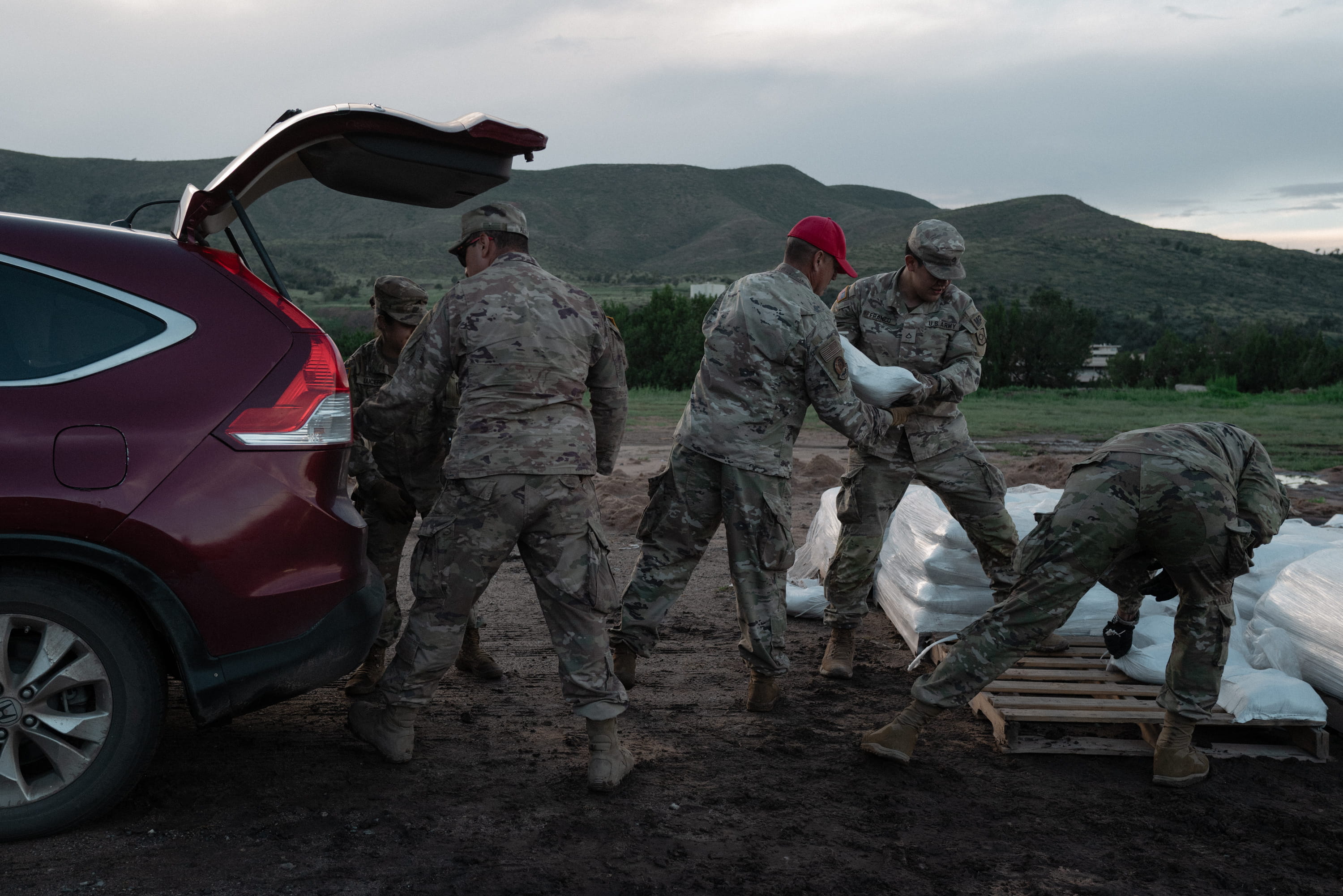
In the aftermath of the July 8 tragedy, local and state officials staunchly defended their emergency response. Village Fire Chief Cade Hall and former deputy manager Michael Martinez maintained that officials did everything possible to manage a historic disaster, with Martinez noting that the flood reached only half of its modeled maximum potential. New Mexico Governor Michelle Lujan Grisham’s administration similarly defended the allocation of $16 million toward the Ruidoso Downs racetrack, asserting that the infrastructure investments were vital for life-safety and downstream protection rather than mere economic stimulus.
Critics and first responders, however, paint a starkly different picture. Speaking anonymously out of fear of reprisal, multiple first responders stated that the disaster could have been mitigated if leaders had acted on hydrological warnings, prioritized physical relocations, and avoided framing public safety messaging around the preservation of tourist dollars. Thora Walsh Padilla, former president of the Mescalero Apache Tribe, sharply criticized the prioritization of commerce over human life, noting that tourists unfamiliar with local geography were placed in extreme jeopardy. Furthermore, investigative disclosures revealed internal state communications prioritizing the structural integrity of the racetrack over residential welfare during the height of the search-and-rescue operations.
Broader Implications for the American West
The crisis in Ruidoso serves as a cautionary paradigm for communities across the American West confronting the compounding effects of climate change, historic wildfire suppression, and suburban expansion into hazard-prone river valleys. Federal agencies have increasingly warned that post-fire debris flows and flash floods represent an escalating secondary threat to Western infrastructure. Similar disasters in Colorado, Utah, and Arizona underscore a dangerous systemic lag: while federal scientists have developed advanced models for debris-flow hazards, local municipalities frequently lack accessible tools and financial resources to enact large-scale managed retreats or infrastructure hardening.
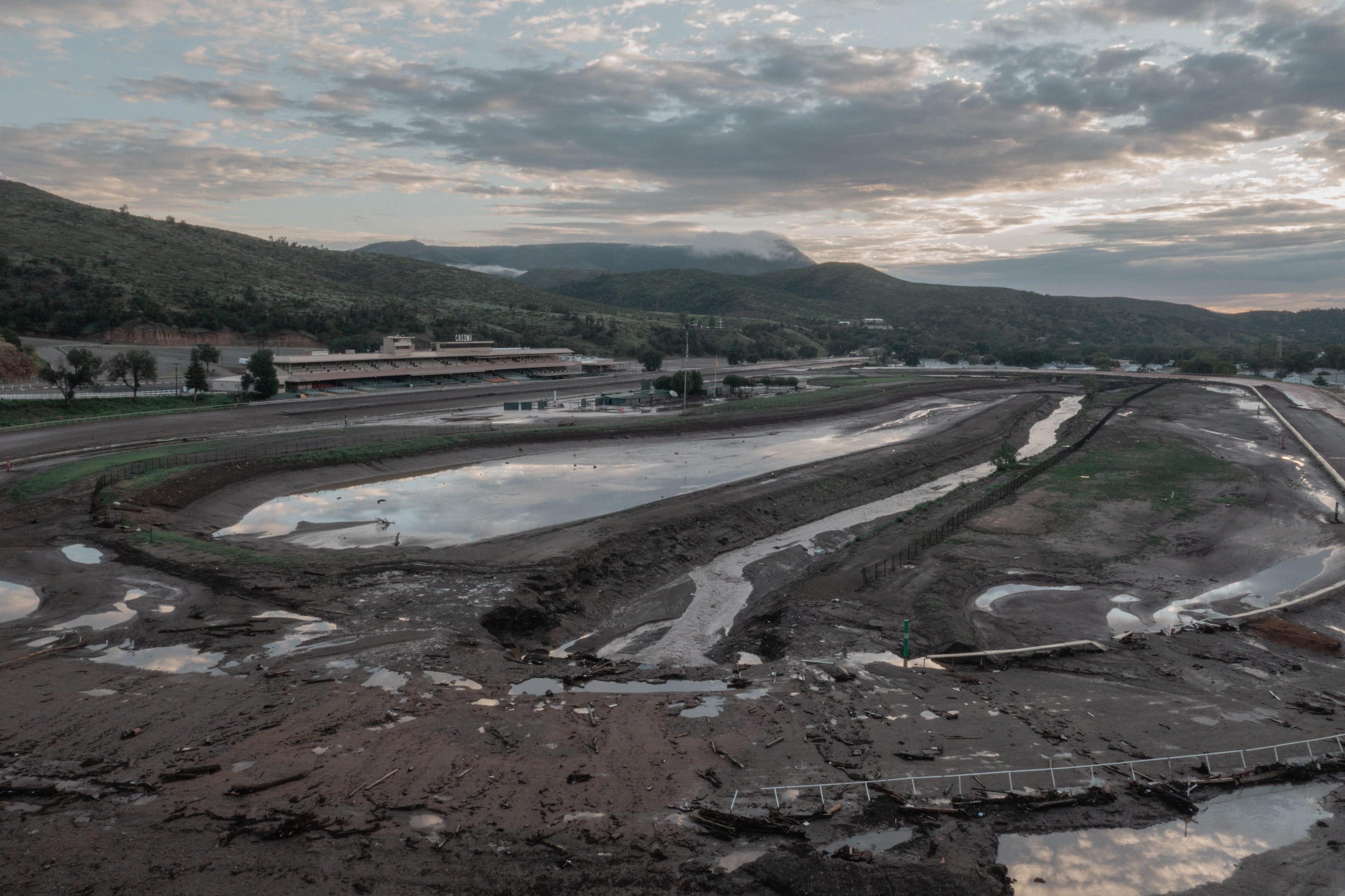
Ruidoso remains heavily reliant on state and federal disaster aid, having absorbed over half a billion dollars in recovery funds since 2024—an amount equivalent to nine times the village’s annual operating budget. Despite the implementation of a delayed $249 million federal-state buyout program for at-risk properties, many residents remain in limbo, awaiting property appraisals while commercial entities continue to market the region to tourists. For the Trotter family, who settled a wrongful death lawsuit with the RV park’s insurance carrier while signaling intent to sue municipal entities, the tragedy remains an enduring testament to the human cost of prioritizing commerce over catastrophe preparedness. As new vegetation slowly blankets the burn scars above the Rio Ruidoso, the fundamental tension between living safely with nature and subduing it for profit remains unresolved across the fire-adapted landscapes of the West.
Related posts: