JetBlue Airways Navigates Financial Turbulence Amid Growing Bankruptcy Speculation and Stagnant Stock Performance

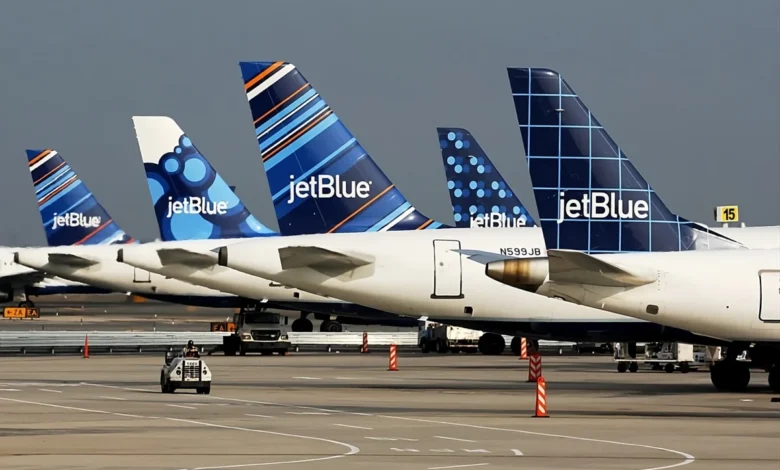
JetBlue Airways finds itself at a critical financial juncture, with its stock price hovering near the $2.91 mark as of Tuesday, prompting intense industry scrutiny regarding its long-term viability and the potential for a formal restructuring. The airline, currently tasked with executing a complex turnaround strategy while grappling with persistent operating losses, has seen its market valuation plummet, leading to widespread speculation about its future. This uncertainty was punctuated by recent remarks from United Airlines CEO Scott Kirby, who, when queried about the possibility of an acquisition, offered no indication that United would intervene to rescue the struggling carrier.
The Financial Anatomy of a Potential Crisis
The $2 per share threshold has long been regarded by market analysts as a psychological and technical warning sign for publicly traded companies. While a low share price is not a definitive indicator of impending insolvency, historical data suggests a strong correlation. According to a 2001 study by Philip Russel and Ben Branch, approximately 72% of companies that eventually filed for bankruptcy were trading below the $2 level at the time of their filing. While this does not imply that every company at this price point is destined for Chapter 11, it underscores the market’s lack of confidence in the firm’s ability to generate future shareholder value.
JetBlue’s financial position is defined by a significant "debt wall" and the exhaustion of substantial capital reserves. In the first half of 2026, the airline reported a staggering $566 million loss, signaling that its operational turnaround—focused on cost-cutting and revenue enhancement—has yet to yield the necessary stability. Adding to the pressure, JetBlue’s loyalty program bonds, a critical piece of its financing structure, have seen their market value decline to roughly 72 cents on the dollar, reflecting investor anxiety over the company’s creditworthiness and the $197.5 million in annual interest payments associated with those specific obligations.
Chronology of the Strategic Pivot
JetBlue’s current predicament is the culmination of several years of operational challenges and failed strategic initiatives. Following the collapse of its proposed merger with Spirit Airlines due to regulatory intervention, JetBlue was forced to pivot toward an independent recovery plan.
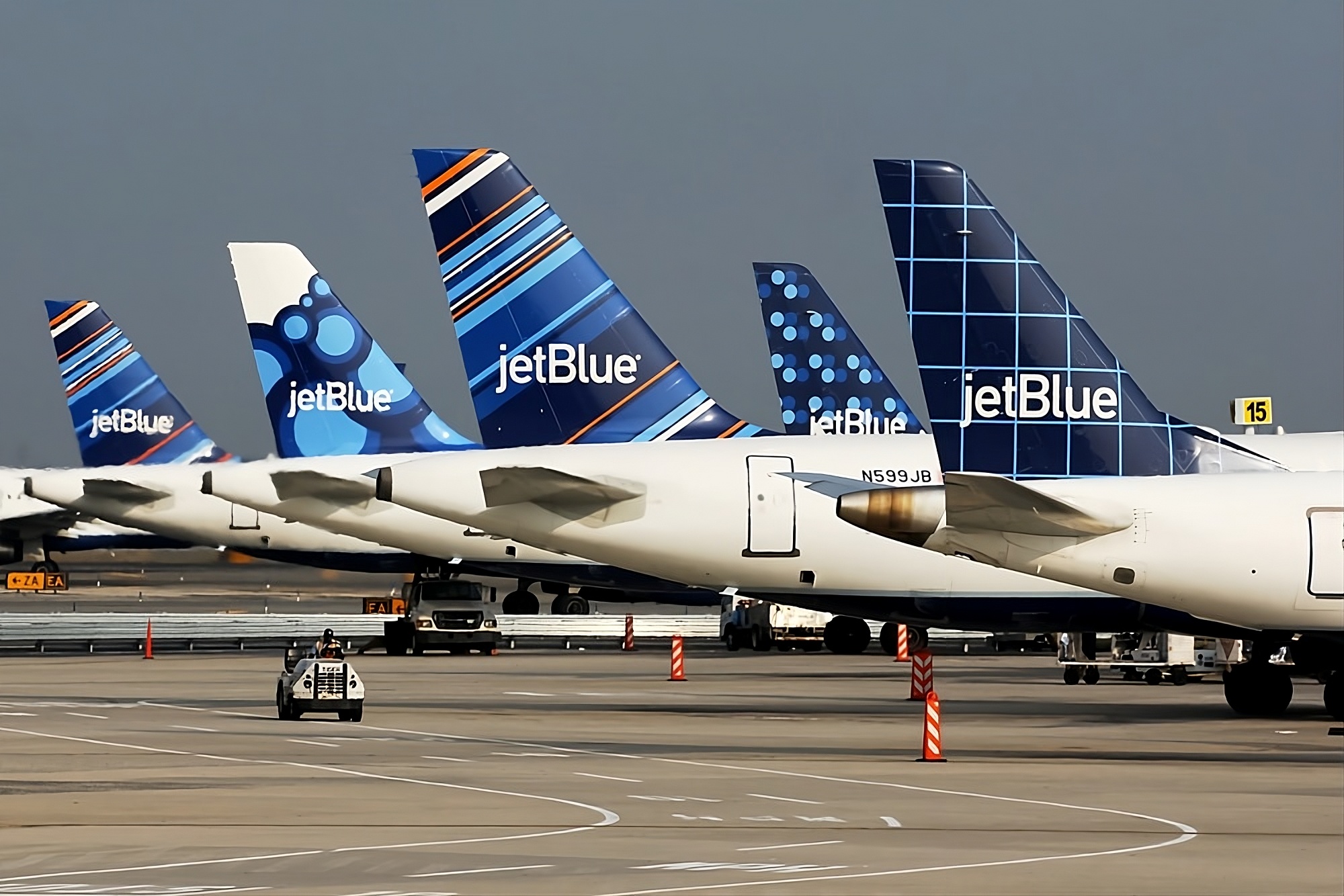
- Early 2026: JetBlue initiates a broad search for strategic alternatives, engaging financial advisors to explore potential buyers, including United, Southwest, and Alaska Airlines.
- March 2026: Reports surface that the airline is actively courting potential suitors, though the burden of nearly $9 billion in total debt serves as a significant deterrent to potential acquirers.
- June 2026: The airline concludes the second quarter with an operating loss of $141 million, further straining its liquidity position.
- September 2026: A mid-quarter update reveals that while revenue per seat mile is expected to grow by 17% to 20%, nonfuel unit costs are also rising by 6% to 8%, narrowing the margins for error.
- October 2026: As the third-quarter earnings report approaches, bond prices for the airline’s loyalty program continue to exhibit high volatility, trading at deep discounts.
Operational Hurdles and the Revenue Gap
JetBlue faces a unique structural dilemma. Its primary hubs in New York and Boston provide access to a high-value customer base and lucrative corporate travel contracts. However, these markets are also among the most congested and competitive in the aviation industry. JetBlue lacks the ultra-low-cost efficiency of carriers like Spirit or Frontier, yet it also lacks the expansive global network and corporate reach of legacy carriers like United or Delta.
To bridge this gap, management is attempting to drive higher revenue from existing passengers through the introduction of premium domestic first-class seating, the expansion of airport lounge access, and increased reliance on co-branded credit card revenue. While these initiatives are designed to improve free cash flow by 2027 or 2028, the timeline is contingent upon a "perfect storm" of favorable economic conditions, stable fuel prices, and flawless operational execution. Any deviation—such as a spike in geopolitical instability affecting jet fuel prices or a softening in travel demand—could render these projections unattainable.
The Role of Liquidity and Credit Covenants
The most immediate threat to JetBlue’s autonomy lies in its liquidity covenants. The airline’s financing documents for its TrueBlue loyalty program require it to maintain at least $750 million in quarter-end liquidity. Should the airline fail to meet these or other collateral tests, lenders have the right to divert cash flow toward accelerated debt repayment, effectively starving the airline of the capital needed for daily operations.
Furthermore, the airline is wary of the potential for credit card processors to demand collateral on ticket sales—a move known as a "holdback." This is a common tactic used by payment processors when they perceive an increased risk of a company’s insolvency, as they wish to ensure they have sufficient funds to cover passenger refunds in the event of a shutdown. While JetBlue stated in June that it had no such requirements currently in place, the industry remains acutely aware of the "Spirit scenario," where processors forced the airline to tie up vast amounts of cash, accelerating its descent into bankruptcy.
Market Reactions and the United Airlines Stance
The broader aviation sector is watching these developments with caution. During United Airlines’ October 21 earnings call, J.P. Morgan analyst Jamie Baker pressed CEO Scott Kirby on the state of the airline industry and the specific struggles of JetBlue, noting the distressed trading levels of their debt. Kirby’s response was characteristically direct: "I have nothing new to add on that."
United’s recent move to bolster its own liquidity through an expanded revolving credit facility was framed by CFO Mike Leskinen as a strategic efficiency play to save on interest costs, rather than a precursor to M&A activity. Kirby explicitly denied that an acquisition was the rationale for these financial moves, reinforcing the industry consensus that any consolidation involving a carrier with JetBlue’s debt profile is highly unlikely outside of a court-supervised restructuring process.
Broader Economic Implications and Outlook
The potential bankruptcy of a major carrier like JetBlue would have profound implications for the U.S. aviation landscape. It would significantly reduce capacity in the Northeast corridor, likely leading to increased airfares for consumers and reduced competition at major hubs like JFK, LaGuardia, and Logan International.
For investors, the situation serves as a stark reminder of the leverage-heavy nature of the airline industry. With over $6 billion in unencumbered assets, JetBlue holds value, but the question remains whether that value can be unlocked in time to satisfy creditors. As the airline prepares to release its third-quarter earnings on October 27, stakeholders are looking for concrete evidence that the turnaround is gaining traction. The report will provide a clearer picture of the current balance sheet, the efficacy of recent cost-cutting measures, and, crucially, how much "runway" the airline has before its financing options are exhausted.
Ultimately, JetBlue’s survival hinges on its ability to navigate a narrow path where operational improvements must outpace the erosion of its cash reserves. Whether the airline can achieve this without seeking protection from its creditors remains the central question facing the industry as the fiscal year draws to a close. The coming weeks will likely determine whether the airline’s current strategy is a roadmap to recovery or merely a delay of an inevitable financial reorganization.