The Rural Maternity Care Crisis Deepens: How Hospital Closures and Emergency Carts Are Reshaping Childbirth in America


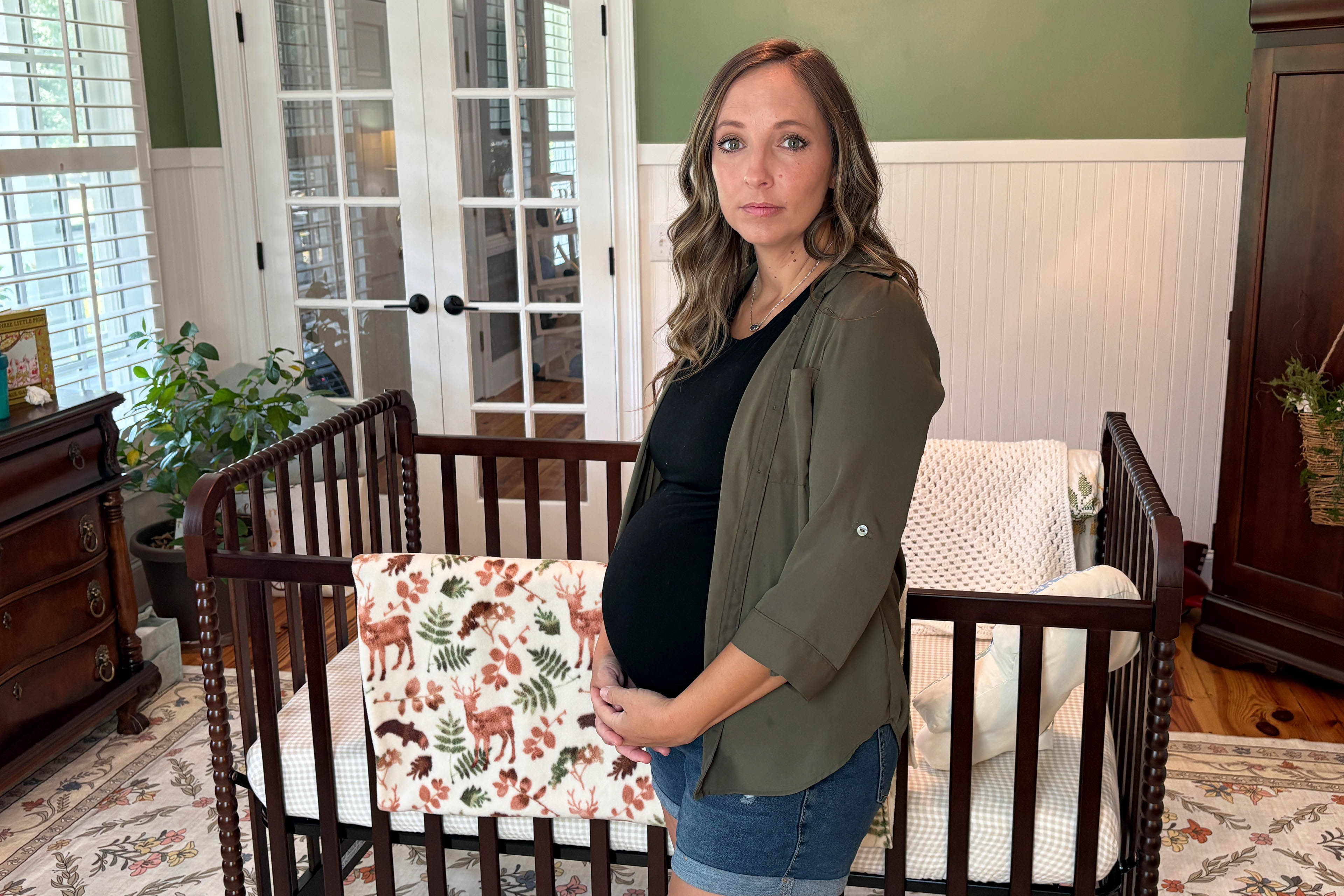
LAVONIA, Ga. — Ten years had passed since Kara Holden last experienced the overwhelming, transformational journey of welcoming a newborn into her family. Yet, as she prepared for the arrival of her fourth child, her mind was not occupied with the typical nesting preparations or nursery designs that often consume expectant mothers. Instead, her head was swimming with complex, high-stakes contingency plans.
Holden, a former obstetric nurse who spent years assisting families through labor and delivery, found herself confronting a stark and unsettling reality. The local labor and delivery unit where she once worked in this rural northeastern Georgia community had permanently closed its doors. Deprived of the local care infrastructure she once trusted, she was forced to orchestrate a precarious safety net. She reached out to former medical colleagues, asking them to remain on standby around her anticipated due date. She and her midwife meticulously mapped out emergency rooms along the harrowing, more-than-50-mile trek to Greenville Memorial Hospital in South Carolina, where she planned to deliver. Furthermore, anticipating a worst-case scenario that every pregnant mother dreads, she curated emergency medical items to keep stowed in her car trunk in case she went into active labor while navigating the highway.
"That’s a horrible place to put a pregnant woman in," said Holden, reflecting on the stress that culminated on October 11, when she endured the painful, hour-long drive to Greenville to safely deliver her son, Tucker.
Holden’s predicament is far from an isolated incident; it is a vivid manifestation of an escalating national crisis. Residing roughly midway between Athens, Georgia, and Greenville, South Carolina—the two nearest urban centers boasting functioning labor and delivery units—she represents the millions of rural Americans stranded in healthcare deserts. Sparked partly by federal Medicaid cuts stemming from President Donald Trump’s One Big Beautiful Bill Act, St. Mary’s Sacred Heart Hospital in Lavonia suspended its obstetric services nearly a year ago.
This closure mirrors a systemic trend tearing through rural communities nationwide. From the expansive plains of South Dakota to the historic towns of Alabama, and from the industrial corridors of Ohio to the mountainous regions of California, a lethal combination of low Medicaid reimbursement rates and dwindling birth rates is forcing hospitals to shutter vital maternity wards. Today, fewer than half of all rural community hospitals in the United States offer labor and delivery services, leaving vast swaths of the country without immediate access to maternal care.
A Statewide Emergency in Georgia
The crisis hits particularly hard in Georgia, a state that consistently ranks among the worst in the nation for overall maternal health outcomes, according to annual evaluations by organizations like the March of Dimes. Data compiled by the Center for Healthcare Quality and Payment Reform reveals that only 36% of rural hospitals in Georgia currently maintain an active labor and delivery unit. Compounding this vulnerability, at least four rural maternity wards have permanently closed across the state since 2020.
In response to the mounting pressure and the severe risks posed to expectant mothers, state officials have sought to leverage federal funding. Georgia has tapped into the $50 billion Rural Health Transformation Program, a federal initiative established by congressional Republicans designed specifically to cushion rural communities from the severe financial fallout and healthcare access gaps precipitated by major federal legislation, including President Trump’s signature economic package.
Out of the nearly $219 million approved for Georgia during the program’s inaugural year, more than $12 million has been earmarked for a specific, targeted intervention: the procurement and deployment of specialized obstetric carts across 43 rural hospitals that lack functional labor and delivery units. These mobile carts are designed to be fully outfitted with critical supplies necessary to manage unexpected births or acute obstetric emergencies within a standard emergency department. The inventory includes advanced neonatal resuscitation tools, thermal blankets, and essential medications such as oxytocin, which stimulates uterine contractions, and magnesium sulfate, utilized extensively to treat dangerous seizures in pregnant patients suffering from pregnancy-induced hypertension or preeclampsia.
The Controversy Over Obstetric Carts: A Band-Aid on a Hemorrhage
While state health authorities praise the initiative as a proactive measure to safeguard patients, frontline medical professionals have expressed deep skepticism regarding its long-term efficacy.
Dr. Justin Peterson, an obstetrician-gynecologist practicing in southern Georgia who has witnessed firsthand the crushing financial and operational pressures facing rural healthcare institutions, acknowledged that the delivery carts sound adequate in theory. However, like Holden, Peterson harbors profound concerns that supplying these carts essentially places complex obstetric emergencies into the hands of emergency room physicians who may lack extensive, specialized training in high-risk childbirth scenarios.
Rather than relying on stopgap measures, Peterson and other maternal health advocates argue that the state should direct its financial power toward structural solutions, specifically investing subsidies directly into rural hospitals to prevent the closure of their labor and delivery units in the first place.
"You’re putting a band-aid on a hemorrhage," Peterson remarked, capturing the sentiment of many clinicians who view the equipment distribution as an inadequate substitute for comprehensive maternity wards.
This sentiment was reinforced by the closure timeline of St. Mary’s Sacred Heart Hospital in Lavonia, which halted its obstetric services in October 2025. Hospital leadership cited the Medicaid cuts mandated by the One Big Beautiful Bill Act as the final, unsustainable tipping point in an already fragile operating budget. Despite appeals from local communities, the hospital system stated that the decision was reached following an extensive 18-month evaluation process that involved recruitment efforts and partnership explorations, all of which ultimately failed to secure financial solvency for the unit.
"You Can’t Practice Scared"
The human toll of these structural closures is perhaps best understood through the experiences of patients like Brittany Mitchell. Mitchell was approximately seven months pregnant when the labor and delivery unit at Sacred Heart abruptly closed its doors. Reassigned to a new OB-GYN located in Athens, she found herself facing a daunting, nearly 50-mile commute for routine prenatal visits—a journey that proved both mentally stressful and financially punishing.
After detecting elevated levels of protein in her urine—a classic, ominous warning sign of preeclampsia, which can rapidly progress to life-threatening organ damage, maternal strokes, or seizures—her physician insisted on weekly monitoring. To comply with this crucial medical advice, Mitchell was forced to routinely sacrifice a full day’s wages from her job as a home health aide, an occupation she noted already offered meager compensation.
Reflecting on her experiences, Mitchell expressed lingering anxiety about the prospect of relying on emergency room physicians should she ever need to give birth locally. Recalling her first pregnancy nine years ago, when her local OB-GYN had to intervene swiftly after her newborn temporarily lost oxygen, Mitchell questioned whether a general emergency room doctor would possess the specialized reflexes and split-second decision-making capabilities required in such a crisis.
"If they were in that situation," she wondered, "would they know how to do all that?"

In written communications with health journalists, Lauren Williams, director of communications for the Georgia Department of Community Health, defended the obstetric cart initiative, emphasizing that training emergency room personnel is a foundational pillar of the program. The rollout plan explicitly incorporates mandatory simulation drills, enabling emergency department staff to rehearse high-risk obstetric procedures under controlled conditions.
Anna Adams, chief government relations officer for the Georgia Hospital Association—the entity tasked with procuring and distributing the carts—noted that while the exact distribution timeline remains fluid, all allocated grant funds must be fully expended by September 30, 2027, under federal guidelines.
Dr. Justin Law, an emergency physician with SouthlandMD, a physician-led healthcare management organization, offered a pragmatic perspective. While he agrees that the concept of consolidated obstetric carts is fundamentally sound—as many of the listed items are already technically present in emergency departments, albeit scattered—he cautions that equipment alone cannot replace specialized expertise. Law noted that despite working across rural Georgia for a decade and possessing emergency obstetrics training from his previous career as a paramedic, he has never been forced to deliver a baby within an emergency room setting. Whenever a mother experiences severe complications, such as an emergency cesarean section, standard protocol dictates rapid stabilization and transfer to a fully equipped tertiary care facility.
Holden reiterated that deep familiarity with nuanced delivery complications is non-negotiable in obstetrics, where minutes dictate survival. "You’re not going to save anybody’s life just because you got access to some equipment," she warned.
Acknowledging these systemic anxieties, Adams conceded that emergency rooms are far from the ideal environment for childbirth. "But sometimes things happen that are outside of our control," she said. "And when it does, we want to make sure those hospitals are prepared."
Robin Clyatt, maternal health community outreach coordinator for the advocacy group Hope for Georgia Moms, offered a blunt assessment of the psychological and professional hurdles facing emergency physicians. While praising their general medical acumen, Clyatt pointed out that an ER doctor might encounter a catastrophic maternal hemorrhage or acute birthing complication only a handful of times per year, naturally eroding their readiness to act instantaneously.
"You can’t practice scared when it comes to obstetrics," Clyatt asserted. "And that’s important, because when you practice scared, you do stupid things."
Contrasting Models and Broader National Implications
While rural maternity wards continue to vanish at an alarming rate, a few regional facilities demonstrate that targeted investment and regional consolidation can yield different outcomes. For instance, the labor and delivery unit at Coffee Regional Medical Center in Douglas serves six counties across southern Georgia. Dr. Peterson, who practices at the facility’s Women’s Center, pointed out that live births at the center surged from 551 in 2020 to nearly 1,000 by 2024—a direct statistical reflection of the vacuum created when surrounding community hospitals closed their doors.
Peterson lamented that corporate healthcare decisions increasingly prioritize financial ledgers over community health outcomes. "They just say, ‘Oh, you know, the numbers aren’t there. We’re closing,’" he observed, emphasizing that once a rural labor and delivery ward is shuttered, the statistical probability of it ever reopening is vanishingly small.

Across the United States, various state legislatures are scrambling to utilize federal transformation funds to patch widening cracks in the maternal health safety net. South Dakota is establishing centralized maternal health hubs designed to optimize resource allocation and assist expectant mothers in navigating fractured health systems. Similarly, Ohio is actively funding the establishment of dedicated rural birth centers to maintain localized access.
In its comprehensive proposal for federal rural transformation grants, Georgia incorporated several workforce incentives, including the funding of 75 new medical residency slots across various specialized fields and the creation of a lucrative grant program designed to reimburse physicians up to $250,000 in relocation expenses if they commit to practicing in underserved rural areas.
However, healthcare economists and medical professionals argue that much more structural reform is required. Peterson suggested that state lawmakers must drastically increase Medicaid reimbursement rates for obstetric care, offer robust medical school loan forgiveness programs tailored specifically to rural practitioners, and ease regulatory hurdles for alternative providers. Holden and Clyatt both emphasized the immense value that certified nurse-midwives and community health workers could bring to rural maternal care. Yet, complex state laws—such as regulations requiring certified nurse-midwives to practice under the direct supervision of a physician—continue to create steep financial and administrative barriers, recently sparking legal challenges from provider coalitions.
As Kara Holden settles into the daily rhythms of motherhood, organizing vintage trinkets and family heirlooms along the bookshelves of baby Tucker’s cozy, sage-green nursery, her thoughts frequently drift toward other, less-resourced mothers in her community. She worries intensely for women dependent on Medicaid or those lacking the flexible schedules and financial means required to travel an hour or more for routine prenatal care.
Without consistent, localized prenatal monitoring, Holden fears that insidious conditions like preeclampsia will increasingly go undiagnosed, culminating in tragic outcomes.
"They don’t make it, and their baby doesn’t make it, because they never got that diagnosed and managed," she said softly.
While society often prefers to maintain an optimistic outlook that childbirth will always proceed smoothly, Holden’s professional background as a nurse and her personal ordeal as a patient serve as a sobering reminder of a fragile medical landscape. "There are so many things that can go wrong," she concluded. "And they can go wrong really quick."
Related posts: