Trump Administration Moves to Expand Commercial Fishing in Protected Marine Monuments Sparking Legal and Environmental Debate

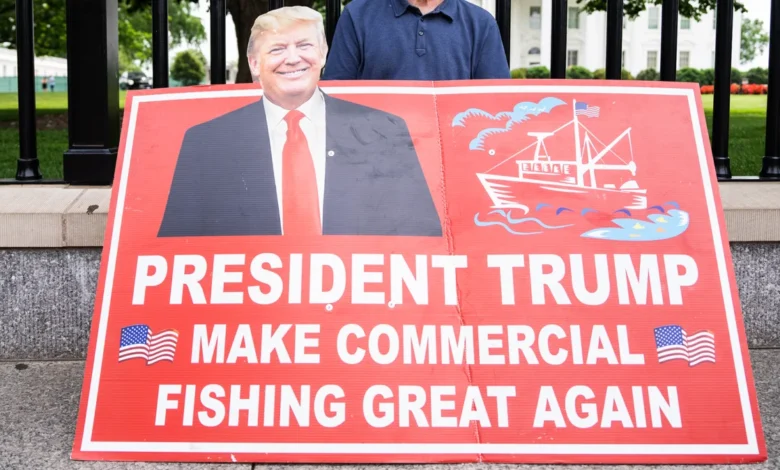
The Trump administration has initiated a sweeping series of executive actions aimed at dismantling long-standing conservation protections in some of the world’s most ecologically sensitive oceanic regions. By issuing a new executive proclamation, the administration seeks to open hundreds of thousands of square miles within national marine monuments to commercial fishing operations, signaling a major shift in federal ocean management policy. The directive specifically targets the Pacific and Atlantic oceans, focusing on the Mau and Ho‘omalu Zones of the Papahānaumokuākea Marine National Monument in Hawai‘i, the Rose Atoll Marine National Monument in American Samoa, and the Islands Unit of the Mariana Trench Marine National Monument. These areas, which collectively cover approximately half a million square miles, have been largely off-limits to industrial extraction for decades, serving as critical sanctuaries for thousands of marine species.
This policy shift is part of a broader "America First Fishing" initiative designed to revitalize the domestic seafood industry, which the administration estimates to be a $319 billion-dollar sector. President Trump has framed the move as a "massive win" for American fishermen, promising that the deregulation will generate millions of dollars in new business and lower costs for consumers. However, the move has ignited a fierce debate involving federal lawmakers, Indigenous leaders, environmental scientists, and legal experts who argue that the ecological and cultural costs could far outweigh any short-term economic gains.
A Chronology of Deregulation and Legal Challenges
The push to reopen marine monuments began in earnest in early 2025. In April of that year, the president signed an initial proclamation intended to open over 400,000 square miles of the Pacific Islands Heritage Marine National Monument to commercial activity. This was followed by an executive order aimed at boosting domestic seafood production through the streamlining of environmental reviews and the increasing of fishery quotas.
The implementation of these policies, however, has been met with immediate legal resistance. Shortly after the April 2025 proclamation, the National Marine Fisheries Service (NOAA Fisheries) informed permit holders that commercial fishing could resume in the Pacific Islands Heritage Marine National Monument. This window of activity lasted nearly four months until August 2025, when a federal district judge ruled in favor of Earthjustice, a nonprofit law firm. The court found that the administration had bypassed the mandatory federal rulemaking process, effectively nullifying the Fisheries Service’s authorization.
Undeterred by the court’s ruling, the administration adjusted its strategy. By February 2026, a new proclamation was issued targeting monuments in the Atlantic Ocean. This time, NOAA Fisheries initiated a formal rulemaking process to amend the regulations that previously prohibited commercial fishing. This procedural shift suggests a more calculated attempt by the administration to entrench these changes in federal law, making them harder to overturn in future administrations.
The Economic Rationale and Industry Support
Proponents of the deregulation argue that the restrictions placed on marine monuments by previous administrations were overly broad and lacked sufficient scientific or economic justification. Kitty Simonds, the executive director of the Western Pacific Regional Fishery Management Council, has been a vocal supporter of the move, emphasizing the need for American consumers to access fish caught by domestic fleets operating under U.S. labor and environmental laws.
Industry leaders, such as Eric Kingma of the Hawai‘i Longliners Association, contend that ocean conservation and commercial fishing are not mutually exclusive. Kingma has advocated for management decisions that support the long-term viability of the Hawai‘i longline fleet, arguing that fishermen should have the flexibility to follow migratory fish stocks into protected waters when conditions are favorable.
In the Commonwealth of the Northern Mariana Islands (CNMI), Representative Kimberlyn King-Hinds has expressed hope that the directive will stimulate local economies. During a signing ceremony in the Oval Office, King-Hinds emphasized that for island territories, ocean policy is inextricably linked to local survival. Her support is contingent on the federal government working with local officials to ensure that the increased fishing activity translates into local jobs, improved seafood infrastructure, and enhanced food security for the Commonwealth.
Ecological Risks and the Threat of Trophic Cascades
While the administration focuses on economic metrics, the scientific community is raising alarms about the potential for irreversible environmental damage. Marine monuments like Papahānaumokuākea are unique because they preserve entire ecosystems in a near-pristine state. These areas are home to more than 7,000 species, including the critically endangered Hawaiian monk seal, humpback whales, and green sea turtles.
Camilo Mora, a researcher at the University of Hawai‘i at Mānoa, has pointed out that only about 3 percent of U.S. waters are currently designated as highly protected areas where all extractive activity is banned. He argues that these small "savings accounts" of biodiversity are essential for the health of the broader ocean. Opening these zones to industrial fishing could trigger a "trophic cascade"—a biological phenomenon where the removal of top predators disrupts the entire food chain, leading to the collapse of prey populations and the degradation of the habitat.
Furthermore, scientists note that these monuments house some of the oldest living corals on Earth. These slow-growing organisms are highly vulnerable to the physical damage caused by commercial fishing gear. Once destroyed, these deep-sea coral forests, which provide essential habitat for countless marine organisms, can take centuries to recover, if they recover at all.
Cultural Heritage and Indigenous Perspectives
For many Native Hawaiians and other Pacific Islanders, the marine monuments represent more than just ecological preserves; they are sacred landscapes tied to ancestral history and spiritual practice. Kekuewa Kikiloi, a Native Hawaiian advocate and researcher, describes the northwestern Hawaiian islands as a place where the environment is so wild that it allows for a direct connection to ancestors. In Hawaiian oral traditions, these islands are considered the place where life began and where souls return after death.
The introduction of industrial-scale fishing into these waters is seen by many as a violation of Indigenous sovereignty and a threat to traditional ways of life. Under previous protections, Indigenous fishers retained the right to engage in subsistence fishing—a small-scale, sustainable practice that provides food for local communities without depleting stocks. By opening the waters to large commercial vessels, the administration is effectively placing traditional fishers in competition with corporate entities.
In American Samoa, the debate is equally complex. While the tuna industry is a cornerstone of the local economy, Congresswoman Uifa’atali Amata has expressed concerns about the specific impact on Rose Atoll. Despite her general support for fishing rights, Amata has maintained that Rose Atoll should remain off-limits to protect the cultural rights of the people of Manu’a. This highlights a growing tension between the desire for economic expansion and the need to respect the specific cultural geography of the Pacific.
The Legal Battle Over the Antiquities Act
At the heart of the ongoing dispute is a fundamental legal question regarding the scope of presidential power. The Antiquities Act of 1906 grants the president the authority to designate federal lands and waters as protected monuments to safeguard scientific, historic, or cultural resources. However, the Act does not explicitly state whether a president has the authority to revoke or significantly diminish the protections of a monument established by a predecessor.
Legal experts at Earthjustice and other environmental organizations argue that the power to manage federal lands rests with Congress, and that the Antiquities Act was intended to be a "one-way lever" for conservation. Several cases are currently pending in federal courts that could determine the future of the monument system. If the courts rule that a president can unilaterally strip protections from a monument, it could set a precedent that leaves all national monuments—on land and at sea—vulnerable to political shifts.
Broader Implications for Global Ocean Governance
The Trump administration’s move comes at a time when the international community is moving in the opposite direction. Under the United Nations’ "30 by 30" initiative, dozens of nations have committed to protecting 30 percent of the world’s oceans by the year 2030 to combat climate change and biodiversity loss. By reversing protections for nearly half a million square miles, the United States risks isolating itself from global conservation trends and undermining international efforts to manage shared migratory fish stocks.
The outcome of this policy shift will likely be determined by a combination of federal court rulings and the ability of the administration to finalize its rulemaking processes before any potential change in leadership. In the interim, the Pacific and Atlantic monuments remain a battleground where the competing interests of industrial growth, scientific preservation, and Indigenous rights continue to clash. For advocates like Kikiloi, the struggle is about preserving the "raw experience" of a wild environment that defines the identity of the people who have lived in harmony with it for generations. As the legal and political processes unfold, the health of the ocean’s most secluded sanctuaries hangs in the balance.
Related posts: