Exclusion of Native Hawaiians from Medicaid Work Requirement Exemptions Threatens Healthcare Access Across the Islands

WAIANAE, Hawaiʻi — A sweeping federal healthcare policy change is threatening to upend medical access for thousands of Native Hawaiians, exposing deep structural vulnerabilities in how the United States government classifies Indigenous populations. Under President Donald Trump’s signature "One Big Beautiful Bill Act," taking effect this coming January, adults enrolled in Medicaid across 43 states and the District of Columbia will be required to maintain a minimum of 80 hours per month of employment, schooling, vocational training, or volunteering to retain their health insurance coverage. While the legislation includes explicit exemptions for American Indians and Alaska Natives (AI/AN), Native Hawaiians have been left entirely out of these protective provisions, creating a regulatory gap that healthcare clinicians, regional administrators, and community advocates warn will drastically worsen existing health disparities.
The omission has drawn sharp criticism from local leadership, who view the policy not merely as an administrative oversight, but as the latest iteration of a systematic challenge to Native Hawaiian Indigenous status. For a marginalized population already grappling with depressed wages, geographic isolation, high rates of uninsurance, and deep-seated historical trauma, the imposition of rigid bureaucratic hurdles threatens to alienate patients from the healthcare system altogether. As health centers race to build infrastructure to assist patients with compliance, federal officials remain largely unresponsive to state appeals, highlighting an entrenched policy framework that heavily penalizes groups lacking formal tribal nation recognition.
Background and Regulatory Architecture of the Mandate
The implementation of work requirements within the Medicaid program marks a profound shift in the administration of public health insurance in the United States. Traditionally structured as a safety-net program designed to guarantee healthcare access for low-income individuals and families, Medicaid is undergoing a fundamental philosophical pivot under the current administration, linking basic healthcare coverage directly to economic productivity metrics.
Under the guidelines of the One Big Beautiful Bill Act, enrollees must systematically document their monthly participation in qualifying work or civic engagement activities. Failure to verify these hours through state-administered portals risks disenrollment, a process that health policy experts caution can trigger a cascade of adverse health outcomes, particularly for chronic disease management and preventative care.
The inclusion of exemptions for Native Americans and Alaska Natives is rooted in the unique legal relationship between the federal government and recognized tribal nations—a relationship established through the U.S. Constitution, federal statutes, treaties, and Supreme Court jurisprudence. The Indian Health Service (IHS), for instance, operates under a distinct federal trust responsibility to provide comprehensive healthcare to members of federally recognized tribes, and facilities operating under tribal or IHS jurisdiction receive full federal reimbursement for medical services.
However, Native Hawaiians occupy a uniquely anomalous position within federal Indian law and policy. While numerous federal statutes acknowledge Native Hawaiians as an Indigenous people with a distinct culture, language, and governance history, they are not categorized among the 575 federally recognized tribes. This lack of formal "tribal nation" status serves as the primary legal and administrative barrier cited by federal agencies when denying exemptions or parity in healthcare funding.
Demographics and the Geographic Spread of Native Hawaiians
Understanding the scope of the crisis requires examining the demographic distribution of the Native Hawaiian population. According to U.S. Census Bureau data, nearly 700,000 individuals identify as Native Hawaiian or Pacific Islander in the United States, with approximately 47% residing within the state of Hawaiʻi. The remaining majority live across the continental United States, with the largest diaspora communities concentrated in California, Washington, Nevada, Texas, and Oregon.
Within Hawaiʻi itself, approximately 390,000 residents rely on Medicaid for their health coverage. State health administrators report that roughly 15% of these Medicaid enrollees—translating to tens of thousands of individuals—identify as Native Hawaiian.
Meredith Nichols, Hawaiʻi’s Medicaid administrator, explained that state officials have repeatedly sought clarity and administrative relief from the Centers for Medicare & Medicaid Services (CMS) regarding the exclusion. In June, a delegation of Hawaiʻi health administrators traveled to Washington, D.C., to meet with Trump administration officials, pressing unsuccessfully for a statutory or regulatory exemption for Native Hawaiians. According to Nichols, federal officials indicated that any such exemption would require explicit congressional approval, pointing directly to the absence of federal tribal recognition as the immovable legal stumbling block.

"We know that when we’ve asked similar questions in the past, it all comes down to federal recognition," Nichols stated, emphasizing the systemic rigidity of federal administrative categories.
Chronology of Advocacy and Federal Engagement
The struggle to secure equitable healthcare policy and funding for Native Hawaiians is part of a decades-long legislative and legal timeline characterized by intermittent gains followed by administrative friction.
- January 1921: Congress passes the Hawaiian Homes Commission Act, placing over 200,000 acres of land into a trust for Hawaiian homesteads to rehabilitate a native population displaced by the 1893 illegal overthrow of the Hawaiian Kingdom, backed by the United States.
- March 2021: President Joe Biden signs the American Rescue Plan Act (ARPA) in response to the COVID-19 pandemic. The federal stimulus package temporarily includes a provision fully reimbursing Native Hawaiian health systems for Medicaid services for a two-year period, marking a rare moment of financial parity with IHS facilities. However, the qualifying centers were restricted strictly to Hawaiʻi, leaving continental diaspora populations unaddressed.
- June 2024–2025: Conservative legal organizations initiate a series of federal lawsuits targeting Native Hawaiian programs, challenging long-standing blood quantum requirements for homestead land distribution and attempting to dismantle scholarship programs earmarked for Native Hawaiians pursuing healthcare careers.
- June 2026: Hawaiʻi health administrators and representatives from 16 local health centers meet with CMS officials in Washington, D.C., to lobby for exemptions to the incoming Medicaid work requirements under the One Big Beautiful Bill Act. The administration declines to grant the request, citing the lack of federal tribal recognition.
- January 2027 (Anticipated): The One Big Beautiful Bill Act takes effect, imposing 80-hour monthly work mandates on adult Medicaid enrollees across 43 states and the District of Columbia, directly impacting thousands of unexempted Native Hawaiians.
Socioeconomic Realities and Local Health Disparities
On the ground in Hawaiʻi, healthcare providers and community leaders express profound anxiety over how the new mandates will collide with the harsh economic realities facing many Native Hawaiian families.
Data compiled by public health researchers demonstrates that Native Hawaiians experience persistent health disparities compared to the white population, including elevated risks during pregnancy, higher infant mortality rates, and significantly lower life expectancy—ranking second-lowest among ethnic groups in the state, just behind other Pacific Islanders.
Kapono Chong-Hanssen, medical director of Hoʻōla Lāhui Hawaiʻi, the Native Hawaiian healthcare system serving Kauaʻi and the privately owned island of Niʻihau—where the 170 full-time residents are predominantly Native Hawaiian—warns that the new policy will actively alienate vulnerable patients.
"It just flies in the face of everything that we’re trying to do," Chong-Hanssen noted. He explained that historical disenfranchisement has created deep-seated skepticism toward institutional systems among Native Hawaiians. When patients encounter insurmountable bureaucratic barriers—such as proving work hours while battling unstable employment or lack of childcare—they are statistically more likely to disengage entirely rather than navigate the appeals process.
The administrative burden is further compounded by geography. Specialized medical care in Hawaiʻi often requires inter-island travel. Medicaid currently covers transportation costs, such as round-trip flights between Kauaʻi and Oʻahu, which can easily cost hundreds of dollars. Losing Medicaid coverage due to a technicality in work-hour reporting would instantly cut off patients from essential specialty care.
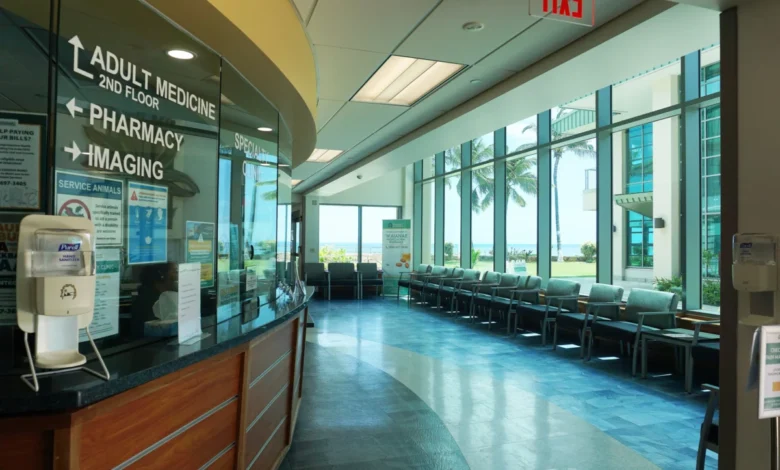
On the west side of Oʻahu, the Waianae Coast Comprehensive Health Center serves the island’s largest concentration of Native Hawaiians, operating in close proximity to four major Hawaiian homestead communities. Rich Bettini, CEO of the health center, and Leinaala Kanana, vice president of the facility, have been aggressively preparing for the fallout by setting up technological pods across their campus to help patients submit verification documents. However, they emphasize that systemic poverty remains the ultimate obstacle.
According to health center estimates, approximately 2,800 of their patients will be directly affected by the new work mandates, half of whom are Native Hawaiian. Bettini pointed out the stark chasm between the cost of living and local wages. While the annual cost of living for a family of four on Oʻahu exceeds $100,000, the average annual income of the center’s patients sits below $30,000.
Furthermore, high housing costs and depressed wages have driven a homelessness crisis across the islands. Native Hawaiians and Pacific Islanders comprise roughly 60% of Oʻahu’s homeless population. For individuals experiencing homelessness or severe housing instability, maintaining steady employment and bureaucratic compliance is nearly impossible, effectively locking them out of life-sustaining healthcare access.

Broader Political Landscape and Strategic Trade-Offs
The fight over Medicaid work requirements is unfolding amid a broader, multifaceted conservative push to dismantle race- and indigeneity-based programs nationwide. In the proposed federal budget for fiscal year 2027, the Trump administration has slated cuts to various Native Hawaiian programs, again justifying the reductions by citing the group’s lack of formal tribal status.
These budgetary pressures coincide with aggressive legal challenges spearheaded by conservative groups seeking to invalidate Native Hawaiian educational preferences, healthcare scholarships, and land trust protections under the Fourteenth Amendment’s equal protection clause. Organizations such as Papa Ola Lōkahi, the nonprofit oversight body for Native Hawaiian health systems, find themselves stretched thin, simultaneously defending existing legal protections in court while managing clinical operations.
Yet, within the Native Hawaiian advocacy community, opinions vary on where to deploy limited political capital. Keolamaikalani Dean, CEO of the King Lunalilo Trust, which provides care for Native Hawaiian elders, characterized the Medicaid work requirement policy as deeply flawed, but pragmatically suggested that advocates face "bigger fish to fry."
Dean argued that rather than expending energy fighting for narrow exemptions to a punitive work mandate, advocacy efforts would yield far greater long-term dividends by pursuing full Medicaid reimbursement parity for Native Hawaiian healthcare systems—mirroring the permanent funding structure enjoyed by the Indian Health Service. Securing such funding streams, he argued, would dramatically enhance the operational capacity of island healthcare providers to absorb the complex medical needs of their communities.
Federal Response and Legislative Outlook
Federal responses to the unfolding crisis have been tight-lipped. White House spokesperson Kush Desai did not respond to multiple requests for comment. Meanwhile, CMS spokesperson Timothy Foster acknowledged in a written statement that agency officials met with representatives from 16 health centers in Hawaiʻi to discuss upcoming Medicaid changes, but declined to answer specific inquiries regarding the exclusion of Native Hawaiians from the Indigenous exemption categories.
Congressional representatives are mobilizing in opposition. U.S. Representative Jill Tokuda (D-Hawaiʻi) sharply condemned the administration’s stance, framing the Medicaid work requirement exclusion not as an administrative oversight, but as part of an intentional strategy to weaken the legal standing of Native Hawaiians.
"These are not one-offs," Tokuda said. "This is a targeted, coordinated attack to undercut the Indigenous status of Native Hawaiians."
As the January implementation date approaches, healthcare providers across the Hawaiian archipelago are bracing for an administrative shockwave. Clinics are racing to establish digital assistance kiosks, train outreach workers, and educate patients on reporting compliance. However, without legislative intervention from Congress or administrative flexibility from federal health agencies, thousands of low-income Native Hawaiians face the imminent prospect of losing their health coverage—deepening historical inequities and further straining an already fragile regional healthcare infrastructure.