Judi Dench Says Panned ‘Cats’ Film Was a ‘Waste’ of Andrew Lloyd Webber’s ‘Goodwill and Talent’

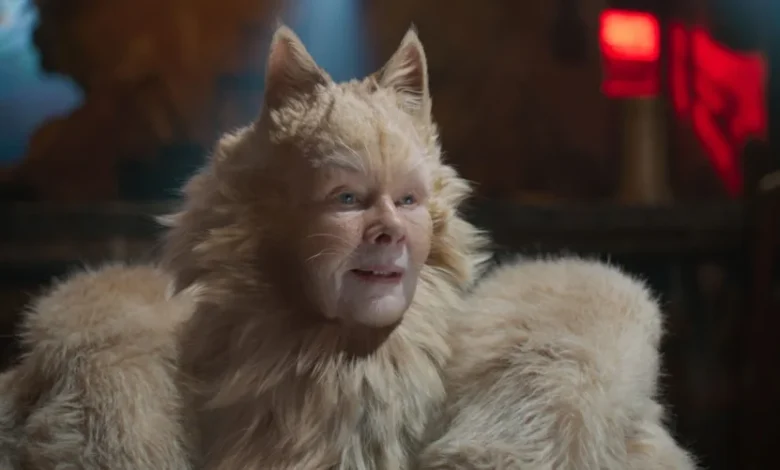
The 2019 big-screen adaptation of Andrew Lloyd Webber’s iconic stage musical Cats stands as one of the most infamous case studies in modern cinematic history. Directed by Tom Hooper, who had previously achieved critical and commercial acclaim with The King’s Speech and Les Misérables, the film was positioned as a holiday blockbuster. Instead, it became a lightning rod for ridicule, a box office bomb, and a cautionary tale regarding the limitations of digital technology in live-action storytelling. Years after the film’s release, Dame Judi Dench—who portrayed the venerable Old Deuteronomy—has finally offered her perspective on the project in her upcoming memoir, Is It Too Late to Make a Run For It?, set for release on November 3.
A Legacy of High Expectations and Low Returns
When the film adaptation of Cats was first announced, industry expectations were remarkably high. The stage musical had run for 18 years on Broadway and 21 years in London’s West End, cementing itself as a global cultural phenomenon. With an A-list ensemble cast that included Judi Dench, Idris Elba, Ian McKellen, Taylor Swift, Jennifer Hudson, and James Corden, the production seemed destined for awards-season recognition.
However, the reality of the production proved far more complex. The film utilized "digital fur technology," a post-production process designed to blend human movement with feline aesthetics. Upon the release of the first trailer, the internet response was immediate and largely negative. Audiences and critics alike were unsettled by the uncanny valley effect created by the character designs. This initial skepticism hardened into outright derision following the film’s December 2019 premiere. Critics blasted the visual effects, the disjointed narrative, and the bizarre tonal shifts, ultimately leading to a 20% approval rating on Rotten Tomatoes.
Judi Dench’s Reflections on the Creative Process
In her memoir, Dench addresses the backlash with a blend of professional grace and personal disappointment. While she acknowledges the hostile reception the film received, she defends the collaborative spirit that governed the production. "Oh God, I can’t bear it – and [Lloyd Webber] had waited so long for it to be made," Dench writes. "What a waste of all that goodwill and talent. I understand the critics were rather hostile to the film. I never saw the final cut so I can’t judge."
Dench’s admission that she never viewed the final version of the film is a significant detail, highlighting the often-disconnected nature of large-scale studio productions where actors may finish their work months before the visual effects are finalized. Despite the negative reviews—and her own Razzie Award nomination for Worst Supporting Actress—Dench emphasizes the inherent risks of the creative process. "Nobody sets out to give a poor performance or make a bad film," she notes. "You do your best, offer something up and hope that people will get on board and join the party."
The Anatomy of a Flop: Financial and Critical Impact
The financial fallout of Cats was swift and severe. Produced on a budget estimated at $95 million—excluding substantial marketing costs—the film earned only $75.5 million globally. When factoring in theater exhibitors’ shares and distribution costs, industry analysts estimated that Universal Pictures lost between $71 million and $113 million on the project.
The film’s failure triggered a rare instance of studio intervention; days after the theatrical release, Universal sent an updated version of the film to cinemas with "improved visual effects," an unprecedented move for a wide-release title. This decision underscored the panic within the studio as the film’s reputation plummeted in real-time. The production’s failure was further compounded by a crowded holiday box office, where it struggled to compete against juggernauts like Star Wars: The Rise of Skywalker.
The Broader Industry Context
Beyond the specific failures of Cats, Dench uses the experience to offer a broader meditation on the unpredictability of filmmaking. "It’s a miracle that anything is ever made – films, plays, TV – let alone turn out to be a success, because there are so many moving parts," she writes. She suggests that failures are rarely the result of a single "villain" or a lack of effort, but rather a misalignment of variables.
"Sometimes things just don’t work out: the timing’s wrong, the cast don’t gel, the elements don’t coalesce," Dench observes. "But people’s intentions are mostly honorable. There were no villains in the making of Cats. And if something isn’t a success, then there are always things you can say you’ve learnt."
This perspective is shared by many industry veterans who understand that the distance between a successful project and a failed one is often measured in nuances of tone, pacing, and editorial judgment—elements that are often finalized long after the actors have left the set.
Looking Back: Why Cats Still Matters
The enduring fascination with the failure of Cats serves as a vital case study for film schools and studio executives alike. It illustrates the dangers of relying heavily on experimental CGI to solve fundamental narrative issues. The "digital fur technology" was meant to bridge the gap between human actors and feline characters, but it instead created a visceral disconnection for the audience.
Furthermore, the film’s failure marked a turning point in how studios approach big-budget musical adaptations. The subsequent success of films like West Side Story and the cultural impact of live-broadcast events have shown that audiences respond more favorably to grounded, tangible production design rather than over-reliance on motion-capture technology.
The Aftermath and Future Implications
In the years since the release, most of the cast have moved on to successful projects, though the "Cats" experience remains a perennial topic in interviews. James Corden, who faced significant criticism for his performance, famously joked about the film during his tenure on The Late Late Show, acknowledging the cultural consensus regarding the movie. Andrew Lloyd Webber, for his part, has been more candid, describing the film as a failure to understand the essence of his music, noting that the production changes made by the director did not align with the spirit of the original stage production.
Dench’s decision to include these reflections in her memoir suggests that while the film was a professional setback, it remains a part of a long and storied career. By framing the failure as a learning opportunity rather than a source of shame, Dench reinforces her reputation for integrity. As she prepares for the release of her memoir, her words serve as a reminder that the creative industry is a volatile landscape where even the most seasoned legends are subject to the whims of production cycles, changing technology, and audience expectations.
As Hollywood continues to grapple with the pressures of blockbuster filmmaking, the story of Cats—and the honest reflection provided by one of its stars—remains a poignant reminder of the fragility of the cinematic art form. It reinforces the reality that, regardless of a star-studded cast or a massive budget, the alchemy of film is unpredictable, and success is never guaranteed. Dench’s forthcoming book promises to offer more than just anecdotes; it provides a mature, thoughtful look at the realities of a life spent in the public eye, where every triumph is balanced by the occasional, very public failure.