Archbishop Fulton Sheen Officially Beatified in St. Louis as Conservative Commentators Weigh in on His Modern Relevance

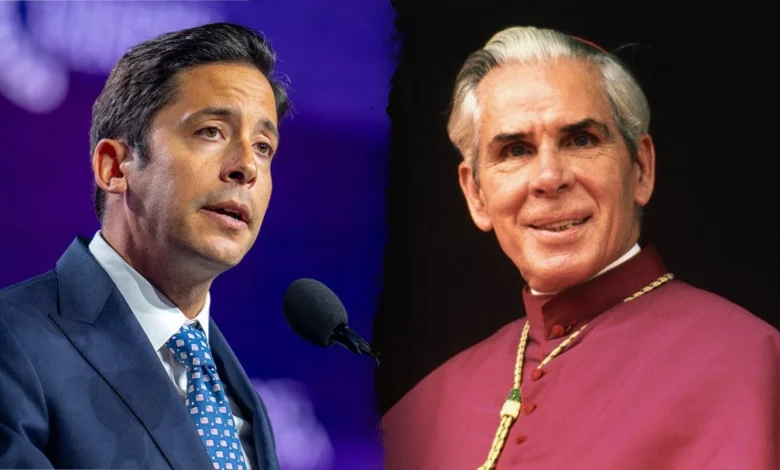
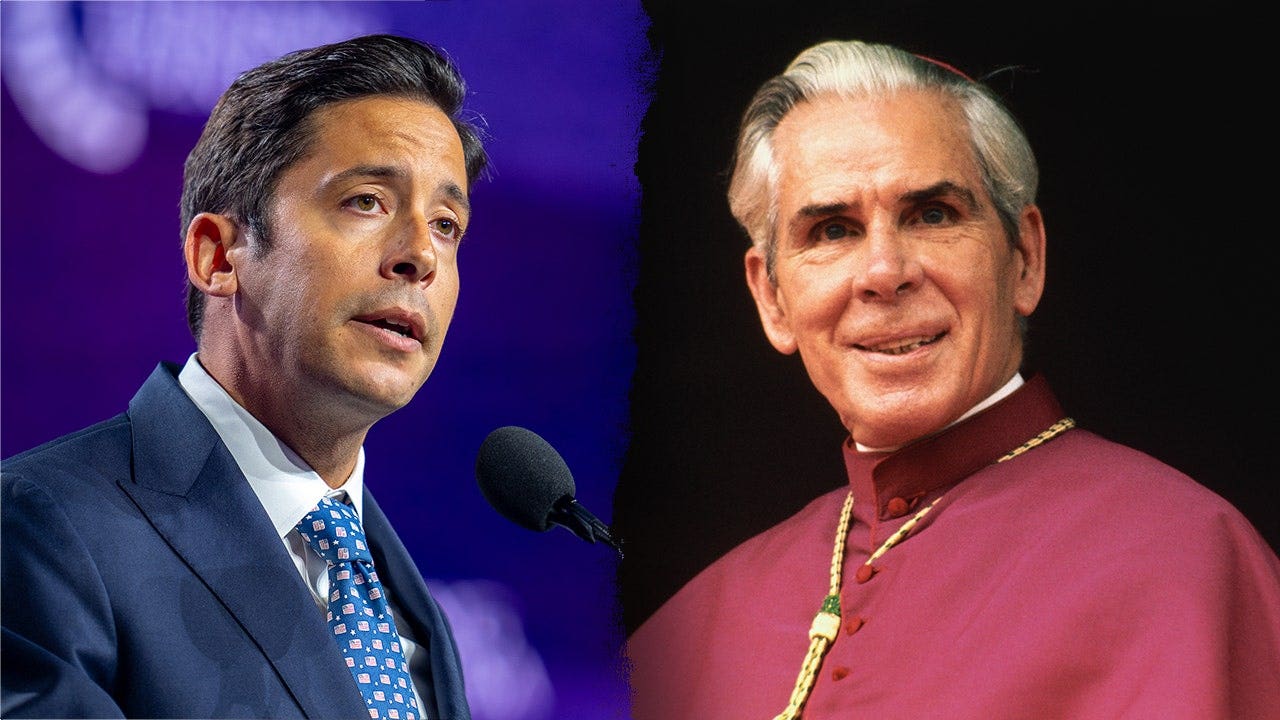
Decades after captivating tens of millions of American television viewers with little more than a chalkboard, a cape, and a profound message of faith, morality, and anti-communism, Archbishop Fulton J. Sheen has taken a monumental step toward Roman Catholic sainthood. In a historic ceremony held Thursday at The Dome at America’s Center in St. Louis, Sheen was formally beatified by the Roman Catholic Church, becoming the first American-born bishop to receive the designation.
The solemn yet celebratory event drew thousands of the faithful, alongside high-ranking church officials and a formal message from the White House, highlighting the enduring legacy of a pioneering broadcaster who competed directly with mid-century entertainment giants like Milton Berle and Frank Sinatra. However, as modern religious and political landscapes shift, the beatification has also sparked widespread commentary regarding how Sheen’s unapologetic theology would be received in contemporary American culture.
A Historic Beatification Ceremony in St. Louis
The beatification Mass was a culmination of a decades-long process that began with the opening of Sheen’s cause for sainthood in Peoria, Illinois, in 2002. Cardinal Luis Antonio Tagle, representing Pope Leo XIV at the ceremony, read an apostolic letter highlighting Sheen’s relentless dedication to spreading the Gospel through emerging mass media technologies.
A central and emotional moment of the ceremony involved the presentation of a reliquary carrying a relic of the newly beatified archbishop. The reliquary was carried by James Engstrom, a 16-year-old whose miraculous survival serves as the foundation for Sheen’s beatification. Born in 2010 without a heartbeat or respiration, Engstrom remained without vital signs for 61 minutes before his mother, Bonnie Engstrom, fervently prayed for the intercession of Fulton Sheen. The child ultimately revived and achieved full health. Following rigorous medical and theological investigations, Pope Francis officially approved the miracle in 2019, removing the final major hurdle toward Thursday’s beatification.
President Donald Trump and First Lady Melania Trump issued a presidential message honoring the occasion. The White House praised Sheen’s historic contributions, emphasizing his ability to articulate Christian teachings during an era defined by global ideological conflict.
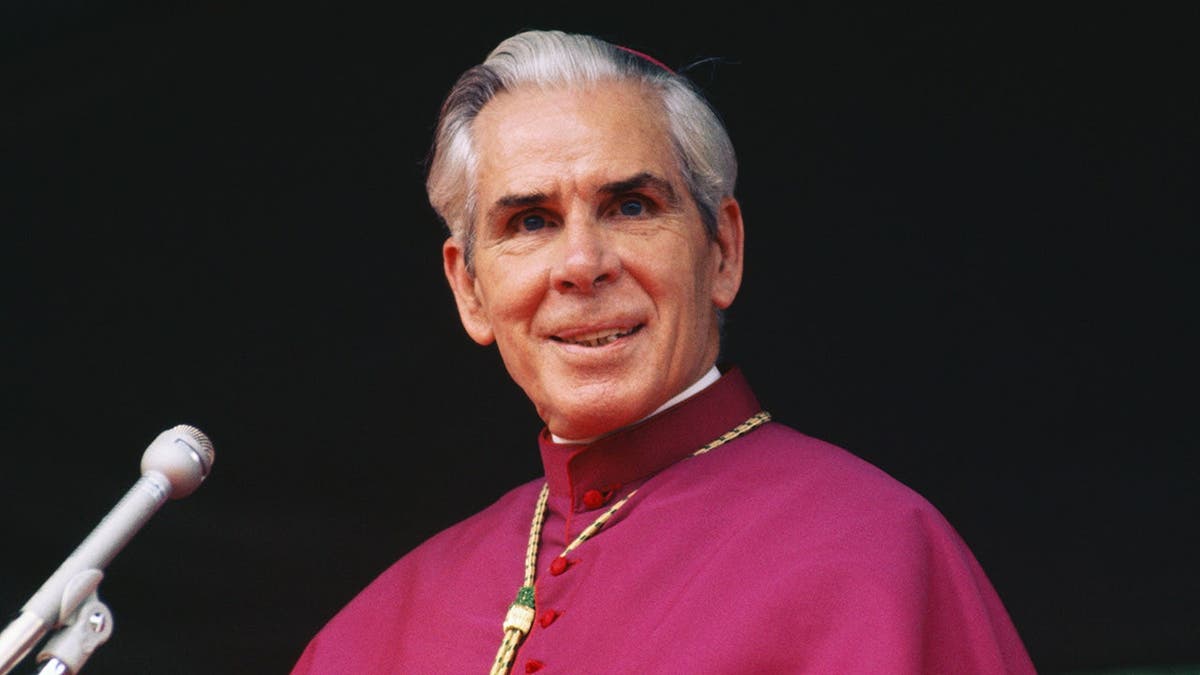
The Pioneer of Religious Broadcasting
Long before the advent of podcasts, live-streaming, and targeted social media algorithms, Archbishop Sheen mastered the art of electronic mass communication. His radio program, "The Catholic Hour," regularly reached an audience exceeding 4 million listeners. When he transitioned to television with his groundbreaking program "Life Is Worth Living," the format was deceptively simple: Sheen stood before a blackboard in full clerical vestments, seamlessly blending rigorous theology with sharp humor, storytelling, and an unwavering defense of human dignity.
At the height of his television success, "Life Is Worth Living" drew an estimated 30 million weekly viewers. His cultural footprint was undeniable; he graced the cover of Time magazine and earned an Emmy Award for Outstanding Television Personality in 1952. His reach was so pervasive that even a young boy growing up in America—who would decades later become Pope Leo XIV—recalled encountering Sheen’s televised evangelization.
Conservative media commentator Michael Knowles, reflecting on Sheen’s legacy in interviews surrounding the beatification, noted that Sheen fundamentally understood the mechanics of mass communication.
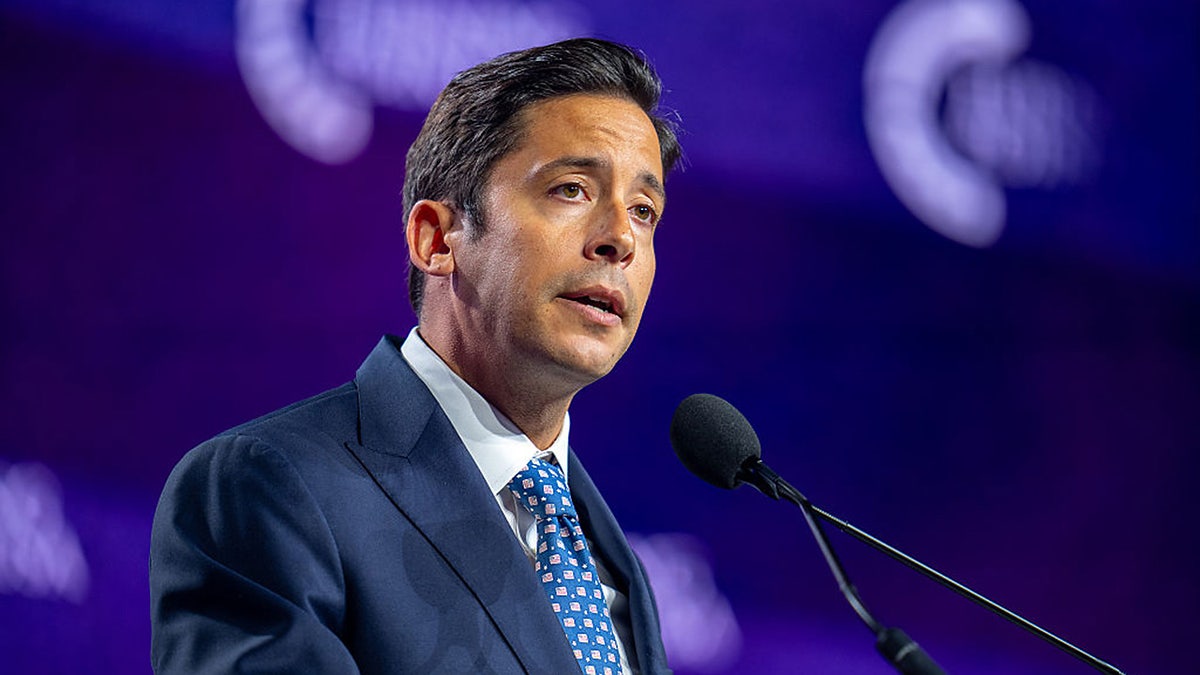
"He was the very first televangelist," Knowles told digital media outlets. "He went where the people were."
Modern Parallels and Cultural Controversy
Despite his mainstream popularity in the 1950s and 1960s, Knowles argued that Sheen’s uncompromising stance on traditional Catholic doctrine, natural law, and communism would likely subject him to severe scrutiny in the modern sociopolitical climate. Knowles suggested that if Sheen were to deliver his classic broadcasts today, critics would swiftly label him a "far-right extremist" before he could finish his opening sentence.
"He wouldn’t need to change his message," Knowles said, emphasizing that Sheen’s adherence to traditional teachings regarding marriage, chastity, and human nature directly challenge prevailing secular norms. When asked whether his Catholicism, his anti-communism, or his steadfast refusal to apologize for either would prompt the harshest backlash, Knowles maintained that the three components were inextricably linked, describing them as instances of Sheen’s "absolutely unapologetic apologetics."

Sheen’s vocal opposition to communism formed a cornerstone of his public ministry. During the Cold War, he repeatedly warned against the spiritual and societal perils of Marxist-Leninist ideology, framing the ideological struggle not merely as a political conflict, but as a battle for the human soul. The White House message echoed this historical context, noting that Sheen continuously warned Americans against destructive cultural impulses. In a speech from the 1960s cited by the administration, Sheen cautioned against societal nihilism, asking audiences who sought to tear down foundational institutions: "Our nation is too full of those that are crying, ‘Down’… Can you build anything down?"
Knowles argued that Sheen’s enduring warnings continue to resonate because modern political movements frequently repeat historical errors regarding human nature. By ignoring the theological concept of original sin, Knowles suggested, utopian political systems inevitably collapse under the weight of their own unrealistic premises.
Chronology of Archbishop Fulton J. Sheen’s Life and Legacy
- May 8, 1895: Peter Fulton Sheen is born in El Paso, Illinois.
- September 20, 1919: Ordained a Catholic priest for the Diocese of Peoria.
- 1930: Launches "The Catholic Hour" radio broadcast, eventually reaching millions of weekly listeners.
- 1951: Begins hosting the television program "Life Is Worth Living," winning an Emmy Award in 1952.
- 1962–1965: Participates in the Second Vatican Council, where he interacts with future pontiffs Karol Wojtyla (Pope John Paul II) and Joseph Ratzinger (Pope Benedict XVI).
- June 11, 1969: Appointed Archbishop of Newport, Wales, by Pope Paul VI, a title he held briefly before resigning due to health concerns.
- October 2, 1979: Meets Pope John Paul II during the pontiff’s historic visit to St. Patrick’s Cathedral in New York City.
- December 9, 1979: Passes away at his apartment in New York City at the age of 84.
- 2002: The official cause for Sheen’s canonization is opened in the Diocese of Peoria, Illinois.
- 2010: Miraculous revival of stillborn infant James Engstrom, later attributed to Sheen’s intercession.
- July 2019: Pope Francis officially approves the miracle attributed to Sheen, clearing the path for beatification.
- September 2026: Archbishop Fulton Sheen is formally beatified during a historic Mass in St. Louis, Missouri.
The Path to Sainthood and Final Legacy
While television ratings, cultural commentary, and immense public visibility defined much of Sheen’s public life, church officials have consistently emphasized that his path to beatification rests primarily on his profound spiritual discipline and the rigorous validation of a miracle.
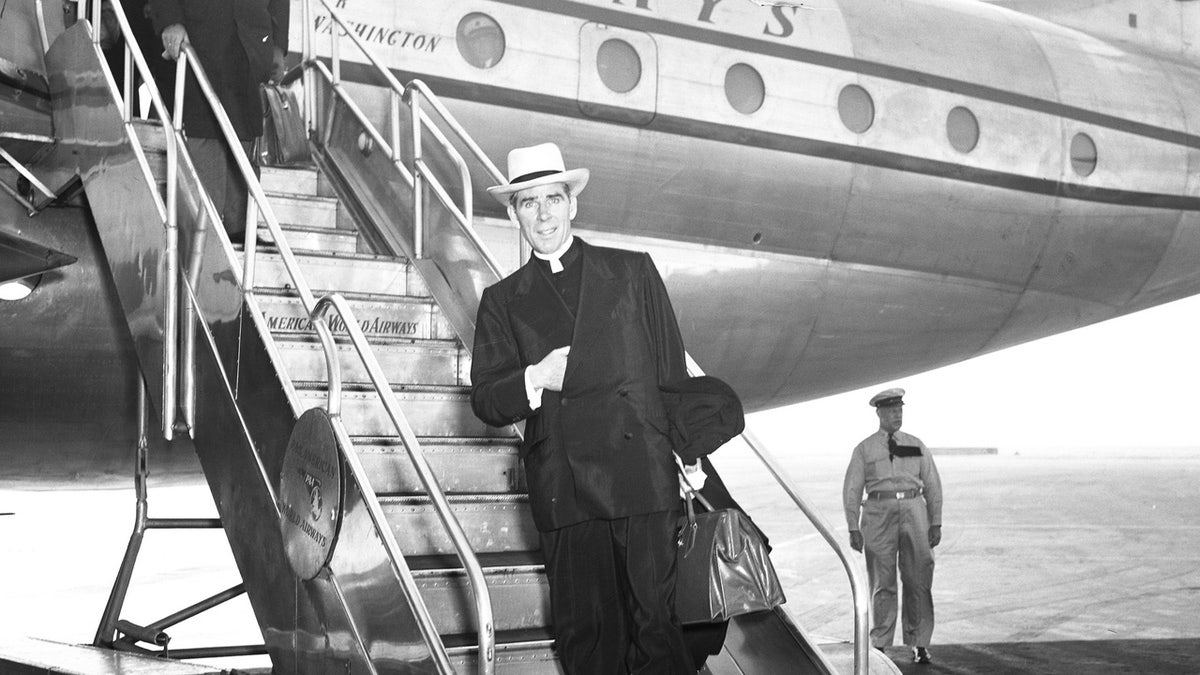
Behind the public persona of the Emmy-winning broadcaster was a priest who maintained a strict daily Holy Hour before the Eucharist, a devotional practice he famously described as "the hour that makes my day." Those close to his historical record note that his effectiveness as an evangelist stemmed from a deep personal piety rather than a desire for celebrity.
As celebrations in St. Louis conclude, the legacy of Archbishop Fulton Sheen offers a complex study in religious communication. Analysts note that while the media landscape has evolved radically from the era of black-and-white television sets and glowing vacuum tubes, the core tension between traditional faith and secular culture remains as potent today as it was seven decades ago. Whether viewed through the lens of media history, geopolitical anti-communism, or spiritual devotion, Sheen’s elevation to the cusp of sainthood cements his status as one of the most influential religious figures in modern American history.