The Evolution of the Private Island Strategy MSC Group Expands Bahamian Footprint with Sandy Cay and Ocean Cay Enhancements

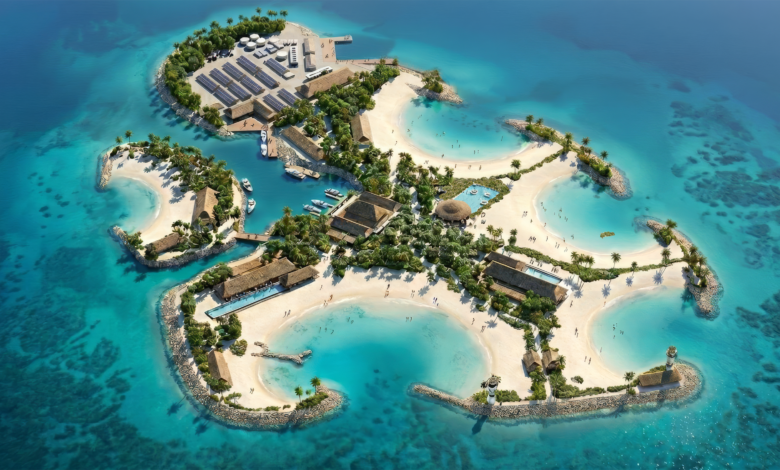
The global cruise industry is undergoing a fundamental shift in how it approaches destination management, moving away from traditional port-of-call models toward highly controlled, vertically integrated private experiences. As the sector prepares to welcome an estimated 37 million passengers in 2026, the strategic importance of private island destinations has never been more pronounced. MSC Group’s Cruise Division, which encompasses both the contemporary MSC Cruises brand and the luxury-focused Explora Journeys, is currently spearheading this evolution through a massive expansion of its footprint in the Bahamas. By developing the new Sandy Cay and significantly upgrading the existing Ocean Cay MSC Marine Reserve, the company is signaling a long-term commitment to "turnkey" tourism—a model where the cruise line manages every touchpoint of the guest journey from the moment they board the ship to the moment they step onto the sand.
This expansion comes at a time of unprecedented growth for the Caribbean cruise market. In 2025, the Bahamas welcomed a record-breaking 12.5 million visitors, with cruise passengers accounting for a staggering 87% of those arrivals. This 11.4% year-on-year increase highlights the region’s dominance as the primary theater for cruise operations. However, with record volume comes the challenge of record expectations. Modern travelers, particularly in the premium and luxury segments, are increasingly seeking "low-friction" experiences that minimize the logistical hurdles of traditional sightseeing in favor of curated, exclusive environments.
The Strategic Shift Toward Operational Sovereignty
The decision to expand into Sandy Cay—a new destination located just a short boat ride from the established Ocean Cay—is rooted in the concept of operational control. In traditional ports, cruise lines are subject to local infrastructure limitations, varying service standards, and the unpredictability of third-party vendors. By contrast, a private island allows an operator like MSC to mirror its onboard service levels on land.
Rubén Rodríguez, CEO of MSC Group’s North American Cruise Division, emphasizes that these destinations allow for a fully integrated experience. This "integrated experience" refers to the seamless transition of dining, entertainment, and service protocols from the vessel to the shore. When a guest steps off an MSC ship onto Ocean Cay or the forthcoming Sandy Cay, they are not entering a different ecosystem; they are entering a physical extension of the ship’s brand promise. This level of control is essential for managing guest flow and ensuring that the high-capacity nature of modern cruise ships does not lead to overcrowding or diminished service quality on land.
Sandy Cay: A New Paradigm in Secluded Luxury
Previously known by the internal working title "Little Cay," the officially named Sandy Cay is scheduled to open its shores to guests in 2028. While Ocean Cay was designed as a sprawling marine reserve with a focus on restoration and nature-led exploration, Sandy Cay is being positioned as a more intimate, luxury-oriented counterpart.
The geography of Sandy Cay is a testament to modern engineering and environmental reclamation. The island is being constructed using natural sandbank materials, specifically aragonite sand. Aragonite is prized in the Caribbean for its brilliant white color and fine texture, and it plays a functional role in the local ecosystem. By turning these natural sandbank materials into a stable island—roughly one-third the size of the 95-acre Ocean Cay—MSC is creating a destination that feels organic yet is purpose-built for high-end hospitality.
The development of Sandy Cay reflects a broader industry trend toward demographic segmentation. As cruise lines build larger ships with diverse passenger profiles, they must offer onshore destinations that cater to different needs. Sandy Cay is designed to satisfy the "quiet luxury" segment—travelers who value privacy, tranquil atmospheres, and a deep connection to the environment. Its proximity to Miami (just 65 miles away) and Port Canaveral makes it an ideal addition to short-haul Caribbean itineraries, providing a high-end escape that requires minimal travel time.
Reinvesting in the Anchor: The Transformation of Ocean Cay
While Sandy Cay represents the future of MSC’s luxury offering, the company is not neglecting its original Bahamian crown jewel. Ocean Cay MSC Marine Reserve, which opened in late 2019, is currently undergoing a significant round of upgrades scheduled for completion in late 2027. This reinvestment is a direct response to the high guest satisfaction scores the island has received since its debut.
The transformation of Ocean Cay is one of the most ambitious environmental projects in the cruise industry. The site was once a barren industrial sand excavation point. MSC spent years removing hundreds of tons of scrap metal and debris to restore the seabed and land. Today, it is a flourishing marine reserve. The upcoming enhancements aim to diversify the guest experience while maintaining this conservation-first identity.
Key developments in the 2027 upgrade cycle include:
- Expanded Dining Infrastructure: The number of dining venues will increase from three to seven, including new specialized restaurants and expanded food markets to reduce wait times and offer more variety.
- The Paradise Sands Experience: A dedicated adults-only beach area designed to provide a quieter alternative to the more active zones of the island.
- Seakers Cove Redesign: To better serve the family demographic, Seakers Cove will be overhauled to include a new splash pad, a playground, a ropes course, and a dedicated family lagoon.
- Enhanced Marine Conservation Center: In collaboration with the MSC Foundation, a new center will be established to educate guests on coral restoration and ocean health, bridging the gap between leisure and environmental stewardship.
A Chronology of MSC’s Bahamian Expansion
To understand the scale of MSC’s commitment to the region, it is necessary to look at the timeline of its development in the Bahamas:
- 2015: MSC Cruises signs a 100-year lease agreement with the Bahamian government to transform a former industrial site into a marine reserve.
- 2016–2019: Extensive environmental remediation takes place, including the relocation of coral colonies and the planting of 75,000 indigenous trees and shrubs.
- December 2019: Ocean Cay MSC Marine Reserve officially opens to its first guests.
- 2020–2023: Despite the global pandemic, MSC continues its conservation work, establishing the Super Coral Programme to research climate-resilient coral species.
- 2024: Plans for "Little Cay" are formalized as the company sees record demand for private island stops.
- Late 2027: Scheduled completion of the major upgrades to Ocean Cay’s guest facilities.
- 2028: Official opening of Sandy Cay, creating a dual-island ecosystem for MSC guests in the Bahamas.
Industry Context: The Private Island Arms Race
MSC’s strategy does not exist in a vacuum. The cruise industry is currently in the midst of a "private island arms race." Competitors such as Royal Caribbean have seen massive success with "Perfect Day at CocoCay," which leans heavily into high-energy waterparks and thrill-seeking attractions. Disney Cruise Line recently opened Lookout Cay at Lighthouse Point, emphasizing Bahamian culture and artistry.
MSC’s approach distinguishes itself by leaning into the "Marine Reserve" concept. By focusing on conservation and the natural beauty of the aragonite sands, MSC is targeting a traveler who may find the "theme park" style of other private islands overwhelming. The addition of Sandy Cay allows MSC to further differentiate its brands. While MSC Cruises’ main fleet will continue to utilize the amenities of Ocean Cay, the luxury-tier Explora Journeys and the "ship-within-a-ship" MSC Yacht Club guests will likely find a more tailored home at the secluded Sandy Cay.
Economic and Environmental Implications
The expansion of these private destinations has profound implications for the Bahamian economy. With 87% of visitors arriving via cruise ships, the partnership between the government and cruise lines is a cornerstone of national GDP. MSC’s investments provide not only direct employment for Bahamian nationals in hospitality and island management but also long-term environmental benefits through the restoration of degraded marine habitats.
From an environmental standpoint, the use of aragonite sand and the focus on coral restoration set a benchmark for sustainable coastal development. The MSC Foundation’s work on Ocean Cay is being watched by marine biologists globally as a case study in how corporate-funded conservation can yield measurable results in biodiversity recovery.
Conclusion: The Future of the Guest Journey
As MSC Group’s Cruise Division moves toward 2028, the dual-island strategy in the Bahamas represents a sophisticated maturation of the cruise product. No longer content with merely transporting guests between existing destinations, cruise lines are now the architects of the destinations themselves.
By segmenting the experience—offering family-focused adventure at the redesigned Seakers Cove, nature-focused relaxation at Ocean Cay, and secluded elegance at Sandy Cay—MSC is ensuring it can capture a wide spectrum of the market. In an era where "luxury" is increasingly defined by the absence of stress and the presence of exclusive access, these private islands are becoming the most valuable assets in a cruise line’s portfolio. The evolution from a sand excavation site to a multi-island luxury ecosystem is not just a construction project; it is a fundamental redesign of the Caribbean cruise experience.