Donald Trump’s Enduring Influence Reshapes Republican Primaries, Signaling a Powerful Grip on the Party’s Future

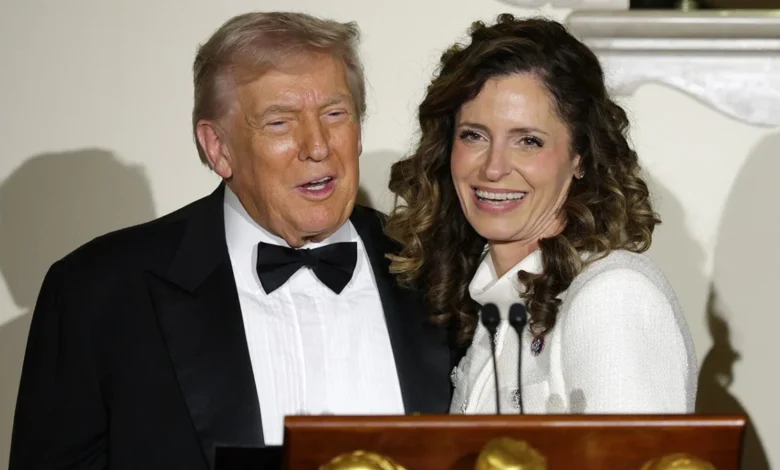
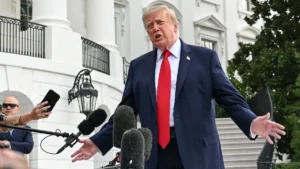
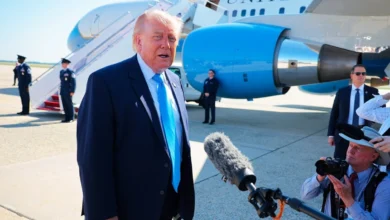
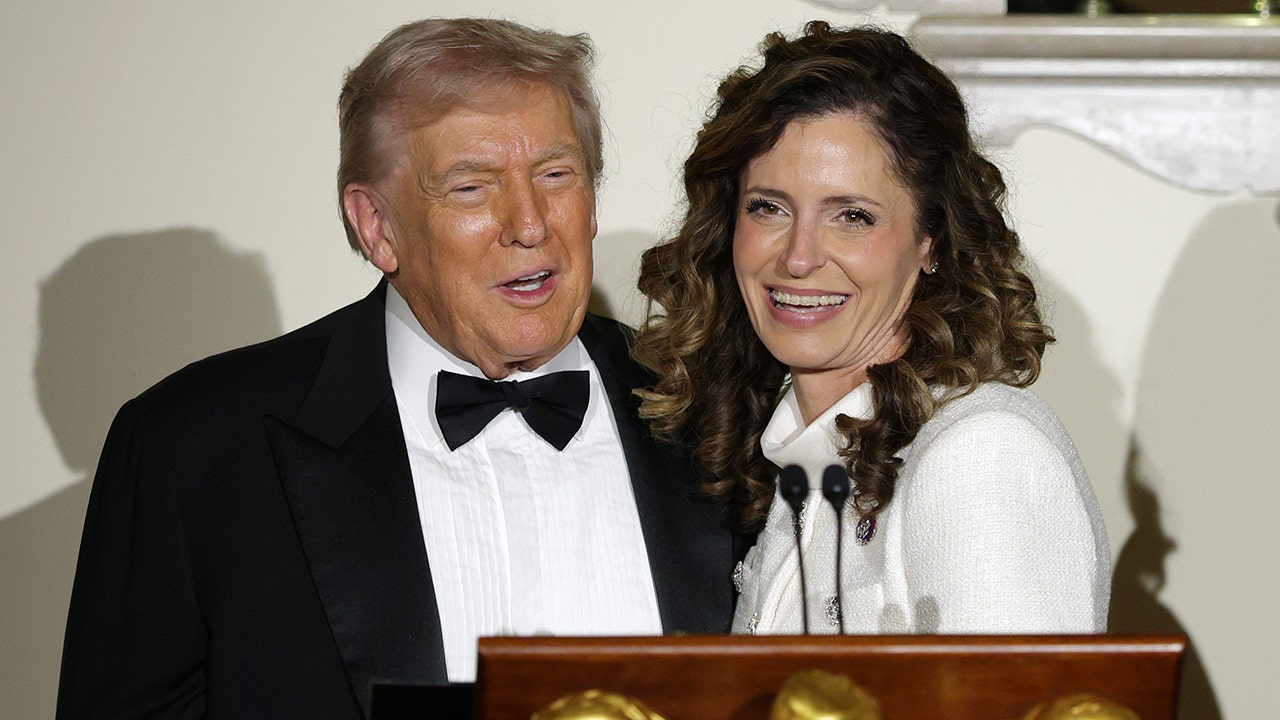
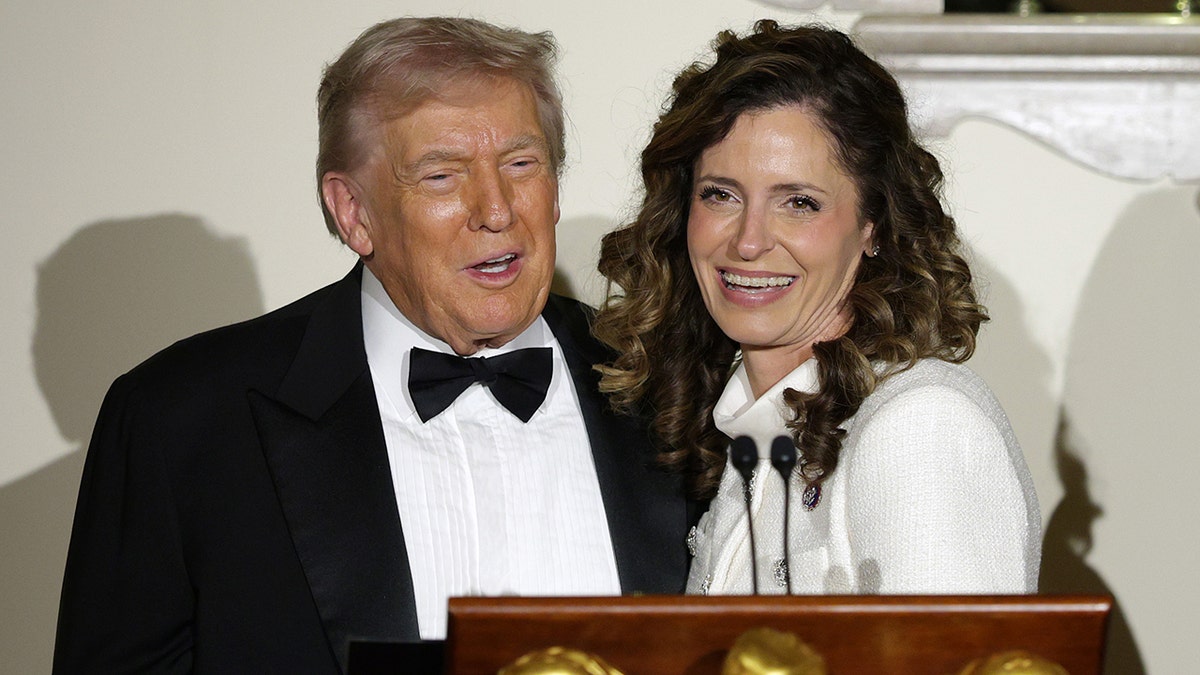
The recent Republican Senate runoff election in Louisiana, where Trump-backed Rep. Julia Letlow decisively defeated state Treasurer John Fleming, has once again underscored the formidable and, at times, unyielding power of former President Donald Trump’s endorsement within the Republican Party. While not a candidate on the ballot, Trump emerged as a significant victor, with Letlow’s triumph seen as another affirmation of his kingmaker status as he endeavors to populate the halls of Congress with loyalists for the remainder of his term. This outcome serves as a potent reminder of the gravitational pull Trump continues to exert over the GOP’s primary electorate, a force that has demonstrably altered political careers and trajectories across several states.
The Louisiana Showdown: A Test of Loyalty and Influence
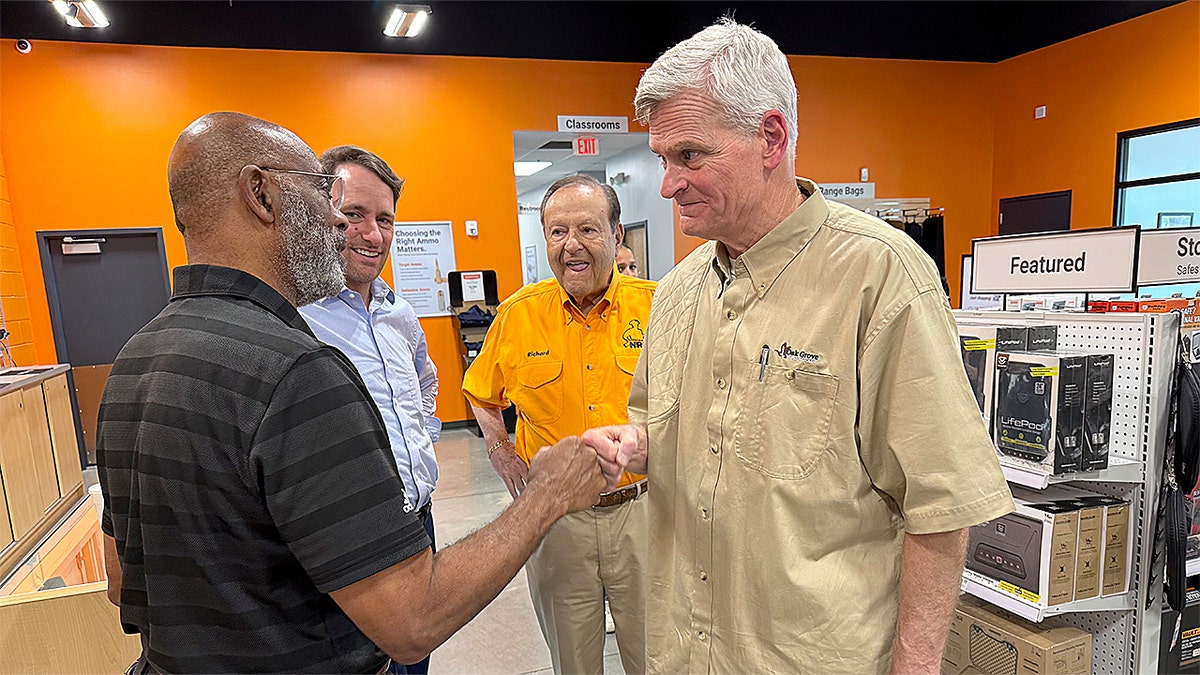
The Louisiana contest was not merely a race for a Senate seat; it was a high-stakes proxy battle, particularly notable for the prior defeat of incumbent Senator Bill Cassidy. Just six weeks before the runoff, Cassidy, a Republican senator who had voted to convict Trump in his second impeachment trial, failed to secure renomination, finishing a distant third in the primary. This loss marked a rare occurrence: Cassidy became the first elected Republican senator since Indiana’s Richard Lugar in 2012 to lose a bid for renomination. His ousting was a direct consequence of Trump’s targeted opposition, a clear message sent to any Republican perceived as disloyal. Trump, celebrating Cassidy’s political demise, took to social media to declare, "it’s nice to see that his political career is OVER!"
Cassidy, in a concession speech delivered to his supporters, offered a thinly veiled rebuke of Trump’s post-election rhetoric. "When you participate in democracy, sometimes it doesn’t turn out the way you want it to," Cassidy stated, adding pointedly, "But you don’t pout, you don’t whine. You don’t claim the election was stolen… You don’t manufacture some excuse." These remarks highlight the deep ideological and personal fissures that continue to divide elements of the Republican Party, even as Trump’s influence remains paramount among the primary base.
Julia Letlow, a rising star in Louisiana politics, garnered Trump’s endorsement even before officially entering the Senate race in January. Her background is marked by personal tragedy and political resilience; she first won her congressional seat in a 2021 special election after her husband, Luke Letlow, tragically passed away from COVID-19 just days before he was to be sworn into the U.S. House following his 2020 election victory. Throughout her Senate campaign, Letlow prominently featured her endorsement from Trump, leveraging it as a key differentiator. She also received backing from Louisiana Governor Jeff Landry, a staunch Trump ally, further solidifying her position within the pro-Trump wing of the state’s GOP.
Her opponent in the runoff, John Fleming, brought his own conservative credentials to the table, having served eight years in Congress and later as a White House deputy chief of staff during Trump’s first term. Fleming positioned himself as the most conservative candidate in the primary field, seeking to appeal to the same base that often responds to Trump’s message. However, the former president’s direct endorsement of Letlow proved to be the decisive factor, demonstrating that personal loyalty to Trump often outweighs even a strong conservative record or past association with his administration. Letlow’s victory places her as the clear frontrunner in the general election against either farmer Jamie Davis or Navy veteran Gary Crockett, who are competing in the Democratic Party runoff, in a solidly red Gulf Coast state.
A Broader Pattern: The Endorsement’s Brute Force
The Louisiana outcome is far from an isolated incident. Over the past two months, Trump’s endorsement power has been on full display in Republican primaries across the nation, consistently propelling his chosen candidates to victory and, in several instances, unseating incumbents he had targeted for their perceived disloyalty. This trend has been observed in states like Indiana, Kentucky, and Texas, where Trump’s preferred candidates successfully navigated competitive primary fields.
The Iowa Anomaly: When Endorsement Meets Other Forces
However, Trump’s endorsement streak, while robust, is not infallible. A notable exception occurred three weeks prior in Iowa, where his last-minute backing of Republican Rep. Randy Feenstra in the race to succeed retiring GOP Governor Kim Reynolds failed to secure a victory for the three-term congressman. Feenstra was narrowly defeated by Zach Lahn, a businessman, farmer, and former political strategist. Lahn’s victory was significant as he was supported by the political wings of "MAHA" (Make America Healthy Again), a movement aligned with Trump’s Health Secretary Robert F. Kennedy Jr., and Turning Point USA, the powerful conservative organization co-founded by the late Charlie Kirk. This result suggests that while Trump’s endorsement is a potent force, it can be challenged when other well-organized conservative movements or significant grassroots efforts coalesce behind an alternative candidate, particularly in races where the incumbent is not explicitly targeted by Trump. The Iowa result offers a glimpse into potential counter-forces within the broader conservative movement that can, on occasion, dilute the power of a Trump endorsement.
Rebound and Resilience: South Carolina and the Dual Endorsement Strategy
Despite the Iowa setback, Trump’s influence quickly rebounded. In South Carolina, his endorsements proved highly effective. Lieutenant Governor Pam Evette, a Trump-backed candidate, secured first place in the GOP gubernatorial primary. Concurrently, Senator Lindsey Graham, a long-time Trump ally who also received the former president’s endorsement, successfully won a majority of the vote in the Republican Senate primary, thereby avoiding a runoff. Graham faced challenges from five candidates, including conservative businessman Mark Lynch, who criticized the senator’s support for the war in Iran and was backed by some "MAGA leaders" who have expressed dissent towards the president on specific issues. Graham’s decisive victory underscores that even amidst internal conservative disagreements, a direct endorsement from Trump often provides an insurmountable advantage in primary contests.
In a peculiar twist in South Carolina’s Republican gubernatorial runoff, Trump found himself in a "can’t lose" scenario. Having initially backed Evette, he later extended a last-minute endorsement to state Attorney General Alan Wilson. Wilson ultimately won the showdown in a landslide, meaning that regardless of the outcome, a Trump-endorsed candidate would emerge victorious, further bolstering the perception of his widespread influence. This strategic dual endorsement highlights Trump’s pragmatic approach to maintaining influence, even when not singularly championing one candidate from the outset.
Georgia and Alabama: A Mix of Wins and a Billionaire’s Blow
The pattern of Trump’s endorsement power, coupled with its occasional limitations, was further illustrated in Georgia and Alabama two weeks prior. In solidly red Alabama, Representative Barry Moore, a House Freedom Caucus member and staunch Trump supporter, secured a comfortable victory in the GOP Senate runoff. Moore, who enjoyed the president’s endorsement, defeated rival Jared Hudson, a former Navy SEAL sniper who had garnered support from some prominent conservative figures. This outcome reaffirmed the effectiveness of Trump’s backing in a state where conservative bona fides are highly valued.
In battleground Georgia’s Republican Senate runoff, an eleventh-hour endorsement from Trump proved instrumental in propelling Representative Mike Collins, a "MAGA champion," to victory. Collins defeated former college football coach Derek Dooley, who was notably backed by popular conservative Governor Brian Kemp. Collins’ win sets him up to face Democratic Senator Jon Ossoff in the general election, a race that is expected to be highly competitive and could be crucial in determining whether the GOP maintains its slim majority in the Senate in the upcoming midterms.
However, Georgia also provided another instance where Trump’s endorsement fell short. In the state’s GOP gubernatorial runoff, Lieutenant Governor Burt Jones, who had the backing of both Trump and Governor Kemp, was defeated by billionaire businessman Rick Jackson. Jackson ran as an outsider, investing over $100 million of his own money into his campaign. This particular outcome offers a significant data point, suggesting that while Trump’s endorsement is powerful, it is not impervious to the overwhelming financial resources that a self-funded candidate can deploy, especially when combined with an effective "outsider" narrative. It underscores that while loyalty to Trump is a potent currency in GOP primaries, it can sometimes be outmaneuvered by sheer financial might.
New York: Expanding the Reach
Most recently, in upstate New York, Trump’s influence extended to a congressional race to succeed retiring GOP Representative Elise Stefanik. On Tuesday, Trump-backed first-time candidate Anthony Constantino, a businessman and former boxer, defeated Robert Smullen, a retired Marine Corps colonel and New York Assembly member who had the backing of the state party. This victory in a typically more moderate Republican stronghold demonstrates Trump’s ability to shape primary outcomes even in regions that might not be considered his traditional base.
Analysis and Implications: A Party Transformed
The cumulative results from these primary elections paint a clear picture of a Republican Party increasingly shaped by Donald Trump’s vision and personal loyalties. His endorsement has become a de facto litmus test for many GOP primary voters, particularly those who identify with the "America First" movement. Candidates who secure his backing often gain an immediate advantage in fundraising, media attention, and, most importantly, voter enthusiasm among the party’s base.
This phenomenon has several significant implications for the Republican Party. Firstly, it reinforces the trend of ideological purification within the GOP, where adherence to Trump’s agenda and personal loyalty to him are prioritized. This can make it increasingly difficult for moderate Republicans or those who have publicly diverged from Trump to survive primary challenges, leading to a more homogenous and perhaps less electorally flexible party in some areas.
Secondly, Trump’s continued influence, even out of office, positions him as a powerful figurehead for the party’s future. His ability to sway primary outcomes means he can effectively handpick candidates who will champion his policies and potentially support his own future political ambitions, should he choose to run again. This solidifies his role as a kingmaker, capable of shaping the legislative landscape for years to come.
Thirdly, the impact on general elections remains a critical question. While Trump-backed candidates perform exceptionally well in primaries, their viability in broader general election contests, particularly in swing states or districts, is not always guaranteed. The fervor of the primary electorate does not always translate directly to the general electorate, which often includes a larger proportion of independent and moderate voters. The Georgia Senate race involving Mike Collins against Jon Ossoff will be a key indicator of whether the strength of Trump’s endorsement can successfully bridge the gap from primary triumph to general election victory in a closely divided state.
Finally, the instances where Trump’s endorsement did not guarantee victory, such as in Iowa and the Georgia gubernatorial race, offer crucial insights. These exceptions highlight that while potent, Trump’s backing is not an absolute guarantee. Factors such as significant financial investment by an opponent, a compelling alternative narrative (like Rick Jackson’s "outsider" appeal), or the concerted efforts of other influential conservative groups (like MAHA and Turning Point USA in Iowa) can still present formidable challenges. These cases provide a nuanced view, demonstrating that the Republican political landscape, while heavily influenced by Trump, is not entirely monolithic.
In conclusion, the recent primary cycle, particularly the Louisiana Senate runoff, serves as a powerful testament to Donald Trump’s enduring and pervasive influence over the Republican Party. His endorsements continue to be a dominant force, shaping candidacies, ending political careers, and charting the course for the GOP’s future. As the party looks towards the upcoming midterm elections, the strength of Trump’s chosen candidates in general election contests will be the ultimate measure of whether his primary-season power translates into broader electoral success and a solidified political legacy.