Trump pushback, Biden ‘disaster’ and gender surprise: 5 key moments from Kansas Senate debate

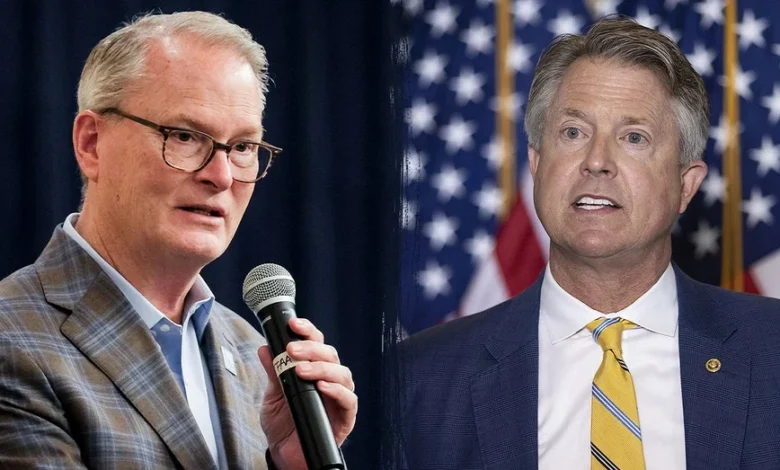
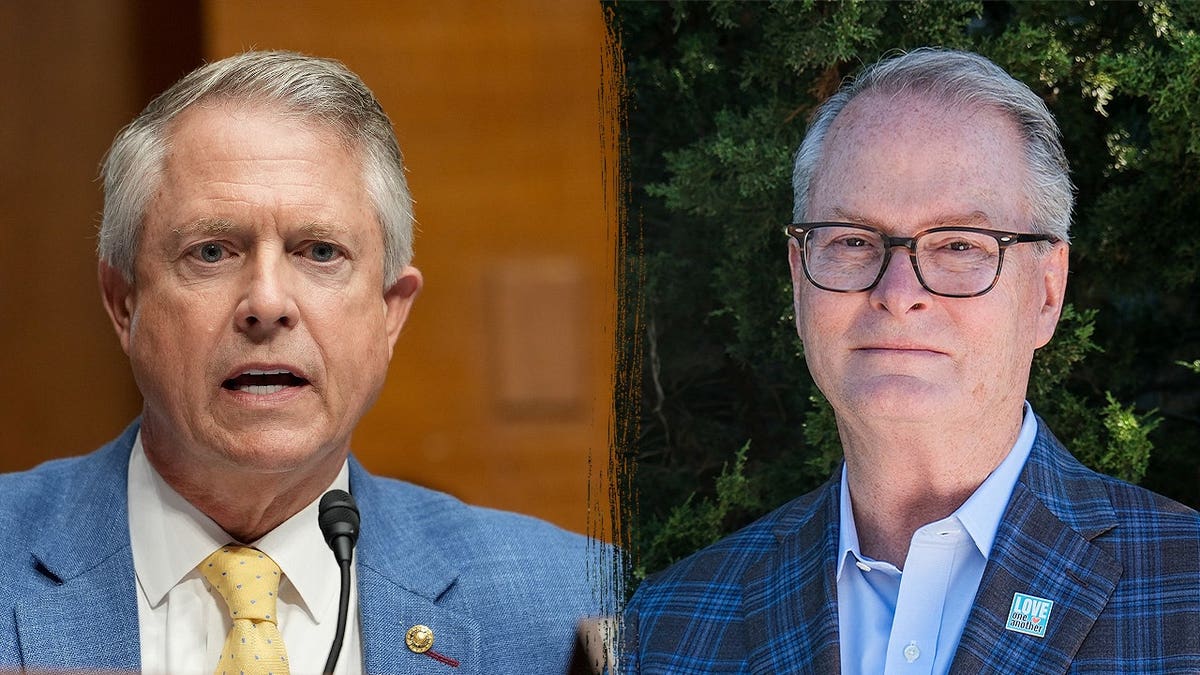
The political landscape of Kansas shifted into overdrive on Wednesday night as Republican incumbent Senator Roger Marshall and his Democratic challenger, long-time pastor Adam Hamilton, squared off in a contentious, hourlong debate. Coming just two weeks before the midterm elections, the high-stakes showdown underscored an unexpectedly competitive race in a reliably deep-red state. With control of the United States Senate hanging in the balance, both candidates locked horns over a wide array of polarizing national and state-level topics, including former President Donald Trump, immigration policy, national security, artificial intelligence, and personal past controversies.
The debate, which drew significant national media attention, reflects a broader electoral battleground where Democrats are aggressively targeting traditional Republican strongholds. For Kansas, a Democratic U.S. Senator has not been elected since 1932, making Hamilton’s campaign a historic long shot that has nonetheless captured the attention of political analysts nationwide. The urgency of the race was further highlighted earlier in the week when former President Donald Trump traveled to Kansas to rally support for Marshall, explicitly urging voters to treat the midterm ballot as a referendum on his own leadership and political agenda.
Opening Salvos: Addressing Personal Controversies and Medical Payouts
The debate wasted no time plunging into fierce rhetoric, beginning with pointed questions regarding the personal and professional controversies that have dogged both candidates on the campaign trail.
Senator Marshall was immediately pressed on a recent review by The New York Times, which revealed that his former medical practice had filed lawsuits against more than 700 patients over unpaid medical bills. Critics have weaponized the finding to portray Marshall as unsympathetic to the financial struggles of everyday Kansans.
Defending his record, Marshall emphasized the dual reality of running a private medical practice in a rural state. "Every year we gave away $3 to $4 million of charity, but we also had a business," Marshall responded during the exchange. "We had 300 employees, we had a mortgage payment, we had electric." He maintained that legal action was only taken as a last resort after extensive efforts to secure payment or negotiate terms with patients.
Simultaneously, Adam Hamilton faced intense scrutiny regarding his oversight of a volunteer at his church’s summer camp who was later accused of sexual abuse. Hamilton acknowledged the gravity of the situation and took direct ownership of the administrative failure.
"I should have checked to make sure that he wasn’t going back," Hamilton stated, addressing the moderator’s questions head-on. "That was a mistake on my part." By confronting the issue directly, Hamilton sought to mitigate potential political fallout, though the exchange set a combative tone for the remainder of the evening.
Navigating the Trump Factor and Party Alignment
The shadow of Donald Trump loomed large over the debate stage. Moderators played video footage from Trump’s recent campaign rally in Kansas, where the former president told the enthusiastic crowd, "And at this election, I’m asking you to pretend, please, that I’m on the ballot. Just pretend."
Given Trump’s active campaigning on his behalf, Marshall was asked whether his victory would signal a blank check for every component of the former president’s legislative and executive agenda.
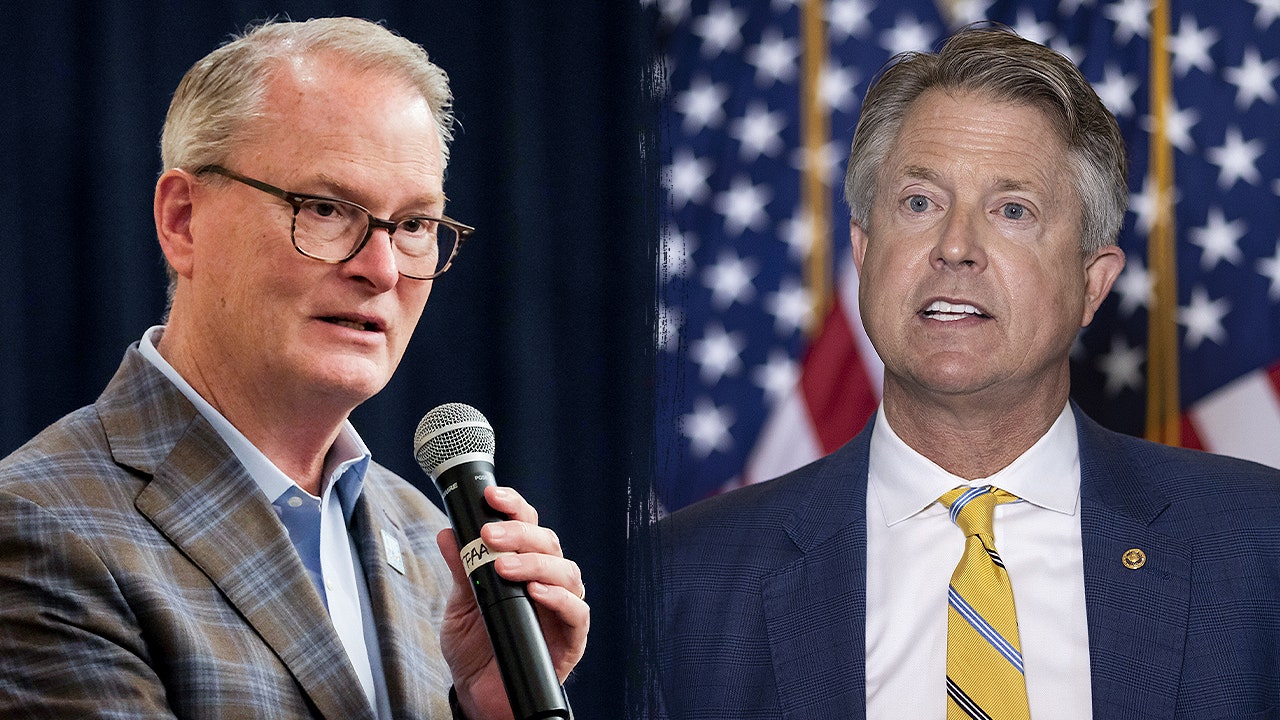
Marshall offered a nuanced response, pushing back against the notion of absolute political conformity. "No," Marshall said, asserting that there had been "multiple times" when he publicly and privately disagreed with Trump. When pressed for a concrete example, Marshall pointed to recent federal immigration enforcement actions in southwest Kansas and disagreements over trade policies, specifically citing Trump’s approach to foreign beef imports, which local agricultural groups have criticized.
"Just like with my wife, I can disagree with her. My wife is always right," Marshall joked, lightening the tension momentarily before adding, "And President Trump is not always right." Despite these occasional divergences, Marshall pivoted swiftly to the core of his closing argument, urging conservative and Trump-aligned voters to cast their ballots for him to prevent Democrats from seizing the Senate majority.
A Rare Point of Agreement: Gender and Athletics
Amidst a night defined by sharp disagreements, the candidates found a surprising moment of consensus when moderators posed a direct question regarding the definition of gender.
"There’s two. There’s a boy and there’s a girl," Marshall stated. Drawing on his background as an obstetrician, he added, "I delivered 5,000 of them and almost half were boys and half were girls."
Hamilton echoed this sentiment without hesitation. "There are two genders, male and female."
However, the consensus evaporated quickly when the conversation transitioned to the fierce national debate over transgender participation in women’s sports. Hamilton articulated a firm stance grounded in fairness and protection for female athletes.
"I have a 12-year-old granddaughter. I don’t want biological men or boys competing against her that could harm her," Hamilton said. "It’s not a fair, fair fight." While Hamilton argued that athletic eligibility determinations should generally remain a local decision, his opposition to biological males competing in female sports divisions was unequivocal.
Marshall adopted a more aggressive rhetorical posture, arguing that by the time children reach high school, "boys need to be in boys sports, girls in girls sports." He accused the national Democratic Party of championing "transgender ideology" that undermines Title IX protections. Hamilton fired back later in the debate, accusing Marshall of leveraging the issue to "pick on" and marginalize vulnerable populations for political gain.
Artificial Intelligence: An Existential Threat Without a Blueprint
One of the most revealing exchanges of the evening centered on the rapidly evolving landscape of artificial intelligence (AI). Hamilton characterized AI as a profound hazard to humanity, drawing a direct historical parallel to the development of nuclear technology during the mid-20th century.
"We developed a Nuclear Regulatory Commission. We need to do the same thing with AI," Hamilton argued, calling for robust, proactive federal oversight to manage the risks posed by autonomous systems and generative intelligence.
However, the momentum of Hamilton’s argument stalled when moderators asked him to name specific federal regulations he would be prepared to introduce or support in the Senate. Hamilton candidly admitted the limitations of his current policy framework, stating, "You know what? I’m not sure, to be honest," while noting that even premier technologists and scientists are struggling to comprehend the trajectory and potential perils of the technology.
Marshall countered by advocating for a minimalist regulatory footprint—what he described as a "light touch" approach. He argued that federal oversight should be laser-focused on national security imperatives, data transparency, the protection of minors online, and individual privacy rights, while warning against bureaucratic, one-size-fits-all international frameworks that could stifle American technological innovation.
Hamilton forcefully rejected Marshall’s philosophy. "This is an existential — potential existential threat to the human race," Hamilton countered. "We can’t just go with a light touch and hope everybody does their best."
Distancing From Washington: Border Policies and Leadership
As a Democrat running in a deeply conservative state, Hamilton faced intense questioning regarding his political donations to high-profile national Democrats, including former President Joe Biden, former Vice President Kamala Harris, and Kansas U.S. Representative Sharice Davids. Moderators challenged Hamilton to reconcile his stated identity as a political moderate with his history of financial support for progressive leadership.
Seeking to carve out a distinct political identity, Hamilton delivered a sharp critique of the Biden administration’s record on national security and immigration.
"The Biden policies when it came to the border were a disaster," Hamilton declared. "I believe in strong and secure borders." He further sought to reassure Kansas voters of his independence, adding, "I’m not somebody who favors the Socialist Party. I’m somebody who stands in the middle."
Furthermore, Hamilton explicitly addressed the issue of Senate leadership, reiterating his pledge that he would not vote for Senate Minority Leader Chuck Schumer to serve as Majority Leader should Democrats retain or expand their control of the upper chamber.
Broader Implications and the Path to Election Day
Wednesday night’s debate crystallized the unique dynamics of the 2026 Kansas Senate race. For Marshall, the challenge lies in energizing the conservative base while navigating the competing demands of agricultural constituents and national Republican orthodoxy. For Hamilton, the path forward requires convincing moderate Republicans and independent voters that his pastoral background and centrist rhetoric offer a viable alternative to the status quo, all while distancing himself from national Democratic policies that remain deeply unpopular across rural Kansas.
With early voting underway and Election Day less than two weeks away, both campaigns enter the final stretch with heightened urgency. As national party committees pour resources into the state, the Kansas Senate race has transformed from a predictable Republican defense into a closely watched bellwether for the broader midterm elections.
Related posts: