Los Angeles, CA – The Los Angeles Dodgers continued their concerning downward trend on Monday night, succumbing to a 9-3 defeat against the San Francisco Giants. The loss, which marked the team’s 13th in their last 22 games, highlighted a troubling confluence of issues: a persistent offensive slump and, on this occasion, an uncharacteristic breakdown from their pitching staff. This latest defeat not only underscores the team’s current struggles but also raises significant questions about their ability to maintain their early-season momentum and secure a dominant position in the National League West.
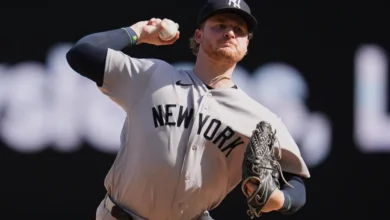
The game hinged on a pivotal seventh inning where the Giants, who entered the series with a less-than-stellar 17-24 record, managed to break a tied score and put the game out of reach. This crucial sequence saw Alex Vesia, a typically reliable reliever who had allowed a mere two runs all season prior to Monday, falter under pressure. Vesia surrendered three consecutive one-out hits, followed by a walk on a full count to Rafael Devers, which plated the go-ahead run. The situation then devolved further when reliever Will Klein entered the game and, with two outs, served up a crucial two-strike sweeper to Willy Adames. Adames capitalized, lining a two-run single to right field, effectively sealing the Dodgers’ fate. This late-game implosion was a stark departure from the performance of a bullpen that had boasted the fourth-best earned run average in Major League Baseball entering the contest.
The offensive woes, however, remain the most glaring concern for the Dodgers (24-17). Despite managing 10 hits on the night, the team struggled to generate significant damage, with only three extra-base hits among their total. Their situational hitting was equally anemic, as they went a dismal 2-for-10 with runners in scoring position. This offensive impotence has become a recurring theme, with the Dodgers scoring three runs or fewer in nine of their last 12 games, a stretch that has resulted in eight losses. The stark reality of their offensive struggles is underscored by their current standing in the National League West, where they have fallen to second place, trailing the division-leading San Diego Padres by half a game.

The game itself was a tightly contested affair through the early innings, a stark contrast to the eventual lopsided score. The Giants drew first blood in the second inning when Rafael Devers launched a solo home run off Dodgers’ starting pitcher Roki Sasaki. The blast came on a hanging splitter, a pitch that Devers managed to connect with at the end of an eight-pitch at-bat, showcasing a patient approach that paid dividends.
The Dodgers responded in the bottom of the fourth, manufacturing a couple of runs from a promising bases-loaded, no-out situation. This offensive rally, however, proved to be a temporary respite from their broader struggles.
The Giants, refusing to be outdone, reclaimed the lead in the sixth inning. This was a point where the Dodgers, perhaps opting to extend Sasaki beyond his typical workload, found themselves in a precarious position. After successfully navigating a bases-loaded jam in the third and then retiring eight consecutive batters with improved fastball command, Sasaki faltered once more. He allowed three straight hits to open the sixth, including a crucial two-run double by Heliot Ramos that pulled the Giants back in front.
The lead, however, was short-lived. In the bottom of the same inning, Max Muncy, the Dodgers’ consistent offensive threat, stepped up to the plate. Muncy belted a leadoff home run to the opposite field, his team-leading 11th long ball of the season, momentarily tying the game at 3-3 and igniting hope among the home crowd. Yet, as the game progressed, it became evident that this tie would not hold, and the Giants would ultimately surge ahead for good.

Sasaki’s Grinding Start and Bullpen Meltdown
Roki Sasaki, the highly anticipated pitcher for the Dodgers, endured another challenging outing, struggling to consistently find his rhythm. While he managed to navigate through some difficult situations, including escaping a bases-loaded jam in the third inning, his overall performance was marked by inconsistency. His outing ultimately ended after five-plus innings, during which he surrendered three earned runs on seven hits, including the crucial double by Ramos that put the Giants ahead. While Sasaki showed flashes of brilliance, particularly during his stretch of retiring eight consecutive batters, the inability to consistently shut down the Giants’ offense proved to be a significant factor in the eventual outcome.
The post-Sasaki era of the game saw a rare implosion from the Dodgers’ typically reliable bullpen. The sequence in the seventh inning, where Alex Vesia surrendered the lead and Will Klein then allowed the Giants to extend it, represented a significant deviation from their established performance. Vesia, who had been nearly unhittable in high-leverage situations, suddenly found himself unable to locate his pitches effectively. His struggles allowed the Giants to capitalize on opportunities, a trait that has plagued the Dodgers in recent weeks. The team’s bullpen, which had been a source of strength, demonstrated a vulnerability that will undoubtedly be a focal point for the coaching staff moving forward.
Offense Remains in a Deep Slump
The overarching narrative for the Dodgers in their recent slump has been the offensive inefficiency. Even with the return of Mookie Betts from a strained oblique, who went 1-for-5 in his return, the team’s offensive output has been alarmingly low. The lack of power, evidenced by the low number of extra-base hits, combined with poor situational hitting, has created a recipe for defeat. The Dodgers’ insistence that these slumps are a natural part of a 162-game season is becoming increasingly difficult to defend as their losing streak lengthens and their grip on the division tightens. The team is struggling to score runs, and when they do, they are not doing so efficiently. This is a concerning trend that needs to be addressed promptly if they are to contend for a championship.
Player Performance: Flashes of Brilliance Amidst Struggles
While the team’s overall performance has been disappointing, there have been individual moments of promise. Teoscar Hernández, who had been mired in a deep slump, hitting just .196 over his previous 26 games and without an extra-base hit since April 21, showed signs of life. Dropped to the number eight spot in the batting order by manager Dave Roberts in an effort to spark his offense, Hernández responded with a 2-for-3 performance, including a double. He also contributed with an impressive sliding catch in left field on the very first pitch of the game, demonstrating his commitment to contributing in multiple facets.

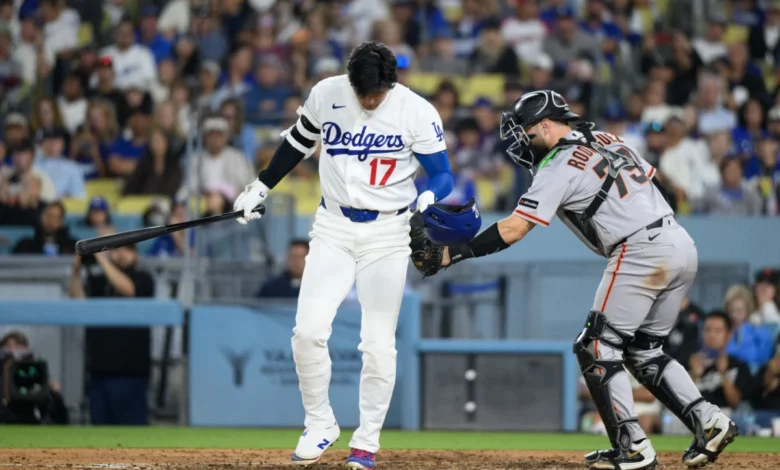
Conversely, Shohei Ohtani continues to grapple with his offensive game. Despite taking pregame batting practice on the field for the third time this season, Ohtani went 0-for-5, extending a recent slump where he has hit just .103 (4-for-38) over his last 11 games. His struggles are particularly evident in situational hitting, as he grounded out twice with a runner at second base. This pattern of pulling the ball on the ground has contributed to his lack of power, with only one home run in his last 107 plate appearances. Ohtani’s batting average has dipped to .233, and his OPS stands at .767, his lowest marks this late into a season since 2022, raising concerns about his offensive impact.
Broader Implications and Looking Ahead
The Dodgers’ current trajectory is a significant concern for a team that has set high expectations for itself. Their recent performance suggests a team struggling to find its identity and overcome fundamental flaws. The prolonged offensive drought, coupled with pitching inconsistencies, has allowed other teams in the division to gain ground. The half-game deficit to the Padres is a clear indicator that their dominance is being challenged.
The upcoming schedule offers little immediate respite, as the Dodgers prepare to continue their four-game series against the Giants. The pitching matchup for Tuesday night features Yoshinobu Yamamoto (3-2, 3.09 ERA) for the Dodgers against Adrian Houser (0-4, 6.19 ERA) for the Giants. Yamamoto has been a bright spot in the Dodgers’ rotation, but the team will need more consistent offensive support to secure victories.
The Dodgers’ management will undoubtedly be under pressure to address these issues. Whether through internal adjustments, strategic player development, or potential trade acquisitions, the team’s leadership faces the critical task of revitalizing the offense and re-establishing pitching stability. The coming weeks will be a crucial test for the Dodgers, determining whether they can navigate this rough patch and emerge as legitimate contenders or if this season will be defined by unfulfilled potential and a dispiriting slide. The return of key players and the emergence of consistent offensive production will be paramount in determining the Dodgers’ fate as the season progresses.