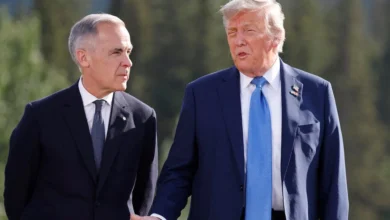
British Prime Minister Andy Burnham announced on Monday that the United Kingdom has committed to providing limited military assistance to Saudi Arabia to help the kingdom repel intensifying attacks from Iran-backed Houthi rebels in Yemen. The announcement, made as Burnham traveled to New York for the United Nations General Assembly, marks a significant escalation in Western involvement in the localized spillover of the broader Iran-U.S. conflict.
The support will primarily consist of Royal Air Force (RAF) assets, specifically providing air-to-air refueling capabilities for Saudi fighter jets. This tactical assistance is currently slated to last for several weeks. The move follows a period of mounting pressure on global shipping routes and energy infrastructure, as the Houthis have successfully expanded their operational footprint in the Red Sea.
The Strategic Shift in the Red Sea
The conflict has entered a volatile phase as Houthi forces, who seized the capital of Sanaa in 2014, have recently achieved significant territorial gains. Earlier this month, the rebels captured the strategic port city of Mokha and several islands in the Red Sea. These positions grant the Houthis tactical control over the Bab el-Mandeb Strait, a maritime chokepoint through which approximately 12% of global trade passes daily.
The rebels have translated this territorial control into an effective blockade of Saudi-linked vessels. On Saturday, a missile strike targeted the Saudi capital of Riyadh—an attack that was intercepted but caused significant alarm. The Houthis have also targeted oil facilities within the kingdom, aiming to disrupt the operations of one of the world’s leading oil exporters.
In a televised address aired Monday, Houthi leader Abdul Malik al-Houthi linked these military actions to the decade-long blockade imposed by the Saudi-led coalition. "Stop the aggression and end the blockade. Our demands represent the legitimate rights of our people," he stated, framing the current violence as a response to the coalition’s efforts to restore the exiled Yemeni government.
A Diplomatic and Military Tightrope for the U.S.
While Britain has opted to intervene, the United States remains in a state of strategic hesitation. Sources familiar with White House deliberations revealed that President Trump weighed the possibility of ordering retaliatory strikes against the Houthis over the weekend. Following a direct request for assistance from Saudi Crown Prince Mohammed Bin Salman, the president had instructed the Pentagon to prepare for potential strikes. However, late Saturday night, the administration opted against immediate military action, citing a reluctance to further expand the theater of conflict.
The U.S. approach remains multifaceted. CIA Director John Ratcliffe held high-level meetings in Cairo with Egyptian President Abdel Fattah al-Sisi on Sunday, discussing the risks of regional escalation and the necessity of maintaining maritime security. Egypt, a key regional ally, has repeatedly called for a diplomatic resolution, though the situation remains fluid.
Chronology of Escalation and Regional Tension
The current crisis is deeply intertwined with the broader Iran-U.S. war, which has seen regional security architecture destabilize since early 2026.
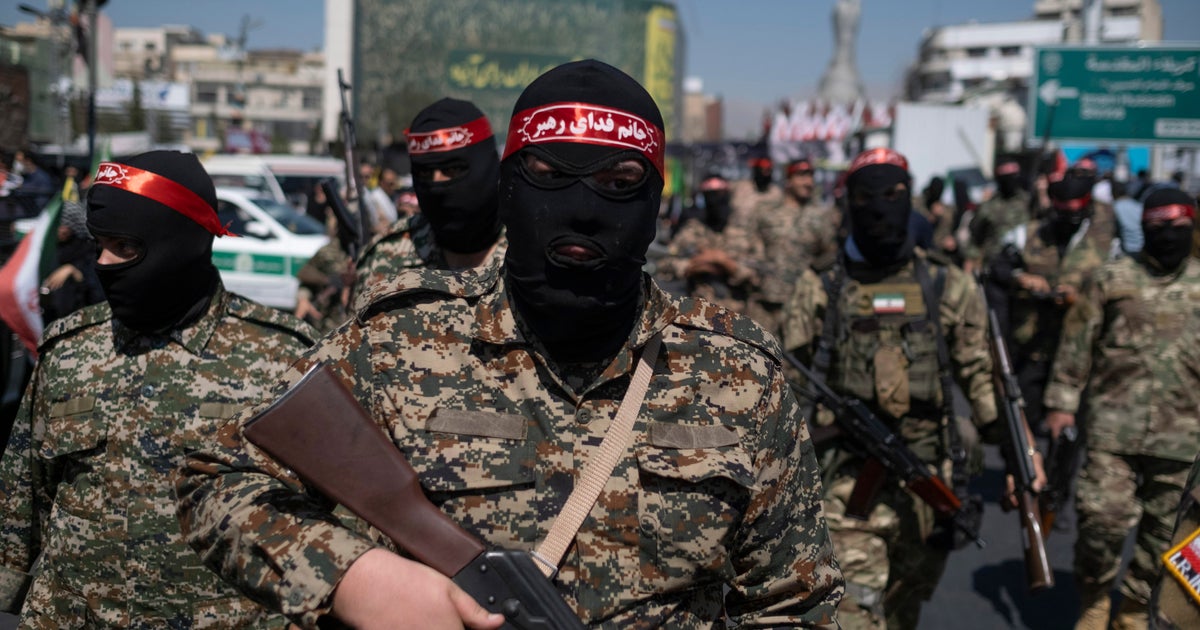
- February 2026: The conflict between the U.S. and Iran begins, leading to the closure of Iranian airspace and the start of a naval confrontation in the Strait of Hormuz.
- Early September 2026: Houthi rebels launch a "lightning offensive," seizing the Yemeni Red Sea coastline, including the port of Mokha.
- Mid-September 2026: Drone strikes damage the Saudi East-West oil pipeline.
- September 19, 2026: Saudi forces intercept a ballistic missile fired at Riyadh.
- September 20, 2026: U.S. embassies across the Middle East issue broad security alerts, warning of "unforeseen escalation."
- September 21, 2026: British Prime Minister Andy Burnham authorizes RAF support for Saudi operations.
The Human and Economic Toll
The humanitarian impact of the renewed fighting is severe. According to the International Organization for Migration (IOM), nearly 130,000 Yemenis have been displaced in the last three weeks alone, with the number of displaced individuals rising by over 11,000 in just a 72-hour window. Othman Belbeisi, the IOM Regional Director for the Middle East and North Africa, described the situation as a crisis where host communities are reaching the limit of their resources.
Simultaneously, the global economy is bracing for the fallout. The volatility in the Strait of Hormuz and the Red Sea has created a climate of uncertainty for energy markets. While Brent crude prices retreated slightly on Monday—falling over 3% to below $100 per barrel—analysts warn that this is largely due to market hopes for a diplomatic breakthrough at the U.N. General Assembly.
Diplomatic Maneuvering at the United Nations
The arrival of world leaders in New York for the U.N. General Assembly has created a rare window for direct, albeit tense, diplomacy. President Trump has indicated that he is "probably" open to meeting with Iranian President Masoud Pezeshkian. However, the path to such a meeting is obstructed by significant friction. Iranian state media reported that the U.S. denied visas to members of the Iranian president’s communications team, an act Tehran characterized as an "unprecedented hostile move."
Iran’s top negotiator, Mohammad Bagher Ghalibaf, has stated that Tehran has communicated its conditions for reopening the Strait of Hormuz through mediators, including Qatar and Pakistan. These conditions include an end to the U.S.-led war, the unfreezing of Iranian financial assets, and the lifting of the naval blockade.
Analytical Perspective: A Systemic Crisis
The situation presents a complex dilemma for Western powers. The U.K.’s decision to provide "limited support" to Saudi Arabia is a calculated attempt to secure energy pathways and support a regional partner without committing to a full-scale ground war. However, the effectiveness of this approach depends on the Houthis’ response and the degree to which Iran is willing to de-escalate.
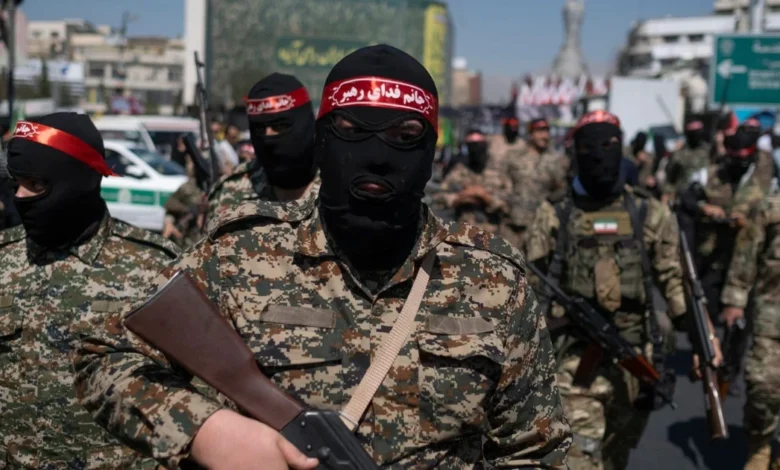
The Revolutionary Guard Corps of Iran has signaled that it is prepared for a long-term conflict, claiming that it is no longer just a war between two nations, but a shift in the regional security order. Spokesman Hossein Mohebbi’s assertion that "America has not lost a war; America has lost a system" highlights the ideological stakes for Tehran.
For the United States, the challenge is to contain the regional spillover—represented by the Houthi attacks—while simultaneously managing the primary conflict with Iran. The fact that the U.S. has thus far refrained from striking the Houthis suggests a desire to keep the conflict compartmentalized. However, as the humanitarian crisis worsens and the pressure on global oil supplies continues, the window for maintaining this equilibrium may be closing.
The coming days at the United Nations will be critical. Should a dialogue between the U.S. and Iran materialize, the focus will likely shift toward an immediate cessation of maritime hostilities. If, however, the diplomatic impasse persists, the conflict in the Red Sea and the Strait of Hormuz is likely to continue, further testing the military and economic resilience of the international community.