Google’s Clear-Cutting of Finnish Forests Sparks National Crisis Over AI Infrastructure Expansion

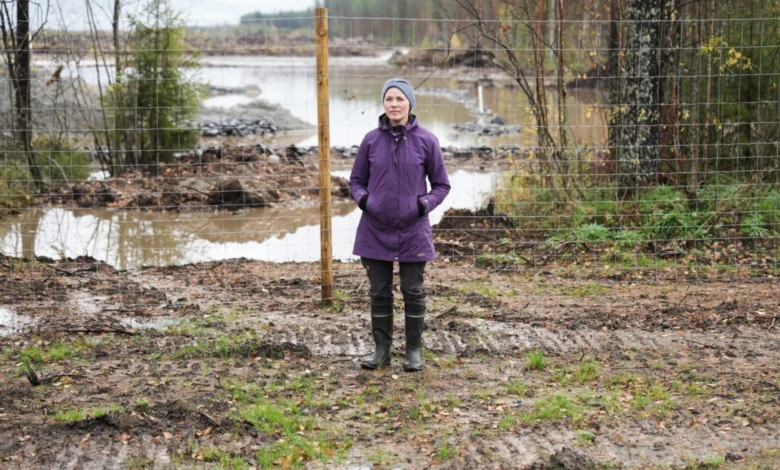
In the quiet, rural municipality of Muhos in northern Finland, the landscape has been irrevocably altered. Where an estimated 250,000 trees once stood on an 815-acre expanse, there is now only a desolate, muddy scar, churned by heavy machinery and stripped of its topsoil. This site, intended to house a massive data center for Google, has become the epicenter of a heated national debate regarding the unchecked growth of AI infrastructure and the environmental cost of the digital age. The unauthorized clear-cutting of the forest has not only drawn the ire of environmentalists and local residents but has prompted the Finnish government to reconsider its aggressive strategy for attracting global tech giants.
A Chronology of the Conflict
The friction between Google’s expansionist ambitions and Finnish environmental regulation began to reach a boiling point in early October 2026. The timeline of events reveals a pattern of accelerated development that bypassed key legal checkpoints.
- Early 2026: Google secures land rights in Muhos and the village of Otanmäki, approximately 62 miles to the southeast, for what is slated to be a $17 billion AI infrastructure project.
- Summer 2026: Preparatory work begins at both sites. Google commences the mass removal of trees and vegetation without waiting for final environmental impact assessments (EIAs) to be processed.
- October 6, 2026: The Finnish Licensing and Supervision Authority (LVV) issues a formal order to halt all operations at both the Muhos and Otanmäki sites. The agency cites the company’s failure to complete mandatory environmental assessments as the primary cause for the cease-work order.
- Mid-October 2026: Reports emerge detailing the ecological impact, including the contamination of local streams feeding into the Oulujoki River and the displacement of local wildlife, including wolves and rare bird species.
- Late October 2026: Google’s country manager, Antti Järvinen, issues a formal apology, though he maintains the company acted upon its "best understanding" of the existing legislative framework at the time.
The Scale of Environmental and Economic Impact
The destruction at the two sites is staggering. Beyond the 250,000 trees removed at Muhos, environmental groups estimate that an additional 150,000 trees were felled at Otanmäki. Because the clearing occurred in violation of environmental laws, the timber harvested from these sites cannot legally be sold to industrial wood-processing plants, leaving the felled wood as debris rather than a commercial resource.
Ecologists from the Finnish Association for Nature Conservation (SLL) have highlighted the long-term ecological consequences. The removal of ground cover and topsoil has led to significant runoff, with sediment-heavy, brown water entering the local watershed. Furthermore, the loss of dense forest cover has forced wildlife into nearby residential areas. Residents in Otanmäki have reported increased sightings of wolves, a direct result of their natural habitat being transformed into industrial zones.
From an economic perspective, the projects have faced scrutiny from experts like Jussi Kangasharju, head of computer science at the University of Helsinki. Kangasharju argues that the benefits to the Finnish economy are minimal. Data centers are largely automated and require few permanent employees once construction is complete. Furthermore, because these facilities are designed to serve international markets, the tax contributions remain low, while the burden of infrastructure, such as electricity grid upgrades and road maintenance, falls on local municipalities and, by extension, Finnish taxpayers.
The Geopolitical and Legislative Context
Finland’s appeal to tech companies is rooted in its unique combination of political stability, cool climate—which reduces the energy required for server cooling—and a surplus of available land. The current government, led by Prime Minister Petteri Orpo, has positioned the attraction of foreign investment as a top national priority. Amidst internal spending cuts, the prospect of a $17 billion investment in AI infrastructure was initially welcomed as a cornerstone of the country’s "data economy."
However, the rapid nature of these approvals has exposed the limitations of Finland’s regulatory environment. Municipalities, eager for jobs and property tax revenue, have often acted as the sole gatekeepers for these projects. Critics are now calling for a centralized national authority to coordinate data center development, arguing that local councils are ill-equipped to weigh the long-term environmental costs against short-term economic gains.

The situation has also gained international attention. Former US President Donald Trump has publicly criticized the project, advocating for such infrastructure to be built within the United States rather than abroad. This political pressure, combined with domestic outrage, has created a complex landscape for the Finnish government, which now finds itself navigating a "cold shower" of public dissatisfaction.
Official Responses and Corporate Accountability
Google’s response to the crisis has been characterized by a blend of contrition and legalistic defense. A spokesperson for the company stated, "We have operated in Finland for 15 years and have always worked to meet or exceed zoning, environmental, health, and safety requirements." The company maintains that it has complied with the LVV’s cease-work order and is committed to an "active, open dialogue" with authorities.
In an effort to mitigate the damage, Google has proposed a restoration plan, including the planting of trees across 74 acres in Muhos. Environmentalists, however, have dismissed this as inadequate, noting that it covers only a small fraction of the 815 acres disturbed and cannot replace the biodiversity lost from mature forest systems.
Government officials, including Veli-Matti Uski, director general of the Ministry of the Environment, have signaled that the state is monitoring the situation closely. There is a growing consensus that legislative amendments will be necessary to ensure that environmental assessments are completed before any land-clearing permits are granted, regardless of the developer’s size or the investment’s value.
The Broader Implications for AI and Society
The controversy in Finland serves as a case study for the global tension between the rapid expansion of AI and the preservation of natural landscapes. As the demand for computing power grows, the physical footprint of the "cloud" is expanding into regions that were previously untouched by heavy industry.
For the residents of Muhos and Otanmäki, the transformation of their landscape into a "drum-like" construction site is a sign of a world moving too fast. Anni Ranta, a resident of Otanmäki, captures a sentiment shared by many: "I don’t like the whole idea of AI and the world changing… It’s going too fast, too soon."
As Finland approaches its April elections, the "data center issue" has transformed from a niche environmental concern into a central political battleground. The outcome of this dispute will likely set a precedent for how the Nordic nation handles future industrial investments. It raises the fundamental question of whether the "data economy" can be integrated into a sustainable future, or if the pursuit of technological advancement will continue to be measured in the loss of trees, the disruption of ecosystems, and the erosion of public trust.
The Finnish experience serves as a warning to other nations currently vying for the favor of global tech giants. When the promise of investment is divorced from rigorous environmental oversight, the result is not progress, but a permanent scar on the landscape and a social divide that may take years to heal. The challenge for policymakers will be to create a framework that allows for innovation without sacrificing the natural heritage that defines the region’s character and quality of life. For now, the silent, muddy expanse in Muhos remains a powerful reminder of the hidden costs behind the invisible, digital world.