Beyond the Ballot: How Black Voters in Swing States Connect Economic Survival, Data Centers, and Climate Policy


For Elijah Lee, the fight for environmental justice has never been an abstract political debate; it has always been measured by the air he breathed outside his childhood classroom. Growing up in a predominantly Black, low-income community in Roanoke Rapids, North Carolina, Lee attended school directly adjacent to a sprawling paper mill. The facility routinely blanketed the local atmosphere in heavy pollution, casting a haze over the neighborhood while serving as the community’s primary economic engine. For Lee, watching generations of residents accept environmental degradation as the unavoidable price of employment planted an early seed of skepticism regarding corporate promises of economic growth.
Now 18 years old and living in Virginia—the rapidly expanding data center capital of the United States—Lee carries that skepticism into his first midterm election cycle. While climate policy ranks among his foremost political concerns, he harbors a deep understanding of why his neighbors, weighed down by immediate financial pressures, might rank the issue lower on their ballots.
“It’s hard to care about the quality of your air or your food that you eat and whether or not that food is actually clean when you can’t even afford the food in the first place,” Lee said.
This tension between immediate economic survival and long-term environmental sustainability forms the crux of a complex political landscape for Black voters across American swing states. New polling data reveals that while climate change rarely registers as a top-three voting motivation on its own, Black communities overwhelmingly demand that elected officials prioritize environmental safeguards, energy affordability, and corporate accountability.
The Kitchen-Table Politics of Energy and Environment
A comprehensive seven-state survey conducted between September 24 and October 10 by polling firm HIT Strategies for the Climate Equity Action Fund and the League of Conservation Voters highlights this nuanced voter mindset. The poll surveyed 2,000 Black and Latino registered voters across crucial battleground states for the 2024 and mid-term elections: Arizona, Georgia, Michigan, Nevada, North Carolina, Ohio, and Pennsylvania. Roughly 70 percent of respondents indicated they were highly likely to participate in upcoming elections.
When asked to rank the issues motivating their vote, stark economic realities took precedence. Only 9 percent of Black registered voters placed climate change among their top three concerns, compared to an overwhelming 74 percent who cited the soaring cost of living.
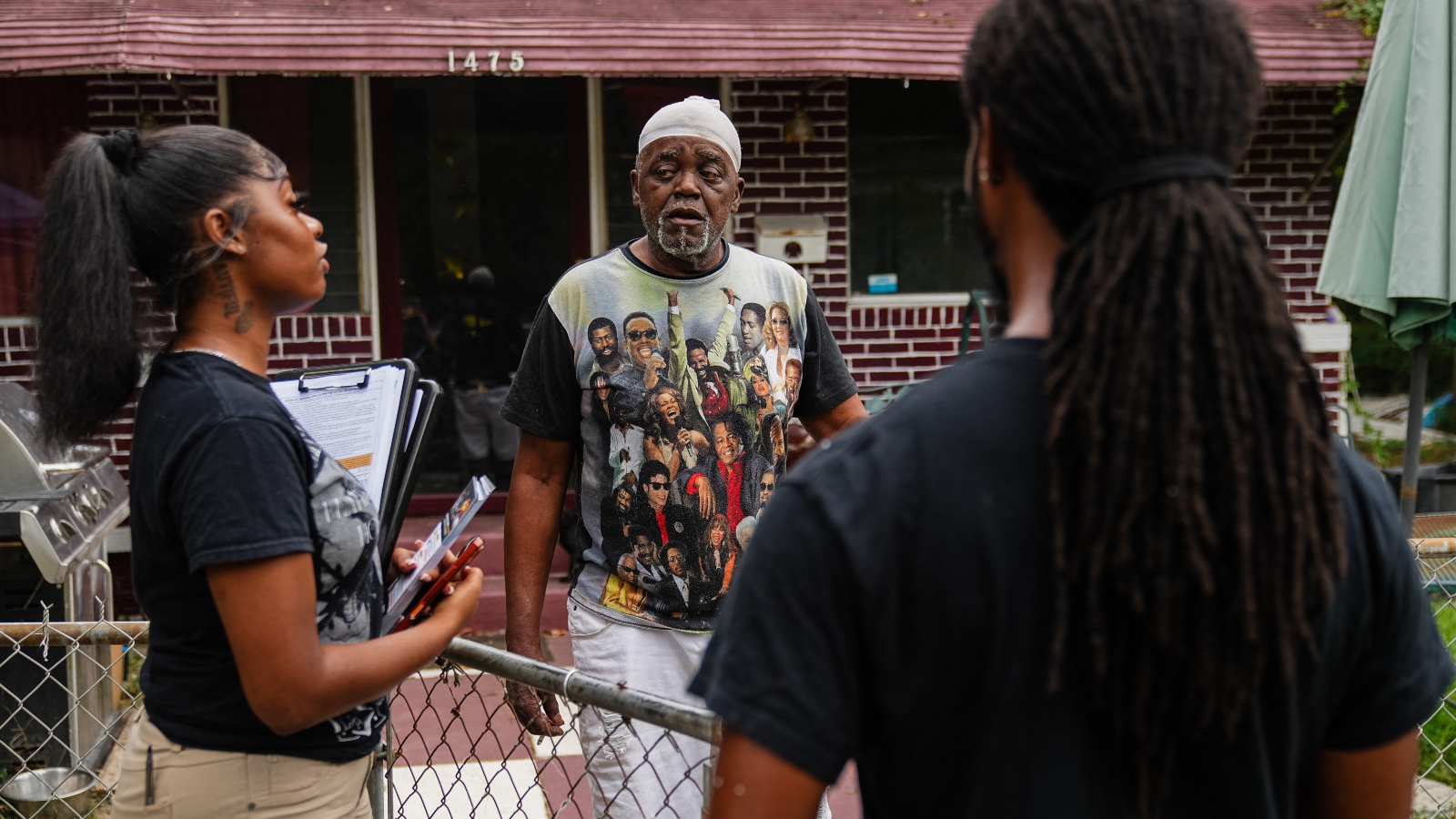
However, when pollsters narrowed the focus to specific policies, the narrative shifted dramatically. Across the surveyed demographics, 89 percent of respondents stated it was crucial for political candidates to prioritize lowering energy costs, 86 percent emphasized reducing air and water pollution, and 82 percent wanted candidates to prioritize addressing climate change. Notably, this concern transcended party lines: even among Black Republicans, 79 percent stated it was important for candidates to actively address climate change.
Erica Tebbs, a senior analyst at HIT Strategies, explains that this discrepancy does not stem from voter apathy toward environmental threats. Rather, it reflects a deep-seated skepticism regarding political follow-through.
“The proof that is needed is that their concerns will be addressed and responded to by elected officials and that a vote will result in a real impact in their community,” Tebbs said. “That’s where the doubts lie.”
Tebbs notes that while abstract terms like “climate change” can feel distant to families struggling with utility bills, translating the issue into tangible factors—such as safe drinking water, extreme weather resilience, and electricity prices—transforms it into an urgent, kitchen-table discussion.
The Data Center Boom and Infrastructure Pressures
Nowhere is the convergence of economic anxiety and environmental policy more apparent than in the explosive growth of data centers. Driven by the artificial intelligence boom, cloud computing, and digital infrastructure expansion, massive server farms are proliferating across suburban and rural communities alike, particularly in states like Virginia, Ohio, and Georgia.
Bill Hairston, the national field director for the League of Conservation Voters, notes that data centers have rapidly become a primary catalyst drawing everyday residents into debates over energy policy. Communities increasingly worry that hosting these massive facilities will trigger surges in local electricity bills, exacerbate air pollution from backup generators, and accelerate housing gentrification.
“I think it’s actually just putting the two and two together,” Hairston said, reflecting on his own upbringing in a low-income Black neighborhood in Charleston, West Virginia. Growing up near busy coal transport routes, his family’s home was routinely coated in black soot, leaving the surrounding grass perpetually stained yellow. Like Lee, Hairston recognizes that historic environmental injustices are repeating themselves under a modern technological guise.
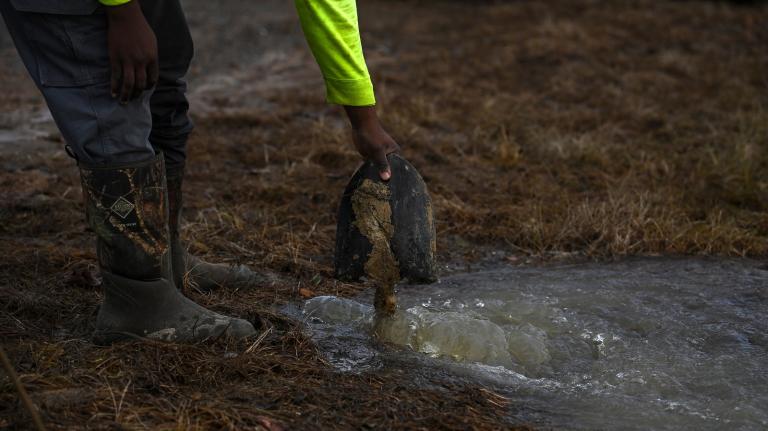
The modern data center expansion poses unprecedented strains on the U.S. electrical grid. Because these facilities operate 24/7 and consume vast quantities of energy—often comparable to the power usage of entire small cities—utilities are forced to build new generation capacity or keep aging fossil-fuel plants online longer than planned.
This infrastructure strain directly impacts consumer pocketbooks. Even when federal lawmakers introduce legislation intended to shield everyday ratepayers—such as proposals in Congress requiring technology companies to finance the direct energy costs of the data centers they build rather than passing expenses onto households—public skepticism remains high. In the HIT Strategies survey, 52 percent of Black voters stated they still expected data center expansion to raise electricity costs for ordinary Americans, regardless of proposed regulatory safeguards.
“They don’t necessarily trust that this type of policy will really protect the public from taking on these costs,” Tebbs said.
Promises Versus Reality in Frontline Communities
For Andrea Cristina Mercado, who leads the Climate Equity Action Fund, these poll results serve as a clear indictment of historical policy failures in low-income and minority communities. Too often, local municipalities offer lucrative tax breaks and zoning concessions to massive corporations under the banner of job creation, only for communities to realize nominal employment gains alongside permanent environmental costs.
Elijah Lee has witnessed this dynamic firsthand in Virginia. While acknowledging the political desire to stimulate state economic growth, he remains fiercely critical of the narrative that data centers serve as engines of widespread local employment.
“I understand the importance of wanting to bring money into Virginia,” Lee said. But he added that “to pass these things off as mass sources of employment is just not true.”
This disconnect between corporate promises and lived reality has helped catalyze a burgeoning grassroots movement. Across the country, working-class communities are organizing against unplanned data center expansions, demanding rigorous environmental impact reviews, transparent utility rate structures, and genuine community benefits agreements. Mercado argues that because traditional economic policies have frequently sidelined working-class needs, climate policy must fundamentally evolve to center economic justice.

“We actually believe that climate policy has to address the needs of working people,” Mercado said, noting that this intersection of affordability and environmental protection is fueling “the emergence of a massive organic movement against data centers.”
Bridging the Cynicism Gap: Organizing for the Future
Despite widespread agreement on the necessity of environmental protections, political organizing in Black and Latino swing-state communities faces a formidable psychological barrier: institutional cynicism.
Nearly half of the survey respondents expressed a fatalistic view, stating their belief that powerful corporate interests and wealthy entities will always successfully block meaningful efforts to reduce climate harm, rendering individual civic action futile. Furthermore, a significant portion of respondents expressed concern that environmental degradation has already advanced past the point of mitigation.
Conversely, 45 percent of Black voters maintained faith in collective action, expressing confidence that civic engagement—through voting, public petitions, and consumer boycotts—remains an effective tool for holding corporations and government officials accountable.
This tension is acutely felt by younger generations who view the compounding crises of climate change, housing scarcity, and inflation as their direct inheritance. Yet, youth-led activism offers a beacon of hope for reform. Lee points to student activists in places like Spartanburg County, South Carolina, where high school and college students have actively organized local opposition to proposed data center developments to secure a voice in their region’s trajectory.
As the political landscape shifts and the demand for digital infrastructure collides with ecological limits, advocates argue that the key to unlocking voter mobilization lies in bridging the gap between systemic reform and daily survival. For Lee and millions of other young voters, the motivation to engage politically is sustained not by naive optimism, but by the necessity of survival.
“We know that this is the future that we’re inheriting, the markets that we’re inheriting, the housing that we’re inheriting, the food prices that we’re inheriting,” Lee said. “And so I think more than anything, I’m being driven by deep concerns, but also by a deep hope that we can turn this around.”