The History of Concrete: John Wilson’s Cinematic Investigation into the Material Foundation of Modern Civilization

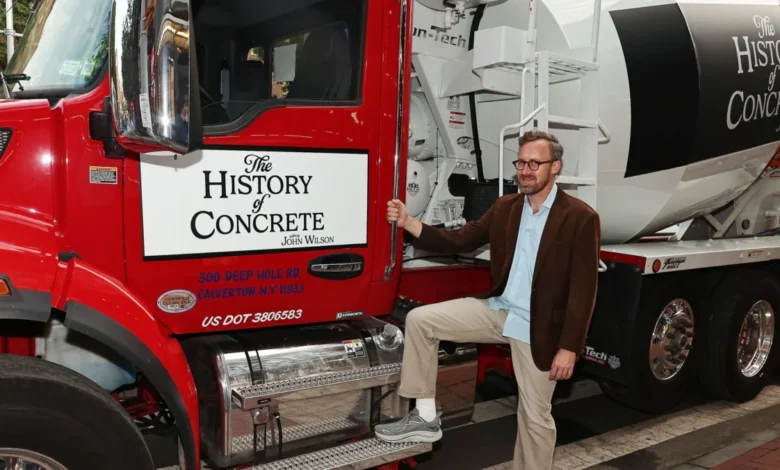
Concrete stands as the most consumed material on Earth, trailing only water in total human usage. It is the literal bedrock of modern urbanization, yet it is increasingly becoming an environmental liability and a structural concern. In his latest feature-length documentary, The History of Concrete, filmmaker John Wilson turns his lens toward this ubiquitous substance, uncovering a narrative of decay, ecological strain, and the quiet absurdity of our built environment. While stylistically reminiscent of his acclaimed HBO series How To with John Wilson—utilizing deadpan narration and a scavenger-hunt approach to storytelling—the film serves as a sobering examination of a global infrastructure crisis that few observers fully comprehend.
A Material at a Breaking Point
The production of concrete is a massive industrial undertaking, accounting for approximately 8% of global carbon dioxide emissions. If the concrete industry were a country, it would rank as the third-largest emitter in the world, surpassed only by China and the United States. The material’s reliance on cement, which requires heating limestone to extreme temperatures, creates a high-carbon footprint that is becoming increasingly difficult to justify in a warming world.
Beyond its atmospheric impact, the physical durability of concrete is failing to meet the demands of a changing climate. The material is fundamentally porous and susceptible to damage from salt, moisture, and extreme temperature fluctuations. As climate change increases the frequency of severe weather events, such as catastrophic flooding and intense heat waves, the nation’s aging concrete infrastructure is deteriorating at an accelerated pace.
Chronology of a Crumbling Infrastructure
The documentary’s thematic focus originated from a personal grievance: Wilson’s struggle with a persistent, flooding basement in his Queens apartment. His attempt to rectify the issue with consumer-grade concrete highlighted the limitations of the material and the broader municipal struggle against water intrusion. This personal anecdote serves as a microcosm for a larger, multi-decade trend in urban management.
The timeline of modern concrete reliance traces back to the rapid urbanization of the mid-20th century. During the post-World War II building boom, cities across the globe adopted concrete as the primary solution for housing, highway expansion, and commercial development. However, the lifespan of these structures is proving shorter than anticipated.
In New York City, experts like former traffic commissioner Sam Schwartz have noted that major arteries, including sections of the Brooklyn-Queens Expressway, are operating well beyond their intended design life. According to engineering estimates, many of these concrete-heavy structures were projected to last 40 to 50 years. Decades later, they remain in service, maintained by a patchwork of emergency repairs, tape, and thin layers of newer concrete, leading to what some analysts describe as a "catastrophic maintenance deficit."
The Global Sand Crisis
A critical, often overlooked component of the concrete dilemma is the depletion of sand. Concrete is a mixture of water, cement, and aggregate—the latter being predominantly sand and gravel. Humanity currently extracts approximately 50 billion tons of sand annually, a rate that far exceeds the natural replenishment of the resource.
This "sand crisis" is triggering severe environmental consequences. Dredging for construction-grade sand destroys riverbeds and coastal ecosystems, leading to the erosion of shorelines and the loss of biodiversity. As beach erosion accelerates, the very materials used to build our defenses against the sea are being stripped from the natural world, creating a feedback loop of environmental degradation.
Urban Heat Islands and Public Health
The impact of concrete extends beyond structural failure; it is a primary driver of the "urban heat island" effect. In densely packed metropolitan areas, concrete absorbs and radiates solar energy, keeping cities significantly warmer than surrounding rural areas. During summer months, surface temperatures on concrete pavement can exceed 140 degrees Fahrenheit.
This phenomenon is a documented public health crisis. In regions such as the American Southwest, hundreds of heat-related deaths are recorded annually, many of which are exacerbated by the thermal retention properties of the built environment. As temperatures rise due to climate change, the reliance on concrete as a primary construction material is effectively trapping heat in urban centers, necessitating higher energy consumption for cooling and increasing the vulnerability of city populations.
The Failure of Recycling Initiatives
The documentary examines potential solutions, such as the emergence of concrete recycling facilities designed to divert construction waste from landfills. However, the implementation of these facilities has met with significant local opposition.
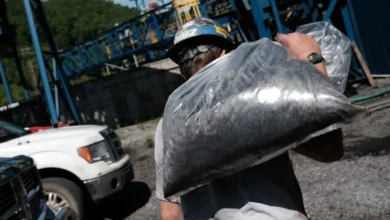
In early 2025, a concrete recycling plant near a Brooklyn marine terminal faced intense community backlash due to the distribution of hazardous airborne particulate matter. Residents reported that the facility’s operations covered neighborhoods in thick layers of concrete dust, posing significant respiratory risks. The facility was shuttered following public protests and municipal intervention, illustrating the difficulty of balancing industrial recycling needs with the health of local communities.
Socio-Economic Implications
The reliance on concrete is not merely an engineering choice but an economic necessity. As a contractor noted in the film, the modern world is essentially "up a creek without concrete." For urban centers to grow and maintain housing, there is currently no material that offers the same cost-efficiency, strength, and versatility at scale.
This dependency creates a difficult paradox for policymakers. While environmentalists push for greener building alternatives, the current market dictates that concrete remains the default. The resulting infrastructure is often described as "locked in," where the cost of replacing or retrofitting existing concrete foundations is economically prohibitive for most municipalities.
Analytical Perspectives on Urban Living
The environmental footprint of city life is frequently debated, with many studies suggesting that urban living is more sustainable than suburban sprawl. However, these calculations often omit "embodied carbon"—the total energy required to produce the materials used to build the city itself. When the concrete, steel, and energy intensive infrastructure required to sustain a dense population are factored in, the carbon advantage of urban living becomes more complex.
For the individual observer, the documentary serves as a prompt to rethink the environment. By highlighting the cracks in a sidewalk or the tape on a salt shed, the film encourages viewers to acknowledge the fragility of the human-made world. It challenges the assumption that the modern city is a permanent, immutable fixture. Instead, it presents the city as a living, aging organism that is constantly struggling against the elements.
Conclusion
John Wilson’s work functions as both a documentary and a cautionary tale. It effectively translates complex environmental and engineering data into a accessible format, forcing the viewer to confront the "gray" reality of their surroundings. As urban centers continue to expand, the questions posed by the film regarding sustainability, material science, and disaster preparedness become increasingly urgent.
Whether through the development of carbon-neutral concrete alternatives or more stringent urban planning, the trajectory of our relationship with concrete must shift. For now, the film leaves the audience with a stark reality: the structures that define our lives are as transient as they are massive. Paying attention to the cracks in the pavement, as Wilson suggests, may be the first step toward understanding the scale of the challenge that lies ahead for the next century of infrastructure development.