The Growing Crisis of Black Lung Disease and the Battle for Miner Benefits in Appalachia

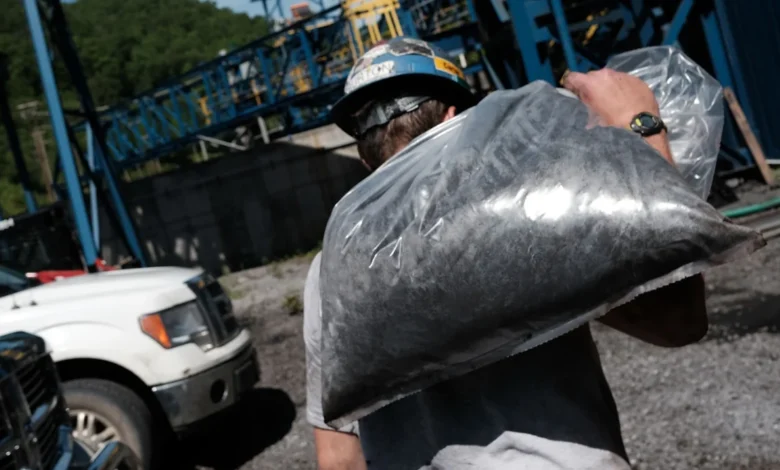
For 38 years, Josh Armes descended into the earth, laboring in the coal mines of West Virginia and Virginia to power the nation’s grid and steel mills. Today, at 74, the Grundy, Virginia resident finds himself in a different kind of darkness: a decade-long bureaucratic struggle for survival. Diagnosed with coal workers’ pneumoconiosis—commonly known as black lung disease—Armes is tethered to an oxygen tank, his lungs scarred and damaged by the very dust he inhaled during his decades of service. His struggle is not merely with a terminal, irreversible illness, but with a federal benefits system that critics say is designed to exhaust, bankrupt, and outlive those it was established to protect.
The federal black lung benefits program, enacted in 1969, was envisioned as a safety net for those who sacrificed their health for energy. However, for families like the Armes clan, the reality is a cycle of litigation, medical expenses, and appeals that often span years. In 2014, three years after he began receiving benefits, Armes was notified that his compensation was being challenged by a coal operator. For twelve years, he has remained in a state of legal limbo, fighting to retain the assistance he requires to manage a condition that leaves him breathless with the simplest of tasks.
A Surge in Disease Amidst Regulatory Stagnation
The crisis facing miners is not a relic of the past; it is an escalating public health emergency. Recent data published in the American Journal of Respiratory and Critical Care Medicine indicates that black lung disease has reached its highest prevalence in nearly 50 years. Among veteran underground coal miners in central Appalachia, the rate of disease has climbed to 32.5 percent, a figure unseen since 1978.
This resurgence is largely attributed to shifts in mining practices. As thinner coal seams are accessed, miners are forced to cut through larger quantities of rock, which releases higher concentrations of silica dust. Silica is significantly more toxic than coal dust alone, causing faster and more aggressive lung scarring. Between 2020 and 2023, over 1,700 miners lost their lives to the disease, yet the regulatory response has been mired in partisan deadlock and legal delay.
In April 2024, a federal rule aimed at curbing silica dust exposure was passed, representing a major victory for labor advocates. However, the momentum was short-lived. By June 2024, funding for the enforcement of this rule was blocked by Congressional Republicans. Shortly thereafter, the Mine Safety and Health Administration (MSHA) under the current administration announced an indefinite delay in the rule’s implementation, citing pending judicial review—a move that critics characterize as a calculated obstruction.
The Anatomy of an Appeal
The process for obtaining federal benefits is notoriously arduous. According to a Government Accountability Office (GAO) report released in May 2026, the burden of proof rests heavily on the miner. Between 2013 and 2024, approximately 40 percent of claims approved by the Department of Labor were subsequently disputed by mine operators.
For many, these appeals are not merely administrative hurdles; they are life-altering financial burdens. The GAO report highlighted a chilling sentiment among the mining community: that operators engage in long-term litigation in the hope that claimants will either die or reach a point of total financial exhaustion before a final judgment is rendered. The median length of an appealed claim exceeds three years, and in some documented cases, the process has dragged on for over a decade.
Crystal Armes, Josh’s daughter, describes the process as a gauntlet of medical tests and legal fees. "They fight you at every single step of the way," she noted. "They’ll send you from one doctor to another, requiring travel and out-of-pocket costs that many families simply cannot afford." The GAO data supports this, noting that between 2013 and mid-August 2024, 390 beneficiaries who had been initially granted support saw their claims reversed on appeal, forcing them to pay back years of benefits—a devastating financial blow to households already struggling with medical bills.
Political and Institutional Responses
The legislative response has been spearheaded by a coalition of Democratic senators, including Mark Warner, John Hickenlooper, Tim Kaine, and John Fetterman. They have introduced various measures intended to streamline the application process and increase accessibility. However, these legislative efforts have consistently faced opposition, leaving the system largely unchanged.
The United Mine Workers of America (UMWA) has been the most vocal critic of the current administration’s inaction. Brian Sanson, president of the UMWA, has publicly demanded that the silica dust rule be unfrozen immediately. "Every day that federal regulators drag their feet and sit on this rule, another working father, mother, husband, wife, sister, or brother contracts an incurable, fatal disease," Sanson stated. "A company’s profit margin cannot take precedence over a miner’s right to draw a breath."
In response to these criticisms, MSHA maintains that it is bound by legal constraints. A spokesperson for the agency stated via email: "Until pending litigation and limited rulemaking on respirable crystalline silica are resolved, MSHA continues to vigorously enforce the permissible exposure limit of 100 micrograms per cubic meter." Critics, however, argue that this threshold is outdated and insufficient to protect miners from the modern realities of silica exposure in high-rock-content seams.
Broader Economic and Human Implications
The plight of the Armes family reflects a broader tension between the industrial heritage of Appalachia and the modern protections afforded to its workforce. The economic dependence of many rural communities on the coal industry has historically complicated the push for stricter safety regulations. However, the current health data suggests that the "cost of doing business" now includes a significant, rising death toll that the current federal infrastructure is failing to mitigate.
The implications of this failure are manifold. Beyond the immediate health outcomes, there is a profound erosion of trust in federal oversight. When a system designed to provide a safety net functions instead as a barrier to justice, the social contract between the state and the industrial laborer is effectively broken. As legal battles continue, the human cost remains the most visible element of the crisis.
For families like the Armes, the focus remains on the daily struggle for breath and the hope for a resolution that never seems to arrive. "We’re hardworking, everyday Americans who go to work, pay our taxes, and try to do the right thing," Crystal Armes said. "And then, we can’t get what was promised to us."
As of late 2026, the status of the federal silica rule remains in a state of suspended animation. With the courts paused and the MSHA declining to bypass the judicial delay, the legislative path forward appears blocked. For thousands of miners currently working in the pits of Appalachia, the wait for protection continues—a wait that, for many, may end in the same diagnosis that has already claimed the livelihoods and health of a generation.
The statistics from the last decade serve as a somber warning: 7,709 miner beneficiaries were receiving aid in 2024, a number that many advocates argue is a fraction of those who actually suffer from the disease but have either been denied coverage or have been discouraged from applying due to the complexity and length of the process. As the 50-year high in disease rates persists, the debate over whether the federal government should prioritize the financial interests of coal operators or the physical survival of miners will likely intensify, further polarizing the discourse surrounding the future of American energy.