As global temperatures continue to climb to unprecedented levels, a harrowing new analysis from the Climate Impact Lab warns that a "Godzilla-level" El Niño event is expected to claim the lives of more than 450,000 people by February 2027. This projected figure represents excess mortality specifically attributed to the surge in heat resulting from this massive climatic oscillation, which is interacting with a planet already fundamentally altered by long-term anthropogenic climate change. This data, which provides a grim window into the future of a warming world, underscores the immediate necessity for systemic, global adaptation strategies.
The Mechanics of a Super El Niño
El Niño, or the El Niño-Southern Oscillation (ENSO), is a natural climate pattern characterized by the warming of surface waters in the central and eastern Pacific Ocean. While it is a recurring phenomenon, the current 2026 iteration has defied expectations, shattering previous temperature records as early as September. Climatologists describe the current event as "mind-blowing," noting that it is not merely a cyclical weather pattern but a force multiplier operating within a greenhouse-gas-saturated atmosphere.
Because the baseline temperature of the Earth is significantly higher than it was in previous decades, this El Niño is acting as a "postcard from the future." It provides a preview of the atmospheric conditions that the global community can expect to become the standard in 20 years if current carbon emission trajectories remain unchecked. By pushing temperatures toward these future thresholds prematurely, the event is creating heat stress that local infrastructures in many parts of the world are currently ill-equipped to handle.
Chronology of the Crisis
The build-up to this current humanitarian emergency has been rapid and destructive. While the effects of the 2026 El Niño were anticipated by atmospheric scientists, the intensity of the heating has outpaced early-year models.
- June 2026: Initial spikes in regional temperatures were recorded, particularly in the tropical belt, as the Pacific warming cycle officially took hold. Heatwaves began to impact vulnerable populations in India and Southeast Asia.
- August 2026: European nations reported a staggering 35,000 excess deaths linked to back-to-back heatwaves, signaling that the phenomenon was not limited to the global south.
- September 2026: Global temperature records for an El Niño event were shattered, prompting the Climate Impact Lab to release its urgent projections regarding the 450,000 excess deaths expected by the following winter.
- Late 2026 – February 2027: This window is identified as the peak period for heat-related mortality, although researchers warn that the physiological and structural effects of the heat will likely persist through June or July of 2027.
Regional Vulnerabilities and Mortality Data
The impact of this heat is not distributed uniformly. The Climate Impact Lab, in its research, utilized a peer-reviewed methodology to analyze temperature-mortality relationships across 24,378 distinct regions worldwide. By comparing these against historical data from 1996 to 2025, the researchers identified the most at-risk nations.
Tropical nations, which are inherently more susceptible to extreme fluctuations in temperature, top the list of projected casualties. Nigeria, Indonesia, Sudan, India, and Brazil face the highest risk of mortality. However, the crisis is truly global. Even wealthy, industrialized nations are not immune; the United States is currently projected to see 3,500 additional heat-related deaths by the time the cycle peaks.
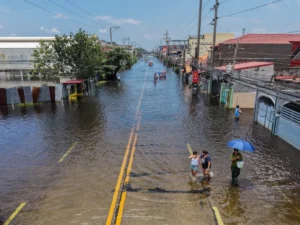
Beyond direct heat stroke, the mortality figures are compounded by secondary disasters. El Niño events are historically associated with severe droughts, unmanageable wildfires, and catastrophic flooding. These events disrupt clean water access, destroy agricultural yields, and overwhelm local medical facilities, creating a cascading failure of public health systems.
Historical Parallels and Scientific Concern
The urgency of the current report is underscored by the historical record. The Great Famine of 1877–1878, which was also driven by a major El Niño, resulted in an estimated 50 million deaths due to widespread crop failure, drought, and subsequent famine in India, China, and Brazil. While modern technological capabilities—such as improved logistics and international aid—offer a buffer that the 19th century lacked, the scale of the current climate crisis makes experts hesitant to assume such protections will be sufficient.
Friederike Otto, a climatologist at Imperial College London, has emphasized that this event represents a "huge redistribution of energy" in the climate system. "El Niño comes and goes," Otto stated, "but as long as we continue to burn fossil fuels, it occurs on an increasingly hotter baseline, making it much more difficult for communities to deal with the consequences."
The Call for Urgent Adaptation
The researchers behind the report—led by Michael Greenstone of the University of Chicago and Tamma Carleton of the University of California, Berkeley—argue that the 450,000 figure should not be viewed as an inevitable statistic, but as a roadmap for intervention.
"The estimate of 451,000 people is such a large number that it can be numbing, but it is made up of parents and children, grandparents and neighbours," said Greenstone. The authors contend that by identifying specific high-risk regions, governments can deploy targeted interventions. These include:
- Deployment of Cooling Centers: Establishing public, climate-controlled spaces for those without access to air conditioning.
- Medical Surge Capacity: Increasing staffing and resources for hospitals during peak heat events to handle spikes in cardiovascular and respiratory failure.
- Labor Regulations: Enforcing mandatory work stoppages or protective equipment requirements for outdoor workers in agriculture and construction.
- Early Warning Systems: Utilizing real-time data to forecast heat-related shocks, similar to how agricultural markets currently forecast crop failure.
Broader Economic and Food Security Implications
The humanitarian crisis is inextricably linked to global food security. The World Food Programme has warned that the 2026 El Niño could push approximately 50 million people into a state of acute hunger. The intersection of extreme heat and reduced water availability threatens the staple crops of the world’s most vulnerable regions.
As prices for basic commodities rise, the economic stability of developing nations is threatened, potentially triggering civil unrest and mass migration. The combination of heat-induced mortality and economic instability poses a significant threat to global security.
A Turning Point for Policy
The report from the Climate Impact Lab serves as a clarion call for policymakers. As Carleton noted, the goal is not merely to survive the current emergency but to build a future that is resilient to the "new normal."
"We don’t want to be in a constant state of emergency," Carleton said. "We need to mobilize now to design, deploy, and evaluate the tools that will save lives in the years ahead."
As the world heads into the winter months, the eyes of the international scientific community remain fixed on the Pacific. The 450,000 lives projected to be lost are not just data points; they represent the human cost of a planet in the throes of a transformative, and often fatal, climate event. The challenge now lies in whether world leaders will treat these projections as an actionable imperative or as yet another warning to be set aside in favor of short-term economic interests. The data suggests that for hundreds of thousands of people, the difference between these two paths is a matter of life and death.