State Department Overhauls Human Rights Funding to Prioritize Conservative Causes and Western Alliances

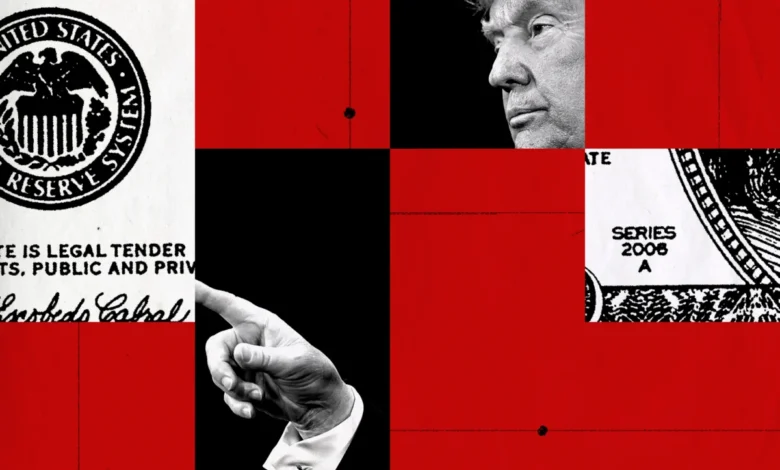
The United States Department of State has initiated a sweeping transformation of its human rights grant-making apparatus, pivoting away from decades of support for persecuted minorities and torture victims in authoritarian regimes to prioritize groups aligned with conservative ideologies in wealthy Western democracies. Under the direction of the second Trump administration, officials have proposed a series of grants that bypass long-standing competitive bidding processes, seeking to fund organizations focused on "civilizational self-confidence," anti-immigration movements in Europe, and advocates for white minority rights in South Africa.
According to internal documents and interviews with current and former staffers, this shift represents a significant departure from the traditional mission of the Bureau of Democracy, Human Rights, and Labor (DRL). Established in 1977, the DRL was designed to institutionalize human rights as a core pillar of American foreign policy. Historically, its funding has supported the documentation of political violence in Burma, anti-torture initiatives in Tunisia, and the protection of LGBTQ+ individuals in countries where they face state-sanctioned violence. The new directives, however, focus heavily on ideological battles within allied nations, raising concerns among lawmakers and career diplomats about the politicization of taxpayer-funded foreign assistance.
A Fundamental Shift in Diplomatic Priorities
For nearly fifty years, the DRL operated with a high degree of technical autonomy. Staffers with regional expertise typically evaluated thousands of grant applications through a rigorous, open-competition framework. This process was designed to ensure that funds reached the most effective organizations working under the world’s most repressive regimes. However, in early 2025, political appointees began presenting career staff with pre-selected lists of organizations to be funded, many of which had not participated in the standard application process.
The new priorities are articulated in programs such as a $4.9 million initiative titled "Developing Civilizational Bonds, Democratic Resilience, and Rule of Law in Europe." This program is intended to support research and cultural engagements that bolster "civilizational self-confidence" within wealthy European democracies. Critics argue that such funding is a veiled attempt to influence the domestic politics of allied nations by supporting MAGA-aligned movements abroad. The program’s call for proposals explicitly instructs recipients not to seek legislative reform, a standard goal of traditional human rights grants, suggesting a focus on ideological and cultural shifts rather than institutional protections.
Bypassing the Competitive Bidding Process
One of the most contentious aspects of the new funding strategy is the use of "sole-source" or "limited-source" awards. Federal regulations generally require the State Department to use open bidding to prevent waste, fraud, and favoritism. Exceptions are typically reserved for emergencies or highly sensitive environments where public bidding could put activists in physical danger.
Current proposals include at least a dozen grants that would bypass these safeguards. Among the handpicked recipients is the Free Speech Union, a British organization known for its opposition to "cancel culture" and its advocacy against bans on gay conversion therapy. The proposed $5 million grant for the group is earmarked to combat "digital overregulation" and "deplatforming." While the organization’s founder, Toby Young, has stated that the group has not yet received government funds, internal State Department documents indicate the grant was in active development following meetings between Trump administration officials and the group in late 2024.
Contracting experts warn that selecting grantees based on political alignment rather than technical merit undermines the integrity of U.S. foreign aid. "It is not good governance to have political appointees give grants to individuals for unknown reasons," a former bureau staffer noted, highlighting that such practices could invite legal challenges and congressional audits.
Focusing on High-Income Democracies and "Civilizational Alliances"
The pivot toward funding groups in high-income countries is statistically and procedurally unusual. Traditionally, U.S. human rights funding is directed toward developing nations where the rule of law is weak. Directing funds to countries like the United Kingdom or Germany typically requires a specific internal waiver, which the State Department has not confirmed it obtained for these new initiatives.
A key figure in this transition is Samuel Samson, a 27-year-old deputy assistant secretary of state. Samson, a former fundraiser for the "America First" movement and an alumnus of Hillsdale College, has been a vocal advocate for the concept of a "common civilizational struggle" between the U.S. and Europe. In various public and private forums, Samson has criticized European governments for their handling of anti-abortion protests and their labeling of far-right parties as extremist, likening these actions to the legal challenges faced by President Trump.

The Role of the Victims of Communism Memorial Foundation
The largest single award proposed this year is a $40 million grant to the Victims of Communism Memorial Foundation. While the foundation was established by an act of Congress in 1993 and has long enjoyed bipartisan support, the scale of the proposed funding is unprecedented. The foundation’s total assets were reported at approximately $12 million in 2024; a $40 million infusion would nearly quadruple its operating capacity overnight.
Questions have been raised regarding a potential conflict of interest involving Samson and the foundation’s leadership. The foundation’s board chair, Elizabeth Spalding, and her husband, Matthew Spalding (a dean at Hillsdale College), have academic ties to Samson. State Department officials have denied that these personal connections influenced the grant, asserting that the funding is a strategic priority to combat the "mortal threat" of communism. The foundation itself stated it was unaware of the specific proposal but welcomed the prospect of increased resources to amplify the voices of dissidents.
The South African Context: White Minority Advocacy
The administration is also seeking to fund research into crimes against minority populations in South Africa, specifically targeting the concerns of white Afrikaner farmers. One group initially singled out for funding was Lex Libertas, an organization that promotes the narrative of "white genocide" in South Africa—a claim that has been debunked by various international human rights monitors and crime statistics, which show that white farmers are not victimized at higher rates than other racial groups in the country.
The State Department has defended this focus, citing "serious concerns about the human rights situation in South Africa." However, veteran diplomats have criticized the move as a distraction from more pressing humanitarian crises on the African continent. The focus on Afrikaner rights aligns with President Trump’s previous statements regarding South African land reform and his administration’s recent decision to reduce funding for HIV/AIDS programs (PEPFAR) in the region.
A Chronology of Transformation
The shift in the DRL’s mission followed a rapid sequence of events in early 2025:
- January 2025: Following the inauguration, the administration suspends all foreign aid for review. Samuel Samson is appointed as a senior adviser to the DRL.
- March 2025: Samson travels to the United Kingdom to meet with Nigel Farage and other figures on the British right.
- April 2025: Secretary of State Marco Rubio, once a defender of the DRL, publishes a post on Substack characterizing the bureau as a haven for "left-wing activists." Rubio proceeds to close several DRL offices and reduce the bureau’s budget from $500 million to $190 million.
- June 2025: Career staffers are reportedly instructed to remove "trigger words" related to marginalized communities and LGBTQ+ rights from official documents and grant descriptions.
- July 2025: Congressional briefings reveal the list of proposed no-bid grants, sparking immediate pushback from Democratic leadership.
Congressional Oversight and External Reactions
The proposed changes have met with sharp criticism from the Senate Committee on Foreign Relations. Senator Jeanne Shaheen, the ranking Democrat on the committee, described the proposals as an "appalling departure" from established practice. "These awards suggest that the Department intends to select awardees for federal funding based on their political ideology, not in the interest of American taxpayers or national security," Shaheen said.
External experts on extremism have also voiced alarm. William Allchorn, a senior research fellow at Anglia Ruskin University, suggested that U.S. government funding for groups like the Free Speech Union provides a "layer of legitimacy" to radical-right ideas. By intellectualizing these concepts through think tanks and cultural grants, the U.S. government may be helping to move fringe ideologies into the political mainstream of allied nations.
Broader Implications for Global Human Rights Standards
The reorientation of the DRL carries significant implications for the global human rights landscape. By shifting resources away from traditional monitoring and toward ideological advocacy in the West, the United States risks abdicating its role as a neutral arbiter of international human rights standards.
Furthermore, the reduction in funding for LGBTQ+ protections and victims of gender-based violence may leave thousands of activists in authoritarian countries without the financial and diplomatic shield previously provided by the U.S. government. As the administration continues to implement its "civilizational" agenda, the debate over the proper use of foreign assistance remains a central flashpoint in the broader struggle over the direction of American foreign policy. The State Department maintains that these programs are simply an implementation of the President’s national security strategy, but for many career diplomats, the changes represent a fundamental break with the values that have defined the department for nearly half a century.