A Journey Through the Flavors of China An Essential Guide to the Nations Most Iconic Culinary Masterpieces

China possesses one of the most sophisticated and geographically diverse culinary landscapes in the world, a reality that makes the distillation of its "best" dishes an ambitious undertaking. With a history spanning millennia and a landmass encompassing varied climates and topographies, the nation’s food culture is categorized into the "Eight Great Traditions": Anhui, Cantonese, Fujian, Hunan, Jiangsu, Shandong, Sichuan, and Zhejiang. For the international traveler or the domestic gourmet, navigating this vast menu requires an understanding of regional identities, historical migrations, and the meticulous techniques that transform humble ingredients into imperial-grade delicacies. From the precision of Cantonese steaming to the fiery complexity of Sichuanese spices, Chinese cuisine serves as a profound reflection of the country’s social fabric and historical evolution.
The Evolution of the Imperial Bird: Peking Duck and the Nanjing Legacy
The history of Chinese poultry preparation is perhaps best exemplified by the global prestige of Peking duck. While synonymous with the modern capital of Beijing, the dish’s genealogical roots trace back over 1,500 years to Nanjing, the former seat of various imperial regimes. During the Ming Dynasty in the 1400s, when the imperial court relocated to Beijing, the culinary elite brought their prized roast duck recipes and specialized chefs with them. This migration facilitated the refinement of the dish into its current form: a masterpiece of texture featuring thin, crisp skin and succulent meat.

The traditional service of Peking duck is a choreographed event. The bird is typically carved tableside into thin slices, intended to be wrapped in delicate pancakes alongside scallions, cucumber, radish, and a rich sweet bean sauce. However, Nanjing maintains its status as a "duck capital" through a different lens. The city’s residents prioritize the full utilization of the animal, as seen in the ubiquitous Duck Blood Vermicelli Soup. This street food staple utilizes a duck-bone broth enriched with duck blood curds and offal, such as liver and gizzards. This contrast between Beijing’s imperial refinement and Nanjing’s rustic intensity highlights the functional diversity inherent in Chinese regional cooking.
The Sichuan Influence: Heat, Spice, and the Philosophy of Flavor
Sichuan province, often associated with the "numbing" sensation of the Sichuan peppercorn (mala), offers a culinary philosophy based on the harmony of seven basic flavors: sour, pungent, hot, sweet, bitter, aromatic, and salty. One of the most internationally recognized exports from this region is Kung Pao Chicken (Gongbao Jiding). Historical records suggest the dish was inspired by Ding Baozeng, a 19th-century governor of Sichuan whose title was "Gongbao." Legend dictates that Ding adapted a Shandong-style fried chicken by incorporating local Sichuanese chilies and peanuts, creating a dish that balances heat with a subtle sweetness.
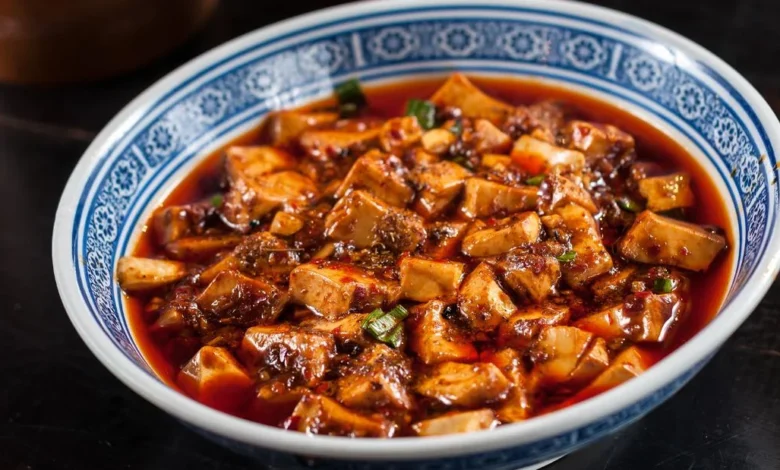
Similarly, Mapo Tofu stands as a pillar of Sichuanese identity. A successful rendition must achieve a specific "zing" derived from Hanyuan peppercorns and fermented broad bean paste (doubanjiang) from the Pidu district. The dish, traditionally featuring soft tofu and minced beef or pork, represents the Sichuanese ability to elevate simple proteins through complex fermentation.

Noodles also play a central role in the Sichuanese diet, with Dan Dan Mian serving as the quintessential soul food. Named after the carrying poles (dan dan) used by 19th-century street hawkers, these noodles are served either dry-mixed or in a spicy, nutty broth. The addition of "rou saozi"—finely chopped pork fried in lard until golden—provides a textural contrast that has made the dish a staple in Chinese restaurants globally.
Southern Mastery: Cantonese Precision and Chaozhou Purity
In southern China, particularly within the Guangdong province, the culinary focus shifts toward the preservation of an ingredient’s original "umami" or natural essence. This is most evident in the art of Cantonese Steamed Fish. The technique is deceptively simple but requires exacting precision; the timing is calculated down to the second based on the fish’s weight and the stove’s heat. Overcooking results in a loss of moisture, while undercooking prevents the flesh from separating from the bone. Served with sweetened soy sauce and ginger, it remains a benchmark for culinary skill.
Cantonese cuisine is also famous for "Siu Mei," or roasted meats. Roast Goose, often prepared in wood-fired ovens using camphor or lychee wood, provides a smoky depth that complements the bird’s natural fat. Char Siu (barbecue pork) offers a different profile, utilizing a marinade of maltose, wine, and soy sauce to create a charred, sweet exterior.

Further south, the seaside region of Chaozhou (Teochew) emphasizes seafood purity. Chaozhou-style cold crab or fish involves lightly seasoning the catch with salt before steaming and then cooling it to room temperature. This method preserves the freshness of the seafood, which is typically paired with fermented soybean paste or a garlic-vinegar dip. This "no-frills" approach is a calculated move to highlight the quality of the local catch, reflecting a deep respect for maritime resources.
Historical Staples and the Legend of the Scholar-Statesman
Chinese cuisine is frequently intertwined with the lives of historical figures. Dongpo Rou, a rich, braised pork belly dish, is named after Su Dongpo, a renowned Song Dynasty poet and statesman. The pork is slow-cooked with rock sugar, soy sauce, and yellow wine until it reaches a consistency so tender it can be divided with chopsticks. This dish exemplifies the "red braising" technique, a cornerstone of eastern Chinese cooking.
In the southwest, Yunnan province offers the "Cross-the-Bridge Rice Noodles" (Guoqiao Mixian). The dish is rooted in a folklore tale of a wife who devised a way to keep her husband’s lunch warm as he studied on an isolated island. By carrying a pot of chicken broth with a layer of oil on top to insulate the heat, she could cook the raw ingredients and noodles on-site. Today, the dish remains a popular interactive dining experience, with various meats and vegetables added to a scalding hot broth at the table.

The Architecture of the Dumpling: From Jiaozi to Xiaolongbao
Dumplings and buns form the backbone of the Chinese carbohydrate landscape. Jiaozi, which can be boiled, steamed, or pan-fried, are a symbolic staple of northern China, particularly during the Lunar New Year. However, the Fujian region offers a unique variation known as "Rouyan," where the dumpling wrapper itself is made from a mixture of pounded pork and flour, creating a distinctively chewy texture.
In Shanghai and the surrounding Jiangnan region, the Xiaolongbao (soup bun) represents a peak of culinary engineering. These delicate buns contain a pork filling and a rich broth that is solid at room temperature but melts during the steaming process. Connoisseurs judge a Xiaolongbao by the thinness of its skin and the number of pleats (traditionally 18) at the top. A similar pan-fried version, Sheng Jian Bao, offers a crispy bottom and a sesame-topped exterior, providing a different textural experience of the same pork-and-broth concept.
Street Food and the Breakfast Culture
The Chinese breakfast is a diverse affair, ranging from the savory crepes of the north to the comforting porridges of the south. In Tianjin, the "Jian Bing Guozi" is a mandatory morning ritual. This mung bean crepe is topped with eggs, scallions, and bean paste before being wrapped around a "guozi" (deep-fried crisp) or a fried breadstick.

Congee (rice porridge) serves as a universal comfort food across the country. In the south, it is often enriched with lean pork and century eggs, while northern versions may utilize millet and pumpkin. These porridges are frequently paired with "Youtiao" (deep-fried dough sticks), which are dipped into the liquid to absorb the flavors. This emphasis on digestibility and warmth underscores the traditional Chinese medical belief in food as a form of preventative healthcare.
Data and Economic Implications of Chinese Gastronomy
The global footprint of Chinese cuisine is not merely a matter of cultural exchange but a significant economic driver. According to market research, the global Chinese restaurant market is valued at hundreds of billions of dollars, with the industry seeing a shift toward "authentic" regional branding rather than generic "Chinatown" menus.
Official efforts by the Chinese government and local municipalities have sought to standardize and protect culinary heritage. For instance, the cities of Chengdu, Shunde, Macau, and Yangzhou have all been designated as UNESCO "Cities of Gastronomy." This recognition has bolstered culinary tourism, which now accounts for a significant portion of domestic travel revenue. Furthermore, the export of specialized ingredients—such as Pidu broad bean paste or Hanyuan peppercorns—has created a robust supply chain that supports rural agricultural sectors.

Conclusion: A Living Culinary Map
The diversity of Chinese food is a testament to the country’s ability to integrate tradition with regional necessity. Whether it is the salt-preserved meats of the nomadic Hakka people (Mei Cai Kou Rou) or the bouncy beef balls of Chaozhou, each dish serves as a repository of history and geography. As China continues to urbanize, these traditional flavors are being reimagined in high-end dining rooms and modern food stalls, ensuring that the nation’s culinary map remains as vibrant and complex as its history. For the global observer, understanding these essential eats is more than a gastronomic journey; it is an entry point into the heart of Chinese civilization.