Species Ingenious Survival Strategies Face Unprecedented Threats from Human Activity as IUCN Updates Global Red List

The International Union for Conservation of Nature (IUCN) has released its latest update to the Red List of Threatened Species, revealing a stark contrast between the extraordinary evolutionary adaptations of the natural world and the accelerating pace of human-driven destruction. While life has successfully colonized the most extreme environments on Earth—from the crushing, superheated depths of the ocean floor to the arid stretches of the African coastline—these specialized survival strategies are increasingly proving insufficient against the combined pressures of industrial mining, climate change, and invasive species. The report, which now includes assessments for 175,909 species, indicates that 49,505 are currently threatened with extinction, marking a critical juncture for global biodiversity conservation.
The update highlights that even the most resilient organisms, which have evolved over millions of years to thrive in "hostile" conditions, are now at a breaking point. Dr. Grethel Aguilar, the IUCN Director General, emphasized that while the situation is dire, the data also provides a roadmap for recovery. The report suggests that while human activity is the primary driver of the current extinction crisis, targeted nature conservation efforts remain a highly effective tool for reversing these trends.
The Deep-Sea Frontier: Hydrothermal Vents and the Mining Threat
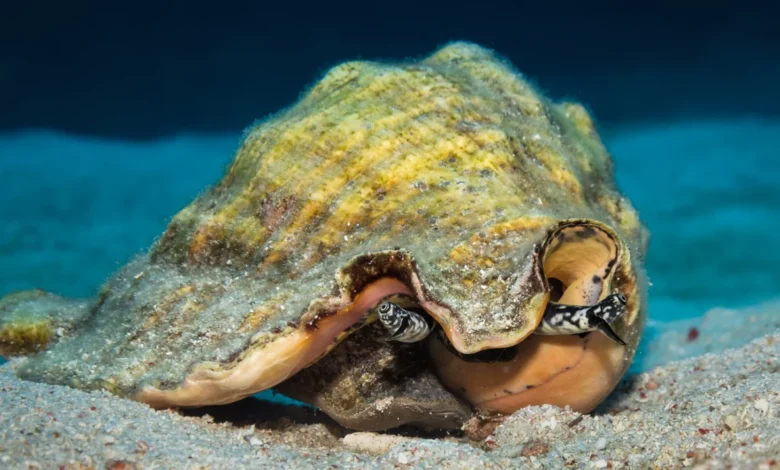
Among the most alarming findings in the latest Red List update is the precarious state of deep-sea mollusk populations. Hundreds of species of snails, limpets, and clams have adapted to life on hydrothermal vents—fissures on the seafloor where geothermally heated water, sometimes reaching temperatures of 450 degrees Celsius (842 Fahrenheit), erupts from the Earth’s crust. These ecosystems are among the most unique on the planet, relying on chemosynthesis rather than photosynthesis.
However, the assessment reveals that two-thirds of the mollusk species found exclusively on these vents are now at risk of extinction. The primary driver of this threat is the burgeoning deep-sea mining industry. As global demand for minerals like cobalt, copper, and manganese grows—often for use in green energy technologies—mining companies are looking to the deep ocean floor. The process of exploring and extracting these minerals involves heavy machinery that disturbs the seabed, creating vast plumes of sediment. These sediments can travel long distances, smothering the delicate vent communities and clogging the feeding mechanisms of sedentary mollusks.
A specific example cited by the IUCN is the snail Lirapex felix, which has been classified as critically endangered. Its habitat in the Indian Ocean overlaps directly with areas targeted for mineral exploration. Conversely, the report offers a glimpse of hope through the case of Provanna exquisita. This ornately shelled snail remains categorized as "Least Concern" because its entire known range falls within the Mariana Arc of Fire National Wildlife Refuge, a marine protected area where mining is strictly prohibited. This disparity underscores the immediate impact of policy and protection on species survival.
The release of this data coincides with high-level negotiations by the International Seabed Authority (ISA) in Jamaica. The ISA is currently tasked with finalizing regulations that would govern deep-sea mining in international waters. In 2021, the IUCN membership voted overwhelmingly for a moratorium on deep-sea mining until the environmental impacts are better understood, a position that this latest data on vent mollusks strongly reinforces.
Specialized Survival in the Terrestrial Realm: The Desert Rain Frog
The Red List update also turns its attention to the desert rain frog (Breviceps macrops), a creature that exemplifies the ingenuity of evolution. Unlike most amphibians that require standing water or high humidity to survive, the desert rain frog has adapted to the hyper-arid coastal dunes of South Africa and Namibia. It spends the daylight hours buried deep in the sand to avoid the scorching sun, emerging only at night to hunt insects and absorb moisture from the sea fog that rolls inland.
Despite these remarkable adaptations, the desert rain frog is now classified as "Vulnerable." Its habitat is being systematically fragmented by diamond mining operations and the expansion of energy infrastructure along the Atlantic coast. Furthermore, the frog has become an accidental victim of the digital age. A viral video featuring the frog’s high-pitched "squeak"—actually a distress call intended to deter predators—has led to a surge in demand within the exotic pet trade. This poaching, combined with habitat loss, has placed the species on a path toward potential extinction if current trends are not halted.
The Climate Crisis and the Emperor Penguin
The ongoing climate emergency remains a dominant factor in the decline of global biodiversity. In an update earlier this year, the IUCN officially declared the emperor penguin (Aptenodytes forsteri) to be in danger of extinction. The primary cause is the catastrophic loss of Antarctic sea ice, which the penguins rely on for breeding and raising their chicks.
Recent observations have documented "mass drowning" events where entire colonies of chicks perished because the sea ice broke up prematurely, before the young birds had developed waterproof feathers. As global temperatures continue to rise, the stability of the Antarctic ice sheets is increasingly compromised, threatening the long-term viability of the species. The emperor penguin serves as a flagship species for the broader impact of climate change on polar ecosystems, where the rate of warming is significantly higher than the global average.
Success Stories and the Power of Conservation: The Numbat’s Recovery
Despite the prevailing narrative of loss, the IUCN update provides significant evidence that conservation interventions can yield positive results. The numbat (Myrmecobius fasciatus), a unique, termite-eating marsupial from Australia, has been moved from the "Endangered" category to "Near Threatened."
In the late 1970s, the numbat population plummeted to fewer than 300 individuals, driven toward extinction by habitat loss and predation by invasive species—specifically feral cats and red foxes. Decades of intensive management have turned the tide. Conservationists utilized a combination of predator-proof fencing, large-scale baiting programs to control invasive predators, and captive breeding initiatives at the Perth Zoo.
Through these efforts, several self-sustaining populations have been re-established in the wild. Today, the population is estimated to be between 2,000 and 3,000. Professor John Woinarski, co-chair of the IUCN Species Survival Commission, noted that the numbat is the last surviving member of the Myrmecobiidae family. Its recovery is not only a victory for biodiversity but also for ecosystem health; the numbat’s digging behavior helps aerate the soil and increases water penetration, which supports the health of Australian woodlands.
The Extinction Toll: Australia’s Lost Marsupials
While the numbat’s recovery is a cause for celebration, the report also confirms the permanent loss of other species. Five Australian marsupials have been officially declared extinct after not being sighted for more than 60 years. These include:
- The Crest-tailed Mulgara
- The Southern Mulgara
- The Northern Mulgara
- The Little Mulgara
- The Little Bettong
These species, ranging from rat-sized carnivores to rabbit-sized jumping marsupials, were unable to survive the introduction of feral cats and red foxes by European settlers. Australia now holds the somber record for the highest number of modern mammal extinctions, with more than 40 species lost since colonization. These extinctions serve as a cautionary tale regarding the speed at which invasive species can dismantle an ecosystem that has evolved in isolation for millions of years.
Chronology of the Red List and Methodology
The IUCN Red List of Threatened Species was established in 1964 and has since evolved into the world’s most comprehensive information source on the global conservation status of animal, fungus, and plant species. It is not merely a list of names; it is a sophisticated tool used by governments, NGOs, and scientists to prioritize conservation action.
The assessment process involves a rigorous review of a species’ range, population size, habitat, and the specific threats it faces. Species are categorized into one of eight groups:
- Extinct (EX): No reasonable doubt that the last individual has died.
- Extinct in the Wild (EW): Survives only in captivity or as a naturalized population outside its historic range.
- Critically Endangered (CR): Extremely high risk of extinction in the wild.
- Endangered (EN): Very high risk of extinction in the wild.
- Vulnerable (VU): High risk of extinction in the wild.
- Near Threatened (NT): Likely to qualify for a threatened category in the near future.
- Least Concern (LC): Does not qualify for a higher risk category; widespread and abundant.
- Data Deficient (DD): Inadequate information to make an assessment.
Broader Implications and Global Policy
The findings of the latest Red List update carry significant weight for international policy. As the world approaches the mid-point of the decade, the pressure to meet the "30 by 30" goal—protecting 30% of the Earth’s land and sea by 2030—is mounting. The IUCN data suggests that achieving this goal is essential for the survival of specialized species like those found on hydrothermal vents and in arid coastal regions.
The report also highlights the "twin crisis" of biodiversity loss and climate change. The two are inextricably linked; climate change accelerates the loss of species, while the loss of healthy ecosystems reduces the planet’s ability to sequester carbon and buffer against climate impacts.
Professor Julia Sigwart of Senckenberg Nature Research, who coordinated the vent mollusk assessment, pointed out that the data provides "crucial evidence" for international bodies. The move toward deep-sea mining, for example, is often framed as a necessity for the "green transition," but the IUCN’s findings suggest that this transition could come at the cost of entirely unique biological lineages.
Conclusion: A Call for Sustained Action
The latest update to the IUCN Red List serves as both a warning and a testament to the efficacy of conservation. While the sheer number of species threatened with extinction—nearly 50,000—is a staggering reflection of human impact, the success of the numbat and the protection of vent species in the Mariana Arc of Fire demonstrate that extinction is not an inevitability.
The path forward requires a shift from reactive conservation to proactive habitat protection and the stringent regulation of extractive industries. As Dr. Aguilar noted, "Nature conservation works," but it requires sustained funding, international cooperation, and a willingness to prioritize biological heritage over short-term industrial gain. By preserving the world’s most "ingenious" survivors, humanity ensures the continued stability of the ecosystems upon which all life, including our own, ultimately depends.