Kevin Weil, Tech Veteran and Early Investor, Joins Stoke Space Board to Accelerate Reusable Rocket Ambitions

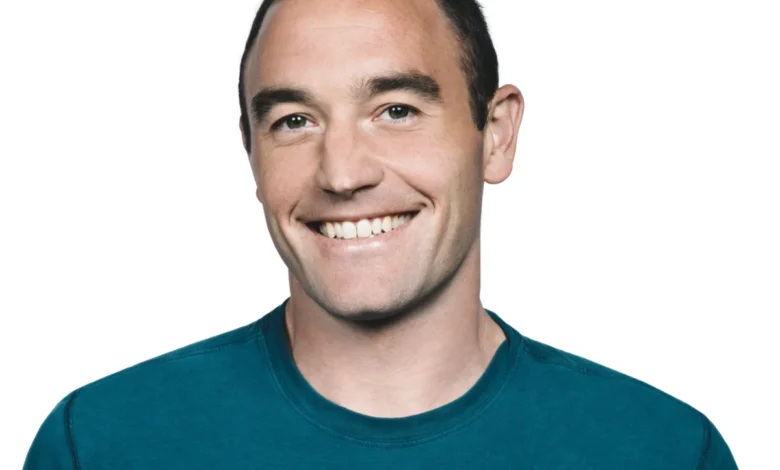
Kevin Weil, a distinguished veteran of the technology sector with a storied career spanning influential roles at Twitter, Meta, Planet Labs, and OpenAI, has officially joined the board of directors for Stoke Space. This strategic appointment signals a significant bolstering of leadership for the Seattle-based startup, which is aggressively developing rapidly reusable rockets designed to challenge the dominance of industry leader SpaceX. Weil’s transition from an early investor to a formal board member underscores the growing confidence in Stoke Space’s ambitious vision to revolutionize access to orbit through unparalleled reusability.
A Strategic Appointment for a High-Stakes Venture
Weil’s arrival on Stoke Space’s board brings a wealth of experience in scaling high-growth technology companies, navigating complex market dynamics, and fostering innovation. His career trajectory is marked by pivotal leadership positions across some of the most impactful tech firms of the last two decades. At Twitter, he served as Senior Vice President of Product, overseeing the evolution of its core platform. Following this, he joined Meta (then Facebook) as Vice President of Product for Instagram, where he played a crucial role in expanding the platform’s features and user engagement globally. Beyond social media, Weil ventured into the burgeoning space industry as President of Planet Labs, a satellite earth observation company, guiding it through its public listing in 2021. Most recently, he contributed to OpenAI, initially as Chief Product Officer from June 2024 to October 2025, and subsequently leading efforts to accelerate scientific research before his departure in April. While his past work has predominantly focused on digital products and platforms, areas not immediately apparent on Stoke’s hardware-centric roadmap, his comprehensive understanding of technology lifecycle management, market strategy, and organizational scaling is invaluable for a startup poised for exponential growth.
The Genesis of a Partnership: From Early Investment to Board Leadership
The relationship between Kevin Weil and Stoke Space CEO Andy Lapsa dates back to the startup’s nascent stages. Lapsa, an engineer by trade, co-founded Stoke in 2020 and soon after entered Y Combinator’s winter batch. He openly recounts the challenges he faced as a founder without prior experience in the intricate world of venture capital and Silicon Valley networking. "It’s real simple for me," Lapsa shared with TechCrunch, reflecting on his initial interactions with Weil. "I came out of engineering, started a company, had no idea how to fundraise. I had no idea how Silicon Valley worked. I had no network. Kevin comes with all of that background and was able to help me think about fundraising and getting the company off the ground."
Weil, alongside his wife Elizabeth, became an early investor in Stoke Space through their fund, Scribble Ventures. Scribble Ventures typically focuses on seed and early-stage investments in technology companies, often identifying disruptive potential in various sectors. This early financial and strategic support proved crucial as Stoke embarked on its capital-intensive journey. The two executives maintained an ongoing dialogue as Stoke Space meticulously built out its capabilities and attracted substantial investment. Over the past few years, Stoke has amassed an impressive $1.34 billion in funding, culminating in a significant $510 million Series D round in 2025. This substantial capital injection has propelled the company toward its goal of developing a rapidly reusable rocket, with plans to conduct its first flight this year. With the company transitioning from a development phase to preparing for operational launches and aggressive scaling, the timing was deemed opportune for Weil to formalize his involvement as a director on the board, leveraging his strategic insights to guide Stoke through its next critical growth phase.
Stoke Space: Pioneering Full and Rapid Reusability
Stoke Space is at the forefront of a technological frontier, developing its Nova rocket with the audacious goal of achieving full and rapid reusability – a feat no company has yet fully accomplished. While SpaceX has made remarkable strides with its Starship, which aims for full reusability, and has successfully demonstrated partial reusability with its Falcon 9 booster, the complete and rapid reuse of an entire orbital launch vehicle remains an elusive holy grail in the aerospace industry.
The technical challenges inherent in this endeavor are immense. Chief among them is the ability of a rocket to withstand the extreme thermal loads experienced during atmospheric re-entry from orbital velocities. Materials science, advanced aerodynamics, and innovative propulsion systems are all critical components that must function flawlessly under incredibly harsh conditions. The re-entry phase generates plasma temperatures that can exceed thousands of degrees Celsius, demanding cutting-edge thermal protection systems and robust structural integrity. Furthermore, rapid reusability implies minimal refurbishment between flights, requiring highly durable components and automated inspection and turnaround processes. Even industry giants like Jeff Bezos’s Blue Origin, where Lapsa previously worked, have explored similar approaches but have not prioritized them to the same extent as Stoke, illustrating the difficulty and capital intensity of this pursuit. Stoke’s approach, while proprietary, is designed to address these challenges head-on, promising a paradigm shift in launch economics.
The Broader Market Landscape: A Race for Affordable Access to Space
The commercial space launch market is experiencing unprecedented growth, driven by a confluence of factors including the proliferation of satellite constellations for broadband internet (e.g., Starlink, Project Kuiper), advancements in Earth observation, scientific research missions, and an increasing demand for national security applications. Despite billions of dollars invested in new launch vehicles and a growing number of players, Andy Lapsa rightly observes, "The world is realizing that launch is still not solved." There simply aren’t enough rockets to meet the surging demand, and existing solutions often come with high costs and lengthy lead times.
This scarcity creates a lucrative opportunity for the next company capable of providing a reasonably-priced, frequently flying rocket. The economic implications of achieving full and rapid reusability are profound. Such a capability could drastically reduce the cost per kilogram to orbit, making space access more democratic and enabling entirely new industries. Where traditional rockets are largely expendable, driving up costs, a fully reusable system could operate more like an airliner, with costs amortized over many flights. This vision, once considered "a little bit out there," as Lapsa notes, "that’s now been rather normalized, and people see the inevitable now." SpaceX’s blockbuster stock market debut, with much of its valuation predicated on the eventual operational success of Starship and its promise of reusability, has validated the foresight of companies like Stoke Space. The market is primed for a disruptor that can consistently deliver on the promise of affordable, frequent, and reliable access to space.
Strategic Implications: Beyond Digital Products
While Kevin Weil’s professional pedigree in digital products might seem distinct from rocket engineering, his value to Stoke Space extends far beyond technical specifics. His expertise lies in strategic growth, organizational scaling, fundraising, market positioning, and navigating complex ecosystems – all critical functions for a hardware-heavy startup transitioning to commercial operations. Board members with such broad strategic acumen are essential for steering a company through periods of rapid expansion and intense competition.
One particularly relevant aspect of Weil’s background is his experience bridging the gap between Silicon Valley innovation and the imperatives of national security. He served as President of Planet Labs, a company whose satellite Earth observation data is highly valuable to government and defense agencies. Moreover, Weil was one of four prominent tech executives who joined the US Army Reserve in a notable initiative aimed at improving recruitment and fostering greater cooperation between the military and the technology industry. This direct engagement with the Department of Defense is a significant asset for Stoke Space, as military contracts are increasingly becoming a cornerstone of success for private space companies. The U.S. government, seeking resilient and diverse launch capabilities, is a major customer, and Weil’s understanding of defense procurement processes and strategic needs could be a key differentiator for Stoke.
Furthermore, the intriguing connection to OpenAI warrants careful consideration. Sam Altman, the CEO of OpenAI, was reportedly exploring an investment in Stoke last year, contemplating backing a direct competitor to Elon Musk’s SpaceX. Weil’s recent tenure at OpenAI, including his role as Chief Product Officer, naturally raises the question of whether he could serve as a vital link between the frontier AI lab and a potential partner in space. While Lapsa prudently declined to comment on "gossip and rumors" about OpenAI, emphasizing Weil’s singular focus on Stoke, the speculation highlights a broader trend: the convergence of advanced computing and space exploration. As AI capabilities expand, the demand for novel data acquisition, processing, and even dedicated infrastructure in orbit could grow exponentially. An AI company might eventually require reliable, cost-effective launch capabilities to deploy its own space-based assets, making a relationship with a company like Stoke strategically attractive.
The Vision for Space: From Orbiting Data Centers to Strategic Autonomy
The ultimate prize for achieving full, rapid reusability extends beyond merely launching satellites more cheaply. It unlocks entirely new paradigms for space utilization. One concept that has captured the imagination of venture capitalists and futurists alike is the establishment of distributed data centers in space. These orbital facilities could leverage abundant solar power, operate in a vacuum environment conducive to certain computations, and potentially circumvent terrestrial political restrictions. However, as Lapsa succinctly puts it, space data centers "really only make sense with full rapid reuse." The sheer volume of computer chips and associated infrastructure required to be sent into orbit would be prohibitively expensive without a dramatic reduction in launch costs. Stoke’s Nova rocket, if successful, could be a critical enabler for such ambitious projects, positioning the company as a foundational pillar for future space infrastructure.
Beyond data centers, cheap and reliable access to space could accelerate advancements in in-orbit manufacturing, lunar and Martian exploration, asteroid mining, and a host of other ventures currently limited by the exorbitant cost of launch. This capability also holds significant implications for national strategic autonomy in space, ensuring that nations have independent and resilient access to orbit for critical infrastructure and defense.
The Road Ahead for Stoke Space
Despite the significant strides made in fundraising, technology development, and now, strategic leadership with Weil’s appointment, Stoke Space faces the ultimate test: execution. Building and operating a fully reusable orbital rocket is an undertaking fraught with technical complexities and financial risks. "We’ve got a good chunk of the risk behind us, we’ve got more to go," Lapsa acknowledged. The aerospace industry is littered with ambitious projects that faltered at the critical juncture of transitioning from development to operational reliability.
Stoke Space is now on the precipice of demonstrating its Nova rocket’s capabilities, with a planned flight this year. The stakes are extraordinarily high, not just for the company, but for the broader commercial space industry that eagerly awaits the next breakthrough in launch economics. With Kevin Weil’s extensive experience in scaling innovative companies and navigating complex markets now officially integrated into its leadership, Stoke Space is better positioned than ever to tackle the remaining challenges and potentially redefine the future of space access. The world watches as they prepare to "go when it’s ready," hoping to usher in an era where the cosmos are truly within reach.