
Dublin Evelyn Hofer Photography
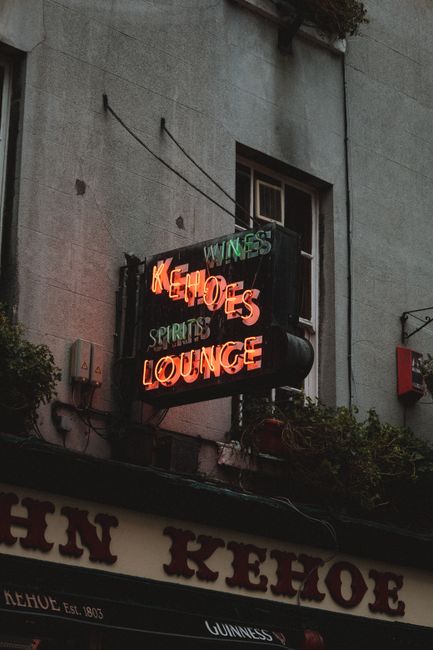
Evelyn Hofer’s Dublin: A Poetic Cartography of a City in Transition
Evelyn Hofer’s photographic engagement with Dublin, particularly her work from the late 1950s and early 1960s, transcends mere documentary. It’s a deeply personal and visually eloquent exploration of a city poised on the cusp of modernity, yet still profoundly tethered to its historical and social fabric. Hofer, renowned for her masterful control of light, composition, and her ability to imbue her subjects with a quiet dignity, found in Dublin a fertile ground for her distinctive aesthetic. Her images are not snapshots; they are carefully constructed meditations, revealing the soul of a place through its architecture, its people, and the ephemeral interplay of urban life. This period in Dublin’s history was one of significant socio-economic change, a slow emergence from post-war austerity and political isolation. Hofer’s lens, however, seems to bypass the overt political narratives and instead focuses on the enduring spirit of the city, its textures, its rhythms, and its inherent, often understated, beauty. Her approach was one of patient observation, a willingness to let the city reveal itself through her meticulous framing. This resulted in a body of work that is both historically significant and artistically enduring, offering a unique perspective on Dublin’s past that continues to resonate with contemporary viewers. The quietude that often pervades her Dublin photographs is not an absence of life, but rather an invitation to a deeper, more considered engagement with the visual world.
Hofer’s photographic technique in Dublin is characterized by its deliberate and precise nature. She was not a photographer of rapid-fire exposures; instead, each shot was considered, meticulously planned. Her use of natural light is legendary, and in Dublin, she masterfully captured the city’s characteristic soft, diffused light, often filtering through narrow streets and reflecting off damp pavements. This atmospheric quality lends a timelessness to her images, making them feel both of their specific moment and eternally relevant. Her compositions are often balanced and harmonious, employing geometric lines of architecture, the framing capabilities of doorways and windows, and the careful placement of her subjects within the urban landscape. There is a clear architectural awareness in her work; she understood how buildings shaped the city and how they could serve as potent visual metaphors. The grand Georgian squares and the more humble terraced houses alike are rendered with an equal degree of attention and respect. Her prints, often large format and richly toned, possess a painterly quality, further enhancing the sense of artistry and considered execution. This meticulous approach to craft is a cornerstone of Hofer’s photographic philosophy, and her Dublin series stands as a testament to its efficacy in capturing the essence of a complex urban environment. The deliberate slow pace of her work allowed her to absorb the nuances of Dublin’s character, moving beyond superficial appearances to uncover deeper truths about the city and its inhabitants.
The subjects Hofer chose to photograph in Dublin are telling. While she captured iconic landmarks, her true fascination lay with the everyday realities of the city. Street scenes abound, depicting figures going about their daily lives: women carrying shopping, children playing in laneways, men engaged in conversation. These are not staged portraits; they are observations of genuine human presence within the urban fabric. There’s a profound sense of empathy in her portrayal of these individuals. Even in their anonymity, they are imbued with a quiet dignity and a palpable sense of character. She was particularly drawn to the interplay between people and their environment, showing how individuals were shaped by, and in turn shaped, the city around them. The weathered facades of buildings, the worn cobblestones, the rain-slicked streets – these elements are not just backdrops; they are active participants in the narratives of her photographs. Her focus on the ordinary elevates it to the extraordinary, revealing the inherent beauty and resilience of the human spirit within a specific urban context. This commitment to depicting the unvarnished reality of life, without overt sentimentality, is a hallmark of her oeuvre and is powerfully evident in her Dublin work. The quiet introspection of her subjects, even those caught in fleeting moments, invites viewers to pause and contemplate their own relationship with urban spaces and the people who inhabit them.
Hofer’s Dublin is a city of contrasts, a visual dialogue between the old and the new, the grand and the intimate. She documented the imposing elegance of Georgian architecture alongside the more modest dwellings of working-class neighborhoods. This juxtaposition is not presented judgmentally but rather as an inherent characteristic of the city’s evolving identity. She captures the echoes of Ireland’s colonial past in the imposing public buildings, but also the burgeoning sense of a distinct Irish modernity in the streets and faces of its people. Her photographs reveal a city still emerging from a period of relative cultural and economic isolation, yet one that possesses an underlying vitality and a rich historical legacy. The presence of tradition, whether in the form of street vendors or religious iconography subtly present in the background, is undeniable. Yet, there’s a sense of forward momentum, a quiet optimism that can be felt in the energy of her street scenes and the direct gaze of her subjects. This nuanced portrayal avoids simplistic categorizations, instead offering a complex and multifaceted portrait of Dublin during a pivotal era of its development. The visual language she employs skillfully navigates these dualities, creating a photographic tapestry that is both historically informative and aesthetically compelling.
The notion of "place" is central to Evelyn Hofer’s photographic practice, and her Dublin series is a profound exploration of this concept. She understood that a city is more than just a collection of buildings; it is a living entity, shaped by its history, its culture, and the experiences of its inhabitants. Her photographs of Dublin capture this essence, revealing the city not as a static entity but as a dynamic and ever-evolving landscape. She was adept at conveying the intangible qualities of a place – its atmosphere, its character, its sense of belonging. The specific quality of light, the textures of the buildings, the way people moved through the streets – all these elements contribute to the palpable sense of place that defines her Dublin images. This is achieved through a keen observation of detail and a masterful control of visual elements. She doesn’t just show us Dublin; she allows us to feel Dublin. The quiet contemplation that her photographs evoke encourages viewers to consider their own relationship with the places they inhabit and the memories that are intrinsically linked to them. Her work serves as a powerful reminder of the enduring connection between people and their environment, a relationship that is both deeply personal and universally resonant.
Hofer’s engagement with Dublin also speaks to a broader post-war photographic trend that sought to move beyond overt social commentary towards a more introspective and humanistic approach. While photographers like Henri Cartier-Bresson explored the "decisive moment," Hofer’s approach was often more deliberate, allowing her subjects and their environment to unfold at their own pace. Her work in Dublin can be seen as a form of visual ethnography, albeit one conducted with an artist’s eye rather than a sociologist’s. She was interested in capturing the subtle nuances of everyday life, the unspoken stories that could be read in a gesture, a posture, or the way light fell on a particular surface. Her photographs possess a quiet poetry, a sense of contemplation that invites the viewer to engage with the image on a deeper, more personal level. The resulting body of work offers a valuable historical document of Dublin in the mid-20th century, but its true enduring power lies in its artistic merit and its ability to evoke a profound emotional response. Her sustained gaze on the city and its inhabitants created a visual archive that continues to speak to the universal human experience of living within an urban environment.
The subtle yet pervasive influence of Evelyn Hofer’s photographic vision on subsequent generations of photographers, particularly those focused on urban landscapes and portraiture, cannot be overstated. Her ability to infuse seemingly ordinary scenes with a profound sense of gravitas and timelessness established a benchmark for documentary and fine art photography alike. Her meticulous attention to composition, light, and the psychological depth of her subjects provided a masterclass in visual storytelling. For photographers seeking to capture the essence of a city, or the intricate tapestry of human lives within it, Hofer’s Dublin series serves as an invaluable resource. It demonstrates the power of patient observation, the importance of understanding the context of one’s subject, and the profound artistic potential that lies within the everyday. Her legacy is one of quiet mastery, a testament to the enduring power of the still image to capture the complexities of human experience and the soul of a place. The deliberate, often unhurried, pace of her work encouraged a contemplative approach to image-making, a valuable counterpoint to the often frenetic pace of contemporary visual culture. Her Dublin photographs remain a compelling and poignant testament to her unique artistic vision and her profound connection with the city.
