The Crisis of Competence and the Push for State Autonomy The Future of the Federal Emergency Management Agency

The first year of the Trump administration has been marked by a series of systemic shocks that have brought the Federal Emergency Management Agency (FEMA) to the brink of institutional collapse. From high-level leadership purges to fundamental shifts in the federal government’s philosophy on disaster response, the agency is currently navigating its most turbulent period since its inception in 1979. While the recent appointment of former Oklahoma Senator Markwayne Mullin as the head of the Department of Homeland Security (DHS) has signaled a potential change in direction, the agency remains paralyzed by a legacy of spending freezes, staffing cuts, and an ideological push to offload federal responsibilities onto individual states.
The Era of Paralysis: The Noem Legacy and the Spending Freeze
The crisis at FEMA reached a fever pitch under the tenure of former Secretary of Homeland Security Kristi Noem. During her time in office, Noem instituted a near-total freeze on disaster recovery and response spending, a move that critics and agency insiders say effectively "decapitated" the agency’s ability to function. This freeze was not merely a budgetary adjustment; it was a cessation of the flow of billions of dollars intended for communities recovering from previous disasters and those preparing for new ones.
The real-world consequences of this policy were felt most acutely during the July 4 floods in Central Texas. As historic rainfall submerged communities, the federal response was notably absent or delayed, a direct result of the administrative hurdles placed on the agency’s core functions. Beyond immediate response, the freeze effectively ended FEMA’s resilience programs, including the Building Resilient Infrastructure and Communities (BRIC) initiative, which is designed to harden infrastructure against future catastrophes.
Simultaneously, the administration’s broader "purge" of the federal civil service, spearheaded by Elon Musk’s efficiency initiatives, targeted the very experts required to manage complex logistics during national emergencies. Leaked memos from earlier this year revealed that DHS planned to reduce FEMA’s on-the-ground response staffing by approximately 50 percent. This reduction in force has left the agency with a skeletal staff as it enters one of the most volatile weather cycles in recent history.
Leadership Transition: From Noem to Mullin
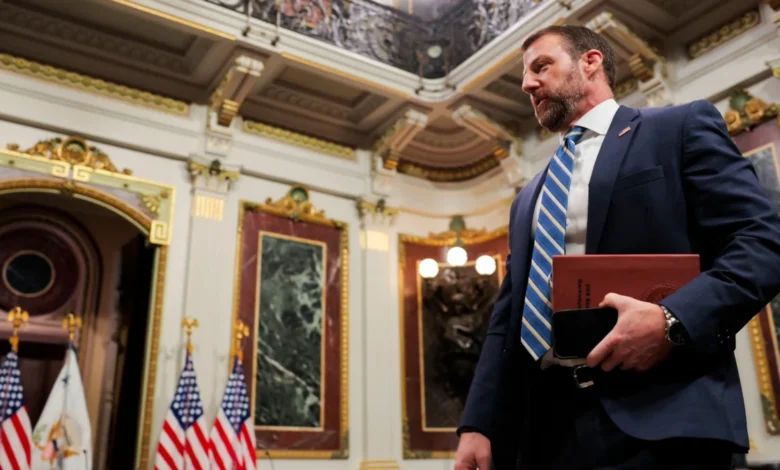
The firing of Kristi Noem last month followed a series of controversies that went beyond FEMA’s internal struggles. Allegations of improper personal spending, misleading testimony before Congress, and a perceived failure to manage immigration enforcement led to her sudden exit. In her wake, President Trump appointed Markwayne Mullin, a former senator known for a more pragmatic, albeit still staunchly conservative, approach to governance.
Mullin has moved quickly to distance himself from Noem’s "micromanagement." He has vowed to lift the spending freeze and has already begun a quiet purge of Noem’s top deputies. According to FEMA employees speaking on the condition of anonymity, several high-ranking officials handpicked by the previous secretary have been dismissed in an effort to "unclog" the agency’s bureaucratic arteries.
However, the transition is far from complete. While Mullin has promised to appoint a permanent administrator—a role Noem left vacant in favor of interim leadership—the current acting head remains Karen Evans. Evans, a Noem appointee, still maintains significant control over which expenses receive high-level approval. Consequently, while some reconstruction payments have been "unfrozen," the majority of the agency’s long-term infrastructure aid remains in a state of suspended animation.
The Ideological Shift: Disaster Response as a State Responsibility
Perhaps the most significant challenge facing FEMA is a fundamental shift in the administration’s view of the agency’s role. President Trump and Secretary Mullin have both articulated a vision where the federal government moves from a primary responder to a "supporting" entity. During a recent visit to North Carolina, Mullin underscored this philosophy, stating that states should not view FEMA as a first responder but rather as a secondary resource to support existing local capabilities.
"The state is much more equipped," Mullin noted during his visit. "But we can be there to get them past the first heavy lift."
This "balkanization" of disaster response is a cornerstone of the administration’s policy. The goal is to force states to shoulder the financial and logistical burden of disasters, a move that proponents argue encourages fiscal responsibility and local autonomy. However, emergency management experts warn that this shift ignores the reality of state-level capacity. While states like Texas and Florida have robust, well-funded emergency management departments, many others do not.
Andrew Rumbach, a senior fellow at the Urban Institute, warns that a smaller federal role with fewer resources will have "hugely significant impacts" on vulnerable regions. States with smaller budgets, such as Mississippi, Louisiana, and West Virginia, lack the tax base to fund multi-billion-dollar recovery efforts independently. Without a reliable federal backstop, these states face the prospect of permanent economic depression following major climate events.
The Collapse of Oversight: The National Flood Insurance Program
One of the most immediate casualties of the agency’s internal turmoil is the National Flood Insurance Program (NFIP). The program, which provides subsidized flood coverage to approximately 5 million American households, relies on a complex rating system to incentivize cities to adopt proactive flood protection measures.
In recent weeks, the contract with the private company responsible for managing this rating system was allowed to lapse. As a result, the discount program has been suspended. This means that, for the first time in decades, there is no federal monitoring of whether U.S. cities and counties are rebuilding in high-risk floodplains or adhering to mitigation standards. Without these incentives, local governments may prioritize rapid rebuilding over long-term safety, potentially trapping homeowners in a cycle of repeated flooding and financial ruin.
Case Study: Maryland’s Forced Independence
The impact of FEMA’s "austerity conditions" is already visible in Maryland. Following devastating river floods in the western part of the state last year, the Trump administration denied a request for $30 million in reconstruction aid. Despite meticulous documentation of the damage—which far exceeded the traditional threshold for federal intervention—the request was flatly refused.
In response, Governor Wes Moore was forced to launch Maryland’s first-ever "state disaster recovery fund." However, the scale of state aid remains a fraction of what was requested. The state was able to provide approximately $500,000 to Allegany County, where the cost of repairing roads and bridges alone accounts for 20 percent of the total county budget.
Maryland lawmakers are now workshopping legislation to create a permanent grant fund for climate resilience, including shoreline erosion control. While this move represents a proactive approach to state independence, it highlights the "scale problem." States can manage small-scale projects, but they cannot replace the massive capital infusions that only the federal government can provide during catastrophic events.
The "Wait and See" Period: A High-Stakes Gamble
As the 2025 hurricane and wildfire seasons approach, FEMA remains in a state of "limbo." The administration’s "review council," a group of governors and state managers tasked with deciding the agency’s ultimate fate, has had its lifespan extended until May. A report completed in December, which reportedly argued for a permanent reduction in FEMA’s role, remains unpublished, leaving local officials without a clear roadmap for the future.
The internal morale at FEMA is reportedly at an all-time low. Regional officials describe a culture of fear and hesitation, where the "other shoe" is always expected to drop. The loss of veteran personnel, combined with the uncertainty of the agency’s mission, has created a vacuum of leadership at a time when the frequency and intensity of natural disasters are increasing.
Fact-Based Analysis of Implications
The transition of FEMA from a proactive federal leader to a secondary support system carries three primary risks:
- Inequity in Recovery: Wealthier states with high tax revenues will be able to protect their citizens, while poorer states will be left behind. This could lead to internal migration patterns driven by "disaster gentrification," where only the affluent can afford to live in resilient areas.
- Loss of Standardized Mitigation: Without federal oversight of programs like the NFIP, building codes and floodplain management will become a patchwork of inconsistent local regulations. This lack of standardization increases the overall risk to the national economy and the insurance market.
- Delayed Response Times: By positioning FEMA as a "second-tier" responder, the critical "golden hour" of disaster response—where lives are saved through rapid deployment of federal assets—may be lost as states struggle to exhaust their own resources before federal help is triggered.
The coming months will be a defining test for Secretary Mullin and the Trump administration’s vision. If the administration continues to pull back federal support without providing states the time or resources to build their own capacities, the cost of the next major disaster may be measured not just in billions of dollars, but in the permanent erosion of public trust in the government’s ability to protect its citizens. For now, the nation’s emergency managers are left to "wait and see," hoping that the infrastructure of the federal government holds firm before the next storm arrives.
Related posts: