
Category Us Foreign Policy
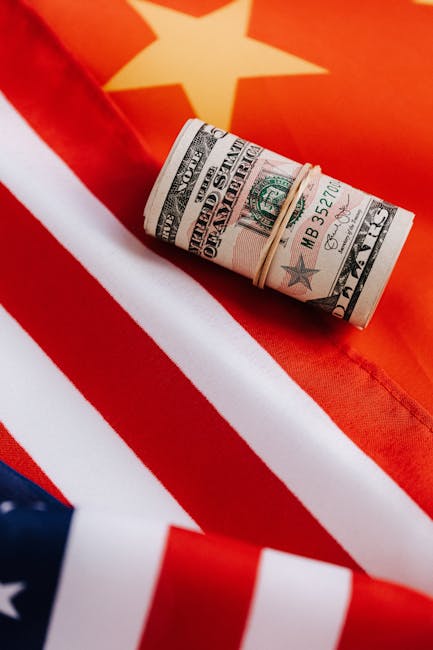
US Foreign Policy: A Multifaceted Approach to Global Engagement
US foreign policy is a dynamic and evolving framework dictating how the United States interacts with other nations and international actors on a global scale. Its primary objectives are multifaceted, encompassing national security, economic prosperity, the promotion of democratic values and human rights, and the maintenance of international stability. This complex web of goals is pursued through a variety of tools and strategies, including diplomacy, economic aid, military intervention, trade agreements, and participation in international organizations. The theoretical underpinnings of US foreign policy can be broadly categorized into several schools of thought, each offering a distinct perspective on the nation’s role in the world. Realism, for instance, emphasizes the pursuit of national interest and power in an anarchic international system, prioritizing security and self-preservation. Liberalism, conversely, highlights the importance of international cooperation, institutions, and the spread of democracy as pathways to peace and prosperity. Constructivism focuses on the role of ideas, norms, and identities in shaping state behavior and international relations. These theoretical lenses, while not always mutually exclusive, provide a conceptual backdrop against which to understand the rationale behind specific policy decisions and their intended outcomes. The practical implementation of US foreign policy is largely the domain of the executive branch, with the President serving as the chief architect and principal actor. The Department of State, led by the Secretary of State, is responsible for conducting diplomacy, managing foreign relations, and advising the President on international matters. The Department of Defense, headed by the Secretary of Defense, oversees the nation’s military capabilities and their application in foreign policy contexts. Intelligence agencies, such as the Central Intelligence Agency (CIA) and the National Security Agency (NSA), play a crucial role in providing information and analysis to inform policy decisions. Congress also wields significant influence through its powers to declare war, ratify treaties, control appropriations for foreign aid and defense spending, and conduct oversight of executive branch actions. International organizations, such as the United Nations, NATO, and the World Trade Organization, serve as platforms for multilateral cooperation and influence US foreign policy by setting international norms, providing forums for negotiation, and sometimes acting as conduits for collective action. The interplay between these domestic institutions and international bodies shapes the contours of US engagement with the rest of the world, reflecting a constant negotiation between unilateral ambitions and the realities of a globally interconnected environment.
The historical evolution of US foreign policy reflects a gradual transition from isolationism to a more assertive and interventionist stance. Initially, the young nation largely adhered to George Washington’s farewell address warning against entangling alliances, focusing on westward expansion and domestic development. The Monroe Doctrine, proclaimed in 1823, signaled a nascent assertion of regional influence in the Western Hemisphere, declaring the Americas off-limits to further European colonization. The late 19th and early 20th centuries witnessed a shift towards imperialism, marked by territorial acquisitions and increased global economic engagement. World War I and II served as pivotal moments, propelling the United States onto the world stage as a major global power. The post-World War II era was characterized by the Cold War, a protracted ideological and geopolitical struggle against the Soviet Union. This period saw the articulation of the Truman Doctrine, which committed the US to containing the spread of communism, and the Marshall Plan, a massive economic aid program to rebuild war-torn Europe and foster capitalist democracies. The establishment of NATO in 1949 solidified a transatlantic alliance dedicated to collective security. The Cold War was fought through proxy wars, arms races, and a constant diplomatic and ideological battle. The collapse of the Soviet Union in 1991 ushered in a unipolar moment for the United States, the sole superpower with unparalleled military and economic might. The post-Cold War era has been marked by new challenges, including the rise of non-state actors, terrorism, the proliferation of weapons of mass destruction, and the growing influence of emerging powers. The September 11, 2001, terrorist attacks fundamentally reshaped US foreign policy, leading to the "Global War on Terror," which involved military interventions in Afghanistan and Iraq, a significant increase in counterterrorism efforts, and a heightened focus on homeland security. The subsequent decades have seen a re-evaluation of these approaches, with debates surrounding the costs and effectiveness of military interventions, the importance of soft power, and the need for greater multilateral cooperation to address complex global issues such as climate change, pandemics, and economic inequality. The ongoing rebalancing of global power dynamics continues to necessitate adaptive and nuanced US foreign policy strategies.
Economic instruments are a cornerstone of US foreign policy, employed to advance national interests, foster stability, and shape the international landscape. Trade policy, encompassing tariffs, quotas, and free trade agreements, is a primary tool for promoting US economic competitiveness, creating export opportunities, and influencing the economic policies of other nations. The negotiation and enforcement of trade agreements, such as the United States-Mexico-Canada Agreement (USMCA), aim to reduce barriers to trade, protect intellectual property, and establish predictable rules for international commerce. Foreign aid, delivered through various agencies like the U.S. Agency for International Development (USAID), serves multiple objectives. Development assistance focuses on poverty reduction, economic growth, and improving living standards in recipient countries, often with the implicit goal of fostering democratic governance and market economies that are conducive to US economic and strategic interests. Humanitarian aid addresses immediate crises such as natural disasters and famines, projecting American goodwill and alleviating suffering. Security assistance, including military training and equipment sales, is provided to allies to enhance their defense capabilities and counter shared threats, thereby bolstering US security interests indirectly. Sanctions, a form of coercive economic diplomacy, are employed to pressure adversaries to change their behavior without resorting to military force. These can range from targeted sanctions against individuals or entities to broader sectoral sanctions aimed at crippling an economy. They are typically used to deter nuclear proliferation, counter terrorism, address human rights abuses, or respond to aggression. The United States’ significant influence within international financial institutions like the International Monetary Fund (IMF) and the World Bank also allows it to shape global economic policies and provide financial assistance with conditions that often align with US economic and political objectives. Investment treaties and policies aim to encourage foreign direct investment in the US while also protecting American investments abroad. Ultimately, these economic tools are integrated into a broader strategy to create an international economic system that is open, stable, and beneficial to the United States, while simultaneously using economic leverage to achieve specific foreign policy goals.
The application of military power and security considerations are central to US foreign policy, reflecting a commitment to protecting national interests and projecting influence. The US maintains the world’s most powerful and technologically advanced military, a significant component of its global engagement. This capability serves as a deterrent against potential adversaries and provides the capacity for projecting force when deemed necessary. Military alliances and partnerships are a critical element of US security strategy. Organizations like the North Atlantic Treaty Organization (NATO) represent a commitment to collective defense, where an attack on one member is considered an attack on all. Bilateral defense agreements with countries such as Japan, South Korea, and Australia solidify regional security architectures and provide forward presence for US forces. Military interventions, while often controversial, have been employed throughout US history to address perceived threats, protect allies, or advance specific policy objectives. These interventions can range from limited strikes to full-scale ground operations. Counterterrorism efforts have been a dominant feature of US foreign policy since 9/11, involving direct military action, intelligence gathering, and support for partner nations in combating extremist groups. The proliferation of weapons of mass destruction (WMD) remains a significant security concern, prompting diplomatic efforts, sanctions, and, in some cases, military posturing to prevent states from acquiring or developing such capabilities. Arms control and disarmament initiatives, while sometimes overshadowed by security concerns, are also part of the US foreign policy toolkit, aiming to reduce the risks associated with conventional and unconventional weapons. The concept of "power projection" underscores the US ability to deploy military assets and influence across vast distances, a capability that underpins its global security commitments. The ethical and strategic implications of military action are constantly debated within the US, with ongoing discussions about the balance between military might and diplomatic solutions, the costs of intervention, and the long-term consequences of using force. The evolving nature of global threats, including cyber warfare and hybrid threats, necessitates continuous adaptation of US military strategy and its integration with other foreign policy instruments.
Diplomacy and engagement in international institutions form the bedrock of US foreign policy’s multilateral dimensions. The Department of State is the primary engine of US diplomacy, with a vast network of embassies and consulates around the world staffed by diplomats responsible for representing US interests, negotiating agreements, and fostering relationships with host governments and populations. Bilateral relations with individual countries are the building blocks of the international system, involving constant dialogue, negotiation, and cooperation on a wide range of issues, from trade and security to cultural exchange. The United States is a founding member of and plays a significant role in numerous international organizations, recognizing their value in promoting collective action and addressing global challenges. The United Nations (UN), in particular, serves as a crucial forum for multilateral diplomacy, peacekeeping operations, and the development of international law. The US actively participates in UN Security Council deliberations, contributing to its decisions on international peace and security. Beyond the UN, the US is a member of various regional organizations, such as the Organization of American States (OAS) and the Asia-Pacific Economic Cooperation (APEC), which facilitate cooperation on regional issues. International economic institutions like the World Bank and the International Monetary Fund (IMF) are vital for global financial stability and development, with the US wielding considerable influence within their governance structures. The World Trade Organization (WTO) plays a critical role in regulating international trade, and US participation is essential for its effectiveness. The US also engages in various multilateral forums focused on specific issues, such as climate change through the UNFCCC or global health through the World Health Organization (WHO). The effectiveness of US diplomacy is contingent on its ability to build coalitions, engage in consensus-building, and adapt its approach to diverse cultural and political contexts. Soft power, encompassing cultural influence, educational exchanges, and the promotion of American values, is increasingly recognized as a vital complement to traditional diplomatic and military tools, enhancing US legitimacy and appeal on the global stage. The ongoing debate within the US foreign policy establishment often centers on the optimal balance between unilateral action and multilateral engagement, with a growing appreciation for the necessity of collaboration in an increasingly interdependent world.
The promotion of democracy, human rights, and humanitarian values is an enduring, albeit often debated, pillar of US foreign policy. This commitment is rooted in the belief that democratic societies are more peaceful, prosperous, and reliable international partners. The US supports democratic transitions through various means, including financial assistance to nascent democracies, election monitoring, and capacity-building programs for civil society organizations. The advocacy for human rights is a consistent theme, with the US regularly condemning abuses and calling for accountability for perpetrators. This advocacy extends to supporting dissidents, promoting freedom of the press, and advocating for the rights of minority groups. Humanitarian assistance, as previously mentioned, is a direct manifestation of this commitment, providing aid to populations in need, regardless of political affiliation. The US actively participates in international efforts to address global health crises, alleviate poverty, and promote sustainable development, often through its contributions to international aid organizations and its own development programs. However, the consistent application of these principles has been a subject of criticism, with accusations of selectivity and the prioritization of strategic interests over universal values. The challenge lies in balancing the promotion of these ideals with the realities of sovereign nations and complex geopolitical landscapes. The US approach often involves a combination of public diplomacy, engagement with international human rights bodies, and, at times, sanctions or other forms of pressure. The legacy of the Cold War and subsequent interventions has also led to discussions about the effectiveness and potential unintended consequences of imposing democratic models. Nevertheless, the aspiration to foster a world where individuals can live free from oppression and enjoy fundamental rights remains a significant driver of US foreign policy objectives, shaping its engagement with both democratic allies and authoritarian regimes.
In conclusion, US foreign policy is a complex, dynamic, and indispensable aspect of global affairs, characterized by its multifaceted objectives, historical evolution, and the intricate interplay of various instruments. From the foundational principles of national security and economic prosperity to the promotion of democratic values and the maintenance of international stability, the United States navigates a global landscape demanding constant adaptation and strategic foresight. The utilization of diplomatic negotiations, economic leverage through trade and aid, military capabilities for deterrence and intervention, and participation in international institutions collectively shape its global footprint. The ongoing evolution of threats, the shifting balance of global power, and the persistent challenges of a deeply interconnected world necessitate a continuous reassessment and refinement of US foreign policy approaches. Its success hinges not only on the projection of American power and influence but also on its ability to foster genuine partnerships, uphold international norms, and contribute to a more peaceful and prosperous global order. The internal debates and evolving priorities within the US continue to shape its role, making its foreign policy a subject of perpetual interest and significant consequence for nations worldwide.
