Global Financial Institutions Pivot Toward Fossil Fuel and Petrochemical Expansion Amid Retreat from Climate Commitments

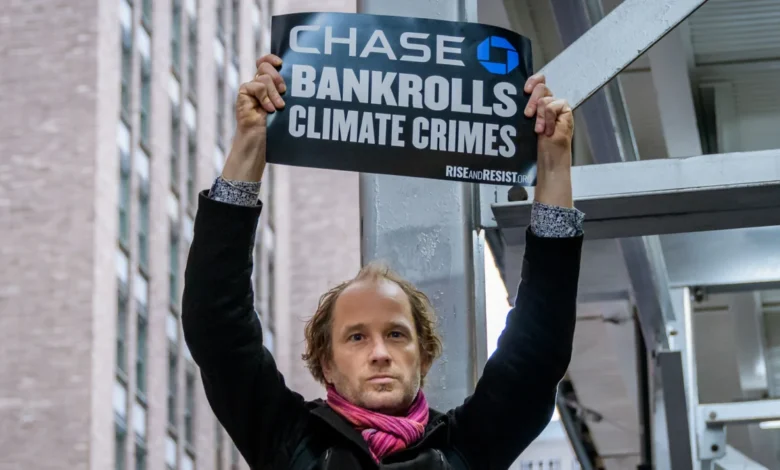
Major global banking institutions have significantly shifted their financial strategies over the past 24 months, moving away from high-profile environmental pledges and toward an aggressive expansion of fossil fuel and petrochemical financing. This retreat from climate-centric governance marks a definitive end to the era of voluntary net-zero alliances that defined corporate social responsibility in the early 2020s. Recent data indicates that the world’s leading lenders are not only failing to meet their decarbonization targets but are actively bankrolling the infrastructure necessary for a long-term reliance on hydrocarbons.
The collapse of the Net-Zero Banking Alliance (NZBA) in October 2025 served as the most visible indicator of this trend. Following the departure of the six largest banks in the United States during the lead-up to the second inauguration of President Donald Trump, the alliance was forced to cease operations after a member vote. This exodus was mirrored by major international players, including the Royal Bank of Canada, Scotiabank, HSBC, NatWest, Santander, and JPMorgan Chase, all of which have recently weakened or entirely discarded their previous decarbonization benchmarks.
The Financial Scale of Fossil Fuel Expansion
A comprehensive analysis released by the Rainforest Action Network (RAN) and a coalition of environmental monitoring groups reveals the staggering scale of this financial pivot. In 2025 alone, the world’s top 65 banks funneled $508 billion into companies specifically focused on expanding fossil fuel development. This represents a 27 percent increase compared to 2024 and marks the highest level of expansionary funding recorded since the Paris Agreement era began in 2016.
The distribution of this capital shows a strategic focus on long-term infrastructure. While direct extraction remains a priority, a significant portion of the funding has been allocated to midstream and downstream projects, such as pipelines and Liquefied Natural Gas (LNG) export terminals. These capital-intensive projects are particularly notable because they represent "lock-in" investments; once built, these facilities require decades of operation to reach profitability, effectively committing the global energy market to methane gas and oil usage well into the middle of the century.
Regional disparities in lending have also become more pronounced. As several European institutions begin to scale back fossil fuel exposure under stricter regional regulations, the financing gap is being filled by banks based in North America and Japan. JPMorgan Chase, Bank of America, Citigroup, and Mizuho Financial have emerged as the primary engines of this expansion, concentrating the financial risk—and the environmental impact—within a smaller group of massive, systemic lenders.
The Petrochemical Pivot: A Survival Strategy for Big Oil
The shift in banking behavior coincides with a broader strategic pivot within the fossil fuel industry itself. As the global transition toward electric vehicles and renewable energy threatens the long-term demand for traditional fuels, oil and gas majors are increasingly viewing petrochemicals as their primary growth sector. This "petrochemical pivot" focuses on the production of plastics, agrichemicals, fertilizers, and other synthetic materials derived from hydrocarbons.
A report from the Center for International Environmental Law (CIEL) provides a detailed look at this trend. Between January 2019 and June 2025, major banks extended at least $591 billion in loans and underwriting to the world’s 15 largest petrochemical companies. Of this amount, approximately $252 billion was directly attributable to specific petrochemical activities, a figure that rivals the entire annual Gross Domestic Product of countries like New Zealand.
The International Energy Agency (IEA) supports the rationale behind this shift, projecting that petrochemical products will account for more than one-third of the growth in global oil demand through 2030, and nearly half of that growth by 2050. By investing in this sector, integrated oil companies like ExxonMobil, Shell, and Saudi Aramco are effectively hedging against the decline of the internal combustion engine. They have moved to acquire majority stakes in chemical firms and have retrofitted existing refineries to prioritize chemical feedstock over gasoline and diesel.
Chronology of the Climate Commitment Retreat
The timeline of this shift illustrates a rapid reversal of corporate policy that took place in less than five years:
- 2021: The Net-Zero Banking Alliance is formed under the United Nations’ Glasgow Financial Alliance for Net Zero (GFANZ), with member banks representing over 40 percent of global banking assets pledging to reach net-zero emissions by 2050.
- 2023-2024: Political pressure in the United States, including "anti-ESG" (Environmental, Social, and Governance) legislation and legal threats regarding antitrust violations, begins to create friction within the alliance.
- Early 2025: In anticipation of a shift in federal oversight, the "Big Six" US banks—JPMorgan Chase, Bank of America, Citigroup, Wells Fargo, Goldman Sachs, and Morgan Stanley—formally exit the NZBA.
- June 2025: RAN and CIEL release findings showing that despite public "green" marketing, actual lending for fossil fuel expansion has reached record highs.
- October 2025: Following a vote by the remaining members, the Net-Zero Banking Alliance officially shuts down, citing a lack of consensus and the departure of key systemic lenders.
- Early 2026: Major European and Canadian banks officially revise their 2030 interim targets, citing "market realities" and "energy security" as reasons for slowing their transition away from carbon-intensive clients.
The Role of Coal-to-Chemical Plants
One of the most alarming aspects of the recent financial data is the resurgence of coal-related financing, particularly in Asia. While coal for power generation has faced significant headwinds, coal-to-chemical plants are seeing a spike in development, primarily in China and India. These facilities convert coal into synthetic gases used to produce fertilizers and plastics, offering a "new lease on life" for the coal industry.
The RAN report highlights that a significant portion of the increase in coal financing is linked to these planned chemical plants. Environmental advocates argue that this trend undermines global efforts to phase out coal, as it creates a new industrial demand for the most carbon-intensive of all fossil fuels, often under the guise of industrial development rather than energy production.
Expert Analysis and Market Implications
The continued investment in fossil fuels and petrochemicals persists despite signals that the sector may be facing a structural decline. Industry analysts have noted an oversupply in the plastics market, which has led to the cancellation or delay of several major projects. Furthermore, multiple credit rating agencies have issued downgrades for petrochemical-heavy firms, and recent geopolitical conflicts—such as the war with Iran—have caused significant price shocks in the agrichemical and plastic sectors.
Fredric Bauer, a senior lecturer at Lund University, suggests that these companies do not always respond to conventional market signals. Instead of scaling back during periods of oversupply, their priority remains the preservation of long-term markets for oil and gas. By building massive chemical complexes, they ensure that the demand for their primary product remains "locked in" for the lifespan of the facility, regardless of the availability of cheaper or more sustainable alternatives.
The environmental impact of this strategy is profound. As of 2020, annual greenhouse gas emissions from the petrochemical sector reached 1.9 billion metric tons—more than double the combined emissions of the global aviation and shipping industries. Beyond carbon, the production of virgin plastics and fossil-fuel-derived fertilizers contributes significantly to toxic chemical pollution and the degradation of biodiversity.
Calls for Regulatory Intervention
The failure of voluntary alliances like the NZBA has led to a growing consensus among advocacy groups and public health experts that government regulation is the only viable path forward. Critics argue that as long as fossil fuel financing remains profitable and legally permissible, banks will continue to prioritize short-term returns over long-term climate stability.
Proposed regulatory measures include:
- Mandatory Transition Plans: Requiring financial institutions to adopt and adhere to credible, science-based plans to align their portfolios with the 1.5-degree Celsius goal of the Paris Agreement.
- Incorporation of Climate Risk: Mandating that banks factor in the long-term physical and transition risks of climate change when determining the creditworthiness of fossil fuel and petrochemical projects.
- Subsidy Reform: Reallocating the more than $1 trillion in annual global subsidies currently supporting the fossil fuel industry toward the development of sustainable chemistry and renewable energy.
- Restrictions on Virgin Plastic Financing: Implementing policies that discourage or prohibit the financing of new facilities dedicated to the production of virgin plastics and synthetic fertilizers.
Joel Tickner, a professor of public health at the University of Massachusetts Lowell, emphasizes the need for a shift in financial incentives. He notes that the fossil fuel industry has benefited from decades of government support, making it difficult for greener alternatives to compete. "If we’re serious about sustainable materials," Tickner states, "then we need to put our money where we want to go."
As the financial sector moves further away from its previous climate commitments, the gap between corporate rhetoric and capital allocation continues to widen. The surge in funding for fossil fuel expansion and the strategic pivot toward petrochemicals suggest that the global banking industry is currently betting against a rapid energy transition, choosing instead to double down on the hydrocarbon economy.
Related posts: