General Motors and Peak Energy Forge Strategic Partnership to Accelerate Sodium-Ion Battery Commercialization for Grid-Scale Energy Storage

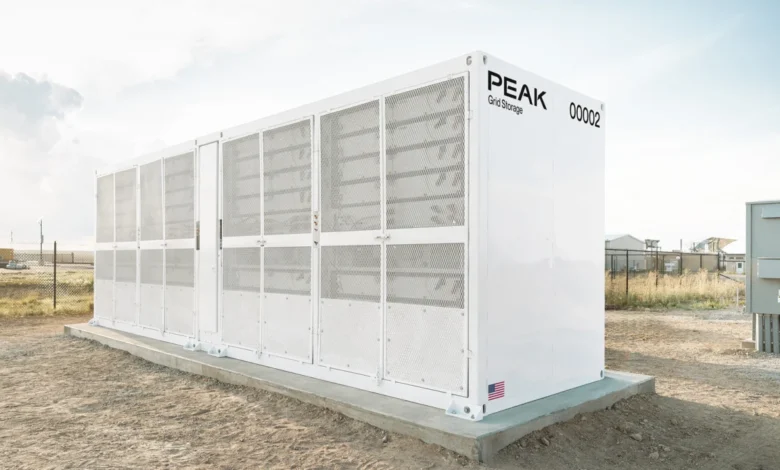
The landscape of global energy storage is undergoing a fundamental shift as General Motors (GM) and the California-based startup Peak Energy announced a comprehensive partnership to develop and manufacture sodium-ion battery technology. This collaboration aims to challenge the long-standing dominance of lithium-ion batteries by introducing a more abundant, safer, and potentially lower-cost alternative specifically tailored for stationary energy storage systems. The agreement marks a significant move for General Motors as it expands its footprint beyond the automotive sector into the burgeoning utility-scale storage market, while providing Peak Energy with the industrial might and research capabilities of one of the world’s largest automakers.
Under the terms of the partnership, General Motors will leverage its state-of-the-art battery laboratory in Warren, Michigan, to refine sodium-ion cell chemistry and manufacturing processes. Peak Energy, which has rapidly emerged as a leader in the domestic sodium-ion space, will integrate these cells into its large-scale energy storage systems (ESS). The move is seen by industry analysts as a strategic hedge against the volatile lithium supply chain and a direct effort to establish a North American foothold in a technology sector currently led by Chinese manufacturing giants.
The Science of Sodium: A Sustainable Alternative to Lithium
To understand the significance of this partnership, one must examine the fundamental differences between the incumbent lithium-ion technology and the emerging sodium-ion alternative. Lithium-ion batteries have been the gold standard since the 1990s, primarily due to their high energy density—the ability to pack a significant amount of power into a small, lightweight package. This characteristic made them the undisputed choice for mobile electronics and electric vehicles (EVs). However, the reliance on lithium, cobalt, and nickel presents significant hurdles, including high material costs, supply chain vulnerabilities, and environmental concerns regarding mining practices.
Sodium-ion batteries function on a similar principle to their lithium cousins, utilizing a "rocking chair" mechanism where ions move between an anode and a cathode. The primary difference lies in the charge carrier: sodium, an element found in abundance in common table salt. Because sodium is roughly 1,000 times more plentiful than lithium in the Earth’s crust, the raw material costs are a fraction of those associated with lithium-ion cells.
Furthermore, sodium-ion batteries offer superior safety profiles. Lithium-ion batteries are prone to thermal runaway—a phenomenon where internal short circuits can lead to intense, difficult-to-extinguish fires. Sodium-ion chemistry is inherently more stable and less flammable, making it an attractive option for large-scale installations near populated areas or critical infrastructure. While sodium-ion cells have a lower energy density—meaning they are heavier and larger for the same amount of storage—this is less of a disadvantage for stationary grid storage, where physical footprint is often less critical than cost and safety.
A Chronology of Peak Energy and the Path to the GM Deal
Peak Energy’s rise to prominence has been remarkably swift. Founded in 2023, the company was established with the specific goal of commercializing sodium-ion technology for the American power grid. The leadership team brought deep industry experience: CEO Landon Mossberg previously served at the Swedish battery powerhouse Northvolt and held roles at Tesla, while Chief Commercial Officer Cameron Dales joined from the advanced battery firm Enovix.
The company’s trajectory over the last three years reflects the accelerating interest in alternative battery chemistries:
- 2023: Peak Energy is founded in Burlingame, California, securing initial venture capital funding to establish a cell engineering center in Broomfield, Colorado.
- 2024: The company begins testing prototype cells and scales its workforce to over 100 employees, focusing on domestic supply chain development.
- 2025: Peak Energy completes its first major milestone, a 3.1-megawatt-hour (MWh) sodium-ion battery demonstration system in Watkins, Colorado, near Denver. This project proved the viability of the technology in real-world grid conditions.
- 2026: The partnership with General Motors is finalized, signaling a shift from pilot-scale demonstrations to industrial-scale manufacturing.
The timing of the GM deal is particularly poignant for the U.S. battery industry. It comes shortly after the high-profile closure of Natron Energy, another domestic sodium-ion hopeful. Natron’s sudden exit highlighted the "valley of death" facing hardware startups—the difficult transition from laboratory success to mass production. By partnering with GM, Peak Energy effectively bypasses many of these scaling risks, gaining access to GM’s established manufacturing expertise and capital.
Strategic Objectives for General Motors
For General Motors, the partnership represents more than just a research project; it is a calculated expansion of its "Ultium" energy ecosystem. As the automotive industry transitions toward electrification, companies like GM are finding themselves with an excess of battery research and development capacity. Furthermore, as EV demand experiences periods of fluctuation, diversifying into stationary storage provides a secondary market for battery intellectual property.
Kurt Kelty, GM’s Vice President for Battery and Sustainability, emphasized that the company views sodium-ion as a "defining chemistry" for the future of the grid. By developing these batteries, GM is positioning itself as a vertically integrated energy company. This allows GM to offer a "total energy solution" to commercial and utility customers, encompassing everything from electric fleet vehicles to the massive battery banks required to balance renewable energy from wind and solar farms.
The partnership also aligns with broader geopolitical and economic trends. The U.S. government, through the Inflation Reduction Act (IRA), has provided significant incentives for domestic battery production. By developing sodium-ion technology in Michigan and Colorado, GM and Peak Energy can capitalize on federal tax credits while reducing dependence on Chinese suppliers like CATL, which currently leads the world in sodium-ion deployment.
Market Context and Global Competition
Despite the optimism surrounding the GM-Peak Energy deal, the sodium-ion market is currently in its infancy in North America. According to data from Benchmark Mineral Intelligence, sodium-ion’s current market share in the region is essentially zero. Projections suggest that even with rapid growth, the technology will likely account for less than 1 percent of the North American battery market by 2030.
In contrast, China has already integrated sodium-ion batteries into small electric vehicles and grid projects. The Chinese market share is expected to reach 3.4 percent by 2030. Analysts note that China’s lead is largely due to its massive existing infrastructure for lithium-iron-phosphate (LFP) batteries, which can be relatively easily converted to produce sodium-ion cells.
Anya Sidhu, a battery analyst at Benchmark Mineral Intelligence, suggests that sodium-ion should be viewed as a complementary technology rather than a direct replacement for lithium-ion. "The partnership between GM and Peak Energy signals growing commercial confidence, particularly for stationary energy storage, where cost and supply chain resilience matter more than energy density," Sidhu noted. While lithium-ion will likely remain the king of high-performance EVs, sodium-ion is poised to become the workhorse of the power grid.
Broader Implications for the Global Energy Transition
The success of sodium-ion technology could have profound implications for the global transition to renewable energy. One of the primary challenges of wind and solar power is intermittency—the sun does not always shine, and the wind does not always blow. To maintain a stable grid, massive amounts of energy must be stored when production is high and released when it is low.
Currently, the high cost of lithium-ion batteries makes large-scale storage projects expensive for utilities. If Peak Energy and GM can successfully lower the cost of storage through sodium-ion chemistry, it would accelerate the decommissioning of fossil-fuel "peaker" plants—facilities that only run during times of high demand.
Furthermore, the environmental impact of the battery revolution could be mitigated. Lithium extraction often requires vast amounts of water, frequently in arid regions like the "Lithium Triangle" in South America, leading to local ecological strain. Sodium extraction is significantly less invasive.
As Cameron Dales of Peak Energy pointed out, the global energy market is too large for a single "silver bullet" solution. "There’s no reason why a single solution should be the thing that works best for every single application," Dales stated. The emergence of sodium-ion, supported by the industrial scale of General Motors, suggests a future where a diverse "menu" of battery chemistries—including lithium-ion, sodium-ion, and eventually solid-state batteries—works in tandem to power a decarbonized world.
The GM-Peak Energy partnership will now move into an intensive development phase in Michigan. The industry will be watching closely to see if this collaboration can finally bring sodium-ion technology out of the laboratory and into the mainstream of the American industrial landscape. If successful, the common salt on the dinner table may soon become the backbone of the 21st-century power grid.
Related posts: