The Critical Role of Urban Forests in Mitigating Rising Metropolitan Temperatures and the Public Health Crisis of Heat Islands

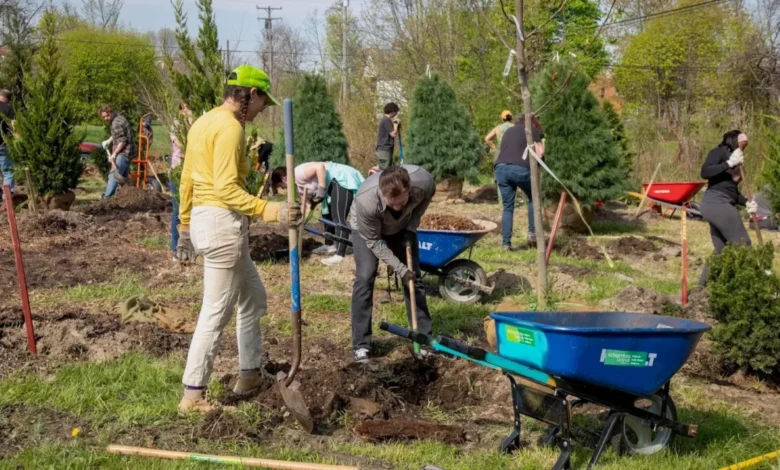
As global temperatures continue to shatter historical records, two comprehensive new studies have illuminated a remarkably straightforward yet powerful tool for urban survival: the expansion of the tree canopy. Research published in Nature Communications and a separate analysis by the Healthy Green Spaces Coalition provide empirical evidence that urban forests are not merely aesthetic amenities but are essential components of "living infrastructure" capable of drastically reducing the lethal effects of the urban heat island (UHI) effect. These findings arrive at a critical juncture as municipal leaders grapple with a climate reality where extreme heat now claims more lives annually in the United States than all other weather-related events combined, including hurricanes, floods, and tornadoes.
The primary study, led by Robert McDonald, the Nature Conservancy’s lead scientist for nature-based solutions, reveals that existing tree cover in cities worldwide currently cancels out approximately half of the potential heat island effect. Without these existing urban forests, the intensity of heat trapped within metropolitan centers would likely double, pushing many cities toward the brink of habitability during peak summer months. A second report, which scrutinized 65 American cities, found that neighborhoods with minimal canopy cover experience up to 40 percent more excess heat than their more forested counterparts, creating a "cooling dividend" that can translate to a temperature difference of nearly 4 degrees Fahrenheit.
The Mechanics of Urban Heat and the Biological Response
The urban heat island effect is a phenomenon where metropolitan areas become significantly warmer than their surrounding rural environments. This is primarily due to the prevalence of "gray infrastructure"—roads, sidewalks, and buildings constructed from materials like concrete and asphalt. These materials possess high thermal mass, meaning they absorb and store solar radiation during the day and release it slowly as heat throughout the night. This prevents the evening cooling that is essential for human physiological recovery, particularly for those living in residences without adequate air conditioning.
Trees counteract this process through two primary mechanisms: shade and evapotranspiration. While the cooling effect of shade is immediately intuitive—blocking direct solar radiation from hitting the ground and buildings—evapotranspiration is a more complex biological process. Much like human perspiration, trees "sweat" by releasing moisture through pores in their leaves. As this water evaporates into the air, it consumes heat energy from the surrounding environment, resulting in a measurable drop in ambient air temperature.
According to the Nature Communications study, the combination of these two factors creates a buffer that is vital for public health. Robert McDonald emphasizes that heat is an "invisible killer," responsible for an estimated 350,000 deaths globally each year. By maintaining and expanding the urban canopy, cities can effectively dress themselves in a manner that mimics more temperate rural landscapes, providing a natural defense against the rising baseline of global temperatures.
A Chronology of Urban Greening and Planning
The history of urban forestry is often viewed through the lens of figures like John Chapman, better known as Johnny Appleseed. While popular folklore focuses on his role in feeding a growing nation, historians note that his primary motivation was the establishment of orchards for cider production. However, his legacy inadvertently highlighted the long-term value of planting trees for environmental management.
The systematic integration of trees into urban design gained significant momentum during the 19th-century Industrial Revolution. As cities became overcrowded and polluted, planners began to recognize the necessity of "green lungs."
- The 1850s: London’s public parks served as a model for urban health, providing a respite for the working class from the industrial smog.
- The 1860s: Inspired by London, Baron Haussmann’s renovation of Paris involved the creation of massive public parks and tree-lined boulevards, fundamentally changing the relationship between the city and nature.
- The Early 20th Century: The "City Beautiful" movement in the United States emphasized the importance of grand boulevards and park systems to promote social order and public health.
- The 21st Century: Modern urban forestry has shifted from aesthetic decoration to a "nature-based solution" for climate adaptation, with cities like Los Angeles and New York setting ambitious goals to plant millions of trees to combat rising temperatures.
Socio-Economic Disparities in Canopy Distribution
One of the most pressing issues identified in the recent studies is the inequitable distribution of the urban canopy. The Healthy Green Spaces Coalition report highlights a "shade gap" that aligns closely with socio-economic status. In many industrialized cities, lower-income neighborhoods have significantly less tree cover than affluent suburbs. This disparity is often the result of historical zoning practices, including "redlining," which led to decades of underinvestment in the green infrastructure of marginalized communities.
In these canopy-deprived areas, the density of housing and the lack of parks create "heat traps." While affluent areas may enjoy the benefits of private yards and mature curbside trees, residents in poorer districts are often surrounded by vast stretches of heat-absorbent concrete. This lack of shade exacerbates the health risks for vulnerable populations, including the elderly and those with pre-existing respiratory or cardiovascular conditions. The study found that this consistency in temperature disparity across 65 different cities suggests a systemic failure in urban planning that must be addressed through targeted reforestation efforts in underserved zip codes.
The Challenge of a Changing Climate
As arborists and city planners look toward the future, they face a paradox: the very climate change that makes trees necessary also threatens the survival of the trees themselves. In many regions, native tree species are beginning to struggle as local climates shift. Some species are naturally migrating northward in search of cooler temperatures, a process that is significantly hindered by the physical barriers of urban development.
To combat this, urban arborists are now selecting "climate-ready" species—trees that may not be native to a specific city today but are expected to thrive in the projected climate of 2050 or 2100. This involves selecting drought-tolerant varieties that can withstand extreme heat while still providing maximum cooling benefits. For example, some trees are more efficient at evapotranspiration than others; however, drought-adapted species may retain water to survive, which can actually reduce their cooling capacity during the hottest periods. Balancing these biological traits is a key challenge for modern municipal forestry departments.
Broader Implications and Integrated Solutions
While the benefits of trees are immense, researchers warn that they cannot be the sole solution to the urban heat crisis. The study led by McDonald found that even if cities were to maximize their tree planting potential, it would only offset approximately 20 percent of the projected temperature increases caused by climate change. This underscores the need for a multi-faceted approach to urban cooling.
Potential integrated strategies include:
- Cool Roofs and Pavements: Using reflective materials that bounce solar energy back into space rather than absorbing it.
- Urban Farms: Blurring the lines between rural and urban by converting vacant lots into productive green spaces that provide both food security and cooling.
- Vertical Forests: Integrating plant life into the facades of high-rise buildings to provide insulation and localized cooling.
- Pocket Parks: Creating small, high-density green oases in crowded urban centers where large-scale park development is not feasible.
The economic implications are also significant. Extreme heat reduces labor productivity and increases energy demand for air conditioning, leading to higher utility bills and greater strain on the electrical grid. Investing in trees provides a high return on investment by reducing these costs while simultaneously boosting property values, improving air quality by filtering pollutants, and enhancing the mental well-being of residents.
Analysis of Policy and Future Outlook
The findings of these two studies suggest that the "cooling dividend" of urban trees is a measurable, quantifiable asset that should be treated with the same priority as roads or water systems. For policymakers, the message is clear: the cost of planting and maintaining a robust urban forest is a fraction of the cost of managing the public health crises and infrastructure failures that result from unchecked urban heat.
However, the "effort and time" mentioned by McDonald remain the primary obstacles. Unlike a new air conditioning unit, a tree requires years, if not decades, to reach a size where it can provide significant cooling benefits. This necessitates a long-term vision that transcends typical political cycles. Furthermore, the maintenance of "living infrastructure" requires ongoing funding for watering, pruning, and disease management—tasks that are often the first to be cut during municipal budget shortfalls.
As the lines between the "gray" city and the "green" countryside continue to blur, the success of modern metropolises will likely depend on their ability to integrate nature into the very fabric of their design. The transition from viewing trees as a luxury to viewing them as a biological necessity marks a fundamental shift in how humanity envisions the future of urban life. In the face of a warming planet, the most effective technology for cooling our cities may not be a new invention, but one that has been standing silently beside us for millennia.
Related posts: