Tesla Semi High Volume Production Signals Transformative Shift for Zero Emission Heavy Duty Freight Industry

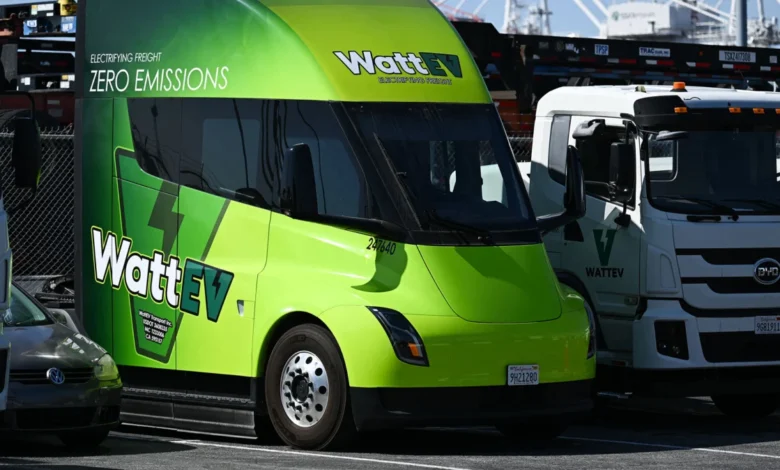
The landscape of American logistics reached a pivotal turning point on April 29, 2026, as Tesla officially commenced high-volume production of its long-anticipated Tesla Semi at its Gigafactory in Sparks, Nevada. This transition from limited pilot builds to mass manufacturing marks the culmination of nearly a decade of anticipation, delays, and rigorous field testing. For an industry historically tethered to diesel fuel, the arrival of a high-range, cost-competitive electric Class 8 truck represents more than just a technological milestone; it signals a fundamental restructuring of the economics of freight transportation.
The move into high-volume production comes at a critical juncture for the trucking industry, particularly in California, which serves as the primary incubator for zero-emission vehicle (ZEV) adoption. Early data from state incentive programs suggests that Tesla is not merely entering the market but is poised to dominate it. According to the International Council on Clean Transportation (ICCT), Tesla has captured the lion’s share of interest from fleet operators, outperforming legacy manufacturers by a staggering margin in recent voucher applications.
Dominating the California Market: A Case Study in Demand
In the most recent application window for California’s Hybrid and Zero-Emission Truck and Bus Voucher Incentive Project (HVIP)—the nation’s most influential state-run program for heavy-duty clean vehicles—the Tesla Semi emerged as the clear preference for commercial fleets. Out of 1,067 total voucher requests submitted since December 2025, 965 were specifically for the Tesla Semi.
Ray Minjares, heavy-duty vehicles program director at the ICCT, noted that this volume of applications for a single model is unprecedented. If these orders are fulfilled by the end of 2026, Tesla could single-handedly account for approximately one-third of all heavy-duty truck sales in California. This surge in adoption would see the state far exceed its own mandates; the Advanced Clean Trucks regulation currently sets a 10 percent target for zero-emission Class 8 vehicles. Tesla’s production ramp-up suggests that the market is ready to move significantly faster than the regulatory floor.
The implications for public health are profound. While heavy-duty trucks account for a small fraction of vehicles on the road, they are responsible for more than half of the transportation sector’s nitrogen oxides (NOx) and particulate matter emissions. These pollutants are linked to asthma, heart disease, and premature death, frequently impacting lower-income communities situated near ports and major highway corridors.
A Chronology of the Tesla Semi: From Concept to Convoy
The journey to high-volume production has been characterized by ambitious promises and significant setbacks. Understanding the current milestone requires a look back at the timeline of the Semi’s development:
- November 2017: Elon Musk unveils the Tesla Semi prototype, promising a 500-mile range and a production start date of 2019.
- 2019–2021: Production targets are repeatedly pushed back as Tesla focuses on the Model 3 and Model Y ramps, citing battery cell supply constraints.
- December 2022: Tesla delivers the first "pilot" versions of the Semi to PepsiCo for real-world vocational testing.
- 2023: Independent testing by the North American Council for Freight Efficiency (NACFE) during its "Run on Less" event proves the Semi’s capability. A PepsiCo-operated Semi travels 1,076 miles in a single 24-hour period using 750-kilowatt Superchargers.
- 2024: Tesla begins expanding its "Megacharger" network, capable of delivering over 1 megawatt of power, specifically designed for heavy-duty applications.
- 2025: Further testing by freight firms like Saia demonstrates consistent 465-mile ranges on single charges during double-shift operations.
- April 2026: Tesla confirms the commencement of high-volume manufacturing in Nevada, targeting an eventual capacity of 50,000 units per year.
Disruptive Economics: Price and Performance Parity
The primary driver behind Tesla’s overwhelming lead in voucher applications is a combination of superior range and a lower price point. Data from the HVIP program reveals that a Tesla Semi with a 500-mile range is priced at just under $300,000. In contrast, competing Class 8 battery-electric trucks from established brands like Volvo, Daimler, and Peterbilt often cost between $438,000 and $524,000, despite offering only half the range (typically 150 to 250 miles).
"The Tesla Semi is twice the range and half the charging time of trucks from traditional manufacturers," said Mike Roeth, executive director of NACFE. "And early data is showing it’s a third less expensive to purchase."
For small and mid-sized fleet owners, the financial math is becoming undeniable. Jennie Abarca, CEO of King Fio Trucking in Long Beach, operates a fleet of 35 trucks serving the busiest port complex in the United States. While she has experimented with other electric models, she describes the Tesla Semi as a "game-changer." With a $120,000 HVIP voucher and additional subsidies from the Ports of Long Beach and Los Angeles, the net cost of a Tesla Semi can drop to a level comparable to a high-quality used diesel truck.
"I can’t buy these trucks without incentives," Abarca admitted, citing the inflationary pressures that have squeezed the trucking industry since 2022. However, she noted that the lower operating costs—reduced maintenance and cheaper fuel—make the electric transition the only viable long-term path for her business.
Overcoming Infrastructure and Operational Hurdles
Despite the enthusiasm, the transition to electric freight faces significant logistical challenges. The "downtime" required for charging remains a primary concern for long-haul operators. To address this, Tesla has introduced the Megacharger, a high-output charging system capable of replenishing 60 percent of the Semi’s battery in approximately 30 minutes.
Rudy Diaz, owner of Hight Logistics, is among those betting on this infrastructure. He has applied for vouchers for 15 Tesla Semis and plans to install Megachargers at his depot. For Diaz, the 500-mile range is the threshold for true diesel parity. "I can go to San Diego and back," he said. "I can be competitive with diesel in areas where I couldn’t compete before."
Furthermore, startups like Nevoya are proving that electric trucks can handle more than just short "drayage" runs from ports to nearby warehouses. By utilizing Tesla’s pre-production models, Nevoya has successfully run freight from Southern California to the Central Valley and the San Francisco Bay Area. John Verdon, co-founder of Nevoya, argues that the increased range allows fleets to maximize vehicle utilization, which is essential for offsetting the higher upfront capital costs of EVs.
Political Headwinds and the Regulatory Environment
Tesla’s production ramp-up occurs against a backdrop of intense political friction. In 2025, the landscape for clean transportation was complicated by federal legislative actions. Republicans in Congress passed measures aimed at nullifying California’s authority to set its own emissions standards under the Clean Air Act. Simultaneously, the Trump administration moved to weaken national fuel economy standards and sought to claw back federal funding for electric vehicle charging infrastructure.
These policy shifts have placed a greater burden on market forces and state-level incentives to drive the transition. Ray Minjares of the ICCT suggests that because the federal government has signaled a retreat from climate-focused regulation, the "downward pressure" on vehicle pricing—driven by Tesla’s vertical integration and manufacturing scale—is now the most critical factor for success.
"Legacy manufacturers are stuck between multiple technologies, weighing them down with development and production costs," Minjares observed. "Tesla has bet on one technology, giving the company greater focus and discipline."
The Global Competitive Landscape
While Tesla currently holds a lead in the North American market, it faces looming competition from overseas. Chinese manufacturers, including BYD and the startup Windrose, are aggressively expanding their electric truck portfolios. Windrose recently sold its first electric trucks in the U.S. at prices that rival Tesla’s, leveraging China’s mature battery supply chain to keep costs low.
The challenge for Tesla moving forward will be to prove the long-term reliability of its platform. While traditional diesel trucks are expected to last for 750,000 to 1 million miles, the Tesla Semi has yet to reach those milestones in a commercial setting.
"Tesla has two things it has to do: convince customers to buy electric, and convince customers to buy its electric," Roeth said.
Impact and Implications for the Future of Freight
The high-volume production of the Tesla Semi is likely to force a reckoning among legacy truck makers. If Tesla can successfully scale to 50,000 units per year—representing roughly 25 percent of the total annual U.S. market for heavy-duty trucks—competitors will be forced to either lower their prices or significantly improve their battery technology.
The shift also necessitates a massive upgrade to the nation’s electrical grid. A single truck depot charging dozens of Semis simultaneously requires the power equivalent of a small town. This will require unprecedented coordination between trucking firms, utilities, and state regulators.
Ultimately, the start of high-volume production in Sparks, Nevada, is more than a corporate victory for Tesla; it is a stress test for the future of sustainable commerce. If the Tesla Semi can deliver on its promise of lower costs and high reliability, it will validate the transition to zero-emission freight even in the absence of federal support. As the first mass-produced units hit the highways this year, the trucking industry—and the communities affected by its emissions—will be watching closely to see if the age of diesel is finally nearing its end.