New Economic Analysis Reveals Every Dollar Spent on Wildfire Fuel Treatments Saves Taxpayers Nearly Four Dollars in Avoided Damages

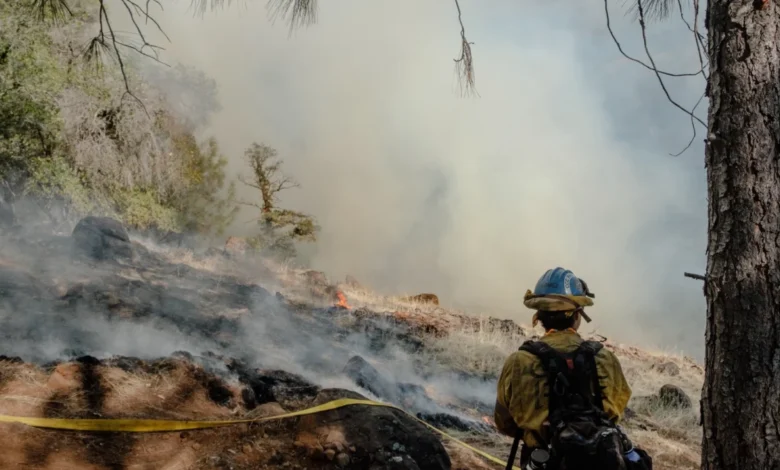
In a landmark study published in the journal Science, researchers have provided the most comprehensive economic justification to date for proactive forest management. The analysis, led by economists at the University of California, Davis, demonstrates that for every dollar the U.S. Forest Service invests in fuel treatments—such as controlled burns and the mechanical thinning of underbrush—the public avoids $3.73 in costs related to healthcare, property damage, and carbon emissions. This finding comes at a critical juncture for federal land management policy, as the United States faces increasingly volatile wildfire seasons and a shifting political landscape regarding how to best protect Western communities and ecosystems.
For decades, scientists and land managers have understood the ecological necessity of "fuel treatments," a term used to describe the removal of excess vegetation that allows fires to climb into the forest canopy and become catastrophic. While the ecological benefits of returning fire to the landscape have been well-documented, the economic argument has often been sidelined due to the difficulty of quantifying "avoided" costs. This new research provides a robust mathematical framework for those savings, suggesting that proactive management is not just an environmental priority, but a fiscal one.
The Science of Fuel Management and Risk Reduction
The study, authored by Frederik Strabo and a team of researchers, utilized high-resolution data from 285 wildfires across 11 Western states between 2017 and 2023. These specific fires were selected because they burned through areas where the U.S. Forest Service had previously implemented fuel treatments. By comparing the behavior of the fires in treated areas versus untreated areas, the researchers were able to model the direct impact of management on fire severity and spread.
The results were stark. On average, fuel treatments decreased the total area burned by 36 percent. More importantly, they reduced the amount of land burned at moderate to high severity by 26 percent. High-severity fires are particularly destructive because they kill mature trees, sterilize soil, and are far more difficult for firefighters to contain. By keeping fires on the ground and reducing their intensity, fuel treatments allow forests to survive the passage of flames and make it safer for suppression crews to engage.
The researchers then translated these physical metrics into dollar amounts. They estimated that the fuel treatments analyzed prevented $1.4 billion in losses related to health and workforce productivity caused by wildfire smoke. Additionally, they accounted for $895 million in avoided structural damage and $503 million in avoided carbon dioxide emissions. The study also highlighted that larger treatments—those exceeding 2,400 acres—yielded the highest return on investment, suggesting that landscape-scale management is more effective than small, fragmented interventions.
A Century of Fire Suppression and the Rise of "Fuel Treatments"
To understand the significance of these findings, it is necessary to examine the history of American forest management. For much of the 20th century, the U.S. Forest Service operated under a policy of total fire suppression. This approach, often exemplified by the "10 a.m. Policy" (which dictated that every fire should be suppressed by 10 a.m. the day after it was reported), led to a massive buildup of vegetation in Western forests.
Historically, many of these ecosystems evolved with frequent, low-intensity fires, often ignited by lightning or managed by Indigenous nations who have used fire for millennia to maintain biodiversity and reduce the risk of larger blazes. The removal of regular fire created a "fire deficit," where forests became unnaturally dense with "ladder fuels"—small trees and brush that allow ground fires to climb into the treetops.
In the late 20th and early 21st centuries, the scientific community began to advocate for a return to "prescribed burns" and mechanical thinning to mimic natural fire cycles. However, these efforts have frequently been hampered by budget constraints, air quality regulations, and public fear of controlled burns escaping. The Strabo study provides a new tool for advocates of these methods by framing the conversation around taxpayer savings and public health.
Chronology of Federal Wildfire Policy: 2022 to 2025
The momentum for fuel treatments saw a significant boost in 2022 when the U.S. Forest Service released its "Wildfire Crisis Strategy." This 10-year plan aimed to increase the scale of forest management and prescribed burns significantly, backed by billions of dollars in funding from the Bipartisan Infrastructure Law and the Inflation Reduction Act. The goal was to treat an additional 20 million acres of National Forest System lands and up to 30 million acres of other federal, state, tribal, and private lands.
However, the trajectory of this strategy has faced recent shifts. In 2025, the Forest Service reported a decline in vegetation management, treating approximately one million fewer acres than in the previous year. Agency officials attributed this drop to an exceptionally active wildfire season in the Southeast, which diverted resources and personnel away from proactive treatments.
Concurrently, the political environment has evolved. The Trump administration has signaled a pivot toward "full suppression" over proactive management. In April 2026, a memorandum on wildfire readiness emphasized aggressive firefighting tactics. While the administration characterized 2025 as a successful year for wildfire containment, critics argue that a focus on suppression without addressing the underlying fuel problem only delays more catastrophic events.
Expert Reactions and the Debate Over Monetization
The reaction to the UC Davis study within the scientific and policy communities has been a mixture of acclaim and caution. Morgan Varner, the director of fire research at the conservation nonprofit Tall Timbers, described the research as the "missing link" in fuel treatment studies. Varner noted that while fire scientists have long known that treatments work, having a quantified dollar value is essential for convincing lawmakers to allocate the necessary funds.
Conversely, some experts worry about the implications of putting a price tag on public lands. David Calkin, a former Forest Service research scientist, expressed skepticism about the precision of the math. Calkin argued that many benefits of forest management—such as the preservation of biodiversity, the protection of cultural sites, and the maintenance of recreational access—are "non-market" values that are difficult, if not impossible, to monetize.
"I worry about trying to monetize the value of treatments on public lands," Calkin said, suggesting that such models might overlook the importance of "home hardening." Calkin and other critics argue that the most effective way to prevent property damage is to focus on the structures themselves—using fire-resistant roofing and maintaining "defensible space" around homes—rather than clearing vast tracts of wilderness.
The Invisible Cost: Smoke and Public Health
One of the most significant contributions of the study is its focus on the economic impact of wildfire smoke. While property damage is visible and immediate, the long-term health effects of inhaling fine particulate matter (PM2.5) from wildfires are often far more costly. Wildfire smoke has been linked to increased hospitalizations for respiratory and cardiovascular issues, as well as lost workdays and decreased economic productivity.
By calculating $1.4 billion in avoided health costs, the study highlights a benefit that is often overlooked in traditional fire management budgets. However, even this figure has been debated. Mark Kreider, a researcher with the Forest Service, pointed out that prescribed burns also produce smoke. Because wildfire is unpredictable, managers must treat a much larger area of the landscape than will actually encounter a wildfire in any given year.
Kreider’s ongoing research seeks to determine whether the cumulative smoke from many small, controlled burns might, in some scenarios, rival the smoke from a single large wildfire. Despite this nuance, Kreider agreed with the study’s core conclusion: "It’s very clear that on the whole, [fuel treatments] are very beneficial."
Implications for the Future of Western Forests
The findings published in Science arrive at a time of heightened anxiety over the future of the American West. Climate change is extending fire seasons and creating drier conditions that make forests more flammable. In this context, the debate over fuel treatments is not just about forestry; it is about the long-term viability of communities in fire-prone regions.
Case studies like the 2021 Caldor Fire near Lake Tahoe illustrate the real-world application of the study’s data. During that event, previously treated areas were credited with slowing the fire’s advance and allowing firefighters to protect the community of South Lake Tahoe. While the fire still caused significant damage, Strabo argues that without those treatments, the catastrophe would have been exponentially worse.
The Trump administration’s plans to increase logging on federal lands have also added a layer of controversy to the discussion. Environmental groups, including the Sierra Club, have expressed concern that "fuel treatment" could become a loophole for clear-cutting larger, fire-resistant trees that are valuable to the timber industry. Heather Stricker, a climate and lands analyst with the Sierra Club, emphasized that while the UC Davis paper supports forest management, it should not be seen as a mandate for industrial logging. Instead, she argued, it reinforces the need for ecologically sound, proactive management that prioritizes forest health over timber volume.
As the U.S. Forest Service navigates its 10-year wildfire plan amidst changing political priorities, the economic evidence provided by Strabo and his colleagues offers a compelling argument for consistency. If the data is correct, the failure to fund and implement proactive fuel treatments is not just an environmental risk—it is a multibillion-dollar liability for the American taxpayer.
Ultimately, the study suggests that the "fire deficit" in Western forests cannot be solved by suppression alone. To avoid the staggering costs of future disasters, the government may need to embrace the very element it has spent a century trying to eliminate: fire. By scaling up controlled burns and thinning operations, policymakers have a scientifically backed opportunity to save both the landscape and the treasury. As Strabo concluded, "We could have these economic and ecological benefits if we scaled it up. It’s a critically underfunded public good."
Related posts: