The Industrialization of History: The Expansion of Data Centers and the Battle for Prince William County

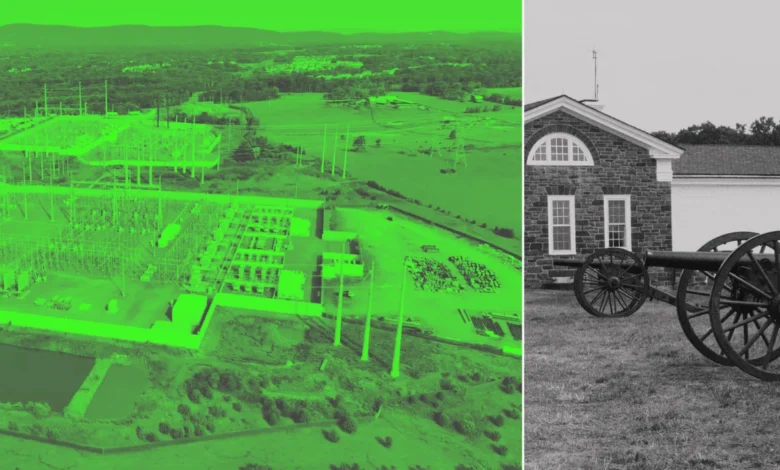
The rapid proliferation of data centers across the United States has transitioned from a niche industrial trend into a central conflict involving land use, environmental conservation, and the preservation of national heritage. In Northern Virginia, specifically Prince William County, this tension has culminated in the approval of the Prince William Digital Gateway, a massive infrastructure project that represents the largest data center development ever proposed. Spanning approximately 2,100 acres, the project has drawn international attention not only for its scale—equivalent to roughly 61 Pentagon buildings—but also for its proximity to the Manassas National Battlefield Park, a site of profound historical significance from the American Civil War.
The expansion of these facilities is driven by the global surge in demand for cloud computing and generative artificial intelligence (AI). As tech giants like Amazon, Google, and Microsoft race to expand their processing power, the physical infrastructure required to house thousands of servers is encroaching on residential neighborhoods, rural landscapes, and protected historical sites. This shift has sparked a complex debate regarding the balance between the economic promises of the digital economy and the tangible costs to local communities and the environment.
The Rise of Data Center Alley and the Shift to Prince William County
For decades, Loudoun County, Virginia, has been known as "Data Center Alley," housing the highest concentration of these facilities in the world. It is estimated that approximately 70 percent of global internet traffic passes through this region. However, as available land in Loudoun has become scarce and electricity prices have risen, developers have turned their sights southward to Prince William County.
The Prince William Digital Gateway is the centerpiece of this expansion. The project involves rezoning vast tracts of land along the Pageland Lane corridor, transforming what was once a rural crescent of farms and homes into a high-density industrial zone. Proponents of the development, including several local government officials and the developers Compass Datacenters and QTS Data Centers, argue that the project is essential for the county’s fiscal health. They estimate that at full build-out, the project could generate hundreds of millions of dollars in annual tax revenue, which could be used to fund schools, public safety, and infrastructure improvements.
Conversely, critics argue that the economic benefits are often overstated and come at a steep price. While the construction phase provides thousands of temporary jobs, the long-term operational staff required for a data center is relatively small compared to its physical footprint. Furthermore, the industry often benefits from significant state and local tax incentives, which can offset the net gain to public coffers.
Environmental Impacts: Power, Water, and Land
The environmental footprint of a data center is immense, particularly in the era of AI. Unlike traditional cloud storage, AI training and inference require specialized chips that generate significant heat, necessitating more robust cooling systems and higher electricity consumption.
Electricity Demand and Grid Stability
Data centers are among the most energy-intensive buildings in the world. In Northern Virginia, the surge in demand has forced utility providers like Dominion Energy to fast-track the construction of new high-voltage transmission lines and substations. PJM Interconnection, the regional grid operator, has expressed concerns about the long-term stability of the power supply as the load from data centers continues to grow exponentially. Reports indicate that data centers in Virginia already consume several gigawatts of power, with projections suggesting that demand could triple by 2030. This necessitates the continued operation of fossil-fuel-based power plants, potentially undermining regional carbon-reduction goals.
Water Consumption
Cooling these massive server farms requires millions of gallons of water daily. In many jurisdictions, data centers rely on evaporative cooling, which consumes water that is not returned to the local watershed. In Prince William County, residents have voiced concerns that the Digital Gateway could strain local aquifers and impact the Occoquan Reservoir, a primary source of drinking water for the region. The potential for runoff from thousands of acres of impervious surfaces—roofs and parking lots—also poses a threat to local water quality and wildlife habitats.
The Battle for Manassas: History vs. Infrastructure
The most contentious aspect of the Prince William Digital Gateway is its impact on the Manassas National Battlefield Park. Established in 1940, the park preserves the site of two major Civil War battles: the First and Second Battles of Bull Run. These conflicts were pivotal in American history, and the park serves as a commemorative space for the thousands of soldiers who fought and died there.
The Digital Gateway project abuts the park’s boundaries, leading to fears that the "viewshed"—the historic landscape as seen by visitors—will be permanently marred by industrial walls, cooling towers, and humming machinery. This concern reached a national level when renowned documentary filmmaker Ken Burns intervened. Burns, whose work has defined the public’s understanding of the Civil War, wrote a formal letter to the Prince William County Board of Supervisors expressing his "distress" over the proposal. He argued that the encroachment of industrial development on the edges of the battlefield would diminish the "hallowed ground" and disrupt the solemnity of the site.
The National Park Service (NPS) also expressed significant reservations. In various statements, NPS officials warned that the scale of the development was incompatible with the park’s mission to preserve the historic character of the landscape. Despite these objections, the local government moved forward with the rezoning processes required to facilitate the project.
A Chronology of Conflict
The path to the approval of the Prince William Digital Gateway was marked by years of public outcry and political maneuvering:
- 2021: The initial proposal for the "Digital Gateway" was introduced, seeking to rezone over 2,000 acres of rural land for data center use.
- January 2022: Ken Burns sends a letter to the Board of Supervisors, sparking national media coverage and galvanizing local opposition.
- 2022-2023: Numerous public hearings are held, characterized by marathon sessions lasting over 20 hours. Residents, environmentalists, and historians testified against the project, while landowners along Pageland Lane—many of whom stood to make millions by selling their property—spoke in favor.
- December 2023: In a climactic and controversial vote, the Prince William County Board of Supervisors approved the necessary comprehensive plan amendments and rezonings for the Digital Gateway. The vote took place after a 27-hour public meeting, one of the longest in the county’s history.
- 2024: Legal challenges were mounted by local conservation groups and residents, alleging that the board ignored environmental regulations and its own land-use policies. Despite these lawsuits, preliminary site work and planning have continued.
Economic Analysis and Local Reactions
The debate over data centers often centers on a "Faustian bargain" described by local activists. For individual landowners, the arrival of data center developers offers a life-changing financial windfall. In Prince William County, some property owners were offered prices far exceeding the agricultural or residential value of their land, sometimes reaching over $1 million per acre.
However, for the broader community, the benefits are less direct. A report by the Brookings Institution notes that while data centers provide significant property tax revenue, they offer "little durable local economic upside" in terms of high-volume employment or the creation of secondary industries. The facilities are essentially automated warehouses for data, requiring few workers once construction is complete.
Furthermore, the "monster tax breaks" often granted to these companies are a point of contention. Virginia offers sales and use tax exemptions for data center equipment, a policy intended to keep the state competitive. Critics argue that since the infrastructure is now a necessity for tech companies, these subsidies are an unnecessary drain on state resources that could be better spent on direct public services.
Broader Implications and the Future of AI Infrastructure
The situation in Northern Virginia is a microcosm of a global trend. As AI becomes integrated into every facet of modern life—from healthcare to finance—the demand for physical "compute" will only increase. This necessitates a rethink of how and where these facilities are built.
Some industry experts suggest that data centers should be moved to regions with surplus power and cooler climates to reduce the strain on existing grids and water supplies. Others advocate for stricter architectural standards to ensure that these "temples of technology" do not destroy the aesthetic or historical value of their surroundings.
In Prince William County, the approval of the Digital Gateway has set a precedent that other jurisdictions are watching closely. It signals that even in the face of intense historical and environmental opposition, the economic momentum of the tech industry often prevails in local governance.
Conclusion
The Prince William Digital Gateway stands as a monument to the digital age’s physical requirements. While it promises a future of technological advancement and municipal wealth, it also serves as a cautionary tale about the loss of rural character and the potential desecration of historic landscapes. As the first bulldozers begin to move earth near the Manassas Battlefield, the conflict remains a stark reminder that the virtual world of the "cloud" has very real, very permanent consequences for the physical world it leaves behind. The outcome of this struggle will likely influence land-use policy for decades to come, as society continues to grapple with the insatiable appetite of the AI revolution.
Related posts: