The Bipartisan Climate Solution Hiding in Plain Sight: How Apartment Expansion Could Drive National Decarbonization

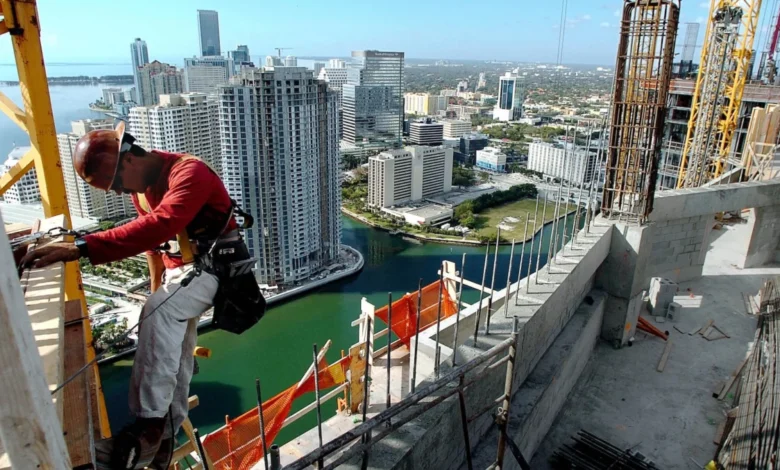
In an era defined by deep political polarization, the United States finds itself at a rare crossroads where Democrats and Republicans have reached a functional consensus: the nation is facing a critical housing shortage that requires immediate and massive construction. While the motivations differ—Republicans often cite economic stimulation and deregulation, while Democrats emphasize affordability and social equity—the proposed solution remains the same. However, a growing body of research suggests that this push for new housing, specifically multi-family apartment buildings, carries an unintended but potent side effect: it is perhaps the most effective tool for rapid urban decarbonization currently available.
According to a comprehensive new report from the Sightline Institute, apartment buildings represent an "almost automatic" form of building decarbonization. Unlike single-family homes, which have historically relied on natural gas for heating and cooking, three-quarters of all new apartments in the United States are constructed with electric heating systems. This shift allows residential units to integrate seamlessly with renewable energy sources, such as rooftop solar or clean-energy grids, bypassing the need for fossil-fuel-burning furnaces and boilers. As the political landscape shifts toward a pro-construction stance, the environmental benefits of density are moving from the periphery to the center of the national climate strategy.
The Structural Efficiency of Multi-Family Living
The environmental superiority of apartment buildings is rooted in fundamental physics and architectural design. Research indicates that the typical resident of a high-rise building in a dense urban core emits approximately one-third of the greenhouse gases produced by a resident of a detached single-family home in the suburbs. This disparity is driven by several key factors: shared infrastructure, reduced square footage, and inherent insulation.
In a multi-family structure, residents share walls, floors, and ceilings with their neighbors. This configuration creates a "thermal envelope" where heat loss is significantly minimized compared to a standalone house exposed to the elements on all four sides. Furthermore, apartment units generally feature smaller square footage than detached homes, requiring less energy to maintain comfortable indoor temperatures. By reducing the volume of air that needs to be heated or cooled, these buildings naturally lower the per-capita energy demand of the population.
This efficiency has historically driven economic decisions that favor electrification. Since the early 1970s, approximately 68 percent of apartments built in the U.S. have utilized electric heating. At the time, this was not a climate-driven choice but a financial one; for developers, installing electric resistance heating—such as baseboard heaters—is significantly cheaper than the extensive plumbing and piping required for methane-based natural gas systems. Today, this legacy means that apartment dwellers are 60 percent more likely to live in an all-electric home than those in single-family houses, providing a ready-made foundation for a carbon-neutral future.
Technological Evolution: The Rise of Heat Pumps and Geothermal Networks
While electric resistance heating was the standard for decades, the technology has evolved toward even greater efficiency through the adoption of heat pumps. Unlike traditional furnaces that generate heat, heat pumps move warmth from the outside air into the home. Modern iterations of this technology are roughly three times more efficient than standard electric space heaters and are now capable of functioning in sub-zero temperatures.
The adoption of heat pumps is accelerating across various climates. In Maine, the state government surpassed its goal of installing 100,000 heat pumps two years ahead of schedule, while in Norway, nearly two-thirds of all households now utilize the technology. In the American Northwest, heat pumps have been incorporated into 18 percent of new apartment structures since 2010. The market shift is undeniable: heat pumps have outsold gas furnaces in the U.S. for several consecutive years.
Innovation is also making retrofits easier for existing buildings. New products, such as "saddle-bag" window units that straddle a sill or combined interior units that do not require complex external infrastructure, are lowering the barrier to entry for renters and condo owners. Beyond individual units, experts are looking toward "networked geothermal" systems. These systems utilize liquid pumped through underground pipes to leverage the Earth’s constant temperature. When an entire neighborhood or apartment complex is hooked into a geothermal network, the need for individual gas connections vanishes entirely, replaced by a localized, "homegrown" energy system.
The Bipartisan Push for "Missing Middle" Housing
The political momentum for these developments is coming from unexpected quarters. While the incoming Trump administration and the broader Republican Party have signaled intentions to roll back specific climate regulations and the Paris Agreement, their aggressive pro-housing platforms in "red" states are inadvertently advancing decarbonization goals.
Montana serves as a primary example of this trend. The state recently passed a series of legislative measures aimed at easing zoning restrictions to allow for more multi-family housing. By framing housing as a property rights and economic issue, Republican lawmakers are enabling the very density that climate advocates have long championed. Alan Durning, executive director of the Sightline Institute, describes apartments as the "climate solution hiding in plain sight," noting that the legislative path to more housing is often the most direct path to lower emissions.
However, significant hurdles remain. In many American cities, zoning laws strictly prohibit the construction of apartments. The Sightline report highlights that in Oregon, apartment buildings of four stories or more are permitted on less than 1 percent of residential land in all but ten cities. Even in Portland, a city known for progressive urban planning, that figure only reaches 14 percent. The "missing middle"—housing that falls between single-family homes and massive high-rises—remains legally barred in much of the country.
Urban Planning and the "15-Minute City" Concept
The benefits of apartment living extend beyond the walls of the building itself. Increased density allows for the development of "mixed-use" neighborhoods, where residential units sit atop commercial spaces like grocery stores, medical offices, and schools. This model, often referred to as the "15-minute city," ensures that residents can meet their daily needs within a short walk or bike ride, drastically reducing reliance on internal combustion engine vehicles.
Cécile Faraud, head of the clean construction program at C40—a global network of mayors focused on climate change—emphasizes that housing cannot be viewed in a vacuum. "These structures need mixed uses… so you can access care, education, and nature," Faraud stated. The integration of "agrihoods"—multi-family developments centered around working farms—and "pocket gardens" further enhances the environmental and psychological health of urban centers. These green spaces act as natural cooling agents, mitigating the "urban heat island" effect that contributes to heat-related deaths, which currently claim more lives in the U.S. than all other extreme weather events combined.
Analysis of Economic and Social Implications
The shift toward electrified, dense housing carries profound economic implications. For the consumer, all-electric apartments powered by heat pumps offer protection against the price volatility of natural gas. As the grid transitions to cheaper renewable sources, utility bills for apartment residents are expected to stabilize and eventually decline. For the labor market, the transition necessitates a massive upskilling of the HVAC and construction sectors, creating a demand for specialized technicians capable of installing and maintaining advanced electric systems.
Furthermore, the "electrification of everything" within a building facilitates the adoption of induction stoves. Experts like Matt Casale of the Building Decarbonization Coalition point out that once a building is heated and cooled electrically, it becomes economically illogical to maintain a gas hookup solely for cooking. This transition not only reduces outdoor emissions but also improves indoor air quality by eliminating the nitrogen dioxide and particulate matter associated with gas ranges.
Chronology of the Transition to Electric Housing
- 1970s: The energy crisis and high costs of gas infrastructure lead developers to adopt electric resistance heating in nearly 70% of new apartments.
- 1990s-2000s: Heat pump technology begins to mature, though it remains primarily limited to moderate climates.
- 2010-2020: Improvements in cold-climate heat pumps allow for adoption in northern states; Maine and Norway become leaders in the transition.
- 2020-2023: Heat pumps begin to outsell gas furnaces in the United States; states like Montana and Oregon begin "pro-housing" legislative pushes.
- 2024 and Beyond: The emergence of networked geothermal and "saddle-bag" heat pumps makes apartment electrification feasible for both new builds and retrofits.
Conclusion: A Convergent Path Forward
The convergence of the housing crisis and the climate crisis has created a unique political window. While the rhetoric surrounding climate change remains divisive, the tangible need for homes provides a bridge. As Amanda D. Smith, a senior scientist at Project Drawdown, observes, most Americans, regardless of their political affiliation, agree on the fundamental necessity of providing homes for the population.
By re-legalizing apartments and embracing the inherent efficiencies of multi-family living, the United States has the opportunity to address its housing shortage while simultaneously making massive strides toward its decarbonization goals. The "secret superpower" of the apartment building lies in its ability to solve two of the 21st century’s greatest challenges with a single, bipartisan solution: more roofs, fewer emissions, and a more resilient urban future.
Related posts: