The Toxic Cost of Plastic Fuel Inside Indonesia’s Informal Furnaces and the Global Waste Crisis

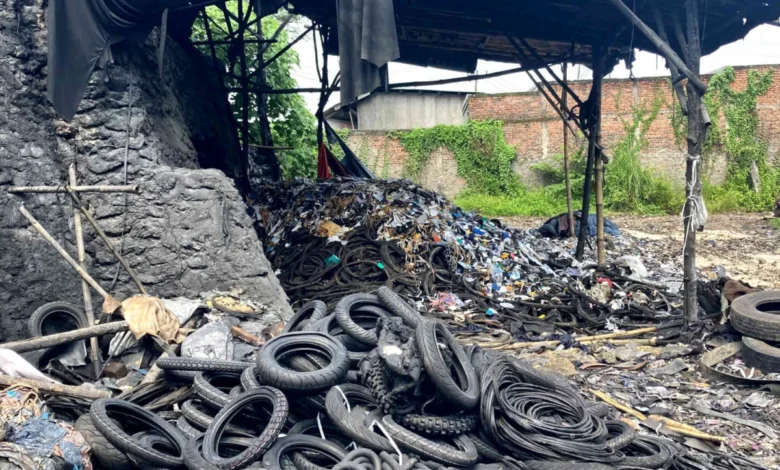
In the village of Tropodo, located in the eastern reaches of Java, Indonesia’s most populous island, the air is thick with a pungent, chemical odor that belies the town’s rustic appearance. While the narrow streets are lined with brightly colored houses and set against lush green fields, the horizon is dominated by tall chimneys belching streams of jet-black smoke. These plumes are the visible byproduct of a localized industrial economy that has turned to discarded plastic as a primary fuel source, a practice that highlights a growing global health crisis at the intersection of waste management and industrial production.
Tropodo has long served as a hub for tofu production, a staple of the Indonesian diet. However, in recent decades, the traditional methods of heating the soy-based product have undergone a dangerous transformation. What began as a reliance on rice husks has evolved into a dependency on shredded plastic waste, much of it imported from Western nations. This transition, driven by economic necessity and the collapse of traditional fuel supply chains, has turned the village into a living laboratory for the toxic effects of open-air plastic combustion.
The Informal Economy of Plastic Combustion
The scale of plastic burning in Indonesia is a microcosm of a global phenomenon. According to landmark data, approximately 12 percent of all plastic waste produced globally is incinerated. While large-scale industrial incinerators in developed nations often utilize advanced air scrubbers and filtration systems to mitigate toxic output, the informal furnaces of Tropodo and similar regions lack even the most rudimentary pollution controls.

In the backyard factories of Tropodo, owners like Muhammad Gufron operate tofu businesses that have been in their families for generations. Gufron’s factory, known as DY, processes significant quantities of soybeans daily, contributing to the 30 tons of soy handled by the village’s producers every 24 hours. The process requires intense, sustained heat to generate the steam necessary for grinding and boiling soybeans into a thick white sludge.
The fuel for this process arrives in sacks of shredded, faded plastic. Local waste sorters dry the material in the sun before selling it to factory owners. For Gufron, who previously used wood until his supplier closed, plastic is a logical choice because it is "good and cheap." However, the cost-saving benefits for the producers come at a devastating price for the community’s health and the local environment.
The Chemical Cocktail: From Furnaces to the Food Chain
The dangers of burning plastic are rooted in the complex chemistry of the material itself. A 2023 study published in the journal Nature revealed that modern plastics can contain upwards of 16,000 different chemicals. At least a quarter of these substances are known to pose significant risks to human health. When these materials are burned in low-temperature, low-tech furnaces, they release a "cocktail" of toxins, including dioxins, furans, heavy metals, and persistent organic pollutants (POPs).
Research conducted by the environmental group Ecoton (Ecological Observation and Wetlands Conservation) has found that these toxins do not remain in the air; they settle into the soil and enter the local food chain. In Tropodo, Ecoton tested eggs from free-range chickens that forage in soil laden with plastic ash. The results were staggering.

The eggs contained some of the highest levels of dioxins ever recorded in Asia. An adult consuming just one of these eggs would exceed the European Union’s acceptable daily intake of chlorinated dioxins by 70 times. These chemicals are linked to a host of severe health issues, including cardiovascular disease, diabetes, cancer, and permanent hormonal changes. Furthermore, the eggs were found to contain polychlorinated biphenyls (PCBs) and per- and polyfluoroalkyl substances (PFAS), often referred to as "forever chemicals." These substances, many of which are banned internationally under the Stockholm Convention, are known to cause reproductive failure, developmental delays, and immune system suppression.
The level of contamination in Tropodo is comparable only to regions with extreme industrial or military legacies. The only higher dioxin level recorded in an Asian egg was found near a former United States military base in Vietnam, which remains contaminated by the historic use of Agent Orange.
The Limestone Kilns of Tamansari
The crisis is not limited to the tofu industry. Approximately 385 miles west of Tropodo, in the region of Tamansari near Jakarta, the landscape is dotted with informal limestone kilns. Here, workers like Amin, who has labored in the kilns for 25 years, bake locally quarried stone into lime for the construction industry.
The process involves filling deep, brick-lined pits with limestone and heating them from below for 48 hours. The fuel of choice in Tamansari is a chaotic mix of refuse, including discarded tires, diapers, and pieces of colored foam. The resulting smoke is so thick and frequent that it obscures the sun, yet workers like Amin, who earns roughly $6 for a 10-hour shift, have little choice but to endure the conditions.

Amin reports frequent respiratory distress among his colleagues, a symptom of inhaling high concentrations of particulate matter. Ecoton’s measurements of PM2.5—tiny airborne particles that can penetrate deep into the lungs and enter the bloodstream—found levels in these areas exceeding 1,000 micrograms per cubic meter. This is 30 times the American 24-hour safety standard and nearly 20 times Indonesia’s own legal limit. Long-term exposure to such levels is a direct precursor to heart attacks, strokes, and neurodegenerative diseases such as dementia.
The Global Waste Pipeline and "Greenwashing"
The plastic fueling these Indonesian furnaces often originates thousands of miles away. Despite international regulations like the Basel Convention, which seeks to limit the transboundary movement of hazardous waste, plastic scrap frequently enters Indonesia as "contamination" within shipments of recycled paper. While Indonesian law limits such contamination to 2 percent of a shipment, environmentalists argue that the actual volume is significantly higher.
This influx of foreign waste has created a market for what the industry calls "Refuse-Derived Fuel" (RDF). Valued at over $5.4 billion annually, the RDF market is projected to double within the next decade. Major multinational corporations and some governments have begun to frame the burning of plastic in cement kilns as a "green" alternative to coal or petroleum coke.
Industry proponents argue that the high temperatures of industrial cement kilns—which are far more advanced than the backyard furnaces of Tropodo—can safely destroy toxic gases while reducing the carbon footprint of cement production, which currently accounts for 8 percent of global CO2 emissions. However, environmental advocacy groups, such as the Nexus3 Foundation, remain skeptical. They argue that using plastic as a fuel source merely incentivizes the continued overproduction of plastic and "locks in" a future where waste management relies on incineration rather than reduction or true recycling.

Analysis: Moving the Landfill to the Sky
The situation in Indonesia highlights a systemic failure in the global plastic lifecycle. For decades, the narrative surrounding plastic pollution has focused on waste management—the idea that if we can simply find a way to dispose of plastic, the problem is solved. However, the reality in Tropodo and Tamansari suggests that "disposal" via combustion is merely a relocation of the problem.
As activists frequently note, incineration "moves the landfill from the ground to the sky." The persistent nature of the chemicals released means that the environmental impact is not localized; it is a transgenerational health threat. The presence of banned substances like PCBs in the eggs of Tropodo chickens proves that these toxins do not disappear; they circulate through the environment for decades.
The reliance on plastic fuel in informal sectors is also a symptom of broader economic inequality. Workers in Tamansari and factory owners in Tropodo are not unaware of the smoke’s foul nature, but they are trapped in an economic reality where the cheapest fuel is the only viable option for survival. Without systemic changes—such as the electrification of industrial kilns with renewable energy and the enforcement of stricter international bans on plastic waste exports—the informal burning of plastic will continue to expand.
Conclusion and Future Outlook
The "urgent global health issue" identified by the Annals of Global Health in 2024 requires a multifaceted response. While the Indonesian government has made attempts to regulate waste imports, the porous nature of global trade and the demand for cheap energy continue to undermine these efforts.

The story of Tropodo and Tamansari serves as a stark warning for the future of global waste policy. As the world negotiates the Global Plastics Treaty, the focus must shift from "end-of-pipe" solutions like incineration toward a drastic reduction in plastic production. Until then, the residents of Java’s "plastic villages" will continue to pay the ultimate price for the world’s addiction to disposable material, breathing in the toxic remains of a global economy that has run out of places to hide its trash.
Related posts: