Controversial Glyphosate Spraying in Tahoe Forest Restoration Projects Sparks Public Outcry and Environmental Concerns

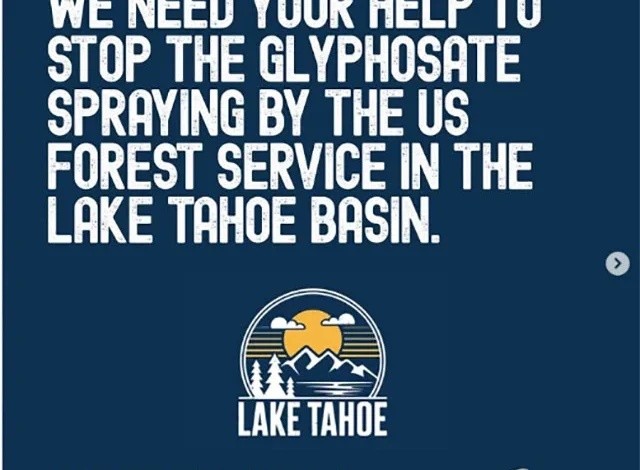
The slopes of the Sierra-at-Tahoe ski resort, typically a pristine expanse within the El Dorado National Forest, have recently become the focal point of a simmering conflict between federal land management strategies and local environmental advocacy. While the region remains a premier destination for outdoor enthusiasts, a significant portion of the landscape now bears the visible scars of a massive chemical intervention. Investigations into the United States Forest Service (USFS) restoration plans following the devastating 2021 Caldor Fire have revealed the widespread application of glyphosate—the active ingredient in the herbicide Roundup—across thousands of acres of public land. This move has triggered a wave of public backlash, fueled by health concerns, ecological risks, and a complex web of shifting federal policies.
The controversy centers on the Forest Service’s strategy to rehabilitate approximately 75,000 acres scorched by the Caldor Fire. While the agency frames the use of herbicides as a necessary and cost-effective tool for reforestation, residents and environmental groups have expressed alarm over the scale of the project and the potential long-term impacts on the Lake Tahoe watershed. The tension is exacerbated by conflicting reports regarding the timeline of the spraying, with many locals under the impression that the project had been delayed, only to discover that application was already well underway.
The Post-Fire Restoration Strategy and the Shift to Chemical Management
The 2021 Caldor Fire was one of the most destructive in California’s history, burning over 221,000 acres and threatening the communities surrounding Lake Tahoe. In the aftermath, the Forest Service faced the monumental task of restoring the ecosystem and mitigating the risk of future high-intensity burns. The agency’s primary objective in many of these areas is the re-establishment of conifer forests, which are vital for carbon sequestration, habitat, and the future timber economy.
To achieve this, the Forest Service has increasingly relied on glyphosate. The herbicide is used to eliminate "competing vegetation"—shrubs, grasses, and broadleaf plants that naturally emerge after a fire. These plants compete with newly planted pine seedlings for sunlight, water, and soil nutrients. By "clearing" the land chemically, the Forest Service ensures that the planted conifers grow faster and with a higher survival rate. According to agency documents, herbicide application is considered the most efficient method for achieving these reforestation goals in the majority of post-fire scenarios.
However, this "industrial" approach to forest management has drawn criticism for treating public lands like monoculture timber farms. In 2023 alone, the Forest Service applied approximately 14,900 pounds of pure glyphosate across California’s national forests. The Caldor Fire Restoration Project represents a massive expansion of this practice. With authorization to spray up to eight pounds per acre over a 75,000-acre footprint, the project could eventually deploy more than 584,000 pounds of the chemical.
Chronology of the Controversy: From Public Comment to Executive Mandates
The trajectory of the Tahoe spraying project reveals a shift from localized forest management to a broader political and economic agenda.
- 2021: The Caldor Fire devastates the El Dorado National Forest and the Lake Tahoe Basin.
- 2023: The Forest Service initiates a public comment period for a reforestation plan. At this stage, the proposed herbicide use is relatively limited in scope. Many local residents later reported being unaware of the proposal during this window.
- Spring 2023: Initial spraying begins in certain sectors of the Caldor Fire scar, including areas within the Sierra-at-Tahoe ski resort.
- March 2025: A federal executive order is issued aimed at expanding timber harvesting on national forestland. This order provides the administrative framework for the Forest Service to significantly increase its herbicide use—more than doubling the original proposal—without requiring additional rounds of public feedback.
- April 2026: Investigative reports reveal that glyphosate use is the fastest-growing herbicide application in California forests. Public awareness spikes, leading to petitions and social media campaigns.
- May 2026: Confusion peaks as local environmental groups and news outlets suggest the spraying has been delayed until 2028. However, field observations and subsequent Forest Service confirmations reveal that spraying in the Sierra-at-Tahoe area and other sectors outside the immediate Tahoe Basin is active or already completed.
Scientific and Legal Disputes Over Glyphosate Safety
The core of the public’s apprehension lies in the controversial safety profile of glyphosate. In 2015, the World Health Organization’s International Agency for Research on Cancer (IARC) classified glyphosate as "probably carcinogenic to humans." This classification has served as the foundation for thousands of lawsuits against Bayer, the manufacturer of Roundup, which acquired the product’s original developer, Monsanto. Bayer has already paid out billions of dollars in settlements to individuals claiming the herbicide caused non-Hodgkin lymphoma.
Environmental risks are equally scrutinized. A 2020 report from the U.S. Environmental Protection Agency (EPA) indicated that glyphosate likely harms 93 percent of threatened and endangered species. Despite these findings, the EPA has maintained that the herbicide is safe for human use when applied according to label instructions, citing the "gold-standard science" used in its assessments.
This stance was challenged in the 9th Circuit Court of Appeals, which recently overturned the EPA’s safety decision. The court ruled that the agency had failed to adequately assess the ecological risks and ignored evidence linking glyphosate exposure to increased cancer risks. While the EPA is expected to issue an updated assessment later this year, the Forest Service continues to rely on the existing, albeit legally contested, federal guidelines to justify its operations.

Public Outcry and the "MAHA" Movement
The opposition to the Tahoe spraying project has brought together an unlikely coalition of activists. Traditional environmental organizations like Greenpeace and local groups like Keep Tahoe Blue have been joined by high-profile figures from the sports world and political movements.
Hannah Teter, an Olympic gold medalist snowboarder and long-time Tahoe resident, has used her platform to voice the frustrations of the local community. "Everyone in Tahoe is so bummed," Teter stated, questioning how such a large-scale chemical application was approved for a region known for its environmental sensitivity.
Simultaneously, the "Make America Healthy Again" (MAHA) movement, which focuses on reducing chemical exposure in the American food and environment, has taken up the cause. Kelly Ryerson, an advocate known as "Glyphosate Girl," has been vocal in her criticism of the Forest Service. Ryerson, who has met with federal officials to discuss the risks of glyphosate, described the decision to spray in the Tahoe watershed as "ludicrous," citing the risk of the chemical leaching into water sources used for drinking and recreation.
Official Responses and Procedural Confusion
The Forest Service has defended its actions, asserting that it provides public notice by posting signs at spray locations. However, these signs are typically removed within 48 hours of application, a window that critics argue is insufficient given that research suggests glyphosate can persist in soil and plant tissue for months or even years.
Furthermore, a significant amount of public confusion stemmed from the distinction between the "Tahoe Basin" and the surrounding forest. The Caldor Fire Restoration Project is divided into two segments: a 3,000-acre section within the Lake Tahoe watershed and a much larger 73,000-acre section outside the basin. While officials indicated that spraying within the immediate Tahoe Basin might not occur until 2028, work in the larger section—which includes the Sierra-at-Tahoe resort—has proceeded according to the agency’s internal schedule.
Questions have also been raised regarding the safety of the workers applying the chemicals. Reports have surfaced of contract crews, often composed of immigrant laborers, working without adequate protective gear. In at least one instance, a county inspector cited a crew for safety violations after observing workers with skin visibly stained by the chemical dye used in the herbicide mixture.
Broader Implications for Forest Management
The situation in the Tahoe region reflects a broader trend in federal land management where efficiency and timber yield are prioritized over natural succession. By utilizing glyphosate to suppress native brush, the Forest Service is essentially "farming" the national forest to ensure a future supply of timber. This approach, while economically viable for the timber industry, raises fundamental questions about the purpose of public lands.
Critics argue that this strategy ignores the ecological benefits of post-fire "shrublands," which provide critical habitat for various species and help stabilize soil naturally. Moreover, the reliance on a single chemical tool in the face of growing scientific and legal opposition suggests a disconnect between federal policy and public sentiment.
As the Forest Service prepares to conclude its current round of spraying in the coming weeks, the debate over the future of the Sierra-at-Tahoe landscape is far from over. The intersection of environmental health, corporate liability, and federal land-use policy in the Tahoe Basin serves as a precursor for how post-fire restoration may be handled across the American West in an era of increasingly frequent and intense wildfires. With the EPA’s pending safety update and ongoing litigation in the Supreme Court regarding herbicide liability, the "Tahoe model" of reforestation will remain under intense national scrutiny.
Related posts: