
Israel Relationship Ukraine Denmark
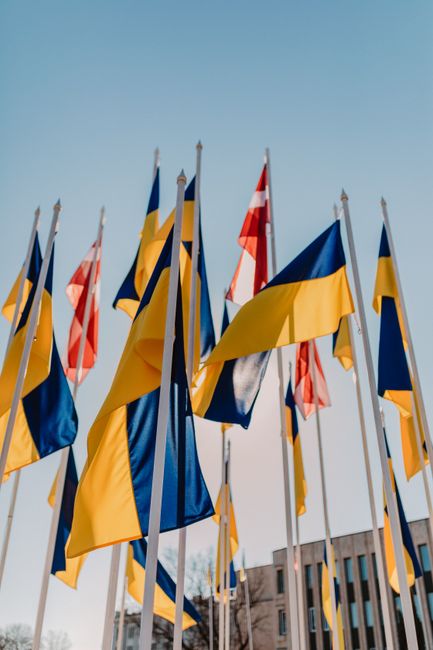
Israel’s Evolving Relationship with Ukraine and Denmark: A Geopolitical Crossroads
The intricate geopolitical landscape of Eastern Europe and the Middle East has witnessed a significant recalibration of relationships, particularly for Israel, in its interactions with both Ukraine and Denmark. These relationships, while distinct in their historical roots and contemporary drivers, are increasingly intertwined by a complex web of shared security concerns, economic interdependence, and shifting international alliances. Understanding the nuances of Israel’s engagement with both nations offers critical insights into broader regional dynamics and the evolving global order.
Israel’s relationship with Ukraine, prior to the full-scale Russian invasion in February 2022, was characterized by a cautious but growing partnership. Economically, Ukraine represented a significant market for Israeli technology, particularly in agriculture, cyber security, and water management. Bilateral trade, though not on the scale of Israel’s engagements with Western European powers, held potential for expansion. Cultural ties were also present, with a substantial Ukrainian-born Jewish diaspora in Israel, fostering a degree of shared heritage. However, a primary constraint on a deeper, more overt alliance was Israel’s strategic imperative to maintain a degree of neutrality in its relations with Russia, particularly given Russia’s military presence and influence in Syria, a close neighbor and strategic concern for Israel. This delicate balancing act meant that overt military support or condemnation of Russian actions, especially concerning Crimea and the Donbas region, was largely avoided by Jerusalem. The Israeli government’s public statements tended to emphasize humanitarian aid and diplomatic appeals for de-escalation, while refraining from imposing stringent sanctions on Russia or providing direct lethal military assistance to Ukraine. This stance was rooted in a pragmatic assessment of Israeli national security interests, prioritizing the avoidance of direct confrontation with a nuclear-armed power that controlled airspace crucial for Israeli operations in the Middle East.
The 2022 Russian invasion fundamentally altered this equation. The sheer scale of the aggression and its blatant violation of international law forced a reassessment within Jerusalem. While the core concern regarding Russian influence in Syria remained, the ethical and political pressure to respond more assertively grew. Israel swiftly condemned the invasion and began providing significant humanitarian aid to Ukraine, including medical supplies, equipment, and financial assistance. The Israeli public, often sympathetic to victims of aggression, also pressured the government for a stronger response. However, the provision of advanced defensive weaponry, such as Iron Dome or anti-tank missiles, remained a contentious issue, primarily due to the persistent fear of provoking a severe Russian backlash. Instead, Israel focused on supplying non-lethal military equipment and bolstering its humanitarian efforts. The leadership in Kyiv, while understanding Israel’s strategic constraints, consistently lobbied for more direct military support, including air defense systems, to counter Russian missile and drone attacks. This dynamic created a persistent tension, with Ukraine seeking a more robust partnership and Israel navigating a complex geopolitical tightrope. The influx of Ukrainian refugees into Europe also indirectly impacted Israel, as global attention and resources were diverted towards the crisis, potentially influencing the broader context of international aid and diplomatic engagements.
Denmark’s relationship with Israel, in contrast, has historically been more firmly anchored within the framework of Western alliances and shared democratic values. As a member of the European Union and NATO, Denmark aligns closely with the foreign policy positions of its European partners, including those concerning the Middle East. Bilateral relations have generally been cordial, with cooperation in areas such as trade, technology, and renewable energy. Danish companies have invested in Israel, and Israeli firms have explored opportunities in the Danish market. Diplomatic engagement has been consistent, with regular high-level visits and discussions on regional and global issues. However, like many European nations, Denmark has also expressed concerns regarding Israeli policies in the Palestinian territories and has supported a two-state solution. This has occasionally led to public disagreements or differing perspectives on specific aspects of the Israeli-Palestinian conflict, though these have generally not fundamentally undermined the overall positive nature of the bilateral relationship.
The escalating conflict in Ukraine has, however, presented Denmark with an opportunity to deepen its engagement with Israel, particularly in the realm of security and defense cooperation. Denmark, a frontline state in the face of a resurgent Russia, has significantly increased its defense spending and is actively seeking to strengthen its security partnerships. Israel, with its advanced defense industry and extensive experience in countering sophisticated threats, has become a natural partner for Denmark. This has manifested in discussions and potential collaborations on areas such as cyber defense, intelligence sharing, and potentially, the procurement of Israeli defense systems. Denmark, like other NATO members, has been actively seeking to bolster its air defense capabilities, and Israel’s expertise in this domain is highly valued. Furthermore, Denmark has been a strong proponent of robust sanctions against Russia and has provided substantial humanitarian and financial aid to Ukraine. In this context, Denmark’s alignment with Western efforts to isolate Russia has created a shared strategic perspective with Israel, albeit from different geographical and historical vantage points. This shared concern over Russian aggression has fostered a greater sense of strategic alignment between Copenhagen and Jerusalem, even as they continue to hold differing views on certain aspects of the Israeli-Palestinian conflict.
The interplay between Israel’s relationships with Ukraine and Denmark is becoming increasingly significant. As the conflict in Ukraine continues, the strategic importance of Israel’s stance vis-à-vis Russia is magnified. Denmark, a key player in European security architecture, is acutely aware of the broader implications of the conflict and is therefore more inclined to engage with Israel on security matters that transcend immediate regional concerns. This has led to a situation where Israel’s balancing act between Russia and Ukraine is not solely a matter of its own regional interests but also has implications for its partnerships with European nations like Denmark. For instance, if Israel were to significantly alter its posture towards Russia in response to escalating Ukrainian needs, this could impact its operational freedom in Syria, a concern for both Israel and, indirectly, for European security given the broader instability in the region. Conversely, a more robust Israeli engagement with Ukraine, even on non-lethal aid, is viewed positively by Denmark and other like-minded European nations, strengthening Israel’s standing within Western alliances.
Economically, the ripple effects of the Ukraine conflict are also evident. The disruption of global supply chains and energy markets has increased the attractiveness of Israel’s technological innovation, particularly in areas like food security and energy independence, which are critical for nations like Denmark. Ukraine, a major agricultural exporter, has also seen its role disrupted, potentially opening further avenues for Israeli agricultural technology and expertise to fill the gaps. The ongoing geopolitical realignments may also lead to a recalibration of investment flows, with nations seeking to diversify their economic dependencies and strengthen ties with stable, technologically advanced partners.
Furthermore, the human dimension of the Ukraine crisis, with the displacement of millions, has created opportunities for humanitarian and technological cooperation. Israel’s expertise in disaster relief, medical technologies, and refugee integration, while developed for its own unique circumstances, can be valuable in addressing the broader humanitarian challenges posed by the conflict. Denmark, as a significant provider of humanitarian aid, could find common ground with Israel in developing and implementing more effective aid strategies. This shared focus on humanitarian response can serve as a bridge for deeper engagement on other, more sensitive issues.
In conclusion, Israel’s relationships with Ukraine and Denmark are in a state of dynamic evolution, shaped by the profound geopolitical shifts underway. The war in Ukraine has acted as a catalyst, forcing a re-evaluation of long-standing strategic calculations. While Israel continues to navigate its complex relationship with Russia, its engagement with Ukraine has deepened, driven by humanitarian imperatives and growing international pressure. Simultaneously, Denmark’s own security concerns in the face of Russian assertiveness have created a new basis for closer security cooperation with Israel. These interconnected relationships, operating at the confluence of security, economics, and humanitarian concerns, are crucial for understanding the intricate diplomatic and strategic maneuverings of the 21st century. The ability of Israel to effectively manage these evolving partnerships will be a key determinant of its regional standing and its influence on the broader international stage. The ongoing developments in Eastern Europe and the Middle East necessitate a continuous recalibration of these diplomatic ties, with the potential for both increased cooperation and the emergence of new challenges. The future trajectory of these relationships will undoubtedly be a significant factor in shaping regional stability and global geopolitical alignments.
