Global Energy Transition Reaches Pivotal Milestone as the World Enters the Age of Electricity Amid Geopolitical Turbulence

The landscape of global energy production and consumption underwent a fundamental transformation in 2025, marking the definitive beginning of what experts are now calling the "Age of Electricity." According to two landmark reports released by the International Energy Agency (IEA) and the energy think tank Ember, the world has reached a critical juncture where renewable energy sources have begun to outpace the growth in global electricity demand. This shift occurs against a backdrop of severe geopolitical instability, specifically the conflict involving the United States, Israel, and Iran, which has disrupted nearly 20 percent of the world’s supply of oil and liquefied natural gas (LNG). While the immediate humanitarian and economic consequences of the war remain grave, the energy sector’s data suggests that the world was already pivoting toward a future where fossil fuels are no longer the primary engine of economic expansion.
The IEA’s World Energy Outlook and Ember’s Global Electricity Review both highlight 2025 as a banner year for decarbonization. For the first time in more than a century, renewable energy sources—led by an unprecedented surge in solar power—surpassed coal in global electricity generation. This milestone indicates that the transition from a combustion-based economy to one powered by electrons is no longer a distant projection but a current reality. The "Age of Electricity" is characterized by the electrification of sectors that have historically relied on oil and gas, including passenger transportation, residential heating through heat pumps, and heavy industrial processes like steel manufacturing.
Geopolitical Instability and the Acceleration of Energy Security
The outbreak of hostilities between the United States and Israel against Iran has sent shockwaves through global commodities markets. With 20 percent of the world’s oil and gas transit currently bottlenecked, energy security has become the primary concern for policymakers in both Washington and Brussels. Historically, such disruptions led to a frantic search for alternative fossil fuel suppliers. However, the 2025 data suggests a different response: a reinforced commitment to domestic renewable infrastructure.
The vulnerability of global supply chains for oil and gas has highlighted the strategic advantage of "homegrown" energy. Solar and wind installations, once viewed primarily through the lens of environmental protection, are now being treated as vital components of national security. By reducing reliance on the Strait of Hormuz and other volatile maritime chokepoints, nations are finding that the "Age of Electricity" offers a degree of energy sovereignty that the age of oil never could. This geopolitical pressure is acting as a catalyst, compressing a decade’s worth of planned energy transitions into a much shorter timeframe.
The 2025 Chronology: A Year of Structural Change
To understand the magnitude of the shift, it is necessary to examine the timeline of events that defined the energy landscape over the past year. At the start of 2025, analysts predicted a steady but slow growth in renewables. However, several factors converged to accelerate this trend:
- Q1 2025: Rapid expansion of solar manufacturing capacity in Asia led to a surplus of modules, driving prices to historic lows and triggering a wave of new utility-scale projects across the Global South.
- Q2 2025: Reports from India and China confirmed that for the first time this century, the absolute volume of electricity generated by fossil fuels had begun to decline, even as their economies continued to grow.
- Q3 2025: Battery storage technology saw a massive breakthrough in cost-efficiency. The price of lithium-ion and alternative battery chemistries fell by 45 percent over the course of the year, following a 20 percent decline in 2024.
- Q4 2025: The IEA and Ember finalized their data, confirming that carbon-free sources—including solar, wind, nuclear, and hydropower—had met 100 percent of the world’s new electricity demand growth.
This chronology demonstrates that the plateauing of fossil fuel demand in the power sector is a structural shift rather than a temporary fluctuation caused by economic downturns. Unlike the emission dips seen during the 2008 financial crisis or the 2020 pandemic, the 2025 transition occurred during a period of healthy global economic growth.
The Dominance of Solar and the Battery Revolution
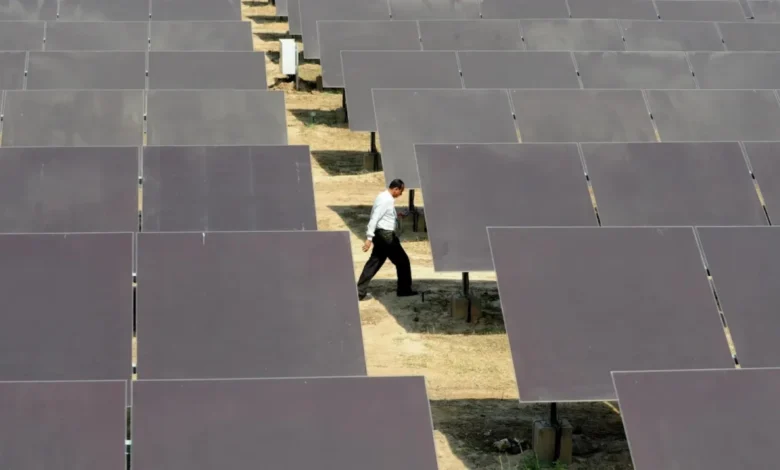
The primary engine of this transition is solar energy. In 2025, solar power became the single largest source of new electricity generation globally. The scalability of solar, ranging from small residential rooftop arrays to massive desert installations, has allowed it to penetrate markets more rapidly than any other energy technology in history.
Crucially, the rise of solar has been accompanied by the "battery revolution." The 45 percent drop in battery costs in 2025 has effectively solved the intermittency problem that long plagued renewable energy. With cheaper storage, solar and wind power can now be dispatched during peak evening hours or during periods of low wind, directly competing with the "baseload" reliability traditionally provided by coal and gas-fired power plants. This cost reduction has also had a profound impact on the automotive industry, making electric vehicles (EVs) price-competitive with internal combustion engine vehicles in almost every market segment.
The "Leapfrogging" Phenomenon in Developing Nations
One of the most significant findings in the recent reports is the role of developing economies in leading the charge toward electrification. For decades, the prevailing narrative was that developed nations would transition first, while developing nations would continue to rely on cheap coal and gas to industrialize. The 2025 data has turned this assumption on its head.
In nations like Indonesia, the adoption of electric vehicles has surged to 15 percent of new car sales, up from nearly zero just a few years ago. This is a higher adoption rate than seen in the United States. Many consumers in these regions are "leapfrogging" traditional gasoline-powered vehicles entirely, choosing an EV as their first-ever automobile. This mirrors the way many developing nations skipped landline telephone infrastructure in favor of mobile networks.
China and India, which together account for 42 percent of the world’s fossil-fuel-based power generation, have also become the world’s largest installers of renewable energy. Their pivot away from fossil fuels is driven not only by climate commitments but by the sheer economic reality that solar and wind are now the cheapest forms of new electricity available.
The Emissions Paradox: Record Highs Amid Renewable Success
Despite the record-breaking growth of renewables, the IEA report contains a sobering statistic: global carbon dioxide emissions reached a new record high in 2025, rising 0.4 percent from 2024 levels. This paradox highlights the complexity of the global energy system. While electricity generation is decarbonizing rapidly, electricity only accounts for a portion of total energy use.
Significant sectors of the economy, including aviation, heavy shipping, and certain high-heat industrial processes, still rely on liquid fuels or coal. Furthermore, 2025 saw a trend reversal in advanced economies. For the first time since the 1990s, emissions from developed nations grew faster than those from developing countries.
In the United States, coal demand rose by 10 percent in 2025. This was driven by a combination of factors: volatile natural gas prices that prompted a temporary return to coal-fired power, a particularly harsh winter in the Eastern U.S., and a massive surge in electricity demand from industrial-scale data centers. These data centers, fueled by the rapid expansion of artificial intelligence applications, require immense amounts of constant power, which in some regions outpaced the immediate availability of new renewable installations.
Expert Analysis and Official Responses
Energy analysts suggest that while the 2025 emissions record is a setback, the underlying trends remain positive. Daan Walter, a lead researcher at Ember, noted that the fact that renewables met all demand growth during a period of economic expansion is the "smoking gun" of a successful transition. "We are seeing the decoupling of economic growth from fossil fuel consumption in the power sector," Walter stated. "The infrastructure is now in place to ensure that once the broader energy economy—transport and heat—is electrified, emissions will fall precipitously."
The IEA has urged governments to maintain focus on grid modernization. According to IEA Executive Director Fatih Birol, the "Age of Electricity" requires a different kind of infrastructure. "The challenge is no longer just generating green electrons; it is moving them," Birol noted in a statement accompanying the report. "We need massive investment in transmission lines and smart grids to ensure that the solar power generated in one region can power the data centers or factories in another."
Future Implications: A New Energy World Order
The implications of the 2025 reports are far-reaching. As the world moves deeper into the Age of Electricity, the geopolitical influence of oil-producing states is likely to wane, replaced by the strategic importance of critical minerals like lithium, cobalt, and copper—essential components of the new electrical infrastructure.
The transition also suggests that the goal of limiting global warming to 1.5 or 2 degrees Celsius, while still a monumental challenge, has a viable technological pathway. The structural shift in 2025 proves that renewable energy can sustain a modern industrial economy. However, the record emissions levels serve as a reminder that the transition must expand beyond the power grid and into the "hard-to-abate" sectors of heavy industry and long-haul transport.
As 2025 comes to a close, the world stands at a crossroads. The conflict in the Middle East has underscored the fragility of the old energy order, while the rise of solar, batteries, and EVs has demonstrated the resilience of the new one. The Age of Electricity has arrived, and while the path forward is fraught with geopolitical and technical challenges, the momentum toward a decarbonized future appears increasingly irreversible.
Related posts: