Google Integrates Travel Brands into AI-Driven Performance Max as Search Ecosystem Shifts Toward Intent-Based Models


The digital advertising landscape for the global travel industry underwent a significant transformation this week as Google officially expanded its AI-powered "Performance Max" product to encompass travel-specific brands and inventory. This strategic move, announced on Thursday, signals a fundamental departure from the keyword-based search paradigms that have dominated the industry for more than two decades, replacing manual control with automated systems designed to navigate the increasingly complex world of generative AI and conversational search. By bringing hotel ads, property promotions, and direct booking links into the Performance Max (PMax) ecosystem, Google is effectively merging its traditional search dominance with its burgeoning AI Overview capabilities, forcing travel marketers to adapt to a "black box" environment where intent—rather than specific search terms—dictates visibility.
The Evolution of Travel Search: From Keywords to Intent
For years, travel marketing was a game of precision keyword bidding. An advertiser would bid on "hotels in New York City" or "best beach resorts in Mexico," and Google’s engine would serve ads based on those specific strings of text. However, the rise of Large Language Models (LLMs) and generative AI has changed how users interact with the internet. Modern travelers are increasingly using conversational queries, such as "Where should I stay in Paris if I want a boutique hotel with a rooftop bar near the Eiffel Tower?" These long-tail, nuanced queries are difficult to capture through traditional keyword matching.
Google’s expansion of Performance Max for Travel Goals is designed to bridge this gap. Instead of relying on a list of keywords provided by the advertiser, the system uses Google’s Gemini-powered AI to interpret the user’s intent. The AI analyzes the user’s query, their previous search behavior, and the context of the conversation to match them with the most relevant travel offerings. This shift represents a move toward "entity-based" marketing, where Google understands the specific attributes of a hotel—its amenities, location, and price point—and serves it to a user based on a holistic understanding of their needs.
Technical Integration and the Role of AI Overviews
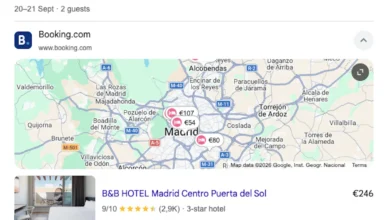
The core of this update is the integration of travel assets directly into AI Overviews, the summary boxes that appear at the top of Google Search results. Formerly known as the Search Generative Experience (SGE), AI Overviews provide synthesized answers to complex questions. Under the new system, travel brands that utilize Performance Max will see their property photos, booking links, and pricing information embedded directly within these AI-generated summaries.
This integration is not merely a change in layout; it is a change in the underlying auction dynamics. In traditional search, an ad appeared in a designated slot above or below organic results. In the "AI Mode" or AI Overviews, the ad becomes part of the answer itself. Google’s AI interprets the user’s request and selects the travel brand that best fits the criteria, essentially acting as an automated travel agent. To facilitate this, Google is also rolling out travel-specific tools that allow hotels to upload "property-level" assets—high-quality images, descriptions, and facility lists—which the AI then uses to construct advertisements in real-time.
A Chronology of Google’s AI Transition in Travel
To understand the magnitude of this shift, one must look at the timeline of Google’s search evolution over the past several years:
- 2021: The Launch of Performance Max: Google introduced PMax as a goal-based campaign type that allows advertisers to access all of their Google Ads inventory from a single campaign. Initially focused on retail and e-commerce, it laid the groundwork for automated bidding across YouTube, Display, Search, and Gmail.
- 2023: Early Travel Pilots: Google began testing "Performance Max for Travel Goals," allowing a select group of hotel chains and online travel agencies (OTAs) to experiment with automated property-level campaigns.
- May 2024: The Google I/O Announcement: At its annual developer conference, Google announced the wide-scale rollout of AI Overviews in the United States, signaling that the search engine would prioritize AI-generated answers over traditional blue links.
- Late 2024: Full Travel Integration: The current announcement marks the full-scale opening of the PMax system to the broader travel sector, including independent hotels and mid-sized booking platforms, while integrating these ads into the AI Overview surface.
Supporting Data: The Economic Weight of Travel Search
The stakes for this transition are remarkably high. According to industry data, travel is one of the most expensive and competitive categories in digital advertising. Market research suggests that travel-related search queries account for a significant double-digit percentage of Google’s total advertising revenue.
Furthermore, data from various digital marketing agencies indicates that the "Zero-Click" search phenomenon—where a user finds the information they need on the search results page without clicking through to a website—has risen to over 50% in certain demographics. By placing booking links directly inside AI Overviews, Google is attempting to monetize these zero-click interactions.
Recent surveys of travel marketers show a cautious embrace of this technology. While 65% of travel advertisers expressed concern over the loss of keyword-level transparency, nearly 80% admitted that automated bidding systems have led to a lower Cost Per Acquisition (CPA) compared to manual campaigns. This data underscores the "tradeoff" that defines the current era: advertisers are sacrificing granular control for the sake of algorithmic efficiency.
The Industry Tradeoff: Control vs. Reach
The primary tension in this new AI-centric model is the loss of control for travel marketers. For decades, Search Engine Marketing (SEM) professionals have prided themselves on their ability to "negative" out certain keywords, adjust bids for specific phrases, and meticulously track which words led to conversions. Performance Max largely removes these levers.
In the PMax system, the advertiser provides the "what" (the hotel rooms, the prices, the images) and the "who" (the target audience), but Google’s AI decides the "how" and the "where." This creates a "black box" effect where it is difficult for a brand to know exactly why their ad appeared for one query but not another.
Industry analysts suggest that this shift favors larger players with massive amounts of data, such as Expedia or Booking.com, who can feed the AI more signals to optimize performance. However, it also levels the playing field for smaller, independent hotels that may not have the budget for a dedicated SEM team but can now rely on Google’s AI to find the right customers for them.
Reactions from the Travel Ecosystem
While official statements from major OTAs have been measured, the underlying sentiment in the industry is one of forced adaptation.
"We are moving from a world of ‘strings’ to a world of ‘things,’" noted one digital strategy executive at a global hotel chain, speaking on the condition of anonymity. "Google no longer just sees the word ‘hotel’; it sees our specific property as an entity with attributes that match a user’s life stage or travel intent. It’s powerful, but it’s also terrifying because we are becoming increasingly dependent on Google’s interpretation of our brand."
On the other hand, Google maintains that these tools are designed to maximize Return on Ad Spend (ROAS). During recent earnings calls, Google executives have emphasized that AI-driven campaigns allow advertisers to find "incremental" customers—people who might not have used traditional search terms but whose behavior suggests they are ready to book a trip.
Broader Implications and the Future of the Funnel
The expansion of AI Max to travel is more than just a product update; it is a redefinition of the marketing funnel. Traditionally, the travel funnel was seen as a linear journey: Inspiration (Social Media/YouTube), Consideration (Search), and Conversion (Booking).
In the AI-driven model, these stages collapse. A user might start a conversation with Google’s AI for inspiration ("Where is a good place for a family vacation in October?") and be presented with direct booking links and property promotions immediately. The distinction between "searching" and "booking" is blurring, with Google positioning itself as the central hub for the entire journey.
Furthermore, this move has significant implications for Search Engine Optimization (SEO). As AI Overviews take up more "above-the-fold" real estate on mobile and desktop screens, organic traffic to travel blogs and review sites is expected to decline. Travel brands will likely find that "paying to play" through Performance Max is the only way to maintain visibility in a search environment dominated by AI-generated summaries.
Fact-Based Analysis of the Path Forward
As Google continues to tease upcoming travel-specific tools, the industry should expect even deeper integrations. This likely includes:
- Multi-modal Search Integration: Ads that respond not just to text, but to images and voice queries. A traveler could take a photo of a hotel they like and ask Google, "Find me something similar in Miami," with PMax serving the relevant ad.
- Real-time Inventory Syncing: Enhanced APIs that allow hotels to update room availability and "flash sale" pricing that the AI can instantly incorporate into conversational answers.
- Hyper-Personalization: Utilizing Google’s first-party data to tailor ad copy within AI Overviews to the specific preferences of the user, such as highlighting "pet-friendly" features to a known dog owner.
In conclusion, Google’s move to bring travel advertisers into the AI Max system is a watershed moment. It marks the end of the keyword era and the beginning of the intent era. For travel brands, the challenge will be providing high-quality data and creative assets that Google’s AI can effectively use, while navigating a landscape where the search engine is no longer just a directory, but an active participant in the travel planning process. The price of this new efficiency is a loss of transparency, a bargain that most of the industry seems prepared—or at least resigned—to make.