Florida Lawmakers Approve New Congressional Map as Supreme Court Strikes Down Louisiana’s

Lawmakers in Florida have formally approved a new congressional map, a strategic move that Lieutenant Governor Jay Collins asserts could secure four additional House seats for Republicans, while simultaneously, the U.S. Supreme Court has dealt a significant blow to Louisiana’s redistricting efforts by striking down a previously drawn majority-Black congressional district, leading to the immediate suspension of Louisiana’s May congressional primaries. This dual development highlights the intensifying national struggle over electoral boundaries, with both states facing profound implications for their upcoming elections and the broader partisan landscape of the U.S. House of Representatives.
The Louisiana Predicament: A Supreme Court Intervention and Election Chaos
The Supreme Court’s Wednesday ruling sent immediate ripples through Louisiana’s political machinery, compelling the suspension of congressional primaries originally slated for May. This decision targeted a district designed to enhance minority representation, with the Court’s action automatically terminating a previous stay that had allowed the state to enforce its existing congressional map. As a direct consequence, Louisiana is now legally enjoined from proceeding with congressional elections under the invalidated boundaries, plunging the state into a period of electoral uncertainty.
Republican Governor Jeff Landry and Attorney General Liz Murrill swiftly issued a joint statement acknowledging the Supreme Court’s decision as a "historic victory for Louisiana," yet conceding its "immediate consequence for the State." Their communication underscored the legal bind the state now finds itself in, emphasizing the termination of the stay and the subsequent injunction. The officials affirmed their commitment to working collaboratively with the state legislature and the secretary of state’s office to "develop a path forward," indicating the urgency of redrawing the map and establishing a new electoral timetable. This comes as early voting was initially scheduled to commence just days after the ruling, on the upcoming Saturday, exacerbating the logistical challenges.
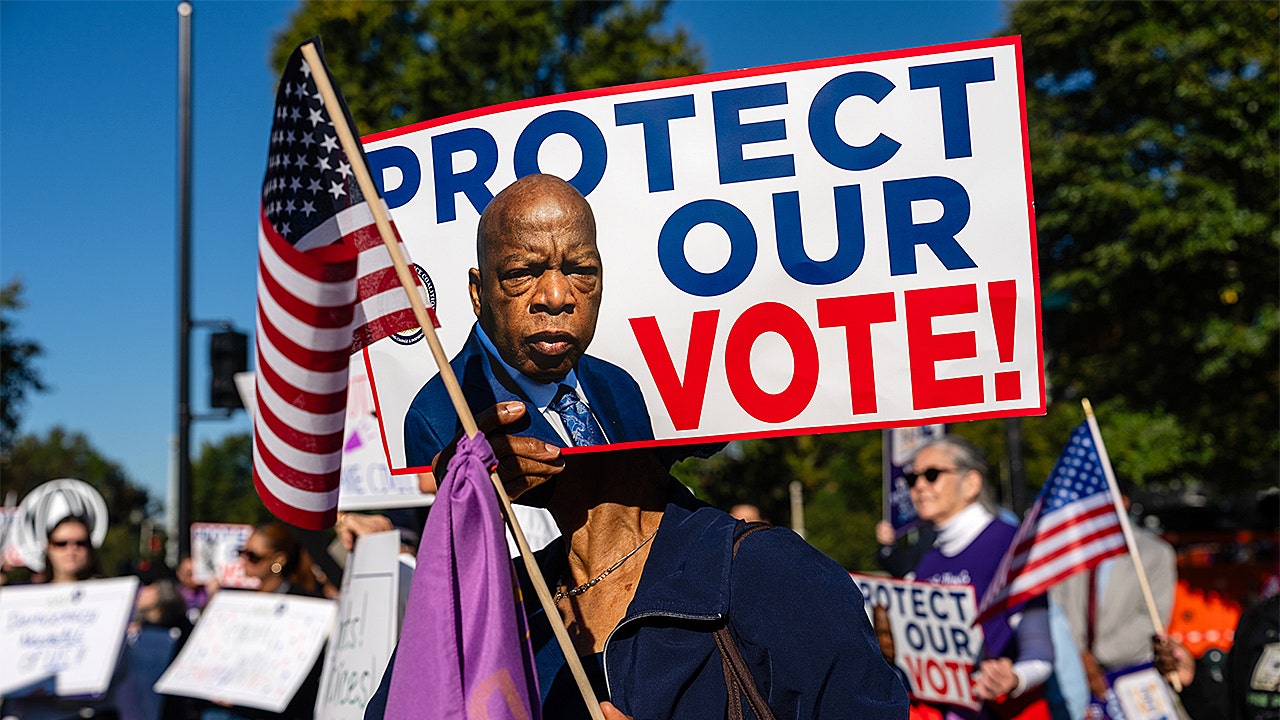
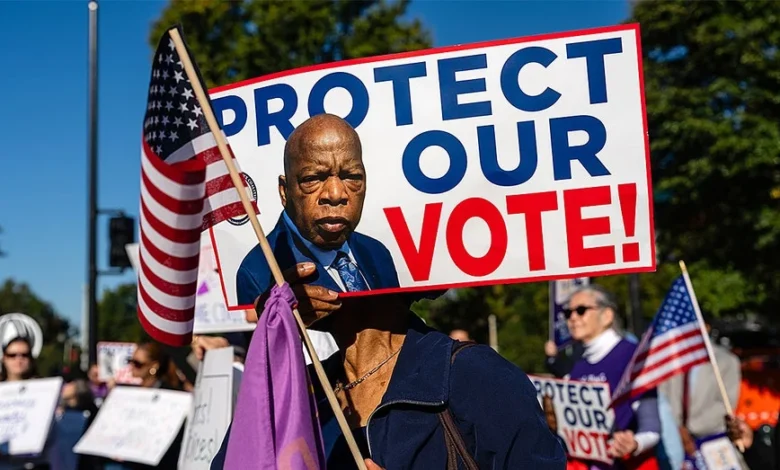
The background to this legal battle lies deeply rooted in the Voting Rights Act of 1965 (VRA), a landmark piece of federal legislation designed to overcome legal barriers at the state and local levels that prevented African Americans from exercising their right to vote. Section 2 of the VRA specifically prohibits voting practices or procedures that discriminate on the basis of race, color, or membership in a language minority group. In the context of redistricting, this has often been interpreted to require states to create majority-minority districts where feasible, to prevent the dilution of minority voting power across multiple districts, a practice known as "cracking." The Supreme Court’s decision in Louisiana likely references principles established in Allen v. Milligan (formerly Merrill v. Milligan), a 2023 ruling that affirmed the VRA’s continued relevance in challenging racially discriminatory gerrymandering, even as the Court has shown a reluctance to intervene in cases of purely partisan gerrymandering. The Louisiana case challenged whether the state’s previous map sufficiently allowed Black voters, who constitute nearly one-third of the state’s population, to elect their preferred candidates in more than one of its six congressional districts.
The impact of the ruling has been met with strong criticism from Democratic quarters within Louisiana. State Senator Royce Duplessis, representing the New Orleans area, voiced grave concerns over the resulting "mass confusion among voters – Democrats, Republicans, White, Black, everybody." He lamented the timing of the decision, stating, "What they’re effectively doing is changing the rules of the game in the middle of the game. It’s rigging the system." Duplessis’s remarks highlight fears that the disruption could disenfranchise voters and undermine faith in the electoral process, particularly given the imminence of the originally scheduled primary. Currently, Louisiana’s delegation to the U.S. House of Representatives comprises four Republicans and two Democrats. Analysts suggest that a redrawn map, particularly one that reduces the number of majority-Black districts, could result in the elimination of one of the Democratic seats, potentially leading to a 5-1 Republican advantage in the upcoming midterm elections.
Florida’s Redistricting Battleground: A Republican Push for Power
Concurrently with Louisiana’s electoral upheaval, Florida lawmakers have successfully approved a new congressional map, a move championed by Lieutenant Governor Jay Collins as both legally sound and strategically advantageous for the Republican Party. Collins, in his public statements, robustly defended the map’s legality, asserting its foundation in objective factors such as geography and population shifts. He notably criticized Democrats for what he described as their "changing stance" on gerrymandering, implying a partisan double standard in their objections to redistricting efforts. Collins expressed unwavering confidence in Florida’s approach, signaling the state’s determination to press forward with its newly drawn boundaries.
Florida’s legislative process for approving the new map was marked by intense debate, but ultimately saw the Republican-controlled legislature push through the proposed boundaries. This legislative victory follows the decennial census, which recorded significant population growth in Florida, entitling the state to two additional congressional seats. The redistricting process then involved carving out these new districts and redrawing existing ones, a complex task with profound political implications. The approved map is projected to consolidate Republican strength, potentially securing four additional House seats for the party. This would significantly bolster the Republican presence in the U.S. House, transforming Florida’s current delegation dynamics.
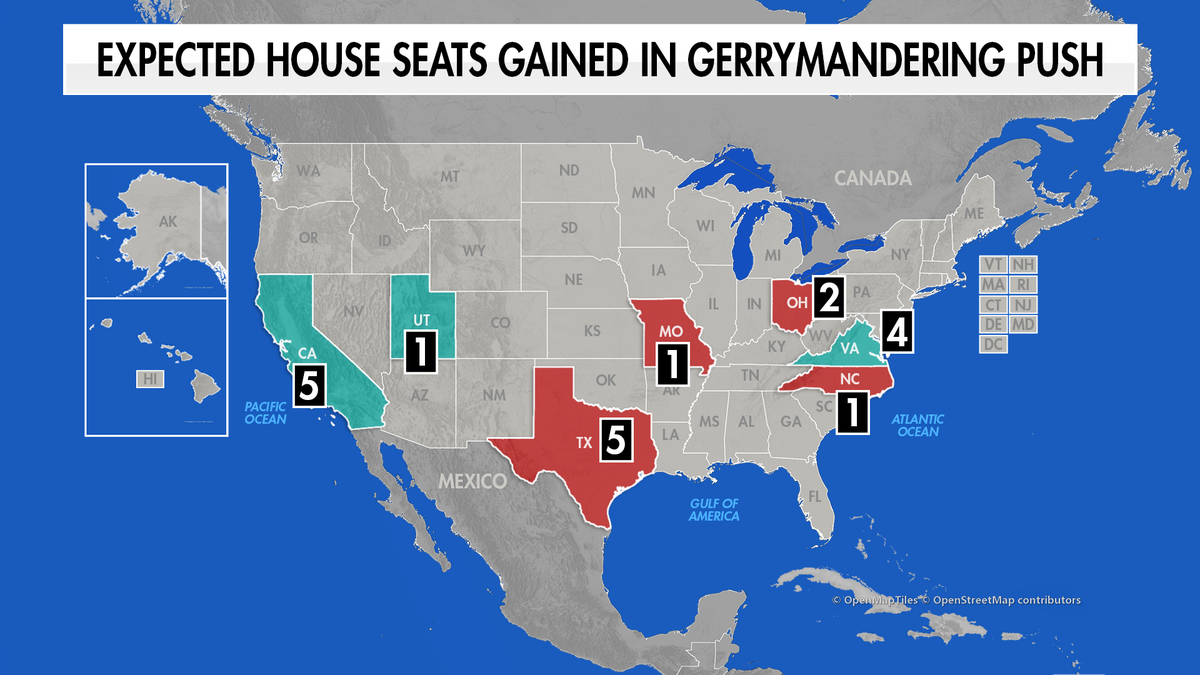
Gerrymandering, the practice of drawing electoral districts to give one political party an unfair advantage over another, remains a contentious issue nationwide. While partisan gerrymandering has largely been deemed outside the purview of federal courts by recent Supreme Court rulings, racial gerrymandering, as addressed by the VRA, continues to be a fertile ground for legal challenges. Florida’s Lieutenant Governor Collins’ defense of the new map leans heavily on claims of geographical and population-based logic, aiming to insulate it from accusations of illegal racial gerrymandering. However, critics often argue that even ostensibly neutral criteria can be manipulated to achieve partisan outcomes, particularly in states with diverse and rapidly expanding populations like Florida. Previous redistricting cycles in Florida have been fraught with legal battles, with courts often intervening to invalidate maps found to violate state constitutional provisions against gerrymandering. The current map, while approved by the legislature, may yet face legal challenges from voting rights groups or Democratic organizations who perceive it as an unfair partisan power grab.
The potential impact of Florida’s new map on the national political landscape is substantial. With four projected additional Republican seats, Florida could play a pivotal role in the struggle for control of the U.S. House of Representatives in the upcoming 2026 midterm elections. Such a shift would not only strengthen the Republican Party’s overall numerical advantage but also potentially influence the legislative agenda and the balance of power in Washington, D.C. The outcome of these state-level redistricting battles collectively determines the composition of Congress, making each state’s map a critical piece in the national political chess match.
The National Landscape of Redistricting: A Partisan Chess Match
These events in Louisiana and Florida are emblematic of a broader national "redistricting war" that erupts every ten years following the decennial census. The census data, which determines each state’s population and thus its allocation of congressional seats, triggers a complex and often highly politicized process of redrawing electoral boundaries. States gain or lose seats based on population shifts, and existing districts must be adjusted to ensure roughly equal populations, as mandated by the "one person, one vote" principle. This process, carried out primarily by state legislatures, provides a powerful opportunity for the dominant political party to shape the electoral landscape in its favor for the ensuing decade.
The role of the Supreme Court in this process has been evolving. While the Court has largely stepped back from adjudicating claims of partisan gerrymandering, asserting that such issues are non-justiciable political questions, it has remained active in enforcing the Voting Rights Act against racial gerrymandering. The Allen v. Milligan decision underscored the VRA’s continued vitality in preventing maps that dilute minority voting power. However, the application of these principles often leads to complex legal challenges, as seen in Louisiana, where the creation of a majority-minority district can be viewed by some as necessary to comply with the VRA, while others may criticize it as an instance of "reverse discrimination" or an artificial creation lacking geographic compactness.
Advocacy groups, civil rights organizations, and political parties are key players in this national redistricting battle. They invest heavily in legal challenges, demographic analyses, and public awareness campaigns to influence the drawing of maps and to ensure compliance with federal voting laws. The stakes are incredibly high: a skillfully drawn map can secure a party’s power for a decade, while a poorly drawn or legally challenged map can lead to significant setbacks. The current cycle has seen both Republicans and Democrats aggressively pursuing redistricting strategies designed to maximize their electoral advantages, recognizing that the control of state legislatures often dictates the control of congressional delegations.
The Path Forward and Lingering Questions
For Louisiana, the immediate path forward involves a rapid response from the state legislature. Lawmakers will need to convene, likely in a special session, to redraw the congressional map in compliance with the Supreme Court’s implicit directive to ensure proper representation under the VRA. This redrawing process will be contentious, with various proposals likely emerging, each with different implications for the state’s racial and partisan balance. Once a new map is approved, the state will have to establish new dates for its congressional primaries and the subsequent general election, causing further disruption to the electoral calendar and potentially impacting voter turnout. The uncertainty could lead to voter fatigue or confusion, as highlighted by Senator Duplessis, and may require extensive public information campaigns to educate citizens about the revised electoral schedule.
In Florida, the approved map now stands, poised to influence the upcoming 2026 midterm elections. While Lieutenant Governor Collins has expressed confidence in its legality, it remains susceptible to legal challenges. Voting rights organizations or Democratic Party committees may initiate lawsuits, arguing that despite claims of geographic and population neutrality, the map unfairly dilutes minority voting strength or constitutes an unconstitutional partisan gerrymander under state law. Such challenges could delay the implementation of the map or even lead to its eventual redrawing by a court order, though such an outcome would likely occur closer to the election cycle.
These developments in Florida and Louisiana collectively highlight the ongoing fragility and dynamism of the American electoral system. The power to draw district lines is a fundamental aspect of democratic governance, yet it is continually subject to intense partisan maneuvering and legal scrutiny. The Supreme Court’s continued engagement with racial gerrymandering cases underscores the enduring importance of the Voting Rights Act, even as the political landscape shifts. As the 2026 midterm elections approach, the maps drawn in states like Florida and Louisiana will not only determine individual races but will also collectively shape the ideological direction and partisan control of the U.S. Congress, with profound implications for national policy and governance. The democratic process, therefore, continues to be a delicate balance between demographic realities, legal mandates, and the ever-present forces of political ambition.