Vanishing Archives and Shifting Landscapes: The Impending Restructuring of the US Forest Service and the Risk to a Century of Climate History

The United States Forest Service, a cornerstone of American conservation for over 120 years, is currently navigating a period of radical reorganization that critics warn could result in the permanent loss of invaluable historical and scientific records. At the heart of the controversy is a sweeping plan by the U.S. Department of Agriculture (USDA) to close all ten of the agency’s regional offices—facilities that currently serve as the primary repositories for a century’s worth of non-digitized data, land management records, and physical biological specimens. As the agency prepares to decentralize its operations and shift its headquarters from Washington, D.C., to Salt Lake City, Utah, conservationists and data transparency advocates are sounding the alarm over the fate of archives that provide the literal baseline for understanding climate change and forest health in North America.
The Scope of the Restructuring Plan
In late March 2026, the USDA announced a fundamental overhaul of the Forest Service’s organizational structure. The primary objective, according to federal officials, is to "streamline" management and prioritize "common-sense" forest use, which includes a significant push toward increasing timber production. However, the logistical reality of this shift involves the shuttering of ten regional hubs located across the country. These offices have historically acted as the bridge between federal policy and local field work, housing not only administrative staff but also massive troves of archival material.
The restructuring is expected to impact approximately 6,500 employees, many of whom have received preliminary notifications regarding changes to their roles, supervisors, or physical work locations. Around 500 employees, primarily those based in the nation’s capital, face mandatory relocation to the new headquarters in Salt Lake City or other distant stations. This migration of personnel comes on the heels of a 16 percent reduction in the Forest Service workforce over the past year, a contraction that has left remaining staff overextended and, according to internal sources, without clear instructions on how to handle the massive volume of physical records currently housed in regional offices.
A Century of Data at Risk
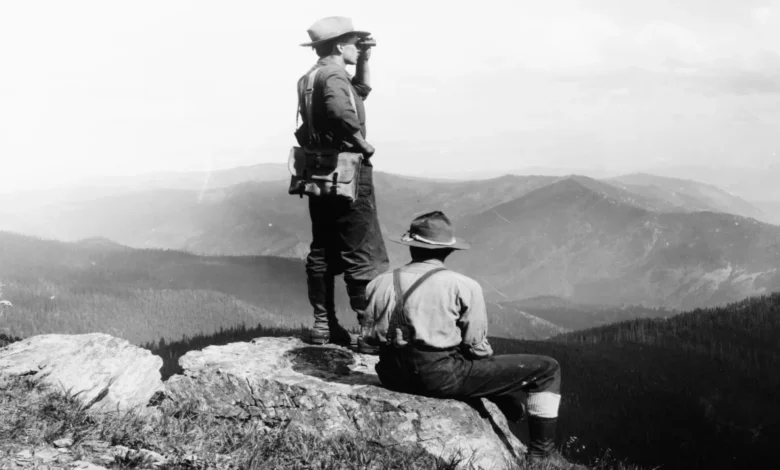
The archives in question are far more than mere bureaucratic paperwork. They represent a continuous record of the American landscape dating back to the late 19th century. Among the most critical items are historical photographs, such as the 1909 images of fire watches atop Mount Silcox in Montana, which allow modern scientists to conduct "repeat photography" studies. By comparing century-old vistas with modern landscapes, researchers can track shifts in vegetation, the encroachment of invasive species, and the effects of long-term fire suppression policies.
Beyond visual records, the regional offices hold:
- Scientific Research Data: Decades of raw field notes on soil composition, rainfall patterns, and wildlife populations that have not yet been transitioned to digital formats.
- Physical Specimens: Collections of water samples and tree cores (logs) that provide a biological timeline of forest growth and environmental stress.
- Land Management Records: Historical maps and permits that document how land use has changed under different federal administrations.
Brian Nowicki, a senior public lands advocate with the Center for Biological Diversity, emphasizes that many of these materials are irreplaceable. "The archives include samples that can detail histories of forest growth progression, fires, and rainfall," Nowicki noted. He pointed out that as scientific technology advances, researchers find new ways to extract data from old specimens—data that would be lost forever if the physical samples are discarded or left to rot in unmanaged storage.
Chronology of the 2026 Reorganization and Opposition
The current crisis has developed rapidly over the first half of 2026, following a period of increased political pressure on federal land management agencies.
- January – February 2026: Reports emerge of a 16 percent decline in Forest Service staffing levels, attributed to budget cuts and a shift in federal hiring priorities.
- March 2026: The USDA officially announces the closure of all 10 regional offices and the relocation of the Forest Service headquarters to Salt Lake City. Agriculture Secretary Brooke L. Rollins frames the move as a way to "boost timber production" and provide "affordable, quality lumber."
- Early April 2026: Internal Forest Service staff express confusion and concern regarding the lack of a formal plan for the preservation of regional archives.
- April 23, 2026: The Center for Biological Diversity submits a formal Freedom of Information Act (FOIA) request to the USDA. The request seeks specific details on the relocation of archives and demands a list of any records the agency does not intend to submit to the National Archives.
- Late April 2026: The USDA issues a statement asserting that "protocol ensures public documents… are preserved," but fails to provide a timeline or specific budget for the massive digitization and relocation effort required.
The Push for Timber and Economic Efficiency
The official stance from the USDA remains focused on the economic benefits of the reorganization. Agriculture Secretary Brooke L. Rollins stated that the changes are designed to foster a "healthy and productive forest system" that supports the American housing market. By moving the headquarters closer to the vast National Forest lands of the West and shifting more authority to state-level offices, the administration argues it can reduce "red tape" that hinders logging and grazing.
This shift in mission—from a multi-use and conservation-heavy focus toward an extractive-industrial focus—is a primary driver of the restructuring. Critics argue that by dismantling the regional office system, the administration is effectively weakening the scientific oversight that often acts as a check on large-scale timber sales. Without the historical data housed in those offices, it becomes significantly harder for the public or independent scientists to challenge the environmental impact assessments provided by the agency.
Broader Implications for Climate Science and Transparency
The potential loss of Forest Service data is not an isolated incident but part of what some experts call a broader "information recession" within the federal government. Rachel Santarsiero, director of the National Security Archive’s Climate Change Transparency Project, has documented a growing trend of disappearing data across multiple agencies. Recent actions include the removal of references to global warming from federal websites, the termination of federal tracking for high-cost climate disasters, and the closure of major research libraries, such as those at NASA.
The destruction of records is not a theoretical fear. Following the recent dismantling of the U.S. Agency for International Development (USAID), reports surfaced of staff being ordered to shred personnel files and classified documents. In the Forest Service’s case, the "destruction" may be more passive—records left in abandoned buildings, lost during moves, or rendered inaccessible due to a lack of cataloging staff.
"The Trump administration is trying to rewrite our history," Santarsiero stated, highlighting that long-term access to public information is no longer a guarantee. For climate science, this is particularly devastating. Understanding how forests respond to rising temperatures and shifting precipitation patterns requires a "long view" that only historical archives can provide. If the baseline data from the 1920s or 1950s disappears, modern scientists lose their ability to measure the true rate of change in the 2020s.
The Legal and Logistical Battle Ahead
As the 20-day deadline for the FOIA request approaches, the legal battle over the Forest Service archives is expected to intensify. Federal law, specifically the Federal Records Act, mandates that agencies preserve records with "informational value." However, the definition of what constitutes value is often a point of contention between political appointees and career scientists.
Logistically, the task of digitizing 120 years of records is monumental. Industry experts estimate it would take a dedicated team of archivists years to correctly scan, meta-tag, and upload the volume of documents currently held in the ten regional offices. With a shrinking workforce and a one-year timeline for the reorganization, conservationists argue that the USDA is setting the stage for a "de facto" destruction of history through negligence.
The outcome of this restructuring will have implications that last far longer than any single political administration. If the archives are lost, the American public loses a piece of its heritage and a vital tool for environmental resilience. As wildfire seasons grow longer and more intense, the irony of losing the very records that could help manage those fires is not lost on those fighting to keep the regional offices’ doors—and their filing cabinets—open. The coming months will determine whether the Forest Service’s past will continue to inform its future, or if a century of environmental memory will be cleared away alongside the timber.
Related posts: