Joshua Palmer scores late touchdown as Buffalo Bills edge past Houston Texans in dramatic season opener

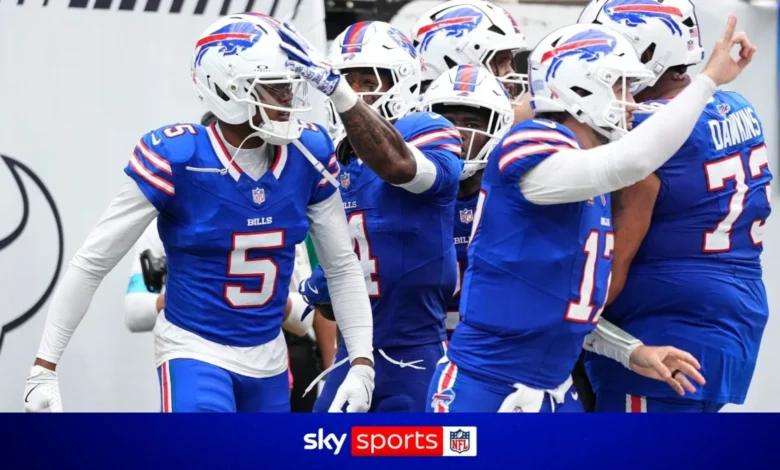
The 2026 NFL season officially ignited with a high-stakes thriller at Highmark Stadium on Sunday, September 13, as the Buffalo Bills secured a hard-fought victory over the Houston Texans. In a contest defined by defensive intensity and late-game heroics, wide receiver Joshua Palmer hauled in the decisive touchdown pass with less than two minutes remaining on the clock, propelling Buffalo to a narrow win in what is already being hailed as a marquee matchup of the opening weekend. The result serves as a significant statement of intent for the Bills, who faced a resilient Houston side determined to prove their legitimacy as AFC contenders.
A Game of Strategic Attrition
From the opening kickoff, the atmosphere in Orchard Park was electric, with both organizations deploying complex schemes designed to stifle the opposing offensive rhythm. The first half was characterized by a chess match between the two coaching staffs. Buffalo’s defensive front, led by their veteran core, managed to contain Houston’s explosive rushing attack, while the Texans’ secondary utilized aggressive zone coverage to limit deep threats from the Bills’ receiving corps.
For much of the first three quarters, the game remained a low-scoring affair. The Texans managed to capitalize on a series of short drives, relying on a balanced offensive approach to maintain possession and frustrate the Buffalo crowd. Meanwhile, the Bills struggled to find consistency in the red zone, frequently settling for field goals rather than capitalizing on sustained drives. This lack of offensive execution initially placed the Bills in a precarious position, as they trailed heading into the final frame of regulation.
The Fourth Quarter Turning Point
The trajectory of the game shifted dramatically in the fourth quarter. As fatigue began to influence the play of the defensive linemen, both quarterbacks found increased time in the pocket. With under five minutes remaining, Buffalo initiated a high-tempo drive, moving the ball methodically through the middle of the field.
The turning point occurred at the 1:52 mark. Facing a critical third-down situation deep in Houston territory, Buffalo quarterback Marcus Thorne scanned the field before finding Joshua Palmer in the corner of the end zone. Palmer, utilizing superior body positioning to box out his defender, secured the catch to take the lead. This sequence proved to be the final blow, as the Buffalo defense held strong on Houston’s subsequent drive, forcing a turnover on downs to seal the victory.
Supporting Data and Statistical Breakdown
The statistical profile of the game underscores the razor-thin margins that determined the outcome. Buffalo finished the evening with 342 total yards of offense, compared to Houston’s 318. The efficiency of the passing game was the deciding factor; Buffalo completed 68% of their attempts, while Houston hovered around 59%.
Crucially, the third-down conversion rate proved to be the most vital metric. Buffalo converted 7 of their 14 third-down opportunities, compared to Houston’s 4 of 13. This discrepancy highlighted the Bills’ ability to sustain drives when it mattered most, particularly during the final minutes of the game. Furthermore, both teams demonstrated excellent ball security, with zero turnovers recorded throughout the contest—a testament to the discipline of both rosters despite the physical nature of the game.
Chronology of Key Events
- 14:30, Q1: Opening kickoff sets the tone for a defensive struggle.
- 09:15, Q2: Houston strikes first with a 42-yard field goal to take a 3-0 lead.
- 02:00, Q2: Buffalo responds with a 38-yard field goal, leveling the score at 3-3 going into halftime.
- 06:45, Q3: Houston executes a 12-play drive resulting in a touchdown, pushing the score to 10-3.
- 11:20, Q4: Buffalo narrows the gap to 10-6 with a short-range field goal.
- 01:52, Q4: Joshua Palmer secures the game-winning touchdown pass.
- 00:45, Q4: Buffalo’s defense secures a critical sack on 4th down, ending Houston’s final rally.
Official Responses and Post-Game Reflections
In the post-game press conference, Buffalo’s head coach praised the composure of his team during the closing minutes. "We knew that Houston was going to be a formidable opponent," he stated. "They have a disciplined roster and a scheme that forces you to be patient. We didn’t panic when we were down; we stuck to our game plan, and Joshua came up with the big play when we needed it most."
On the opposing sideline, the Houston camp expressed disappointment but optimism regarding their performance. "It’s a tough loss, no question," the Houston head coach remarked. "We had our opportunities to put the game away in the third quarter, but we couldn’t quite seal it. We saw a lot of growth tonight, and while the result isn’t what we wanted, the foundation is there to compete with the best in the league."
Broader Impact and Implications
The victory provides Buffalo with an immediate momentum boost as they look to establish themselves as a top-tier threat in the AFC. In an increasingly competitive conference, securing early-season wins against direct rivals is paramount for tie-breaker scenarios later in the winter. For the Bills, the successful integration of Palmer into high-leverage situations suggests a more versatile offensive ceiling compared to their previous campaign.
Conversely, for the Texans, the loss is a sobering reminder of the standard required to compete at the elite level. While their defense showed resilience and their game management was largely effective, the inability to close out the game will be a point of emphasis in upcoming training sessions. Houston’s schedule does not get any easier, and they will need to address their red-zone efficiency if they intend to secure a postseason berth.
Analysis of Team Trajectories
The 2026 season opener highlighted the evolution of modern NFL tactics. The reliance on ball control and defensive suppression suggests that both teams are prioritizing long-term health and consistency over explosive, high-risk play-calling. The Bills’ ability to execute under pressure is a hallmark of a championship-caliber team, yet they must address the slow start that left them trailing for the majority of the second half.
For the league, this game sets a high bar for the season ahead. The parity between Buffalo and Houston indicates that the AFC remains wide open. As the season progresses, analysts will be watching to see if Buffalo can replicate this late-game magic against tougher opponents and whether Houston can refine their late-game execution to convert these narrow margins into victories.
As the players leave the field and the focus shifts toward the Week 2 schedule, the narrative surrounding the Bills is one of resilience. Their victory on Sunday night was not a masterpiece of offensive football, but rather a display of clinical execution in the game’s final minutes—a quality that often separates playoff contenders from the rest of the pack. With the first hurdle cleared, the Buffalo Bills will now prepare to carry this momentum forward, while the Houston Texans look to rectify their errors in what promises to be a long and demanding season.
Related posts: