Trump Administration Targets American Bison in Shift Toward Pro-Cattle Public Land Policy

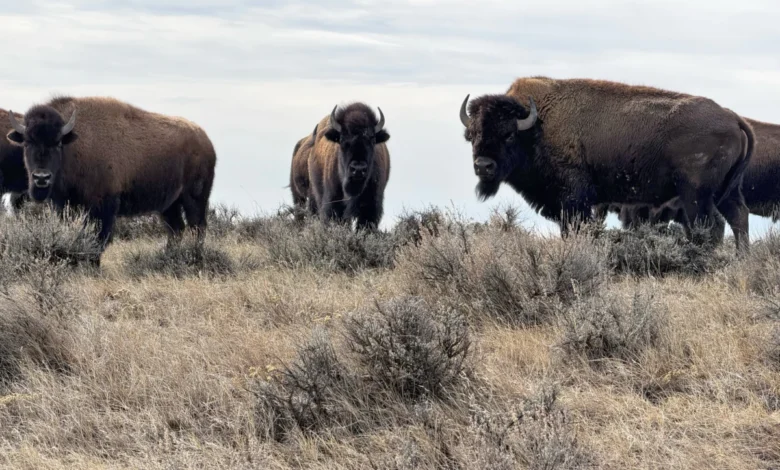
The American bison, a species that serves as the national mammal of the United States and a symbol of the Interior Department for over a century, has emerged as a central figure in a burgeoning political and legal battle over the future of Western rangelands. In a significant policy shift, Interior Secretary Doug Burgum proposed in January to cancel grazing leases for bison herds on federal lands managed by the Bureau of Land Management (BLM). The move represents a stark departure from the previous administration’s efforts to treat conservation as a legitimate use of public lands and marks a victory for cattle ranchers and Republican politicians in Montana who have long viewed the reintroduction of bison as a threat to their traditional way of life.
The proposal specifically targets the American Prairie, a nonprofit organization dedicated to restoring a massive grassland ecosystem in north-central Montana. For nearly two decades, the organization has grazed bison on federal allotments under permits that were expanded during the Biden administration. However, the current Interior Department leadership argues that these bison are not being raised for "production-oriented purposes," a distinction that could lead to the eviction of nearly 1,000 buffalo from tens of thousands of acres of public land. This decision has sparked a firestorm of protest from environmentalists, private bison ranchers, and more than 50 Indigenous tribes who view the move as an existential threat to tribal bison restoration efforts across the Great Plains.

Historical Context and the Taylor Grazing Act
The management of public lands in the American West is governed largely by the Taylor Grazing Act of 1934. Enacted during the height of the Dust Bowl, the law was designed to prevent overgrazing, stabilize the livestock industry, and restore the health of the prairie. For decades, the BLM, which oversees approximately 245 million acres of public land, has prioritized cattle and sheep grazing. This focus earned the agency the derisive nickname "Bureau of Livestock and Mining" among conservationists.
In 2022, the Biden administration sought to modernize this framework by introducing a rule that elevated conservation to a "formal use" of BLM land, on par with grazing and resource extraction. This allowed organizations like American Prairie to secure leases for bison grazing, arguing that the animals play a "keystone" role in maintaining the health of the prairie ecosystem.
The Trump administration’s recent proposal seeks to dismantle this interpretation. Secretary Burgum’s decision rests on a novel legal argument: that the Taylor Grazing Act only permits the grazing of "domestic livestock" intended for meat or fiber production. By characterizing the American Prairie bison as a "wild" herd intended for conservation rather than commercial slaughter, the Interior Department asserts they have no legal right to graze on federal land.

A Growing Conflict: Cattle vs. Bison
The tension in Montana is rooted in the state’s agricultural identity. Cattle ranching is the dominant economic engine of Phillips County and much of eastern Montana. With a human population that has been in steady decline for a century, the region remains home to roughly 11 head of cattle for every one person. Local ranchers, organized under groups like "Save The Cowboy," argue that the expansion of bison herds and the "American Serengeti" project will eventually lead to the introduction of apex predators like wolves and grizzly bears, which pose a direct threat to their livestock.
Montana Governor Greg Gianforte, a vocal supporter of the lease cancellations, framed the issue as a fight against "federal overreach." He argued that the BLM’s previous decisions failed to account for the needs of local communities and the production-oriented agriculture that feeds the nation. Ranchers also express concern over land prices; organizations like American Prairie, backed by wealthy donors, can often outbid local families for private ranches, which often come with lucrative federal grazing rights.
However, the scientific community often points to the ecological benefits of bison over cattle. A study by Kansas State University found that bison are significantly more effective at promoting plant diversity than cattle. Because bison move faster and more frequently, they do not trample the land as heavily as cattle and are better at spreading seeds. Furthermore, bison are more resilient to the extreme weather associated with climate change; they require less water than cattle and can thrive on lower-quality forage during droughts.

Chronology of the Bison Grazing Dispute
To understand the current impasse, it is necessary to trace the timeline of American Prairie’s expansion and the shifting federal response:
- 1934: The Taylor Grazing Act is passed to regulate grazing on public lands.
- 2004: American Prairie begins purchasing ranches in Montana with the goal of creating a 3-million-acre wildlife reserve.
- 2006: The organization introduces its first bison herd to private land.
- 2017–2021: During the first Trump administration, local opposition to bison grazing intensifies, with state officials attempting to block the expansion of herds.
- 2022: The Biden administration’s BLM grants American Prairie permission to graze bison on seven allotments in Phillips County, concluding that the animals would improve soil and water quality.
- January 2026: Interior Secretary Doug Burgum proposes a reversal of the 2022 decision, citing the "non-production" nature of the bison herds.
- Spring 2026: A final ruling is expected. If finalized, American Prairie will have to remove its bison from federal land, likely replacing them with cattle to maintain their leases.
Indigenous Perspectives and Tribal Impact
Perhaps the most significant reaction to the Interior Department’s proposal has come from the Coalition of Large Tribes (COLT). Representing tribes that manage 25,000 buffalo and account for roughly half of the Native American population in the U.S., the coalition views the ruling as a direct assault on tribal sovereignty and economic development.
For many tribes, the restoration of bison is not merely an ecological project but a spiritual and nutritional necessity. Tribes across the West have been working to move bison from overcrowded reservation lands onto adjacent BLM allotments. COLT’s executive director, OJ Semans Sr., characterized the Interior Department’s preference for cattle as "DEI for cows," arguing that the federal government is unfairly subsidizing one industry at the expense of another.

The legal counsel for COLT noted that the Interior Department’s definition of "domestic livestock" is arbitrarily narrow. They pointed out that tribal bison are "actively managed, marketed, sold, and traded" much like cattle. If the "intent" of the owner—whether for conservation or commercial sale—becomes the standard for lease eligibility, tribal leaders fear they will be permanently locked out of federal rangelands.
Supporting Data and Economic Implications
The economic stakes of this policy shift are considerable. The BLM charges a per-animal grazing fee that is approximately 90 percent cheaper than the rates for private land. This subsidy is a cornerstone of the cattle industry’s profitability in the West.
- Cattle Inventory: Montana currently holds over 2.1 million head of cattle.
- Agricultural Revenue: Cattle ranching accounts for approximately two-thirds of the agricultural income in counties like Phillips County.
- Bison Numbers: There are approximately 500,000 bison in the United States today, a significant recovery from the late 19th century when fewer than 1,000 remained.
- Land Holdings: American Prairie currently manages over 600,000 acres of deeded and leased land. Of this, only about 46,000 acres are currently free of cattle.
If the bison are evicted, American Prairie has indicated it will shuffle its operations. The organization already manages eight times as many cattle as bison to satisfy existing lease requirements and maintain relationships with neighbors. However, the forced removal of bison would represent a significant setback for the "American Serengeti" vision, which requires large, contiguous landscapes for the animals to roam.

Broader Implications for Public Land Management
The proposal to ban bison grazing on federal land reflects a broader ideological tug-of-war over the purpose of the American West. Under the current administration, the "multiple-use" mandate of the BLM is being steered back toward traditional extractive industries and livestock production.
Critics of the proposal argue that using "intent" as a legal standard for grazing permits is a dangerous precedent. If the government can deny a lease based on whether an owner intends to eventually release animals into the wild or prioritize conservation over profit, it could affect a wide range of land-use permits. Conversely, supporters of the ban argue that federal land should be reserved for those who contribute directly to the nation’s food supply and the local tax base.
As the comment period for the proposal closes and a final decision looms, the fate of the 950 bison in Phillips County remains uncertain. While American Prairie has private land where it can move some of the herd, the broader effort to restore the bison to its ancestral range on public land faces its most significant political hurdle in decades. The outcome of this dispute will likely dictate the management of millions of acres of Western rangeland for years to come, determining whether the future of the Great Plains belongs to the cowboy, the buffalo, or an uneasy coexistence of both.