The Evolution of German Gastronomy: A Comprehensive Guide to the Nation’s Culinary Heritage and Modern Innovations

German cuisine is a sophisticated tapestry of flavors that extends far beyond the global stereotypes of beer, sauerkraut, and sausages. Characterized by its richness, heartiness, and regional diversity, the culinary landscape of Germany is a testament to both its deep-rooted agricultural traditions and the multifaceted influence of centuries of immigration. Today, the nation’s food culture is defined by a commitment to high-quality, locally sourced ingredients, manifesting in a vibrant scene that includes bustling food markets, historic beer gardens, prestigious wine festivals, and a growing number of Michelin-starred restaurants. From the maritime influences of the north to the alpine traditions of the south, German gastronomy offers a profound exploration of European history through the lens of the dinner plate.
The Historical Foundations of German Culinary Identity
To understand German food is to understand the history of Central Europe. The country’s geography—ranging from the salty coasts of the North and Baltic Seas to the fertile plains of the central regions and the rugged terrain of the Bavarian Alps—has dictated a diverse pantry. Historically, German meals were designed to provide the caloric density required for manual labor and to withstand the harsh continental winters. However, the 20th and 21st centuries introduced transformative shifts.
The post-World War II era, in particular, saw the arrival of "Gastarbeiter" (guest workers) from Italy, Greece, and Turkey, who introduced ingredients and techniques that are now inseparable from the German diet. Simultaneously, the division of Germany into East and West created distinct culinary trajectories, with the East maintaining traditional Prussian influences while the West integrated more globalized trends. Following reunification, these paths merged, resulting in a modern culinary scene that honors tradition while embracing innovation and sustainability.
Masterpieces of the German Table: Traditional Meat and Poultry
At the heart of the German menu lie dishes that have sustained families for generations. One of the most historically significant is Königsberger Klopse. Named after the former East Prussian capital of Königsberg (now Kaliningrad, Russia), these meatballs are a masterclass in balanced flavors. Traditionally crafted from minced veal, anchovies, and onions, they are served in a sophisticated white sauce brightened by capers and lemon juice. During the era of the German Democratic Republic (GDR), the dish was politically rebranded as Kochklopse to erase references to the annexed Prussian territory, but it has since reclaimed its original name and remains a staple in Berlin and Brandenburg.
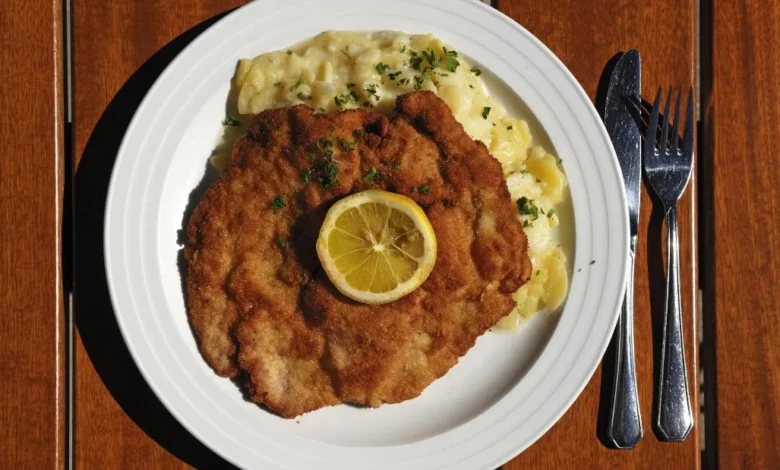
Equally iconic is the Schnitzel. While its origins are frequently debated—with some pointing to the Italian Cotoletta alla Milanese—the dish has become a pillar of German dining. Unlike the Austrian Wiener Schnitzel, which must be made from veal by law, the German version often utilizes tenderized pork or turkey. The cultural distinction lies in the accompaniments; Germans frequently serve their schnitzel with heavy gravies, such as Jägerschnitzel (mushroom sauce) or Rahmschnitzel (cream sauce), reflecting a national preference for rich, savory finishes.
For special occasions, Rouladen and Sauerbraten represent the pinnacle of German slow-cooking. Rouladen involves wrapping thin slices of beef around a filling of bacon, onions, mustard, and pickles, then braising the rolls until they are exceptionally tender. Sauerbraten, often cited as Germany’s national dish, requires even more patience. This pot roast is marinated for several days in a mixture of vinegar, wine, and spices. The resulting meat is served with a dark, sweet-and-sour gravy thickened with gingerbread or rye bread to balance the acidity, typically accompanied by potato dumplings (Klöße) and red cabbage.
Regional Specialties and European Recognition
The regionalism of German food is so distinct that several dishes have earned Protected Geographical Indication (PGI) status from the European Union. Maultaschen, hailing from the Swabian region of Baden-Württemberg, is perhaps the most famous example. These large, rectangular pasta pockets—often compared to ravioli—were historically dubbed Herrgottsbescheißerle (little God-cheaters). Legend suggests that monks created them during Lent to hide meat inside the dough, out of the sight of God. In 2009, the EU officially recognized Maultaschen as a regional specialty, marking it as a vital piece of Germany’s cultural heritage.

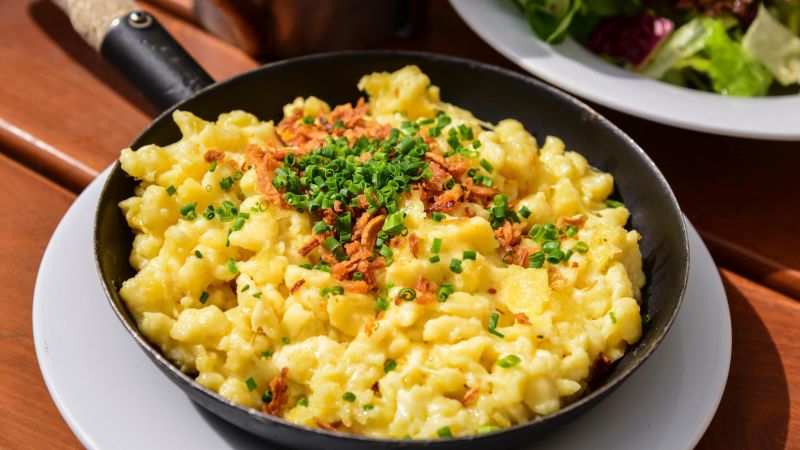
In the south, particularly in Bavaria and Swabia, Spätzle reigns supreme. These egg-based noodles are a staple side dish, but when transformed into Käsespätzle, they become a main course of formidable richness. Layered with grated mountain cheese and topped with crispy fried onions, the dish is baked until the cheese forms a molten, elastic bond with the noodles. It is the quintessential comfort food of Munich’s beer halls and Alpine ski huts.
Conversely, the north of Germany offers Labskaus, a dish that embodies the nation’s seafaring legacy. Originally a meal for sailors in the 18th and 19th centuries, it was designed to utilize preserved provisions. A mash of salted beef, potatoes, and pickled beetroot gives the dish a distinctive pink hue, served alongside fried eggs, gherkins, and Rollmops (pickled herring fillets). While its aesthetic may be unconventional, its savory depth makes it a celebrated delicacy in Hamburg and Bremen, and it is famously regarded as a potent "hangover cure" (Katerfrühstück).
The Street Food Revolution: From Wurst to Döner
The German fast-food landscape is a fascinating intersection of tradition and immigration. No discussion of German food is complete without Bratwurst. With over 40 varieties across the country—ranging from the marjoram-scented Franconian style to the small, grilled Nuremberg sausages—the bratwurst is a ubiquitous street snack.
However, the Currywurst holds a special place in the urban zeitgeist. Invented in 1949 by Herta Heuwer in West Berlin, the dish was born of necessity. Heuwer obtained ketchup and curry powder from British soldiers and combined them to flavor grilled sausages for construction workers rebuilding the war-torn city. Today, Germans consume an estimated 800 million currywursts annually, making it a cultural phenomenon that transcends social classes.

Equally significant is the Döner Kebab. Introduced by Turkish immigrants like Kadir Nurman in the 1970s, the German Döner evolved from a simple plated meal into a portable sandwich served in toasted flatbread with abundant salad and various sauces. Berlin is now considered the global capital of the Döner, and the industry contributes billions of euros to the German economy annually, symbolizing the successful integration of immigrant cultures into the national identity.
Seasonal Rhythms: White Gold and Autumnal Traditions
German dining is deeply cyclical, dictated by the harvest calendar. The most fervent of these seasons is Spargelzeit (Asparagus Season), which begins in mid-April and ends abruptly on June 24th (St. John the Baptist Day). During this window, Germany is consumed by a "white gold" fever. The nation consumes over 70,000 tons of white asparagus annually. Unlike green asparagus, the white variety is grown underground to prevent photosynthesis, resulting in a delicate, slightly sweet flavor. It is traditionally served with hollandaise sauce, melted butter, and boiled potatoes, often accompanied by ham or schnitzel.
As autumn arrives, the focus shifts to the vineyards. In regions like the Mosel and the Palatinate, October is the time for Federweisser and Zwiebelkuchen. Federweisser is a young, partially fermented wine that is cloudy and naturally sparkling. Because it continues to ferment in the bottle, it cannot be transported easily and is best enjoyed locally. It is traditionally paired with Zwiebelkuchen, a savory onion tart made with bacon and caraway seeds, providing a warm, rustic counterpoint to the sweet, fizzy wine.
In the northwest, the arrival of frost signals the start of Grünkohlzeit (Kale Season). Dishes like Pinkel mit Grünkohl (cooked kale with a specific grainy sausage) are celebrated through "Grünkohlfahrten"—social hikes through the countryside that culminate in a hearty kale feast.

The Sweet Conclusion: Pastry and Innovation
The German tradition of Kaffee und Kuchen (coffee and cake) is a cherished afternoon ritual. The Schwarzwälder Kirschtorte (Black Forest Gateau) is the most globally recognized representative of this tradition. It is named not for the forest itself, but for Schwarzwälder Kirschwasser, the cherry brandy distilled in the region. A authentic gateau must feature layers of chocolate sponge, whipped cream, and tart cherries, all infused with a generous amount of the brandy.
For a lighter option, the German Käsekuchen (cheesecake) differs significantly from its American counterpart. Utilizing Quark—a fresh, acid-set dairy product—instead of cream cheese, the German version is fluffier and less dense, often flavored with lemon and vanilla.
Finally, for a touch of post-war whimsy, there is Spaghettieis. Invented in Mannheim in 1969 by Dario Fontanella, this dessert consists of vanilla ice cream pressed through a potato ricer to look like noodles, topped with strawberry sauce (mimicking tomato sauce) and white chocolate shavings (representing Parmesan). It remains a beloved staple of German ice cream parlors, illustrating the playful side of the nation’s culinary evolution.
Broader Impact and the Future of German Cuisine
The implications of Germany’s culinary diversity extend into the realms of economics and sustainability. Germany is a global leader in organic farming, and the "Bio" label is a major driver of consumer behavior. This shift toward sustainability is influencing traditional recipes, with many chefs now offering vegetarian and vegan adaptations of classics like Maultaschen or Currywurst.

Furthermore, the European Union’s protection of regional dishes has bolstered food tourism, drawing millions of visitors to specific "food routes" such as the Asparagus Route or the Wine Route. As Germany continues to balance its rich history with a modern, multicultural population, its cuisine serves as a living record of its journey. Whether through a 300-year-old recipe for Königsberger Klopse or a contemporary Berlin Döner, the food of Germany remains a testament to the power of tradition, adaptation, and the simple joy of a well-prepared meal.
Related posts: