Democrats Face Uphill Battle as Massive "Dark Money" Investment in Virginia Redistricting Fails Amidst Looming Midterm Fundraising Disparity

Democrats, already grappling with a significant fundraising deficit compared to their Republican counterparts in the lead-up to the crucial midterm elections, leveraged a House Democratic-aligned "dark money" group in a high-stakes, ultimately unsuccessful, bid to redraw Virginia’s congressional map in their favor. This strategic maneuver, heavily financed through undisclosed donor funds, highlights the escalating financial arms race in American politics and the critical role of redistricting in shaping legislative power, even as the Democratic Party seeks to project an image of broad-based, grassroots support.
The audacious attempt to secure a projected four additional congressional seats through a favorable redrawing of Virginia’s electoral districts was a costly gamble. Campaign finance records reveal that Democratic-aligned organizations poured more than $64 million into this initiative. However, this substantial investment failed to yield the desired outcome, as the Virginia Supreme Court ultimately invalidated the redistricting process due to a procedural constitutional violation, delivering a significant blow to Democratic hopes of gaining an electoral edge.
The Virginia Redistricting Gambit: A High-Stakes Failure
The battle over congressional maps, often referred to as gerrymandering, is a foundational struggle in American politics, with profound implications for which party controls legislative bodies. Redistricting occurs typically once every decade following the U.S. Census, allowing states to adjust their electoral boundaries to reflect population changes. These adjustments can dramatically alter the political landscape, creating districts that are either safely partisan or highly competitive. For Democrats, securing a more favorable map in Virginia was not merely a local concern; it was seen as a critical piece in the national puzzle of regaining control of the House of Representatives.
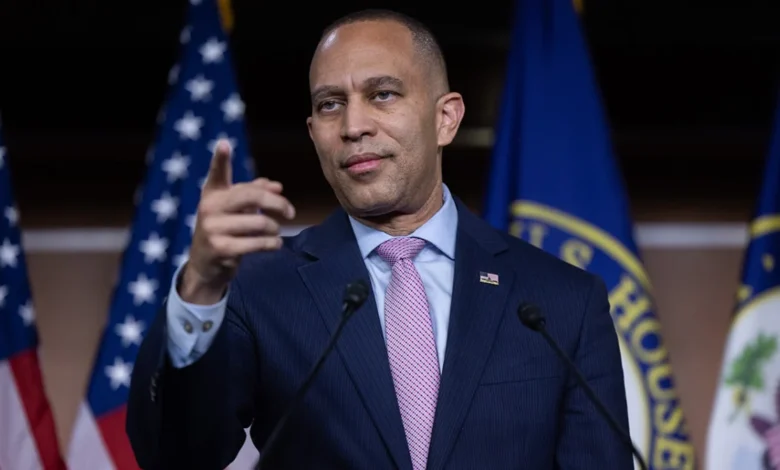
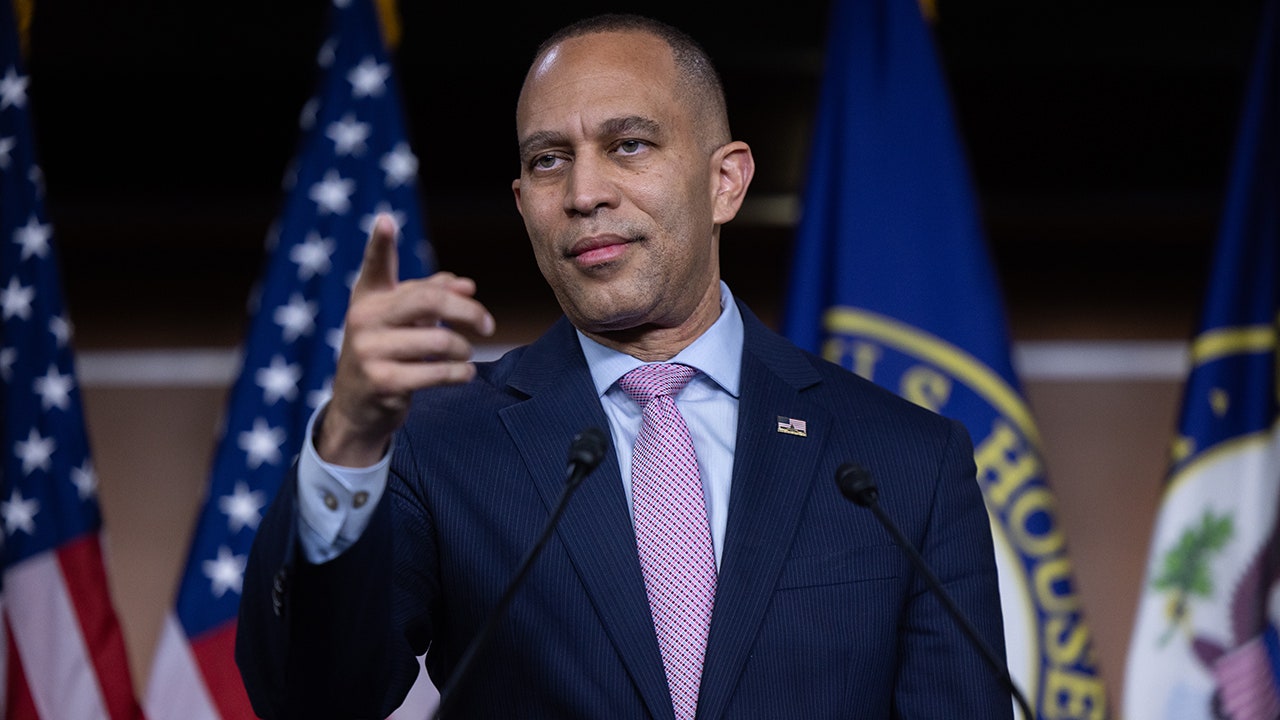
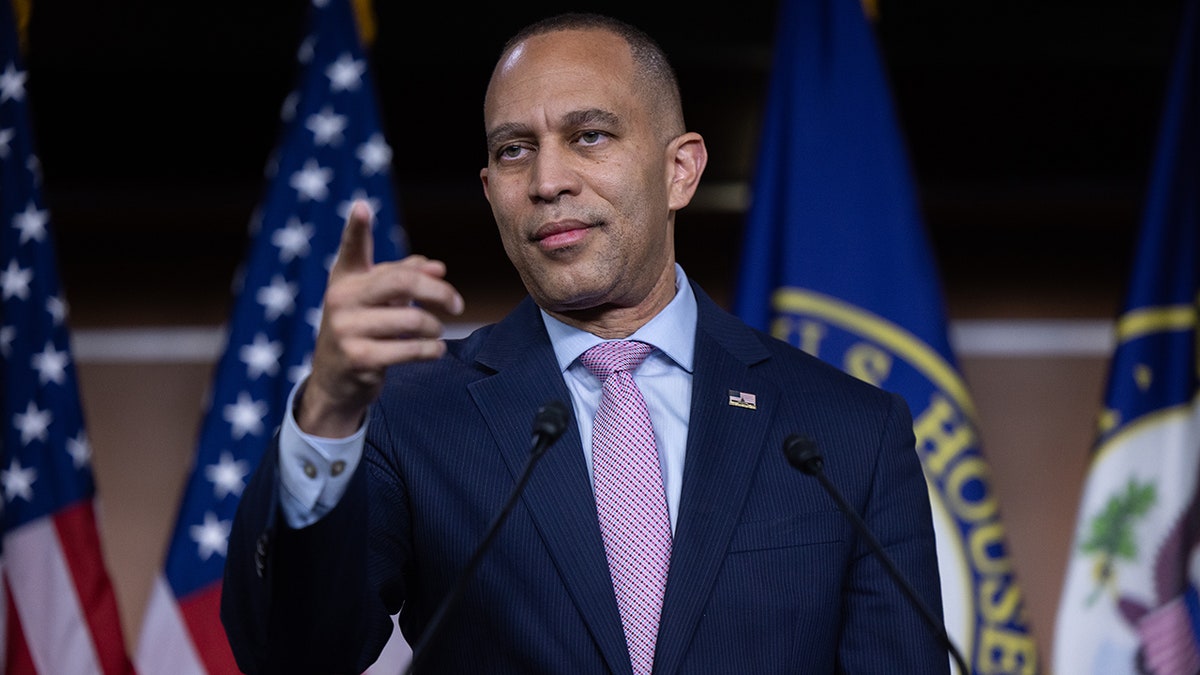
The specific effort in Virginia centered around an April redistricting referendum, where voters were asked to approve changes to the state’s congressional districts. House Minority Leader Hakeem Jeffries, D-N.Y., was a prominent figure in this campaign, acting as a leading surrogate. He delivered impassioned speeches advocating for the redistricting, framing the initiative as a necessary response to perceived Republican map manipulation. Jeffries elevated the stakes by famously characterizing Virginia as the "crown jewel" in a broader national contest over congressional maps, underscoring the perceived importance of the state’s outcome for the party’s national ambitions.
Leading up to this pivotal vote, Federal Election Commission (FEC) records indicated a stark financial disparity between the two major parties. The ten wealthiest Republican-aligned political committees boasted nearly twice as much cash on hand as their Democratic equivalents. Despite this overall financial disadvantage, Democratic-aligned groups committed considerable resources to the Virginia effort, signaling the strategic importance they placed on the state’s electoral geography. The $64 million spent represented a significant portion of their available funds, demonstrating a willingness to make a large, concentrated bet on redistricting as a pathway to power.
The ultimate invalidation by the Virginia Supreme Court, based on a procedural constitutional violation, was a severe setback. While the specific nature of the violation was procedural, its consequence was a complete derailment of the Democratic-backed redistricting plan, leaving the party without the anticipated electoral advantage they had sought to engineer. This outcome not only wasted a substantial financial investment but also deprived Democrats of a critical strategic win in the ongoing national struggle for House control.
The Intricate Web of "Dark Money": House Majority Forward’s Role
A significant portion of the Democratic spending in the Virginia redistricting election, roughly $40 million, flowed from House Majority Forward (HMF). HMF is a 501(c)(4) nonprofit organization, a designation that allows it to engage in political activity without being required to publicly disclose its donors. This lack of transparency is why such groups are commonly referred to as "dark money" organizations. HMF is closely affiliated with House Majority PAC (HMP), a super PAC dedicated to backing House Democrats. These two entities operate as "sister organizations," forming a crucial pipeline for undisclosed funds to influence the political process.
The mechanism is straightforward: contributions from undisclosed donors are funneled into House Majority Forward. HMF then makes publicly reported donations to House Majority PAC, which, in turn, becomes a major source of cash for congressional Democrats. This structure allows money from anonymous sources to enter the political system, impacting elections and policy debates without public scrutiny of the original donors. This method of political financing has long been a point of contention, with critics arguing it undermines transparency and allows special interests to exert undue influence.
CJ Warnke, communications director for House Majority Forward, defended the organization’s involvement, stating, "HMF’s support matched the $40 million Republicans invested in the recent redistricting election, and once again their pro-war, costs-raising, toxic agenda was soundly rejected by Virginians." Warnke further asserted confidence in Democratic prospects, adding, "No amount of GOP money will prevent Leader Hakeem Jeffries from becoming the next Speaker of the House." This statement underscores the perceived necessity of HMF’s financial engagement as a counterweight to Republican spending, while simultaneously projecting an optimistic outlook for the Democratic Party’s future leadership.
The Broader Fundraising Landscape: A Deepening Divide
The Virginia redistricting saga unfolded against a backdrop of a widening financial chasm between the two major parties as they gear up for the 2026 midterm elections. At the close of March, a comprehensive analysis of FEC data revealed that the ten largest Republican political committees held a staggering nearly $1 billion in cash on hand. In stark contrast, their ten wealthiest Democratic counterparts collectively commanded approximately $550 million. This nearly two-to-one financial advantage for Republicans presents a formidable challenge for Democrats seeking to reclaim or defend legislative majorities.
Prominent among the Republican financial powerhouses were President Donald Trump’s MAGA Inc. and the Senate Leadership Fund, an influential super PAC closely affiliated with Senate Majority Leader John Thune, R-S.D. These entities represent significant conduits for conservative donor money, channeling resources into campaigns at both presidential and congressional levels. On the Democratic side, the Soros family’s Democracy PACs and the Senate Majority PAC were the leading fundraisers. The Soros family, particularly billionaire George Soros, has long been a significant financier of progressive causes and Democratic campaigns, making their PACs crucial to the party’s fundraising efforts.
This substantial cash advantage for Republicans has not gone unnoticed within Democratic circles. Mike Smith, who leads both House Majority Forward and the affiliated House Majority PAC, voiced concerns earlier in April about the lack of widespread understanding regarding the severity of this disparity. "I don’t think it has broken through, the level of money that Donald Trump and Republicans are sitting on as it compares to Democrats," Smith told NOTUS. He emphasized the potential consequences, stating, "I don’t think there’s a comprehensive understanding of both the level of disparity and what that could mean in terms of us being able to win the House." Smith’s comments highlight an internal recognition of the financial hurdles Democrats face, even as they publicly project confidence.
However, the Democratic Congressional Campaign Committee (DCCC) spokesperson, Viet Shelton, offered a more optimistic assessment, focusing on recent gains. "House Democratic candidates are pulling in massive fundraising hauls, outraising their GOP opponents last quarter, and the DCCC just had its best quarter of fundraising for the cycle," Shelton told Fox News Digital. He articulated the party’s strategy, stating, "While Republicans brag about their billionaire backers, Democrats are focused on building support amongst the people – and by every measure, we are poised to take back the majority and make Hakeem Jeffries the next Speaker of the People’s House." This narrative aims to counter the financial disadvantage by emphasizing grassroots engagement and the broader appeal of Democratic policies.
Political Retorts and the Shadow of Nancy Pelosi
The failed Virginia redistricting effort and the underlying fundraising dynamics sparked sharp criticism from Republicans. Mike Marinella, a spokesman for the National Republican Congressional Committee (NRCC), did not mince words, launching a direct attack on House Minority Leader Hakeem Jeffries. "So-called ‘Leader’ Hakeem Jeffries lit well north of $55 million on fire chasing illegal redistricting fantasies, only to fall flat on his face in spectacular fashion," Marinella declared to Fox News Digital. He emphasized the broader financial context, adding, "National Democrats are already drowning in a massive cash deficit against Republicans while the NRCC and our battle-tested candidates continue shattering fundraising records and building momentum for 2026."
Marinella’s reference to "well north of $55 million" includes the $17 million that House Majority PAC successfully spent on redistricting efforts in California, an important clarification that tempers the impression of total financial waste. However, the core of his critique remained focused on the Virginia failure and the overall Democratic financial position.
The NRCC spokesman went further, drawing a direct comparison between Jeffries and his predecessor, former Speaker Nancy Pelosi, a figure widely regarded for her formidable fundraising capabilities. "Jeffries is proving he’s no Nancy Pelosi, and Democrats are getting an expensive lesson in the difference between media hype and actual leadership," Marinella asserted. This comparison is particularly poignant given Pelosi’s storied history as one of her party’s most prolific fundraisers. During her tenure, from her appointment as House Minority Whip in 2002 until her resignation from Democratic leadership in 2022, Pelosi reportedly raised over $1 billion for the party, according to CBS News. Her fundraising prowess was legendary, establishing a high bar for her successors.
Sources have indicated that Pelosi, even after stepping down from leadership, retains considerable influence over the operations of House Democrats, a situation that has allegedly caused some irritation for Jeffries. This rumored dynamic adds another layer to the comparison, suggesting a potential internal tension alongside the external political jousting.
A spokesman for former Speaker Pelosi, however, swiftly came to Jeffries’ defense, pushing back against Republican critiques. "Speaker Emerita Pelosi is exceptionally proud of Leader Hakeem Jeffries and his masterful strategy to fight fire with fire on the path to retaking the House in November," the spokesman told Fox News Digital. This statement not only refutes the notion of Jeffries’ inadequacy but also reinforces the perception of party unity and strategic alignment. The House Minority Leader Hakeem Jeffries’ office did not respond to a request for comment regarding these remarks.
Nuanced Fundraising Dynamics and Future Implications

Despite the overarching financial dominance of Republicans across major political committees, the fundraising landscape reveals a more nuanced picture at the individual campaign level in certain key congressional races. Democrats have managed to build considerable leads in some closely watched contests, particularly in the Senate. Campaign finance data analyzed by NPR indicates that Democratic candidates have out-raised their GOP opponents in competitive Senate races in states like Georgia, Alaska, Ohio, Michigan, and Maine. These localized successes offer a glimmer of hope for Democrats, suggesting that while the party may lag at the national committee level, individual candidates can still generate significant financial support.
Similarly, in the House, Roll Call reported that 13 Republican candidates running in hotly contested races found themselves out-raised by their Democratic challengers. This contrasts with just four Democrats defending competitive seats who were out-raised, suggesting a potential advantage for Democrats in directly challenging Republican incumbents in swing districts.
However, this picture is not uniformly favorable for Democrats. Campaign finance records also show that Republican members of Congress in toss-up seats, on average, raised more than Democrats defending similarly competitive seats during the first three months of 2026. This indicates that while Democrats might be strong challengers in some races, incumbent Republicans in vulnerable positions are also effectively mobilizing resources to defend their seats.
The Pelosi spokesman reiterated the Democratic perspective on the sources of campaign funding, contrasting them with Republican methods. "Republicans are being rewarded with endless big, dark, special interest money from the billionaires they gave a tax break after cutting trillions from Americans’ health care in their Big, Ugly Bill," the spokesman asserted. In contrast, the Democratic strategy, despite the financial disparities, remains focused on broader support: "Democrats may not have unlimited resources from billionaires, but we will have enough grassroots support to organize and win a resounding victory to elect Hakeem Jeffries as Speaker of the House." This statement encapsulates the ongoing ideological battle over campaign finance and the perceived legitimacy of different funding sources.
The failed Virginia redistricting effort serves as a stark reminder of the complexities and high stakes of modern American political campaigning. It underscores the critical role of money, particularly "dark money," in shaping electoral outcomes and the continuous battle over electoral maps. As the 2026 midterms draw closer, both parties will continue to deploy every available resource, financial and strategic, in their quest for legislative control. For Democrats, overcoming the Republican financial advantage, especially in the wake of costly strategic failures like Virginia, will require not only robust fundraising but also a compelling narrative and effective grassroots mobilization to translate their aspirations for Hakeem Jeffries’ speakership into a tangible reality. The shadow of the Virginia decision will undoubtedly loom large as both parties recalibrate their strategies for the battles ahead.