The Unfolding Healthcare Crisis: Hundreds of Foreign Doctors Face Deportation Amidst Stalled Visa Waivers and Crippling Fees

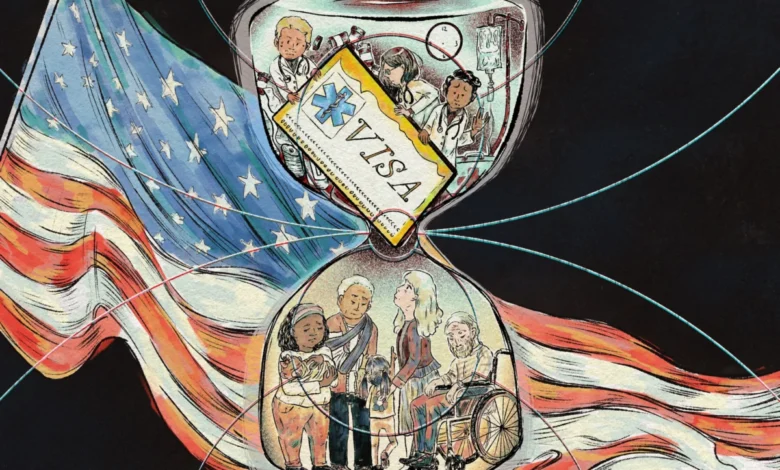
Hundreds of foreign-born physicians nearing the end of their vital training in the United States are on the precipice of deportation, a looming crisis rooted in a severe backlog of visa waiver applications and a prohibitive new fee structure for temporary worker visas. Immigration attorneys and healthcare advocates warn that if the federal government does not expedite the processing of these applications, which have been stalled since late last year, a critical shortage of medical professionals will be exacerbated, leaving already underserved communities without essential care.
The J-1 visa waiver program, administered by the Department of Health and Human Services (HHS), is designed to retain foreign physicians who have completed their U.S. medical education. This program allows them to transition from their J-1 training visa to a temporary worker status, typically an H-1B visa, in exchange for a commitment to serve in medically underserved areas for at least three years. This pathway is crucial for the U.S. healthcare system, which relies heavily on international medical graduates to fill physician vacancies, particularly in rural and low-income urban areas where American doctors are often reluctant to practice.
A Looming Exodus: The Human and Health Toll of Bureaucratic Delays
For a psychiatrist who trained in Europe before undertaking residency and fellowship in the U.S., the delay is not just a bureaucratic inconvenience; it represents a direct threat to their ability to serve vulnerable populations in New York. "It will be the patients that suffer the most because in about three months, there’s going to be hundreds of places that are not going to have a physician that should have," the psychiatrist stated, speaking on condition of anonymity due to fear of governmental reprisal. This physician, like many others, applied for a J-1 waiver through the HHS Exchange Visitor Program this year, hoping to continue their work with disadvantaged patients, including trafficking survivors, the homeless, and incarcerated individuals.
The current situation starkly contrasts with the program’s historical efficiency. According to immigration attorneys, the HHS Exchange Visitor Program typically reviewed waiver applications within one to three weeks in recent years. However, a significant backlog has now accumulated, with hundreds of applications awaiting review by the State Department and subsequent approval by U.S. Citizenship and Immigration Services (USCIS). This administrative paralysis has created a critical deadline: if these applications do not reach USCIS by July 30, the affected physicians will likely be compelled to return to their home countries.
The Financial Chasm: The Prohibitive H-1B Fee
The prospect of returning home is not merely a matter of geographical relocation; it carries immense financial implications for both the physicians and the healthcare facilities that have recruited them. To re-enter the U.S. and continue their practice, these doctors would need to secure an H-1B work visa. However, a recent proclamation by the Trump administration, initially targeting the tech industry’s use of H-1B visas, has imposed a substantial $100,000 fee on employers sponsoring foreign workers living outside the U.S. This fee, which does not apply to those already within the country, is proving to be an insurmountable barrier for many hospitals and clinics, especially those located in rural and underserved areas.
Charles Wintersteen, a Chicago-based attorney specializing in health workforce immigration, described the situation as a "cliff that this train is headed for." Many of these facilities, which often operate on slim margins and serve predominantly Medicare and Medicaid patients, simply cannot afford such a significant expenditure. "That’s the cliff that this train is headed for," Wintersteen stated. This financial hurdle jeopardizes the very purpose of the J-1 waiver program: to bolster healthcare access in areas facing critical shortages.
HHS Response and the Underlying Systemic Reliance
In response to inquiries, an HHS spokesperson, Emily Hilliard, acknowledged the program’s efforts to address the delays. While she did not provide specific numbers on pending applications or definitively explain the causes of the slowdown, she stated that the Exchange Visitor Program has reviewed all fiscal year 2025 clinical J-1 waiver applications and some from fiscal year 2026. The department claims to be "implementing key process improvements to prevent future delays" and is "working diligently" to evaluate remaining applications before the July 30 deadline.
However, physicians and immigration attorneys report a lack of transparency and clear communication from HHS regarding the application status and expected timelines. Jennifer Minear, a Virginia-based health workforce immigration lawyer, expressed profound bewilderment at the apparent paralysis of a program that has historically functioned effectively. "Why would HHS want to take a program that is working – a program that places hundreds of U.S. trained international physicians in highly underserved parts of the country every year – and slow-walk it into non-existence?" Minear questioned via email. "How does that serve the public health? It is baffling."
The reliance of the U.S. healthcare system on foreign-born professionals is undeniable. According to 2025 licensing data, nearly a quarter of physicians in the United States received their medical education outside of the U.S. or Canada. These international medical graduates are integral to staffing hospitals and clinics, especially in regions grappling with persistent physician shortages. The J-1 waiver program provides a critical mechanism for retaining these skilled professionals, offering them a pathway to permanent residency in exchange for their commitment to public service in underserved communities.
A Chronology of Delays and Escalating Concerns
The current crisis appears to have its roots in a significant slowdown in application processing that began in late September or early October of last year. While HHS claims to have resumed processing, the pace remains dramatically slower than what is required to meet the July 30 deadline. The standard timeline for the waiver process involves HHS forwarding recommendations to the State Department, which then typically takes two to three months for review before sending them to USCIS. This multi-stage process, when operating efficiently, allows for timely approval. However, the current backlog has compressed this timeline to an untenable point for many.
The American Medical Association (AMA) has been vocal in its concerns. John Whyte, CEO of the AMA, sent a letter to the Exchange Visitor Program urging "emergency batch processing" for physicians with contracts set to begin in the summer. Similarly, Efrén Manjarrez, president of the Society of Hospital Medicine, implored the program for emergency measures, stating, "Every day this backlog persists is a day that hospitalized patients in these communities face greater risk."
The H-1B Fee Dilemma: A Devastating Blow to Underserved Areas
The $100,000 H-1B fee, introduced as part of a broader immigration policy shift, has compounded the J-1 waiver crisis. This fee, levied on employers sponsoring foreign workers not already in the U.S., disproportionately impacts smaller hospitals and clinics in rural and low-income urban areas. These facilities often rely on J-1 waiver physicians to fill essential roles that they struggle to staff with American doctors.
Barry Walker, an attorney in Tupelo, Mississippi, specializing in health workforce immigration, highlighted the devastating impact of this fee. "That’s just a deal killer, especially for the small, rural hospitals," Walker commented. He noted that employers have already invested significant resources in recruitment and legal fees for the waiver process. The additional H-1B fee, for many, represents an unaffordable financial burden.
Attorneys suggest that employers are now more inclined to sponsor physicians in highly lucrative specialties, such as cardiology or orthopedics, where they can more easily recoup the substantial fee. This leaves even less incentive to sponsor physicians in primary care or other essential but less profitable fields, further exacerbating shortages in critical areas. Furthermore, healthcare facilities are reportedly less likely to absorb the cost for other essential healthcare professionals like nurses and lab technicians, who are also often trained abroad. While fee exemptions are possible, attorneys report no instances of hospitals or clinics successfully obtaining them.
Broader Implications and Advocacy Efforts
The confluence of J-1 waiver delays and the prohibitive H-1B fee has ignited a multi-pronged advocacy effort. Physicians, hospital administrators, lawmakers, and immigration experts are actively campaigning to bring attention to the crisis and seek remedies.
Despite numerous letters from hospital associations, medical societies, and rural health organizations urging an exception to the H-1B fee for healthcare personnel, the Trump administration has not yet responded. In March, a bipartisan group of lawmakers introduced legislation in the House of Representatives to create a healthcare exemption for the H-1B fee, but it has not yet seen a hearing.
Simultaneously, several lawsuits have been filed challenging the H-1B fee. The U.S. Chamber of Commerce, a coalition of 20 states, and a diverse group of plaintiffs including a foreign nurse recruitment company and a union representing medical graduates, are all seeking to overturn or significantly limit the fee’s applicability.
The consequences of inaction are stark. Physicians facing deportation may seek opportunities in other countries, such as Canada, which has reportedly been actively recruiting foreign physicians completing their training in the U.S. One of the psychiatrist’s friends, facing similar uncertainty, has already accepted a Canadian offer and withdrawn their HHS waiver application.
For the psychiatrist in New York, the potential separation from their partner and the prospect of months without employment while navigating licensing in their home country are deeply distressing. Even if an employer could afford the H-1B fee, the emotional toll of the protracted and uncertain process has left them questioning their desire to remain in the U.S. "This entire process has been so incredibly painful and just soul-crushing," they admitted. "I would rather go to a country that would appreciate my motivation to work with patients."
The unfolding situation represents a critical juncture for the U.S. healthcare system, highlighting the complex interplay of immigration policy, workforce needs, and the fundamental right to healthcare access. The continued delays and financial barriers threaten to dismantle a vital pipeline of medical talent, leaving a profound and detrimental impact on the health and well-being of communities across the nation. The coming weeks will be crucial in determining whether bureaucratic inertia or proactive solutions will prevail in averting a significant healthcare crisis.