FIFA World Cup 2026 Mandatory Hydration Breaks Ignite Controversy Over Player Safety and Commercial Exploitation

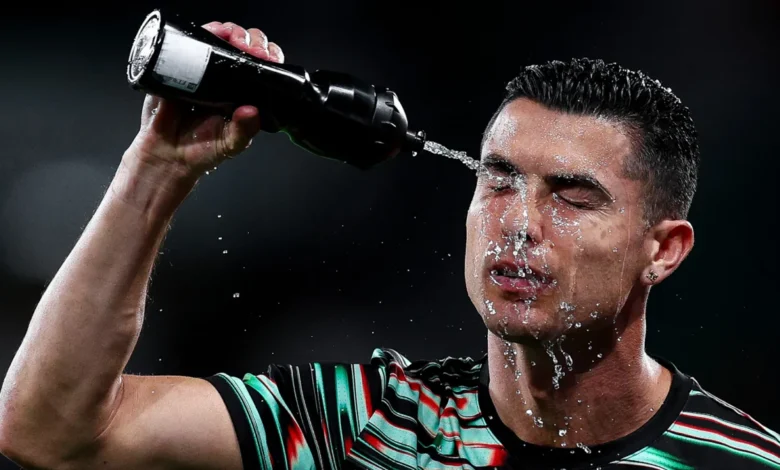
The 2026 FIFA World Cup, hosted across the United States, Mexico, and Canada, was marketed as a historic expansion of the world’s most popular sporting event. However, as the tournament progresses, the conversation has shifted from the pitch to the sidelines. A new, mandatory policy requiring three-minute hydration breaks in each half has ignited a firestorm of criticism from fans, broadcasters, and football purists. While FIFA maintains the breaks are a vital response to the escalating threats of climate change and extreme heat, critics have labeled the move "Water-gate," suggesting the breaks are a thinly veiled attempt to increase advertising revenue by carving the traditional 90-minute match into quarters.
The controversy reached a boiling point during a recent group stage match between the United States and Australia. For millions of viewers, the sight of a referee blowing a whistle midway through a scoreless half was jarring. Unlike previous tournaments, where cooling breaks were a rare occurrence dictated by extreme weather conditions, these pauses are now a permanent fixture of the 2026 edition. The backlash was immediate. In the United Kingdom, The Independent used the "Water-gate" moniker to describe the shift, while the Daily Mail’s chief sportswriter characterized the pauses as a "momentum killer" and a "money-grabbing disgrace."
The Evolution of Hydration Policy: From Necessity to Mandate
To understand the current friction, one must look at the historical precedent of heat management in professional soccer. For decades, FIFA’s "Cooling Break" protocol was strictly situational. Breaks were only sanctioned when the Wet Bulb Globe Temperature (WBGT)—a composite measure of temperature, humidity, wind speed, and solar radiation—exceeded 32 degrees Celsius (89.6 degrees Fahrenheit). Under those rules, the referee and the FIFA medical delegate would determine shortly before kickoff if breaks were necessary.
The 2026 World Cup has abandoned this nuance. FIFA’s new policy, announced in December 2025, mandates three-minute hydration breaks at the 30th and 75th minutes of every match, regardless of the ambient temperature or humidity. This includes matches played in climate-controlled, indoor environments like the Mercedes-Benz Stadium in Atlanta or the SoFi Stadium in Los Angeles.
FIFA’s official stance, as stated in their December announcement, is that "the use of hydration breaks is part of a focused attempt to ensure the best possible conditions for players." The organization argues that a uniform rule prevents confusion and ensures that all teams, regardless of where they are playing in the vast North American landscape, are treated with the same standard of care.
The Role of Climate Change and Player Advocacy
The impetus for this policy change stems from a growing body of scientific evidence regarding the dangers of high-intensity athletics in a warming world. Following a series of international matches in the United States during the summer of 2025, FIFPRO, the global union for professional football players, issued a stern warning. They pointed to several instances where players exhibited signs of heat exhaustion and argued that matches should have been canceled or rescheduled due to extreme heat.
In a press release preceding the 2026 World Cup, FIFPRO stated, "It has never been more important to give space to scientific knowledge and find mitigation strategies that protect the health and wellbeing of our players." The union’s research indicated that at high temperatures, a player’s core body temperature can rise to dangerous levels within minutes of sustained sprinting, leading to cognitive impairment, reduced physical output, and, in severe cases, heatstroke.
Despite the scientific backing, the implementation has been met with skepticism by the very people it is meant to protect. Virgil van Dijk, the veteran captain of the Netherlands’ national team, expressed a sentiment shared by many players: "If it’s really hot, obviously it will be good to put them in. But I think you have to look at it in every game separately." The lack of flexibility in the rule is what many find frustrating, as it disrupts the natural flow and psychological momentum of a match that might be taking place in mild 70-degree weather.
The Commercialization of the "Beautiful Game"
The most cynical—and perhaps most substantiated—criticism of the hydration breaks involves the financial windfall they provide. Unlike American football or basketball, soccer has traditionally been an advertiser’s challenge because it offers 45 minutes of uninterrupted play per half. By introducing mandatory breaks, FIFA has effectively created four "quarters," providing broadcasters with two high-value windows for television commercials.
The economic implications are staggering. According to reports from the Wall Street Journal, a 30-second advertising spot during the early group stages of the 2026 World Cup sells for approximately $200,000. For high-profile matches involving the United States national team, that price tag can soar to $750,000.
FIFA’s regulations specify that advertisements during hydration breaks must not begin until 20 seconds into the pause and must conclude 30 seconds before play resumes. This leaves roughly 130 seconds of available airtime per break. John Kosner, a former ESPN executive, noted that FIFA has "essentially divided the game into quarters and made enormously valuable breaks."
The risks of this commercialization were laid bare during the tournament’s opening match. Approximately 67 minutes into the game, a mandatory break was called. The American broadcaster Fox cut to a commercial break that overran the actual duration of the player’s respite. When the broadcast returned to the pitch, play had already resumed, leaving viewers confused and angry. Fox later claimed they missed the referee’s signal to restart because they were showing a replay at the time. While FIFA opted not to sanction the network, the incident served as a flashpoint for fans who believe the "beautiful game" is being sacrificed for corporate profit.
A Chronology of the Hydration Break Dispute
The path to "Water-gate" began long before the first whistle of the 2026 tournament:
- October 2025: During World Cup qualifiers, such as the match between Portugal and Hungary in Lisbon, players are seen frequently using water breaks to cope with unseasonable heat, signaling a need for better hydration protocols.
- August 2025: FIFPRO conducts a scientific study following a heatwave in North America, concluding that existing FIFA heat policies are insufficient for the safety of elite athletes.
- December 2025: FIFA officially announces that mandatory hydration breaks will be implemented for every match of the 2026 World Cup to ensure "player welfare."
- June 2026: The tournament begins, and the first mandatory breaks are met with boos from fans in stadiums and a deluge of criticism on social media platforms like Reddit.
- June 14, 2026: The Fox broadcasting error occurs, leading to widespread speculation that the breaks are designed primarily for advertising.
Physiological Reality vs. Spectator Experience
From a medical perspective, the benefits of hydration are indisputable. In a 90-minute match, an elite soccer player can lose between two and three liters of sweat. Dehydration of as little as 2% of body mass can significantly impair aerobic capacity and decision-making. Dr. Chris Taylor, head coach of Vermont Green FC—a club known for its focus on environmental and climate issues—acknowledges the necessity of hydration but questions the rigid application of the rule.
"I don’t think the health of the players is their primary concern," Taylor remarked. "This World Cup has felt that every angle has been monetized." Taylor’s perspective highlights the tension between genuine safety concerns and the optics of a tournament that appears increasingly corporate.
The fan experience has also been significantly altered. Soccer is a game of rhythm and fatigue; the "ebb and flow" of a match is a core part of its tactical appeal. By providing a guaranteed three-minute rest, the physical advantage held by fitter teams is partially neutralized, and the tactical pressure applied by an attacking side can be evaporated by a whistle. During the England vs. Croatia match, fans of both nations—rarely in agreement—united to boo the referee when the hydration break was signaled.
Broader Impact and the Future of the Sport
The controversy over hydration breaks in 2026 may be a harbinger of things to come as global temperatures continue to rise. As international sporting bodies grapple with the reality of hosting events in increasingly hostile climates, the balance between safety, tradition, and commercial viability will become even more precarious.
For FIFA, the 2026 World Cup is a test case. If the mandatory breaks become a permanent fixture of international soccer, it will represent the most significant structural change to the game’s timing in its modern history. While the organization defends the move as a proactive climate solution, the "Water-gate" scandal suggests that the public remains unconvinced.
As the tournament moves toward the knockout stages, the scrutiny on these breaks will only intensify. Whether they are remembered as a necessary evolution for athlete safety or a cynical "money-grab" will likely depend on how FIFA manages the optics of its broadcasting partners and whether the organization can prove that player health—not the bottom line—is the true priority. For now, the "beautiful game" remains paused, waiting for the next commercial break to end.
Related posts: