Southwest Airlines Eyes Strategic Pivot with Potential Airport Lounge Launch to Capture Premium Market Share

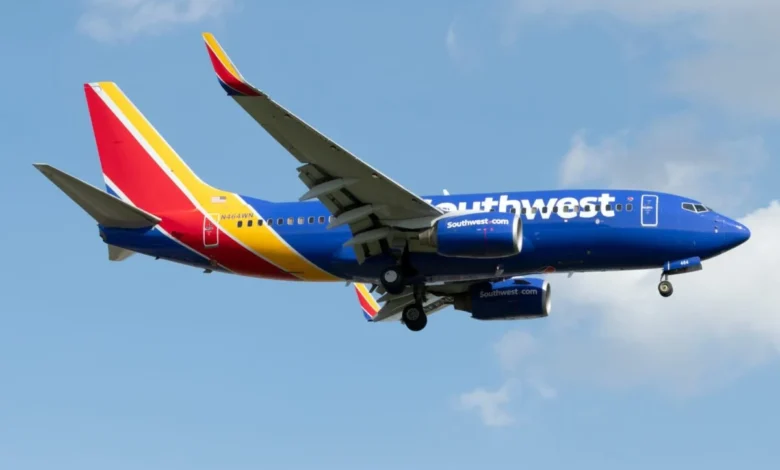
Southwest Airlines CEO Bob Jordan has provided the strongest indication to date that the Dallas-based carrier is preparing to break from its decades-old "no-frills" tradition by introducing airport lounges. Speaking during a conference call with analysts following the company’s third-quarter earnings report, Jordan confirmed that internal teams are actively developing a lounge strategy, marking a significant departure from the egalitarian model that has defined the airline since its inception in 1971. While the airline is not yet ready to provide a formal launch date or specific locations, the move signals a broader transformation aimed at boosting loyalty program engagement and capturing a larger share of the high-yield premium travel market.
The potential introduction of lounges is not merely a service upgrade but a calculated financial move designed to bolster Southwest’s co-branded credit card portfolio with Chase. "I know I’ve teased the lounges. That’s something obviously — there’s work underway," Jordan stated. "The whole purpose is to expand co-brand opportunities, expand the card set and provide to our customers something that they really want." This shift reflects a growing industry-wide trend where airline profitability is increasingly tied to financial services and loyalty programs rather than just ticket sales.
The Strategic Shift: From Egalitarianism to Premiumization
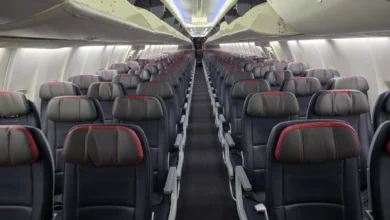
For over 50 years, Southwest Airlines distinguished itself through a simple, consistent product: open seating, no baggage fees, and a single-class cabin. However, changing consumer preferences and intense competitive pressure from legacy carriers have forced a reevaluation of this "one size fits all" approach. In July 2024, Southwest announced it would end its iconic open-seating policy and begin offering seats with extra legroom, effectively creating a premium economy section.
The lounge initiative is the logical next step in this evolution. As Delta Air Lines, United Airlines, and American Airlines have successfully monetized their lounge networks through premium credit card tiers, Southwest has found itself at a disadvantage in attracting business travelers and high-spending leisure flyers. By offering a "sanctuary" within the airport, Southwest aims to reduce churn among its Rapid Rewards members and incentivize higher spending on its co-branded credit cards.
Industry analysts suggest that the "premiumization" of the airline industry is no longer optional. Data from the airline industry shows that while base fares have remained relatively stagnant when adjusted for inflation, revenue from ancillary services—including lounge access, seat assignments, and loyalty partnerships—has surged. For Southwest, which has historically relied on high volume and operational efficiency, the move toward lounges represents an admission that the low-cost carrier (LCC) model must adapt to a world where travelers prioritize comfort and "status" perks.
Chronology of a Transformation
The journey toward Southwest Lounges has been accelerated by a turbulent 2024. The following timeline outlines the key events leading to this strategic pivot:
- Early 2024: Southwest faces mounting pressure from activist investor Elliott Investment Management, which acquired a significant stake in the company. Elliott criticized the airline’s "outdated" business model and called for leadership changes and a modernization of the customer experience.
- April 2024: Southwest reports a first-quarter loss, citing Boeing delivery delays and rising labor costs. The airline announces it will exit several underperforming airports and limit hiring.
- July 2024: In a landmark announcement, Southwest confirms it will move to assigned seating and introduce "premium" seating options with extra legroom on all flights. This marks the end of an era for the carrier’s boarding process.
- September 2024: During its Investor Day, Southwest outlines a "Tactical Transformation" plan, projecting that the new seating and boarding changes will generate $1.5 billion in additional annual EBIT (earnings before interest and taxes) by 2027.
- October 2024: CEO Bob Jordan confirms that "work is underway" for airport lounges during the Q3 earnings call, linking the project directly to the expansion of the airline’s credit card ecosystem.
The Role of the Rapid Rewards Ecosystem
The primary driver behind the lounge project is the Southwest Rapid Rewards program. In the modern aviation economy, the relationship between an airline and its banking partner is often more lucrative than the flying operation itself. Southwest’s partnership with Chase has been a cornerstone of its financial stability, but to remain competitive, the airline needs to offer "aspirational" benefits.
Currently, Southwest’s highest-tier credit cardholders receive perks like Upgraded Boardings and 25% back on in-flight purchases. However, compared to the Delta SkyMiles Reserve American Express or the United Club Infinite Card, the Southwest portfolio lacks a "hero" benefit like lounge access. By building its own lounges or partnering with existing networks, Southwest can justify higher annual fees for its premium card products, thereby increasing the "spend-to-earn" velocity among its most loyal customers.
Internal data suggested that a segment of Southwest’s frequent flyers was "dual-loyal," maintaining status with Southwest for short-haul domestic flights while holding premium cards from competitors for international travel or lounge access. Southwest’s goal is to capture that secondary spend by providing a comprehensive "end-to-end" premium experience.
Financial Context and Investor Pressure
The timing of the lounge announcement is inextricably linked to Southwest’s ongoing battle with Elliott Investment Management. The activist firm, which holds an 11% stake in the airline, has been vocal about Southwest’s failure to evolve. Elliott’s "Stronger Southwest" campaign argued that the airline’s refusal to adopt industry-standard practices—like lounges and assigned seating—contributed to a 50% decline in stock price over the previous three years.
In late October 2024, Southwest reached a settlement with Elliott, avoiding a proxy fight. As part of the agreement, several new directors joined the board, and the airline committed to a more aggressive pursuit of revenue-generating initiatives. The lounge project serves as a clear signal to the market that Southwest is no longer tethered to its historical dogmas and is willing to invest in high-margin infrastructure.
Financially, Southwest is in a position where it must find new revenue streams. While the airline reported a net income of $67 million in the third quarter of 2024, its operating margins have been squeezed by a 15% increase in labor costs following new contract agreements with pilots and flight attendants. Lounges offer a way to increase "Yield per Available Seat Mile" (YASM) without significantly increasing the cost of the actual flight operation.
Operational Hurdles and Potential Locations
Implementing a lounge network is not without significant challenges, the most prominent being physical space. Most major U.S. airports are at or near capacity, and finding square footage for new lounges in prime terminals is a difficult and expensive endeavor.
Southwest’s "point-to-point" network means its traffic is more distributed than the hub-and-spoke systems of United or Delta. However, certain "mega-stations" are obvious candidates for the first Southwest Lounges:
- Dallas Love Field (DAL): As Southwest’s home base, Love Field is a primary candidate. However, the airport is gate-restricted, and space for a lounge would likely require reconfiguring existing administrative or retail areas.
- Denver International (DEN): Southwest has a massive footprint in Denver, one of its fastest-growing markets. With the recent expansion of the C Concourse, Denver offers the most viable path for a large-scale lounge.
- Nashville International (BNA): Southwest has turned Nashville into a major transit point. The airport’s recent renovations and high volume of business travelers make it a logical choice.
- Phoenix Sky Harbor (PHX) and Las Vegas (LAS): Both airports serve as high-volume nodes for Southwest, with a mix of business and high-end leisure travelers who would likely value lounge access.
The airline may also explore a hybrid model. Rather than building proprietary lounges at every airport, Southwest could partner with independent lounge operators like The Club or Priority Pass, while reserving "flagship" Southwest-branded lounges for its top five or ten markets.
Market Reactions and Industry Implications
The reaction from the travel industry has been one of cautious optimism. Travel analysts note that Southwest’s entry into the lounge space could disrupt the domestic market. If Southwest manages to offer lounge access at a lower price point or via a more attainable credit card tier than the "Big Three," it could force a price war in the premium segment.
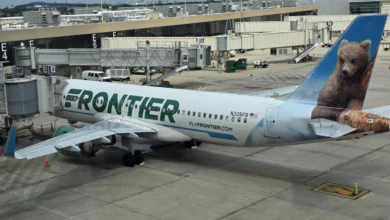
Competitors are watching closely. JetBlue Airways recently announced its own plans to open lounges at New York-JFK and Boston Logan in 2025, signaling that the "low-cost-plus" model is becoming the new industry standard. If both Southwest and JetBlue successfully launch lounges, the traditional distinction between "budget" and "legacy" carriers will almost entirely vanish, leaving the market divided between ultra-low-cost carriers (like Spirit and Frontier) and "full-service" carriers.
Customer reaction has been mixed. Long-time Southwest loyalists—often referred to as "LUV" fans—have expressed concern that the airline is losing its identity. On social media and travel forums, some flyers worry that the addition of lounges and assigned seating will lead to higher base fares and the "nickel-and-diming" culture seen at other airlines. Conversely, business travelers have largely cheered the news, citing the need for a quiet space to work during delays.
Conclusion: A New Era for the "LUV" Airline
The potential for Southwest lounges represents the final brick in the wall of the airline’s total transformation. By moving toward assigned seating, extra legroom, and premium ground amenities, Southwest is repositioning itself to compete directly for the most profitable segment of the traveling public.
While the "work underway" mentioned by Bob Jordan will likely take years to fully manifest in the form of open doors and buffet lines, the intent is clear: Southwest is no longer content being the "alternative" choice. It wants to be the primary choice for travelers who demand both the reliability of a major carrier and the perks of a premium brand. As the airline prepares to navigate the logistical and financial complexities of this rollout, the industry will be watching to see if the "Southwest Effect"—which historically brought lower fares to every market the airline entered—can now bring "affordable luxury" to the airport lounge.