The Colorado River Basin Crisis Federal Funding Technological Innovation and the Quest for a Sustainable Water Future in the American West

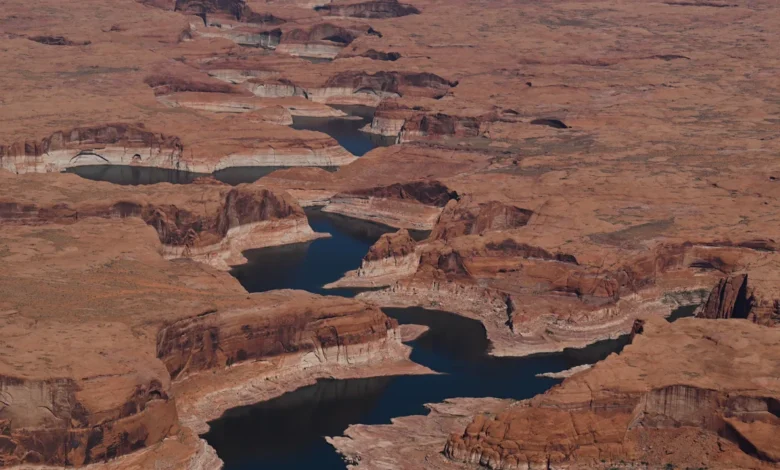
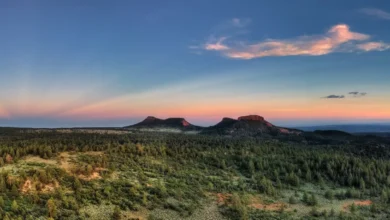
The Colorado River, often referred to as the "lifeline of the American West," is currently facing an existential threat that transcends simple environmental concern, evolving into a complex geopolitical and economic crisis. For decades, the seven U.S. states and two Mexican states that rely on this 1,450-mile waterway have operated under a system of over-allocation, consuming more water than the river naturally provides. This chronic imbalance, exacerbated by a 24-year "megadrought" fueled by climate change, has brought the river’s primary reservoirs—Lake Powell and Lake Mead—to historically low levels. As the deadline for a new long-term management agreement approaches in late 2026, the traditional path of diplomatic negotiation has stalled, prompting a shift toward aggressive federal spending and high-tech interventions to bridge the widening gap between supply and demand.
The fundamental crisis is rooted in a mathematical impossibility. The 1922 Colorado River Compact, which serves as the "Law of the River," was drafted during an unusually wet period and allocated approximately 15 million acre-feet of water annually among the states. Modern hydrologic data reveals that the river’s actual average flow is closer to 12 million acre-feet, and in recent years, that figure has dipped even lower. This "structural deficit" means that even in years with average snowfall, the system loses water. With the two largest reservoirs in the United States currently hovering at roughly one-third of their total capacity, the threat of "dead pool"—a state where water levels are too low to flow through hydroelectric turbines or downstream gates—has moved from a theoretical nightmare to a distinct possibility.
A Chronology of Declining Reserves and Diplomatic Deadlock
The current emergency is the culmination of nearly a quarter-century of aridification. Since 2000, the Colorado River Basin has experienced its driest period in over 1,200 years. This environmental shift has forced a series of reactive policy measures:
- 2007 Interim Guidelines: States agreed to a set of criteria for sharing shortages, primarily affecting Arizona and Nevada.
- 2019 Drought Contingency Plans: An additional layer of voluntary cuts was established as reservoir levels continued to plummet.
- 2022 Crisis Point: The Bureau of Reclamation issued an unprecedented ultimatum, demanding that states find a way to cut an additional 2 to 4 million acre-feet of usage or face unilateral federal mandates.
- 2023-2024 Short-term Reprieve: High winter snowpack and billions of dollars in federal payments to farmers for temporary fallowing provided a brief stabilization of Lake Mead, but experts warn this is a temporary "band-aid."
- 2026 Deadline: The current operating guidelines expire at the end of 2026. Negotiators must find a permanent solution to manage the river in a hotter, drier future.
Despite the urgency, negotiations between the Upper Basin (Colorado, Utah, Wyoming, and New Mexico) and the Lower Basin (Arizona, California, and Nevada) have reached a stalemate. The Upper Basin states argue that they are at the mercy of Mother Nature, as their supply depends on annual snowpack, while the Lower Basin states benefit from the massive storage in Lake Mead. Conversely, the Lower Basin argues that the Upper Basin must contribute more to conservation efforts. This impasse has left the federal government in a precarious position, forced to mediate a dispute where every gallon of water saved by one party is seen as a loss by another.
The Federal "Wish List": A $50 Billion Strategic Shift
With legal negotiations stalled, the focus has shifted toward infrastructure and innovation. The governors of the seven basin states recently submitted a comprehensive "wish list" to the Department of the Interior, requesting over $50 billion in federal investment. This proposal signals a pivot from the Biden administration’s strategy of paying for temporary conservation toward the Trump administration’s apparent preference for long-term technological and infrastructural solutions.
Interior Secretary Doug Burgum and the Bureau of Reclamation are currently reviewing these proposals, which aim to "create" new water or drastically reduce the consumption of existing supplies. The logic is that if the states cannot agree on how to divide a shrinking pie, the federal government must help make the pie larger—or at least more efficient.
Desalination and Interstate Water Exchanges
One of the most ambitious and costly proposals involves large-scale desalination. While the Colorado River is landlocked for much of its U.S. run, the "wish list" includes up to $6 billion for a desalination plant in Baja California, Mexico. Under this plan, treated seawater would be used by Mexican municipalities and agriculture, allowing Mexico to reduce its legal claim to Colorado River water. That "saved" water would then be diverted to Arizona, which faces the most significant risk of delivery cuts due to its junior water rights status.
A similar model is being explored in San Diego. The Claude "Bud" Lewis Carlsbad Desalination Plant, the largest in the Western Hemisphere, already provides a significant portion of San Diego’s water. A new memorandum of understanding suggests that Arizona or Nevada could pay for the operation of such plants in exchange for San Diego’s share of the Colorado River. While desalination offers a drought-proof supply, it remains controversial due to its high energy requirements, the environmental impact of brine disposal, and a price tag that can be five to ten times higher than traditional river water.
Technological Retrofitting and the Rise of "Water-Neutral" Industry
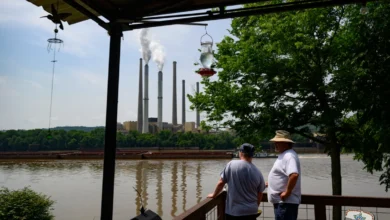
As the American West experiences a boom in data centers and semiconductor manufacturing—industries essential to the modern economy and national security—water usage in these sectors has come under intense scrutiny. Nevada, despite being the most water-efficient state on the river, is seeking $950 million to address industrial consumption.
The proposals include:
- $300 Million for Power Plant Retrofits: Converting natural gas plants to "dry cooling" systems that use air instead of water to dissipate heat.
- $650 Million for Closed-Loop Cooling: Installing advanced cooling systems in schools, airports, and the massive data centers that power the AI revolution.
These investments reflect a broader recognition that the "thirsty" tech boom must be decoupled from the region’s dwindling water supplies if it is to remain sustainable.
Cloud Seeding: Engineering Precipitation
In the Upper Basin, where water supply is entirely dependent on winter snowpack, states are turning to "weather modification" or cloud seeding. This process involves dispersing silver iodide or salt particles into storm clouds to encourage the formation of ice crystals, which then fall as snow.
Utah and Colorado have utilized cloud seeding for decades, but the scale of the current proposals is unprecedented. Startups like Rain Enhancement and Rainmaker are pitching autonomous, ground-based generators and drone-delivered seeding agents that they claim can increase annual precipitation by 10 to 30 percent. While some scientists remain skeptical of the long-term, basin-wide efficacy of cloud seeding, the federal government is increasingly viewed as a potential primary financier for these "rain-making" technologies.
The Groundwater Controversy: The Cadiz Project
Perhaps no proposal is as divisive as the mining of desert groundwater. The Cadiz project, a decades-old plan to pump water from an aquifer beneath the Mojave Desert and transport it via pipeline to the Colorado River Aqueduct, has been revived. Despite intense opposition from environmental groups who fear the project will dry up desert springs and harm local ecosystems, the project’s proponents argue it is a necessary component of an "all-of-the-above" water strategy.
The Department of the Interior has recently agreed to study the potential for Cadiz to contribute to the region’s water security, though the project remains absent from the official seven-state "wish list," highlighting the internal friction regarding which solutions are politically and environmentally palatable.
Analysis: The Implications of an Infrastructure-First Strategy
The shift toward a $50 billion infrastructure-heavy approach carries significant implications for the future of the American West. First, it acknowledges that the era of "cheap water" is over. Whether through desalination or high-tech recycling, the cost per acre-foot is set to rise dramatically, a cost that will eventually be passed on to taxpayers and consumers.
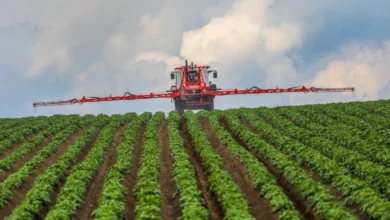
Second, this strategy risks incentivizing continued growth in an area with fundamentally limited resources. Critics argue that by focusing on "supply-side" solutions, the government may be delaying the inevitable necessity of "demand-side" management—namely, the permanent retirement of thirsty agricultural land and stricter limits on urban sprawl. Agriculture currently accounts for nearly 80 percent of the Colorado River’s usage; even a small percentage reduction in farming would dwarf the gains made by multi-billion-dollar tech retrofits.
Finally, the reliance on federal funding creates a moral hazard. If the federal government consistently steps in to bail out the basin with multi-billion-dollar grants, there is less incentive for states to make the politically difficult compromises required for a long-term legal settlement.
As the 2026 deadline looms, the Colorado River Basin stands at a crossroads. The transition from a "negotiation of scarcity" to an "investment in technology" represents a bold gamble that American ingenuity and capital can overcome the realities of a changing climate. Whether these "weird" fixes—from cloud seeding to desert pipelines—can truly stabilize a river that supports 40 million people and a $1.4 trillion economy remains the defining question for the future of the West.