In a move that signals a significant shift in how states balance technological growth with environmental and economic sustainability, New York Governor Kathy Hochul issued an executive order on Tuesday establishing a one-year moratorium on the construction of new large-scale data centers. The order makes New York the first state in the nation to implement a statewide pause on these facilities, which have become the backbone of the global digital economy but are increasingly viewed as a threat to local utility costs and the stability of the electrical grid.
The executive order directs the New York State Department of Public Service (DPS) to halt the issuance of new permits for "hyperscale" data centers for a period of twelve months. During this hiatus, state agencies will conduct a comprehensive environmental and economic impact study. The goal of this analysis is to determine how these massive facilities—often spanning hundreds of thousands of square feet and consuming as much power as small cities—affect the state’s ambitious climate goals and the monthly bills of average New Yorkers.
“As data center development threatens to hike up utility bills, deplete our natural resources, and create uncertainty for New Yorkers, it’s my responsibility to take action and lead,” Governor Hochul stated in an official release. The Governor’s office emphasized that while New York remains "open for business" for the tech sector, that growth cannot come at the expense of the state’s energy security or its residents’ financial well-being.
The Artificial Intelligence Boom and Rising Energy Demands
The surge in data center development is not a localized phenomenon but a global trend driven largely by the rapid advancement of artificial intelligence (AI). Training and maintaining large language models and generative AI systems require immense computational power, which in turn demands a constant, high-volume supply of electricity.
Over the past three years, technology giants such as Amazon Web Services (AWS), Google, and Microsoft have committed tens of billions of dollars toward expanding their domestic data infrastructure. New York, with its proximity to financial markets and its robust existing fiber-optic networks, has been a prime target for this expansion. However, the sheer scale of these projects has begun to outpace the growth of the state’s renewable energy supply.
A typical hyperscale data center can require anywhere from 100 to 500 megawatts of power. To put that in perspective, 500 megawatts is enough to power approximately 400,000 homes. When multiple such facilities are connected to a regional grid, they can create "congestion," driving up the wholesale price of electricity. Under current regulatory frameworks, these increased costs are often passed down to residential and small-business ratepayers.
Regulatory Deep Dive: The Department of Public Service Mandate
The one-year moratorium is more than just a pause; it is a period of intense regulatory scrutiny. Governor Hochul has tasked the Department of Public Service with leading a proceeding that could fundamentally change how tech companies operate in the Empire State.
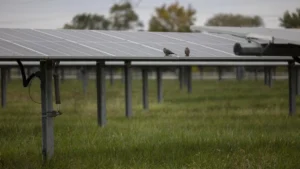
A primary focus of the DPS study will be the implementation of a "pay-to-play" energy model. The executive order suggests that future data centers may be required to either pay a premium for grid-supplied energy or, alternatively, supply their own power through on-site generation. This could include the construction of dedicated solar farms, wind turbines, or advanced battery storage systems that prevent the facility from drawing on the public grid during peak demand hours.
Furthermore, the environmental analysis will look at the secondary impacts of data centers, specifically water consumption. Many facilities use "evaporative cooling" systems to prevent servers from overheating, which can consume millions of gallons of water daily. In regions of Upstate New York that rely on sensitive watersheds, the introduction of multiple data centers has raised alarms regarding long-term water security.
Economic Reprioritization and the Repeal of Tax Incentives
For years, New York used generous tax exemptions to lure data center developers, viewing them as symbols of a modern, high-tech economy. However, the promised "job boom" has often failed to materialize. While construction creates temporary labor, an operational data center requires relatively few full-time employees—often fewer than 50 people for a facility worth hundreds of millions of dollars.

In tandem with the moratorium, Governor Hochul has called on the state legislature to repeal existing sales tax exemptions for large-scale data centers. This move reflects a growing sentiment among policymakers that the state should no longer subsidize industries that place a net strain on public infrastructure without providing a proportional increase in permanent, high-quality jobs.
To address the local impact, the Governor has also directed the state’s economic development agency, Empire State Development (ESD), to create a standardized framework for municipalities. This framework will empower local governments to negotiate more effectively with tech companies. Recommended community benefit agreements will focus on:
- Infrastructure Improvements: Requiring companies to upgrade local substations or water lines.
- Child Care Investments: Direct funding for local social services to offset the influx of temporary construction workers.
- Labor and Wage Standards: Ensuring that both construction and operational roles meet prevailing wage requirements.
- Grid Reinvestment: A proposed fund that would require data center operators to contribute directly to the state’s clean energy transition.
A Timeline of Growing Resistance
The executive order follows a period of mounting legislative and grassroots pressure. The trajectory of this policy shift can be traced through several key milestones:
- April 2024: Maine Governor Janet Mills vetoed a statewide data center moratorium, citing concerns that it would stifle innovation. The veto sparked a national debate among governors regarding the "unintended consequences" of blocking tech infrastructure.
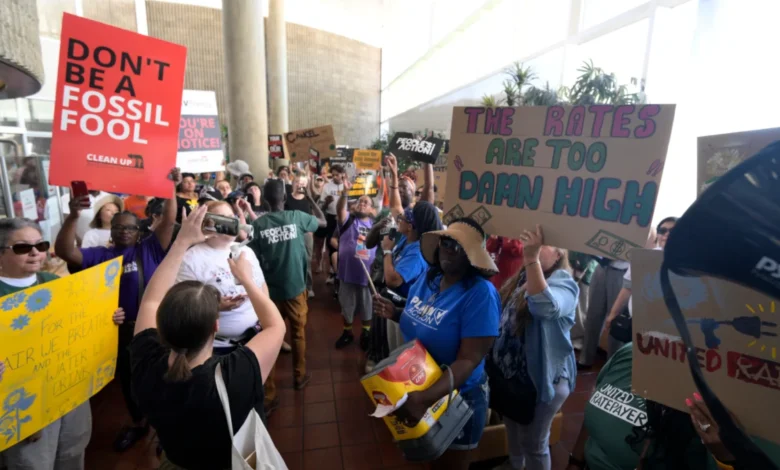
- June 2026: Climate activists and residents in Western New York held large-scale protests against a proposed hyperscale facility near Buffalo, citing concerns over "peaker plants"—fossil fuel plants that are kept online specifically to handle surges in demand caused by data centers.
- June 2026: The New York State Legislature passed a bill (S10642) that proposed an even more stringent moratorium than the one issued by the Governor. While Hochul has not yet signed that specific bill, her executive order achieves many of the same immediate goals through administrative action.
- July 2026: Governor Hochul officially signs the executive order, making New York the first state to successfully implement a statewide pause.
Broader Implications and Industry Reaction
The tech industry has responded to the moratorium with caution. Industry trade groups argue that such a ban could drive investment to neighboring states like New Jersey, Pennsylvania, or Virginia. Virginia, specifically "Data Center Alley" in Loudoun County, currently hosts the highest concentration of data centers in the world. However, even Virginia has begun to grapple with the limits of its grid, leading some to believe that New York’s move is the first of many "regulatory corrections" across the United States.
Environmental groups, conversely, have hailed the decision as a landmark victory for climate policy. New York’s Climate Leadership and Community Protection Act (CLCPA) mandates that 70% of the state’s electricity come from renewable sources by 2030. Analysts have warned that the projected energy demand from the AI sector alone could make this target impossible to reach unless data centers are forced to bring their own "green" energy to the table.
Technical Analysis: The Strain on the New York Grid
New York’s electrical grid is currently in a state of transition. While the state is closing older nuclear and coal-fired plants, it is simultaneously building out massive offshore wind projects and solar arrays. However, there is a "geographic mismatch" in the state’s energy profile. Much of the clean energy is generated in Upstate New York, while the highest demand is in the New York City metropolitan area.
Large-scale data centers are often proposed for Upstate locations where land is cheaper and power is more accessible. However, if these centers consume the surplus of renewable energy generated Upstate, it leaves less "clean" power to be transmitted to the southern part of the state. This forces the grid to rely on aging natural gas plants in the New York City area to meet demand, effectively increasing the state’s overall carbon footprint despite its investments in renewables.
By pausing development, New York is effectively hitting the "reset" button to ensure that the infrastructure for transmitting and storing energy can handle the specific, high-load characteristics of the data industry.
Conclusion: A Precedent for the Digital Age
Governor Hochul’s executive order represents a fundamental questioning of the "growth at any cost" mentality that has characterized the tech industry’s expansion for the last decade. As AI continues to reshape the global economy, the physical infrastructure required to support it is coming into direct conflict with the limited resources of land, water, and electricity.
The next twelve months will be a critical period for New York. The findings of the Department of Public Service will likely serve as a blueprint for other states facing similar pressures. If New York successfully implements a model where data centers are required to be energy-independent or provide significant community offsets, it could change the landscape of the tech industry, forcing companies to prioritize energy efficiency and localized generation as much as they currently prioritize processing speed.
For now, the message from Albany is clear: the digital future will not be built at the expense of the New York ratepayer or the environment. The one-year moratorium is a signal that the era of unchecked data center expansion has met its first significant regulatory boundary.
Related posts: